
Why WP10 Flywheels Are So Thin: The Recessed Crank Flange
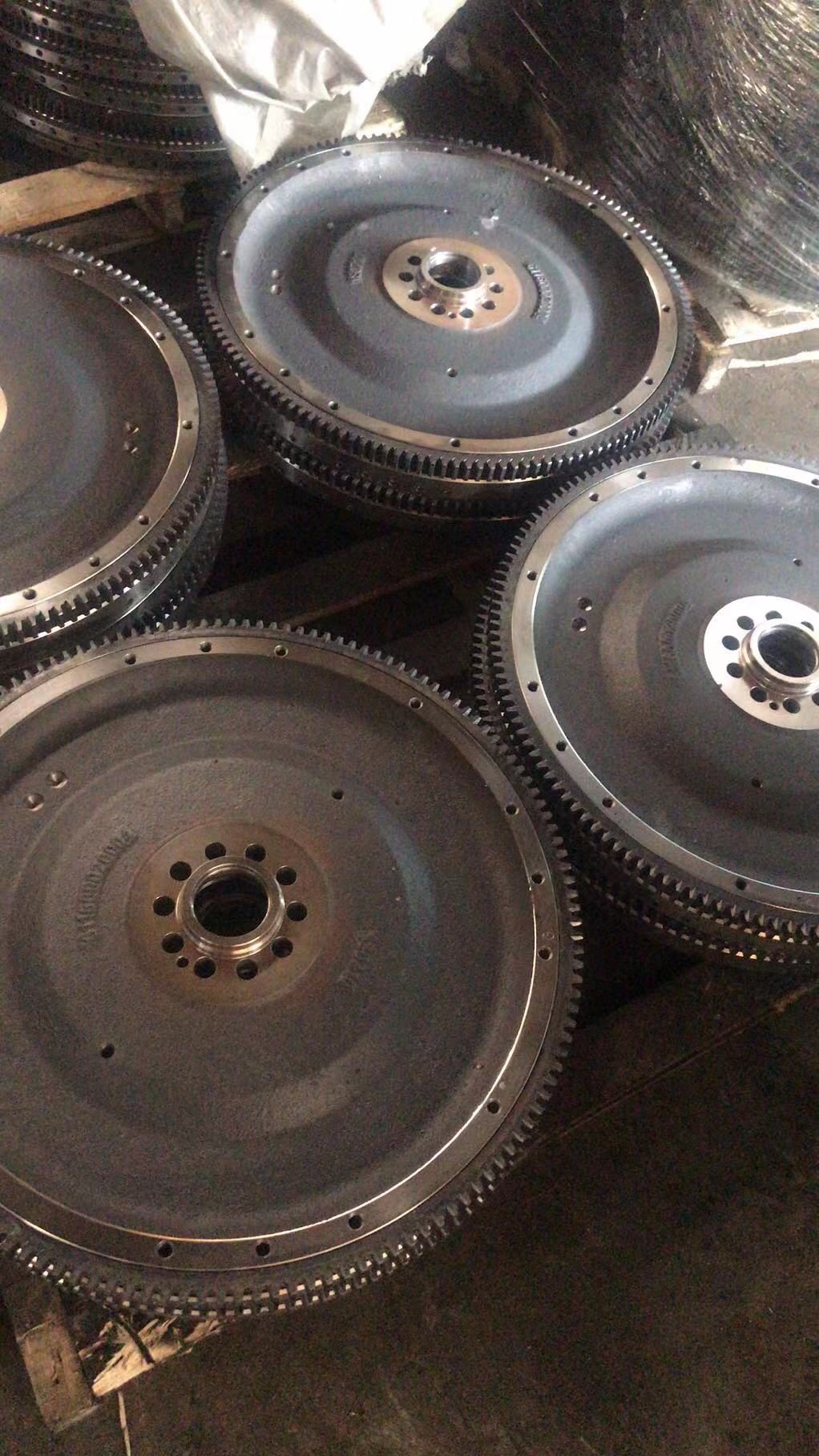
Why WP10 Flywheels Are So Thin: The Recessed Crank Flange
The first question a buyer usually asks when a WP10 flywheel arrives is whether it was machined too thin.
It does sit noticeably lower than a truck flywheel of the same diameter. Put the two side by side and the WP10 is clearly the shorter one. But nothing was skimped on. The crank side of the flywheel is recessed by design — only the outer rim stands proud. The space inside that recess was given away on purpose.
This article covers three things: where the recess is, who gets the space it frees up, and why the design only suits one kind of duty cycle.
Contents
- Look at the Part: Where the Crank End Is Recessed
- Who Gets the Space That Is Freed Up
- Thin Is Not the Same as Light
- Switching from Friction Drive to Rigid Coupling
- Three Mistakes Buyers Make
- Checks Before Fitting
- FAQ
- About Changwei
Look at the Part: Where the Crank End Is Recessed
Turn the flywheel over and look at the crankshaft side. The structure runs like this:
The outermost ring is a machined friction face or flange. Step inward and you reach the crank mounting zone, which sits lower than the outer face. The crank flange bolt holes are drilled into that recessed ring, so once the bolts are torqued the heads sit down inside the flywheel instead of standing proud.
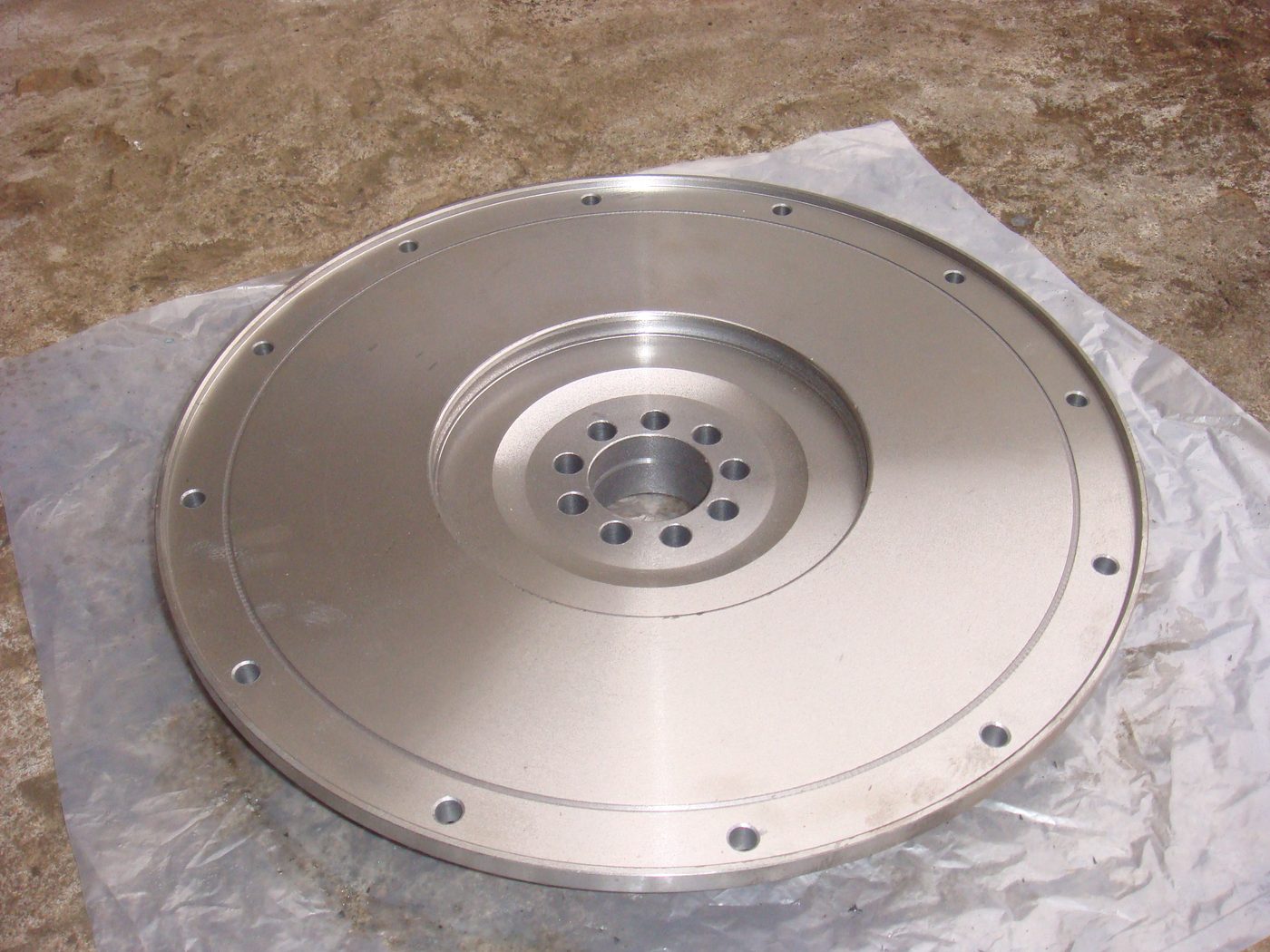
The same structure shows up on construction machinery flywheels such as the Komatsu P200, where the centre drops away and the outer face stays flat and open.
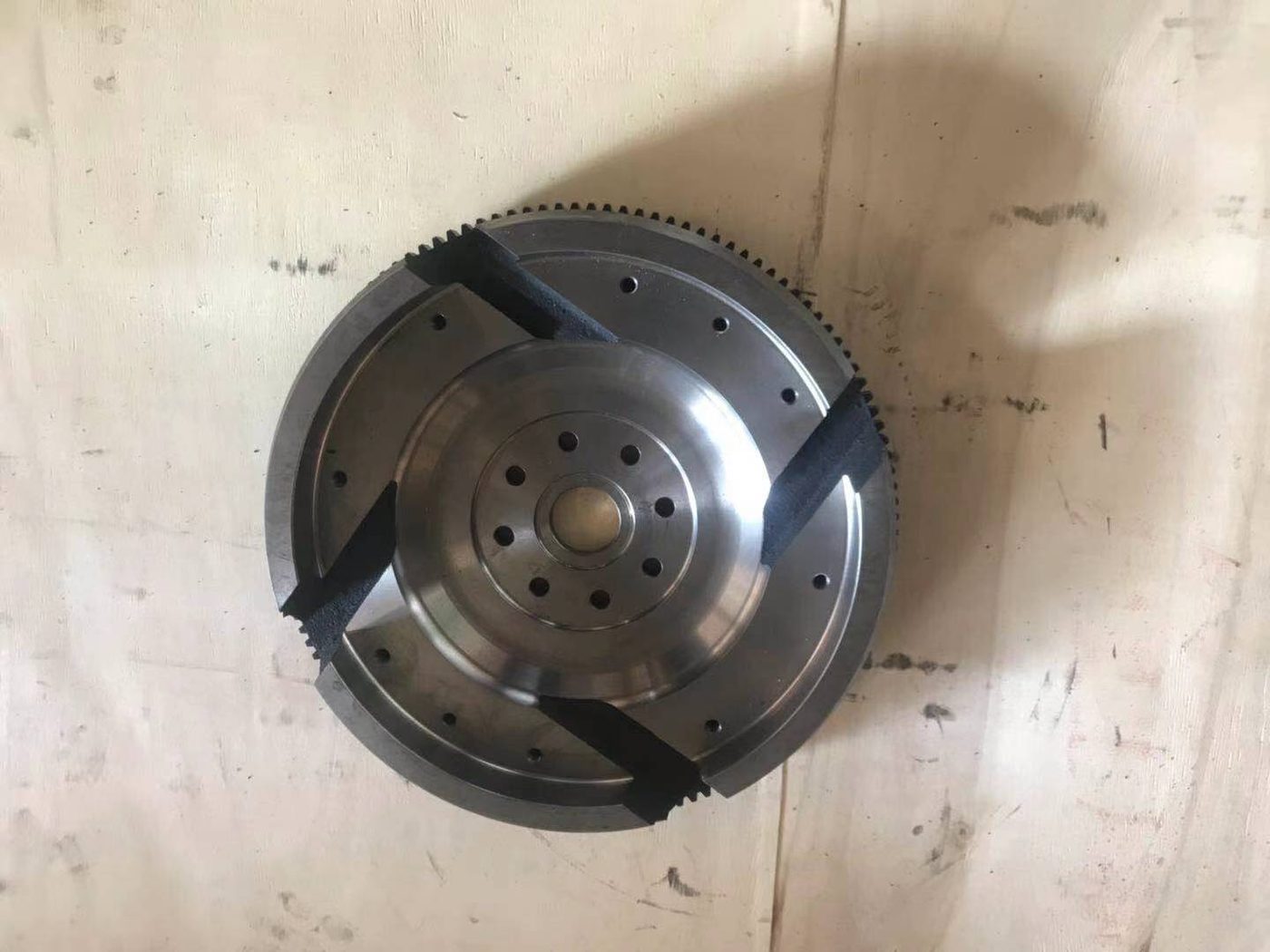
What if it were a flat flange instead? Either the bolt heads would stick out behind the flywheel, or the whole flywheel would have to grow thicker toward the crank. Both options add axial length to the assembly.
Recessing the centre tucks the bolt heads inside the flywheel body.
Who Gets the Space That Is Freed Up
The space is not saved for the flywheel. It is saved for whatever sits behind it.
In a wheel loader or a bulldozer, the WP10 flywheel does not drive a clutch. It drives a torque converter and a powershift transmission. The converter has axial length of its own, and behind it come the impeller, the housing and the oil passages.
On the machine side, the distance from the engine rear face to the transmission front face is fixed. Frame width, driveline layout and overall machine length were locked in at the design stage. The engine maker cannot change them and neither can the transmission supplier.
Inside that fixed gap, every millimetre one component takes is a millimetre another component loses. The flywheel gives its millimetres to the converter.
A side view of a flywheel with its ring gear shows how tight the whole stack is, from the ring gear face to the crank mounting face:
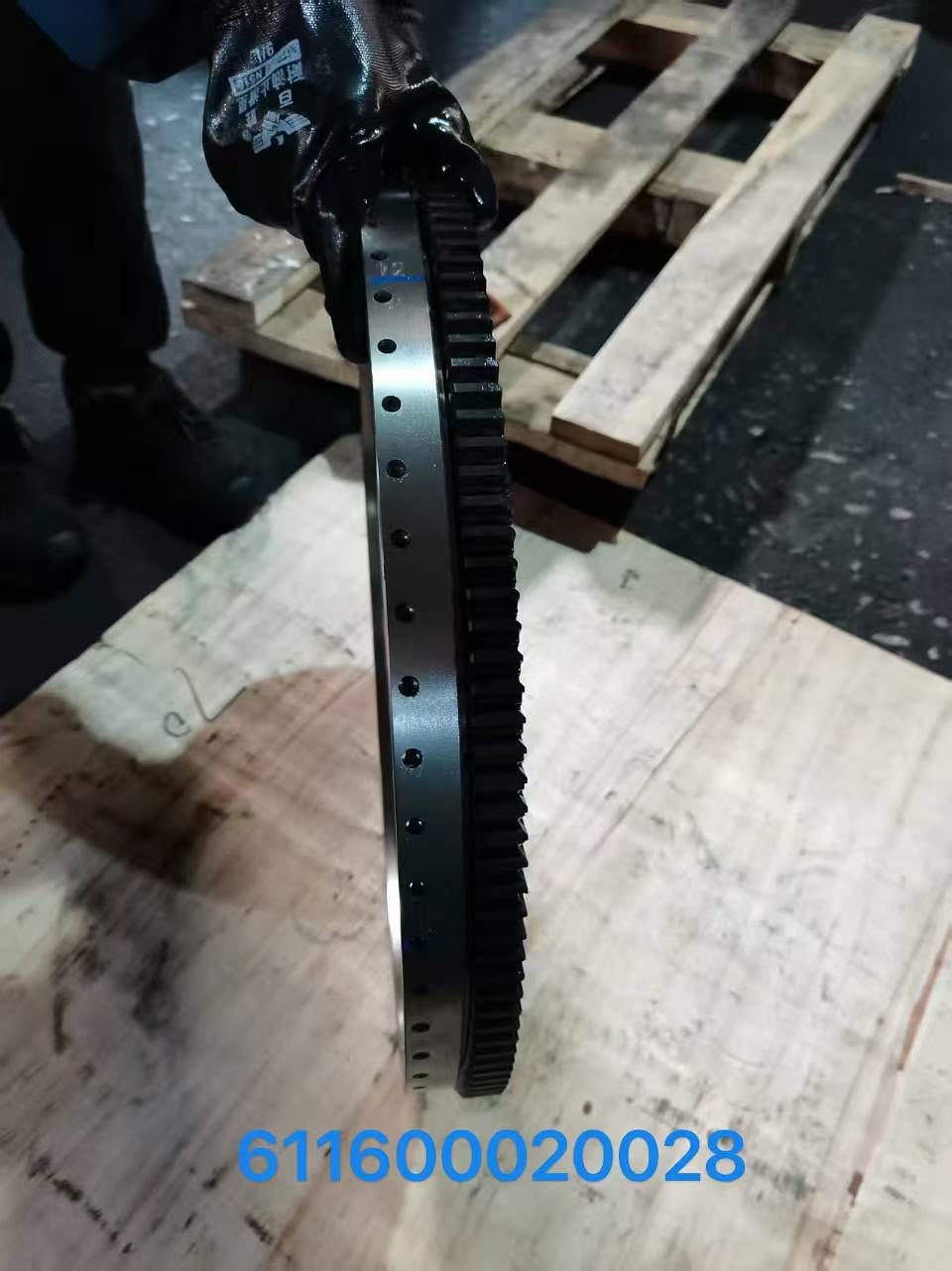
On loaders and dozers, the transmission side is already tight. A thinner flywheel makes the whole machine layout easier. That is not cost cutting. It is leaving room for the machine designer.
Thin Is Not the Same as Light
Two different things get confused here: a thin flywheel and a light flywheel.
A lightweight racing flywheel exists to cut rotational inertia so the engine revs faster. That comes at a cost, and the cost is smoothness.
The thin WP10 flywheel works on different logic. It gives up axial length, not mass or inertia. Look at the part and the machined surfaces cover the full body — mass has not been carved away to the point where energy storage suffers.
It does two jobs in the system.
First, energy storage. The torque an engine puts out over each cycle is not even. The flywheel smooths that out using its rotational inertia, so the output side turns at a steadier speed.
Second, power transfer. The flywheel is the first node after the crankshaft. Everything downstream passes through it.
Neither job depends on thickness. Both depend on mass and where that mass sits. Recessing the centre leaves the mass out at the rim, and inertia is dominated by mass at the rim. So the recess buys axial space while giving up very little inertia.
And because there is no clutch and no friction pair behind it, there is nothing on the flywheel that wears. The common verdict on these construction machinery flywheels is simple: if the engine holds up, the flywheel holds up. No clutch disc grinds against it, so its life is tied to the engine’s.
Switching from Friction Drive to Rigid Coupling
The biggest structural change is in how it connects.
On a truck the chain runs flywheel, pressure plate, clutch disc. Torque crosses a friction pair, which can slip during launch and shifts, absorbing shock.
On a loader or dozer it becomes flywheel, rigid drive plate, torque converter. No friction pair. The bolts carry the load. The buffer is gone, so engine torque fluctuations go straight into the flywheel and the crankshaft.
That has practical consequences.
Balance matters more. With no slipping friction pair to mask it, imbalance becomes vibration that travels up the crank. Flywheels have to be balanced at the factory, and the grade has to hold.
Face runout matters more. If the mating face between flywheel and drive plate runs out, the assembly wobbles, and over time that means loosening, wear and noise.
Bolt torque and tightening sequence matter more. In a rigid joint the bolts are the only load path. One missing bolt, low torque or the wrong sequence concentrates stress on the rest.
Concentricity matters more. Flywheel, drive plate and converter have to line up. Any one of them off-centre shows up at the converter bearing.
In short: a friction coupling tolerates a bit of deviation, a rigid one does not. That is why these flywheels carry stricter inspection requirements than truck flywheels.
Three Mistakes Buyers Make
One: substituting a truck flywheel. Same WP10, possibly the same diameter, but the overall thickness, the crank interface and the drive plate hole positions do not match. Either it will not go on, or it goes on with the wrong axial clearance.
Two: reading only the last four digits of the part number. This one deserves its own paragraph. There is a 0354 in the WP10 range and a 0354 in the WP2 range, and they are entirely different parts. One has a pronounced raised crank hub, the other is comparatively flat. The arc of the crank bolt holes differs too. The full numbers are 612600020354 and 612630020354. Matching last four digits does not mean interchangeable.
Three: quoting only the engine model. The same engine model can carry different flywheels across years and configurations. Writing “WP10” and nothing else leaves the supplier guessing.
Give these six items and the quote usually lands right first time:
| Item | Why it is needed |
|---|---|
| Full part number | Last-four-digit collisions are real, give the whole number |
| Crank bolt hole count and spacing | Determines whether it bolts to the crankshaft |
| Drive plate / pressure plate mounting holes | Determines what bolts on behind it |
| Signal hole count and phase | Determines whether the ECU reads engine speed correctly |
| Ring gear tooth count | Determines whether the starter can turn it |
| Overall thickness or axial dimension | Determines whether there is clearance once fitted |
Signal holes are the one most often left out, and the one that causes the most trouble. The flywheel bolts up and spins, but if the phase is wrong the speed signal is wrong.
We make WP10 flywheels to drawing or sample. The range is on the Weichai engine flywheel page, and the construction machinery versions with the recessed crank end are listed with them.
Checks Before Fitting
When a construction machinery flywheel is replaced, check these before assembly:
- Flatness of the crank mounting face. If the recessed face is distorted, it will not seat properly and bolt preload will decay.
- Counterbore depth. If the counterbores are shallow, the bolt heads will not seat and the joint is effectively loose.
- Face runout. Measure on a fixture that replicates crank location. Laying it flat on a bench proves nothing.
- Dynamic balance. Ask the supplier for the balancing report and grade.
- Ring gear interference fit. A loose ring gear produces a starter noise on construction machinery.
- Bolt torque and sequence. Follow the machine service manual rather than habit.
For how to read flywheel part numbers and tell apart parts that share a number, see Flywheel Identification Guide.
For choosing between cast iron and steel, see Cast Iron vs Steel Flywheels.
FAQ
Why is a WP10 flywheel thinner than a truck flywheel?
Because the crank end is recessed. The crank flange bolt holes sit on a ring that is set down inside the flywheel, so the bolt heads are contained within the body and the overall axial length is reduced. The space that frees up goes to the torque converter and transmission behind it.
Does a thin flywheel mean lower quality or shorter life?
No. Thin reduces axial length, not effective mass. Flywheel mass sits mainly at the rim, and the recess only affects the centre, so rotational inertia barely changes. The loading on a construction machinery flywheel is arguably easier than on a truck flywheel, because there is no clutch friction pair behind it and nothing on the flywheel wears.
Can I use a truck flywheel in place of a construction machinery flywheel?
Not directly. Overall thickness, crank interface and rear connection differ. A truck flywheel drives a pressure plate and clutch, a construction flywheel drives a rigid drive plate. Rigid coupling also demands tighter balance and runout, and the structure is different.
Is there a standard depth for the crank recess?
No single figure applies across brands. Depth is set by each engine maker according to the crank flange and the rear packaging, so it varies between models. Specify by part number and by the actual dimensions of the mounting face, not by an assumption that all WP10 flywheels share one depth.
Will rigid coupling damage the crankshaft?
Not by design. But it depends on the flywheel being correctly balanced, face runout being within range, and bolts being torqued in sequence. If any of those are wrong, vibration and additional load go straight into the crank. A rigid joint has less tolerance for error than a friction one.
What should I include in an enquiry?
Full part number, not just the last four digits. Crank bolt hole count and spacing. Drive plate mounting holes. Signal hole count and phase. Ring gear tooth count. Overall thickness or axial dimension. If you can, attach a photo of the old part, especially the crank side and the stamped number.
About Changwei
Changwei Intelligent Equipment (Changchai Power) is an IATF 16949 certified iron foundry in Wangke Industrial Zone, Changyi, Weifang, Shandong. We make cast iron engine components: flywheels, ring gears, flywheel housings, timing gear housings, cylinder blocks and heads, and transmission housings.
Flywheels are made to drawing or sample across a range of Weichai and Sinotruk HOWO power assemblies, including construction machinery versions with the recessed crank end. Pattern development, casting and precision machining are all done in house. Port of loading is Qingdao.
If you have a flywheel to match, send the full part number or a photo of the old part.
- Email: [email protected]
- Phone / WeChat / WhatsApp: +86 19953662121
- Factory: Wangke Industrial Zone, Changyi, Weifang, Shandong, China
- Website: changweiintl.com
- Request a quote