
Flywheel Identification Guide: Same Look, Different Part Number
Same Look, Different Part Number: How to Identify a Flywheel Before You Order
There is a category of return that has nothing to do with quality.
The part is genuine. The material is correct, the machining is clean, runout passes, the packing is intact. The problem is the part number. It looks almost identical to the flywheel it is replacing, and it will not fit. The crank bolt holes do not line up, or the signal holes sit at the wrong angle. The engine starts, but the fault lamp stays on.
This happens more often with flywheels than with most engine parts, and the reason is structural. A flywheel is a casting whose outer profile is dictated by two standardised interfaces, the crankshaft end and the clutch end. There is very little room for the visible shape to vary. The features that actually define a part number are on surfaces you cannot judge from a photo of the front face.
This article breaks down the four layers where flywheels look the same but are not, then gives a verification checklist to use before placing an order.
Contents
- 1. The photo matched, the part still did not
- 2. Four layers where flywheels look identical
- 3. One suffix, two part numbers: the 0354 case
- 4. No OE number: telling ISUZU 6UZ1 from 6HK1
- 5. Pre-order verification checklist
- 6. What the factory does to prevent mix-ups
- 7. FAQ
1. The photo matched, the part still did not
An enquiry usually arrives like this: one photo of a flywheel front face, and a line that says “quote this one”.
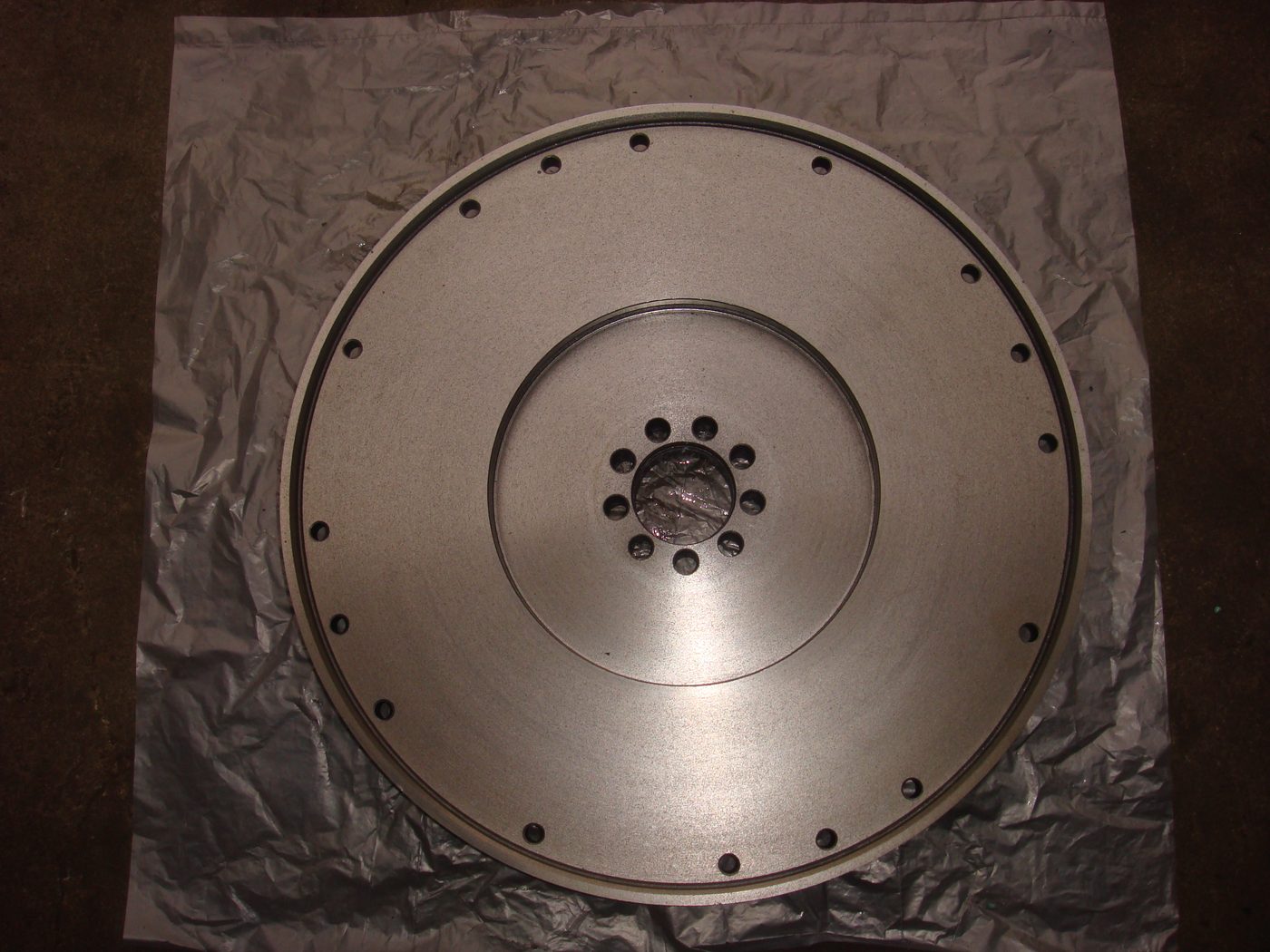
A front-face photo carries very little usable information. What you can see is the disc diameter, the rough distribution of bolt holes, and the ring gear tooth form. What you cannot see is the angular spacing of the crank bolt holes, the phase angle of the signal holes, the height of the crankshaft boss, or the step dimensions on the pressure plate mounting face. All of that is flattened out of the image.
This is why some orders take three or four rounds. The first quote is wrong, the second round involves shipping a sample, and by the third round someone discovers that two different part numbers share the same colloquial name.
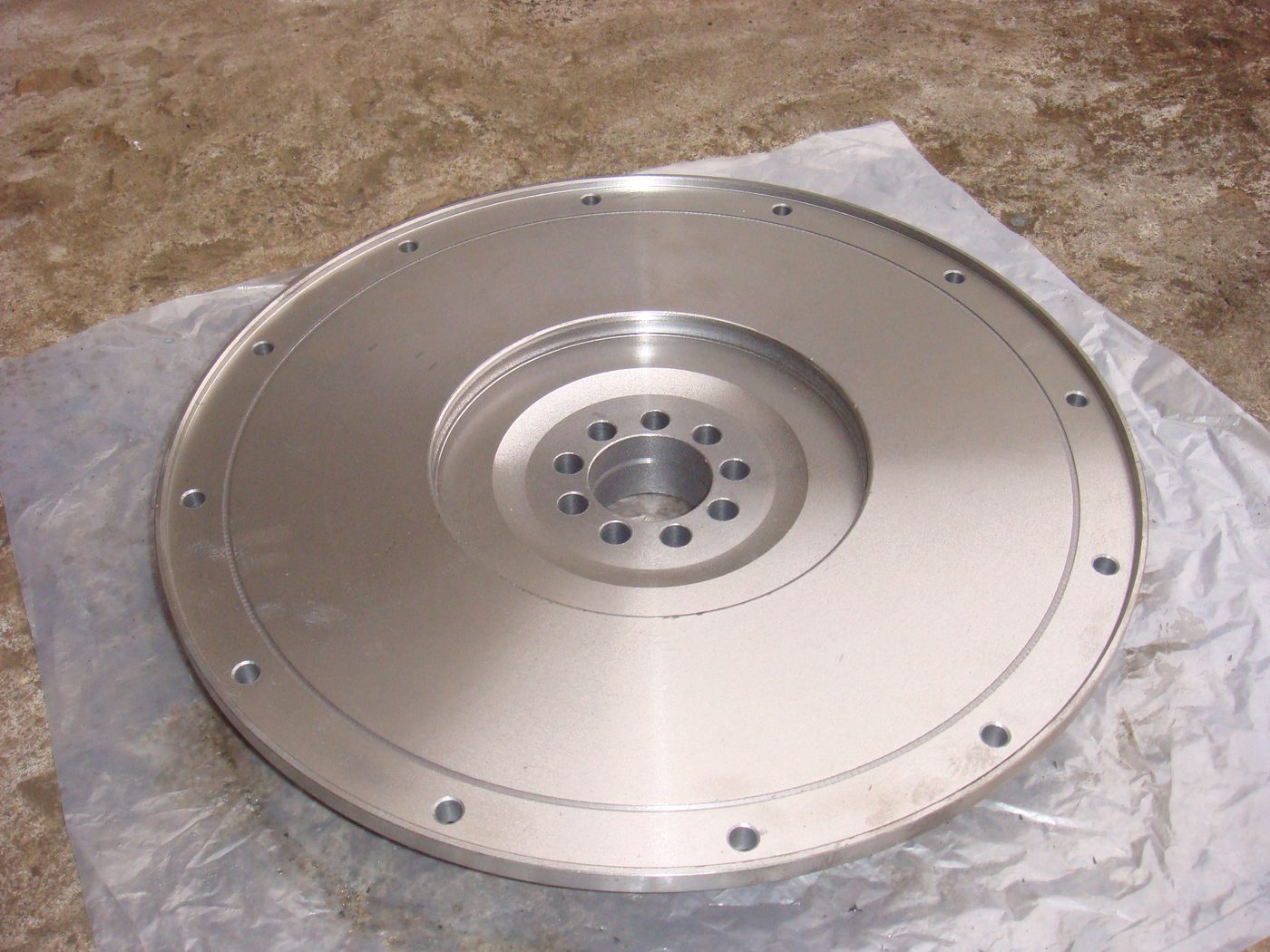
The photo below shows a typical flywheel back face. The ring of holes at the centre is the crankshaft interface; the smaller holes around the rim are signal holes. A photo can tell you how many holes there are. It cannot tell you at what angle they sit, and that angle is what decides whether the part works on your engine.
2. Four layers where flywheels look identical
Layer one: crankshaft bolt spacing
This is the hardest layer. Get it wrong and the part simply will not bolt up.
Two things matter: the number of bolt holes, and the angular spacing between them. Two flywheels can have the same number of holes and still differ, because the holes may be evenly spaced on one and offset on the other. That difference decides whether the flywheel will seat on the crankshaft flange.
Some engines use non-uniform spacing, where a small positional error is enough to prevent assembly. Which means “eight holes” is not a specification. “Eight evenly spaced holes” and “eight offset holes” are two different parts.
Layer two: signal hole count and position
This layer does not stop the part from fitting. It stops it from working.
Diesel engines derive speed and top dead centre from a crankshaft position sensor sweeping past holes machined in the flywheel. Signal hole counts commonly run to 54, 56 or 58 holes, and the hole diameters vary as well, because different sensors operate at different air gaps.
The harder problem is position. With the same hole count and the same diameter, a set of holes that starts at a different phase angle will shift the top dead centre the ECU calculates. The engine will start, but injection timing will be off. On a vehicle that shows up as power loss, black smoke and higher fuel consumption; in the worst case it sets a fault code.
Layer three: ring gear tooth count
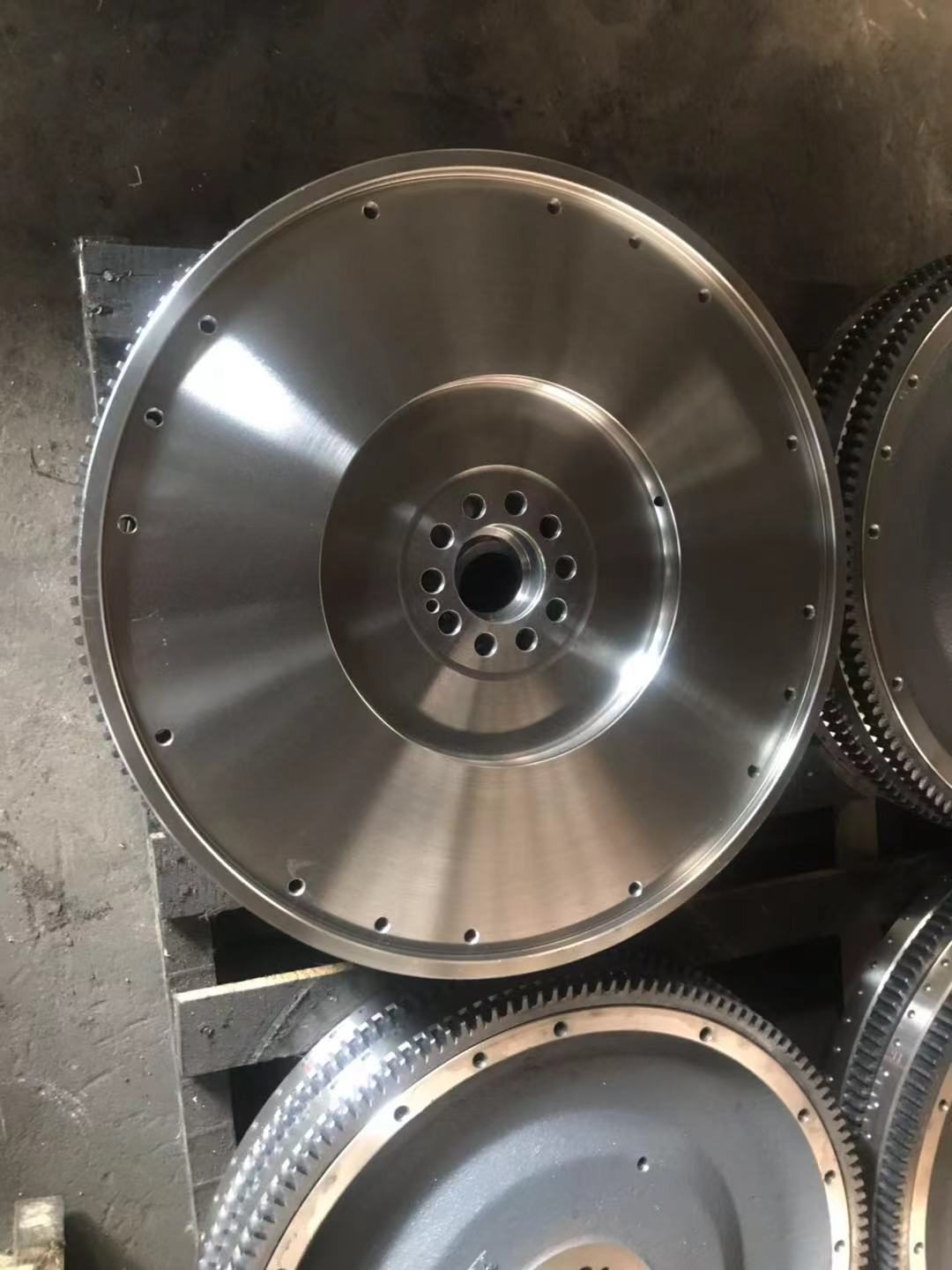
A single engine model can be built with more than one ring gear tooth count. The starter pinion and the ring gear must match; if the tooth count is wrong, the starter will either fail to turn the engine or wear the tooth flanks quickly.
Verifying this one is straightforward: count the teeth. Mark the starting tooth with a paint pen and work around the circumference. It is faster than trying to infer the count from a photograph.
Layer four: crankshaft boss height and overall thickness
This layer is the easiest to overlook, because it does not affect whether the part bolts up. It affects whether there is room for it.
The “boss” is the raised ring at the centre of the crankshaft end. Some engines use a tall boss and a thick disc. Others machine the crankshaft end concave, which makes the flywheel very thin.
The value of a thin flywheel shows up most clearly on construction machinery. Loaders and bulldozers have very little space around the transmission to begin with, so the clearance a thin flywheel frees up becomes design margin for the clutch and gearbox. The same engine that takes a conventional-thickness flywheel in a truck may need the thin version in construction equipment.
The reverse is where buyers get caught. Order on “same outer diameter, same tooth count” alone, and a thick flywheel going into a tight installation will interfere during assembly.
3. One suffix, two part numbers: the 0354 case
A concrete example makes the problem clear.
Weichai builds two flywheels whose part numbers begin 612600 and 612630 respectively, and both end in 0354. In quotations and chat threads, both get shortened to “the 0354 flywheel”.
They are not interchangeable.
The difference is at the crankshaft end. One has a noticeably taller crankshaft boss, the other is relatively flat. More importantly, the arc of the crankshaft bolt holes differs between them. Together those two differences mean each part suits a different crankshaft interface.
Quoting “0354” on its own is therefore unsafe. The 612600 and 612630 prefixes indicate different product platforms, and a shared suffix does not make two parts the same. The correct practice is to write the complete part number into the contract and onto the packing label, not the shorthand.
The same pattern appears in part numbers that split over signal hole position. One Weichai family has flywheels where the pressure plate, pilot bearing, ring gear, crankshaft end and thickness are all identical. The only difference is the direction the crankshaft position signal holes face. That produces two entirely different part numbers with different leading digits, and missing one digit is enough to ship the wrong part.
This is not manufacturers adding complexity for its own sake. The differences come from the sensor mounting positions required by different vehicle platforms. For the buyer the conclusion is simple: compare the full part number digit by digit, never the suffix alone.
4. No OE number: telling ISUZU 6UZ1 from 6HK1
There is a harder case still: the customer’s old flywheel carries no legible part number. The stamping has worn away, or the part is aftermarket and was never marked to a standard.
At that point the only route is to work back from physical features. Take ISUZU’s 6UZ1 and 6HK1. The two flywheels genuinely look close, but there are two reliable discriminators.
The first is crankshaft bolt count. 6UZ1 uses eight, 6HK1 uses ten. You do not need to strip the engine; turn the flywheel to its back face and count.
The second is the signal holes. The two use different hole counts, 58 and 56, and the hole diameters differ as well.
Together those two features are usually enough to settle the identification. If the bolt count and signal hole count both match but the customer is still unsure, check the ring gear tooth count as a third data point. Three matching features is a reliable identification.
The general value of this method is that it needs no OE number, only the part in hand and a count.
5. Pre-order verification checklist
Here is the same material as a checklist you can work through. It applies to any engine flywheel, not one brand.
| Step | What to verify | How | Consequence if wrong |
|---|---|---|---|
| 1 | Complete part number | Check every digit, including the prefix | Same suffix on different platforms shipped interchangeably |
| 2 | Crankshaft bolt count | Count holes, no disassembly | Will not bolt up at all |
| 3 | Crankshaft bolt spacing | Check for even spacing vs offset | Will not seat on the crankshaft flange |
| 4 | Signal hole count | Count holes | Incorrect speed and TDC signal |
| 5 | Signal hole phase | Compare hole by hole against a sample photo | Starts, but injection timing is wrong |
| 6 | Ring gear tooth count | Mark a tooth and count around | Starter mismatch, early tooth wear |
| 7 | Crankshaft boss height, overall thickness | Measure with calipers against a sample | Assembly interference or insufficient clutch travel |
If any of the first six does not match, do not place the order. Step seven only becomes critical on installations with tight packaging such as construction machinery and some buses, but where it applies it cannot be skipped.
One practical note on photographs. Do not send only the front face. Send at least three: front, back and side, with the crank bolt holes and signal holes clearly visible in the back-face shot. If the customer still has the old part, ask them to place a ruler beside the signal holes before shooting. The scale makes hole diameters much easier to judge.
6. What the factory does to prevent mix-ups
Confusion starts at the identification stage, but what stops it turning into a return is the marking system at the production end. A few practices that work.
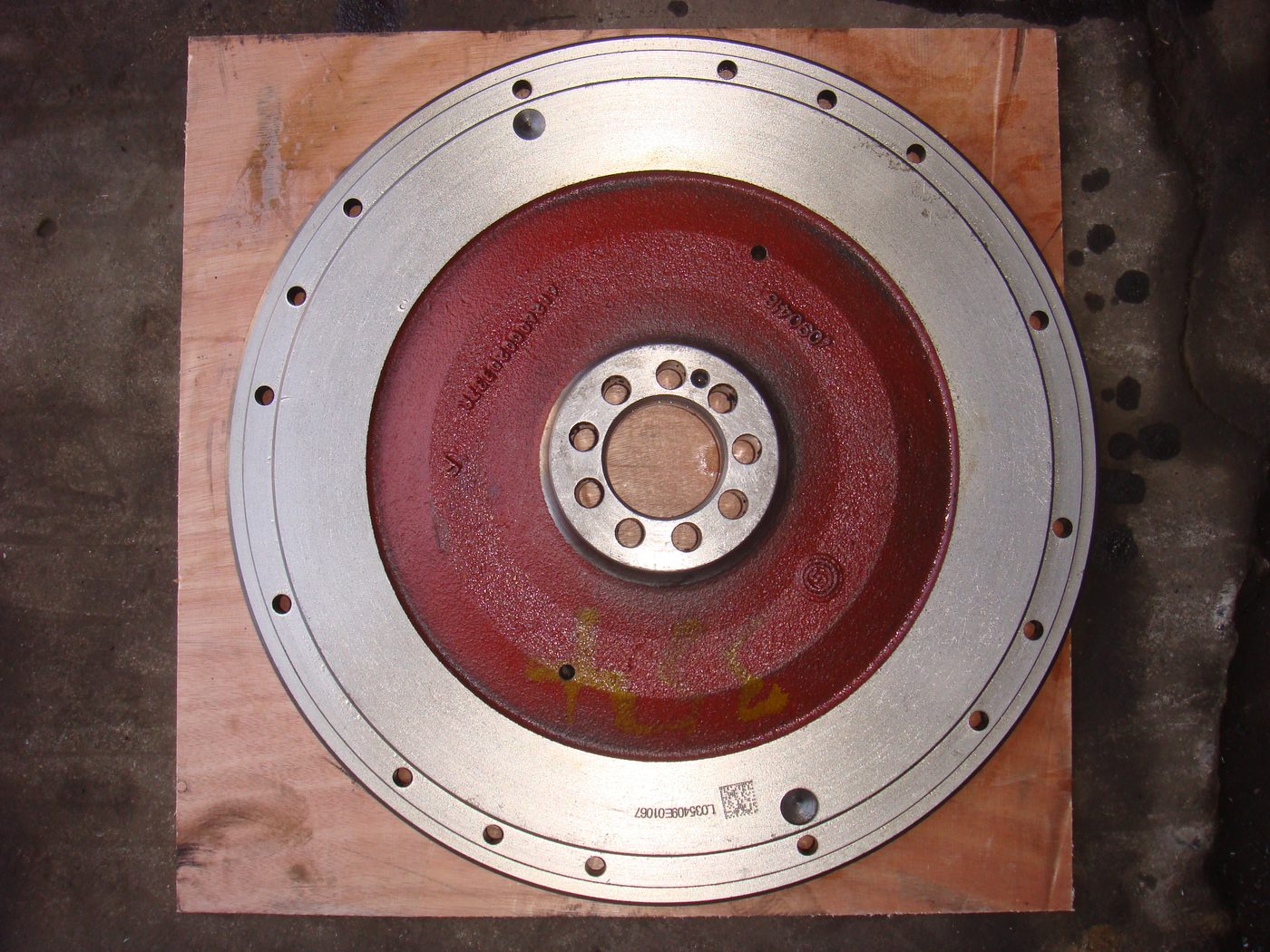
First, stamp and laser-mark in a visible place. The flat area on the flywheel rim is ideal, because it can still be read before the part is installed on an engine. What gets marked should be the complete part number, not the shorthand.
Second, pair the laser mark with a QR code. The code carries the full part number and the production batch, so scanning it pulls up the drawing and the inspection record. For customers with traceability requirements this is normally written into the contract.
Third, bind tooling numbers to part numbers. Flywheel shape is set by the mould, so one mould maps to one part number. Keeping tooling numbers tied to part numbers in the production record makes it fast to isolate a batch problem.
Fourth, make the packing label match the contents. This sounds basic, and it is still the single biggest source of returns. On pallet shipments, mix-ups usually happen at the final stacking step, when two batches of similar-looking flywheels come off the line at the same time and labels get swapped.
Fifth, keep first-article records. Photograph the first article of every batch from three angles and file it against the sample photos the customer approved. The value is not retrospective; it is that the next batch has a baseline to check against.
7. FAQ
A flywheel part number differs by one digit. Can I assume it is interchangeable?
No. The difference can sit in signal hole phase or crankshaft bolt spacing, neither of which affects how similar the two parts look. A one-digit difference means a separate verification.
Can flywheels with the same suffix but different prefixes be swapped?
No. The prefix normally denotes the product platform, and different platforms use different crankshaft interface designs. Weichai 612600020354 and 612630020354 are both called 0354, but their crankshaft bolt hole arcs differ.
The customer has no OE number, only a photo. What now?
Ask for photos covering three data points: crankshaft bolt count, signal hole count and ring gear tooth count. Those three cover most common engine families. If it is still unresolved, ask for the flywheel outer diameter, overall thickness and crankshaft boss height.
The signal hole count matches, so why is there still a fault code?
Because matching count does not mean matching phase. A shifted starting angle across the ring of signal holes produces a systematic error in the top dead centre the ECU calculates. That has to be checked hole by hole against a sample, not by counting.
Can a thin flywheel be replaced with a standard one?
Not freely. A thin flywheel with a concave crankshaft end exists for installations with tight packaging. Moving to a conventional thickness can change pressure plate travel or release bearing position; moving the other way, fitting a thick flywheel into a tight installation causes interference.
How do I reduce risk on the first batch from a new mould?
Run first-article approval: three-angle photographs of the first article plus a full dimensional inspection report, verified line by line against the drawing before mass production. Confirm the content and location of the marking at the same time, so batch parts do not end up labelled differently.
Send the photos first and we will identify it
There is no shortcut to identifying a flywheel part number. Every layer has to be checked. One thing does save time: taking all the photos that matter in one go so we can check them for you.
Changwei Intelligent Equipment is a cast iron foundry in Weifang, Shandong, certified to IATF 16949. We manufacture engine flywheels, ring gears, flywheel housings, timing gear housings and related cast iron components, built to drawing, sample or complete OE number, with in-house mould development, casting and precision machining.
To identify a flywheel, send front, back and side photographs together with the crankshaft bolt count and signal hole count. We will check them against the drawings, confirm the part number and note any interchangeable options.
- Contact: Irene
- Email: [email protected]
- Phone / WeChat / WhatsApp: +86 19953662121
- Factory: Changyi Wangke Industrial Zone, Weifang, Shandong, China
- Port of loading: Qingdao (FOB Qingdao)