
Genset Flywheel vs Vehicle Flywheel: What Changes
Genset Flywheel vs Vehicle Flywheel: What Actually Changes
The same engine can take a different flywheel depending on whether it ends up in a truck or in a generator set.
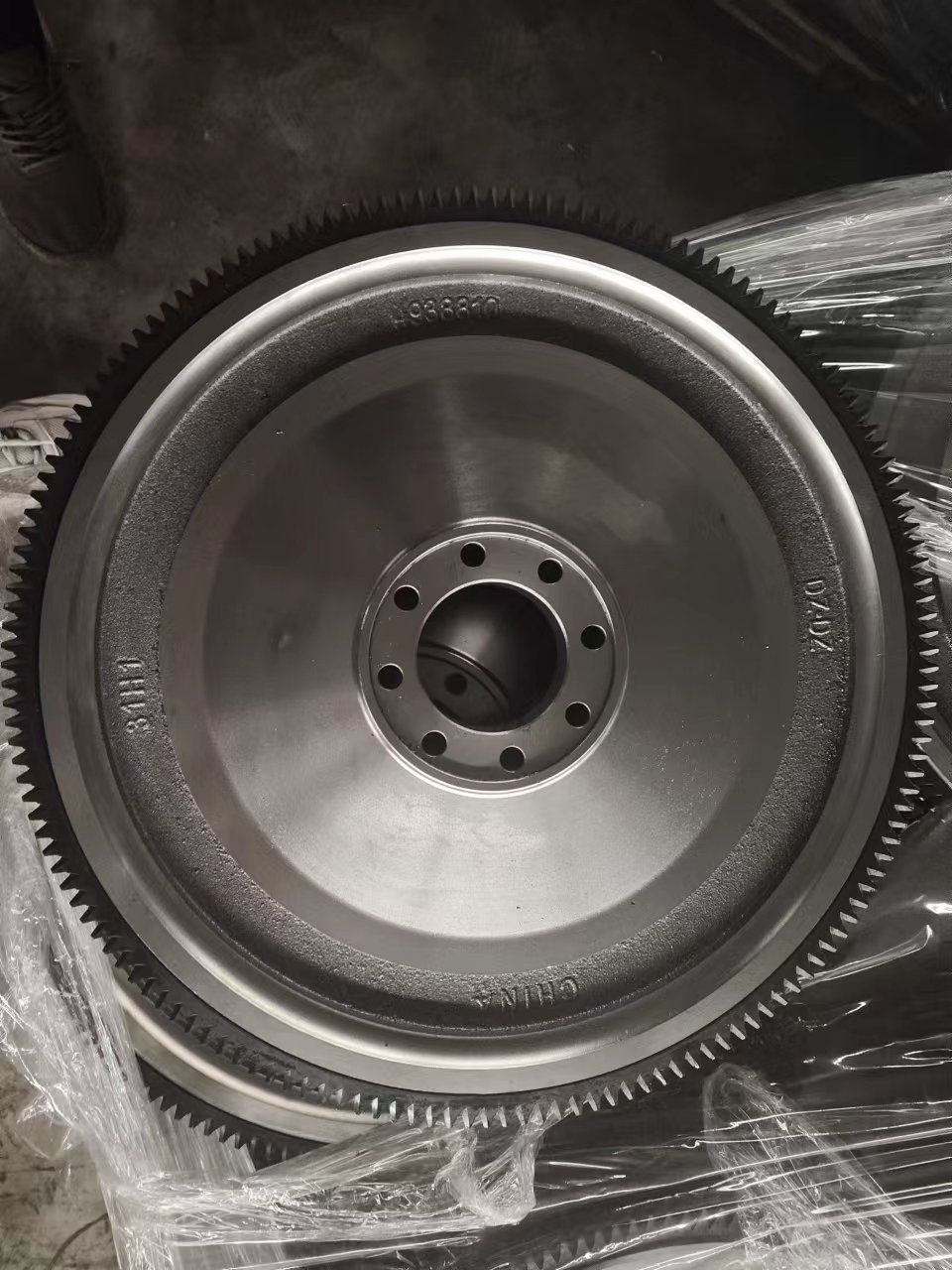
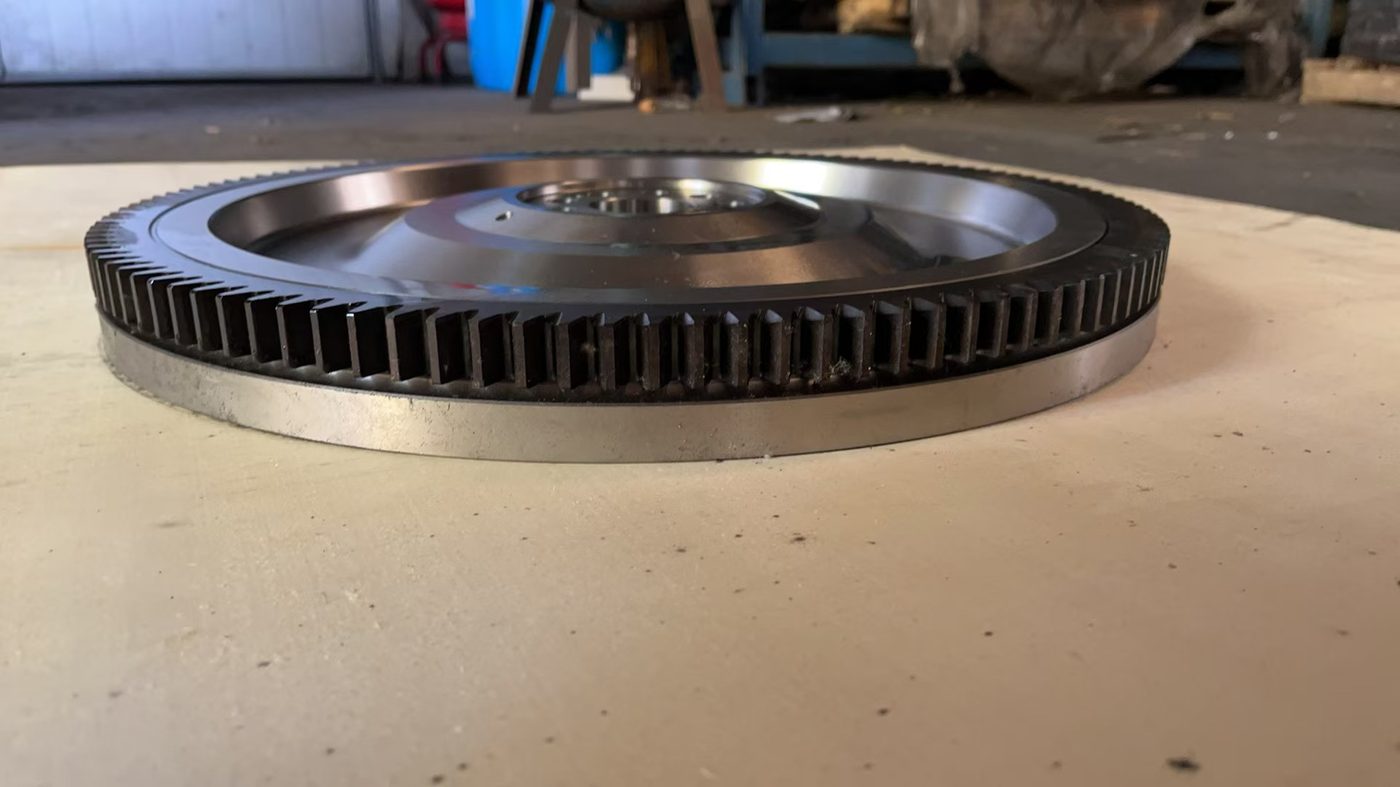
It is not obvious from across the yard. Diameter looks similar, ring gear looks similar, and the crank end looks similar too. Put the two side by side on the floor, or turn them over and look at the bolt pattern, and the difference shows up.
This article covers what changes, why, and what to put in an enquiry so you do not end up with the version that will not fit.
Contents
- The Root Difference: What Bolts On Behind
- Coupling Options: Integrated and Bolt-On
- Why Genset Flywheels Are More Balance-Sensitive
- A Truck Flywheel Does Three Jobs, a Genset One Does Two
- Speed and Inertia
- What to Include in an Enquiry
- FAQ
- About Changwei
The Root Difference: What Bolts On Behind
Behind a truck flywheel sits a clutch. Power goes flywheel to pressure plate to clutch disc to gearbox. There is a friction pair in the middle, which can slip during launch and shifts, and that absorbs shock.
Behind a genset flywheel sits a generator. There is no clutch position and no clutch function. Engine speed and generator speed are locked together — 1,500 rpm for 50 Hz, 1,800 rpm for 60 Hz. There is no engagement and no disengagement.
So the rear face of a genset flywheel is not a pressure plate mounting face. It is a coupling interface.
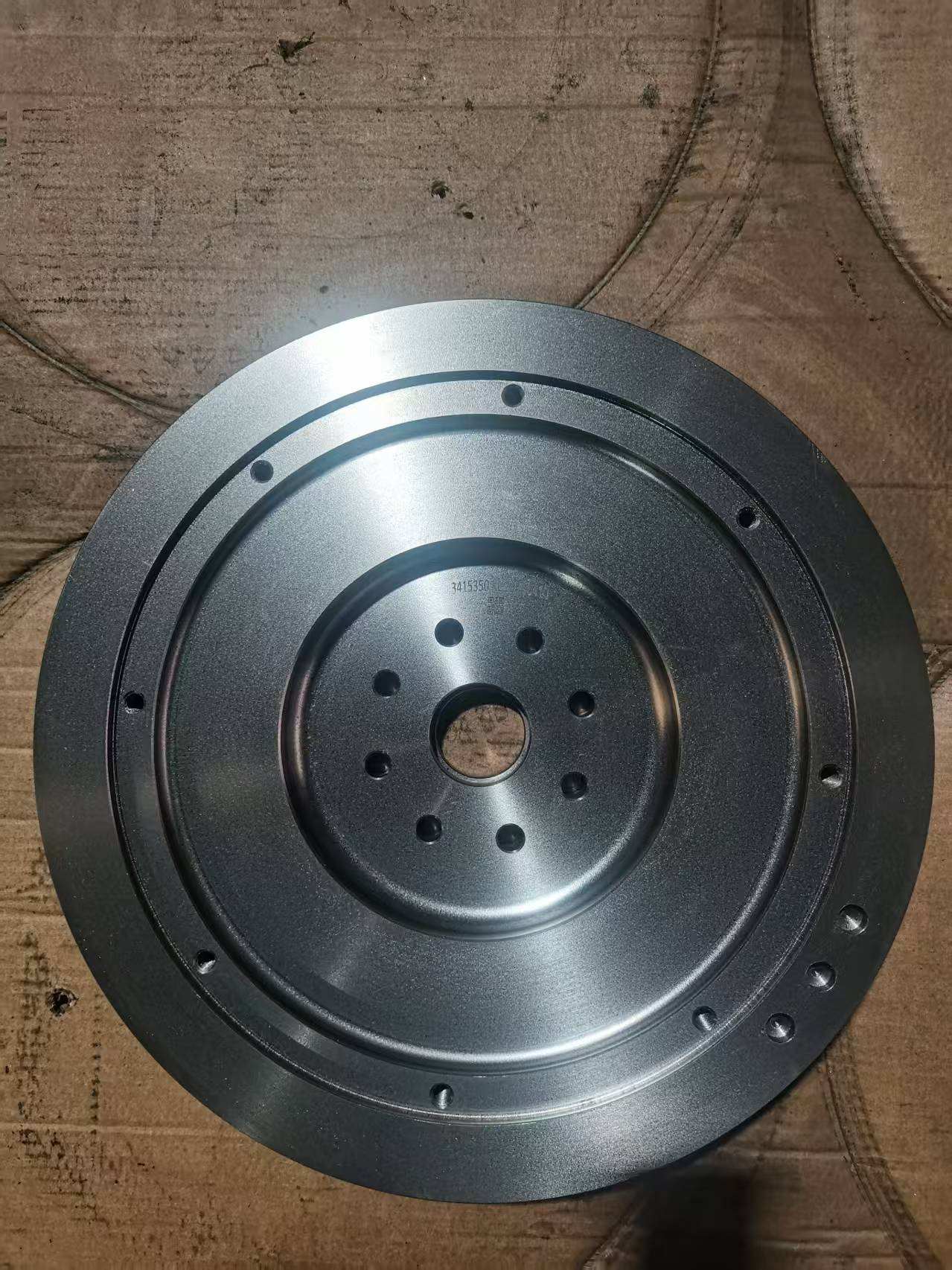
This difference drives everything downstream. No friction pair means no wear parts. No slip means no cushioning. Torque leaves the crankshaft, crosses the flywheel, crosses the coupling, and goes straight into the generator. The whole chain is rigid.
Coupling Options: Integrated and Bolt-On
There are two ways to build a genset flywheel, and this is where enquiries get vague.
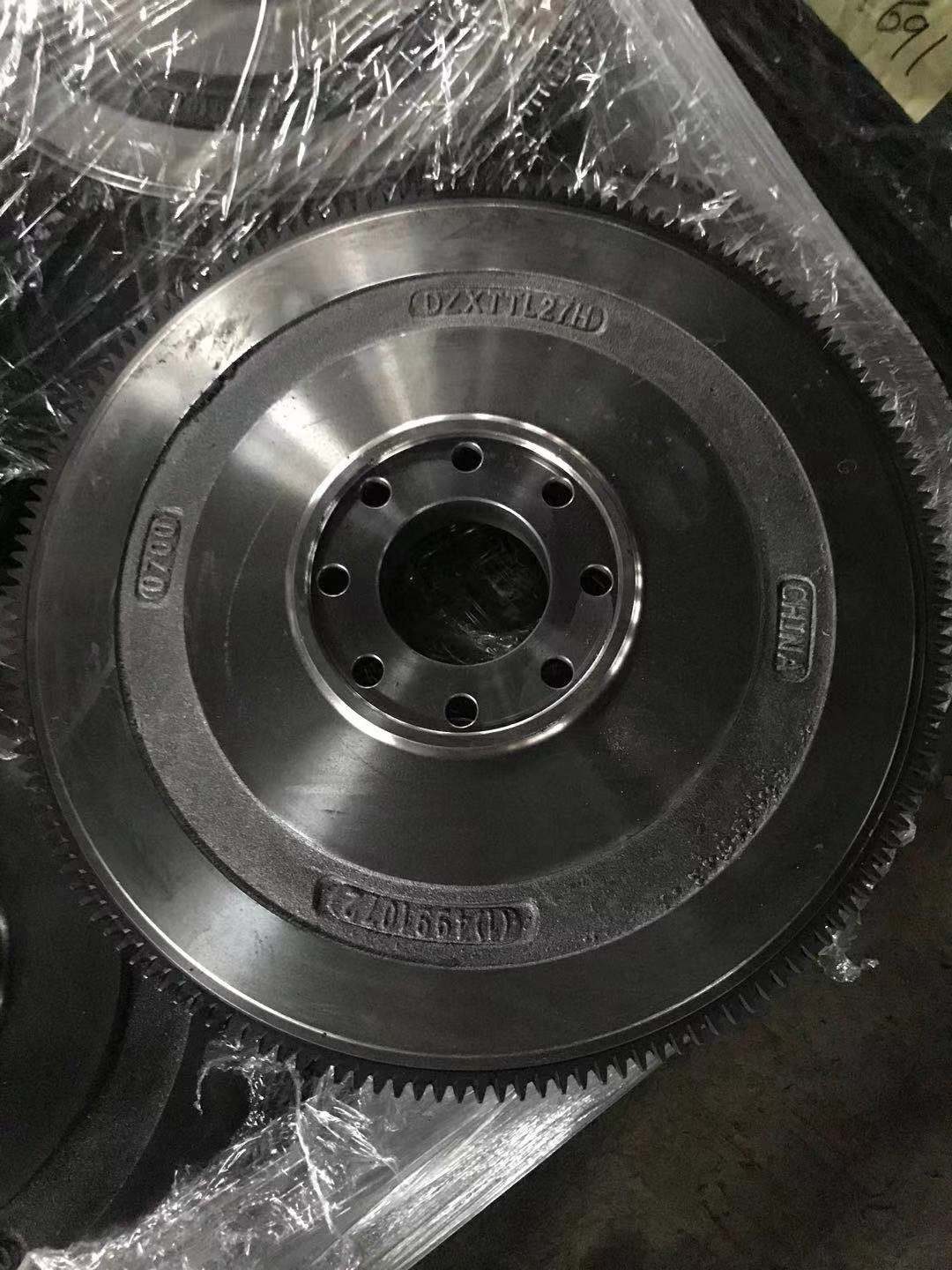
One is a separate coupler. The flywheel is made for the engine end, and a drive plate — sometimes called a coupling disc or bell plate — bolts onto the back of it. The generator connects to that plate, either through a flexible coupling or a direct flange.
The other is integrated. The coupler function is machined into the flywheel body itself, so once the flywheel is on the engine the generator mates directly to it.
The integrated version wins on two counts. Balance is done once, on a single part, with no tolerance stack between two components. And there are fewer assembly steps — the flywheel goes on, the generator mates up, and no one is fitting a drive plate and re-centring in the field.
The separate version is not inferior. Its advantage is flexibility: one flywheel body can take drive plates of different thicknesses or bolt patterns, covering several generator brands. For a maker supplying multiple brands, that keeps inventory manageable.
Which to choose depends on two things. If volumes are high, integrated pays off. If the generator brand varies, separate stays more flexible.
Why Genset Flywheels Are More Balance-Sensitive
A truck flywheel tolerates a certain amount of imbalance. The clutch disc and pressure plate slip as they transmit torque, and that absorbs some of the vibration.
A genset has no such buffer. A rigid connection means any imbalance in the flywheel travels to the generator rotor and then into its bearings. And the duty cycle is harsher: a genset often runs continuously for hours or days, instead of the stop-start, varying-speed life of a truck.
Running at constant speed for long periods turns even a small imbalance into cumulative bearing wear.
That is why genset flywheel balance grades are usually specified tighter than truck flywheel grades. It is not that the design is more sophisticated. The operating conditions force it: constant speed, long run hours, and a precision rotating machine on the far end.
When specifying for a genset, put the balance requirement in the order and ask for the balancing report. An unbalanced flywheel shows up as out-of-tolerance vibration on the whole set, and the blame usually lands on the flywheel supplier.
A Truck Flywheel Does Three Jobs, a Genset One Does Two
A truck flywheel does three things at once.
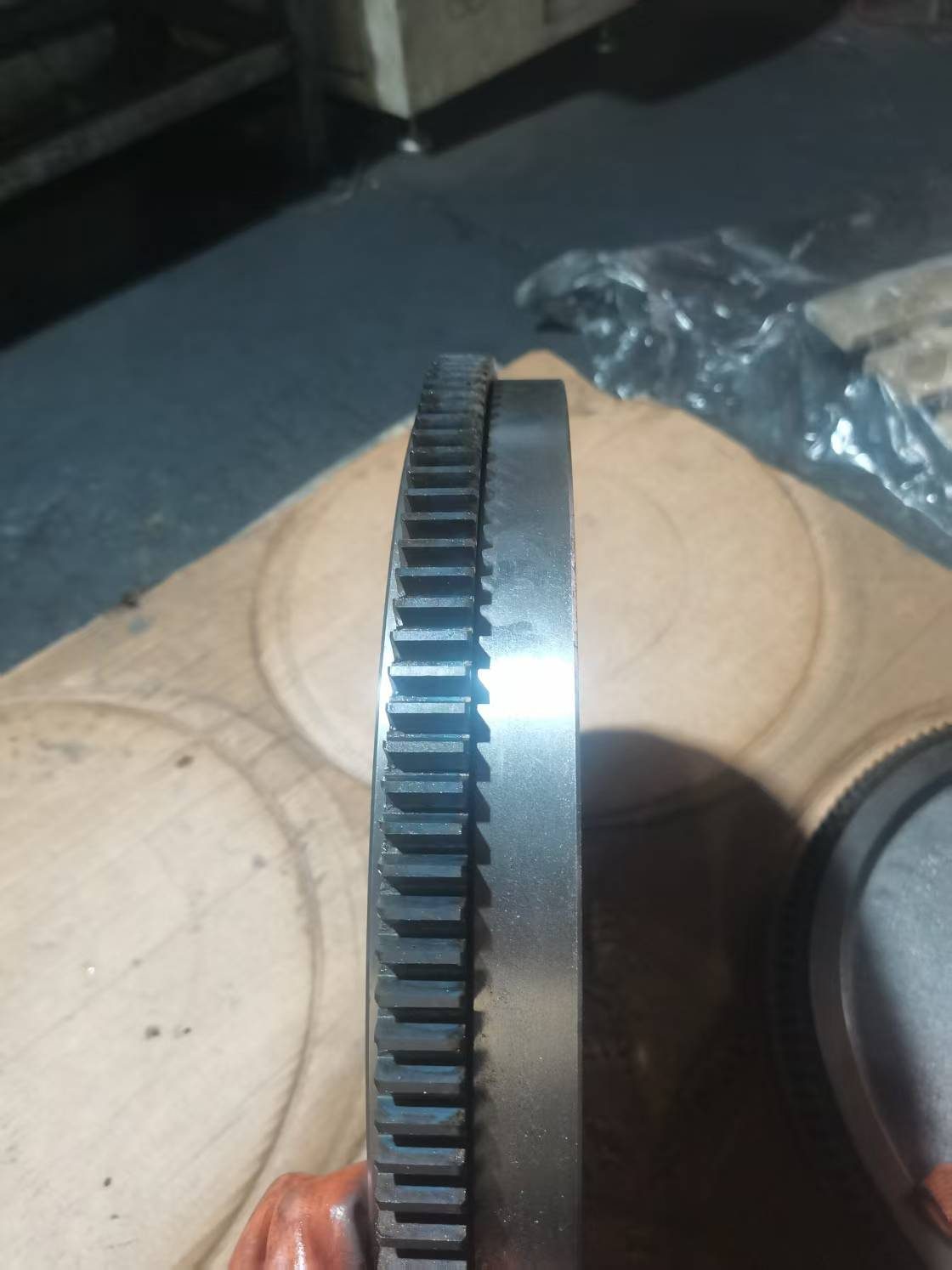
It stores energy, smoothing the torque ripple of each engine cycle. It provides a friction face for the clutch disc. And it carries the starter ring gear.
A genset flywheel keeps the first and third. The friction face is gone, because there is no clutch behind it.
In exchange, it picks up a job the truck version does not have: it is the mounting datum for the generator coupling. The runout of that face and the accuracy of its bolt pattern decide whether the generator lines up.
So when you evaluate a genset flywheel, the question is not how well the friction face was turned. It is how accurate the rear interface is.
Speed and Inertia
Diesel gensets commonly run at two speeds: 1,500 rpm in 50 Hz regions, 1,800 rpm in 60 Hz regions. Both are well below the rated speed of many truck diesel engines.
At lower speed, the same inertia stores less energy. Meanwhile the load profile is step-shaped — the moment a large motor starts, load lands on the engine instantly, speed drops, and the flywheel plus the governor have to pull it back.
That means genset flywheel inertia cannot be too small, or the speed dip and recovery time on load acceptance will fall out of spec.
There is also a torsional vibration question across the engine and generator shaft line. Flywheel inertia is one of the inputs to that calculation, and the wrong value can put a resonance inside the operating range. So a genset flywheel is not normally a truck part with a coupling bolted on. It gets re-checked against the specific set configuration.
This matters most on custom work. When a customer supplies only an engine model and a generator rating, the supplier should work back to whether the inertia is appropriate, not simply machine what the drawing shows.
What to Include in an Enquiry
Give these seven items and the quote usually lands right:
| Item | Why it is needed |
|---|---|
| Full engine model and part number | Sets the crank interface; an engine family name is not enough |
| Crank bolt hole count and spacing | If it does not bolt to the crank, nothing else matters |
| Ring gear tooth count | Determines whether the starter can turn it |
| Signal hole count and phase | Speed signal; affects control and protection |
| Integrated or separate coupling | Determines whether a drive plate is needed |
| Generator brand and coupling spec | The rear interface, critical for the separate type |
| Balance grade required | Put it in the order so it can be inspected against |
If you have the old part, attach a photo — one of the crank end and one of the rear interface. That alone removes half the back-and-forth.
One trap is worth calling out on its own. The same engine model can have a different part number and a different interface for the vehicle version and the genset version. Do not assume the flywheel interchanges just because the engine is the same. Two flywheels sharing the same last four digits can be one for a truck and one for a set, with different crank bolt arcs.
For how to read flywheel part numbers, see the Flywheel Identification Guide.
For choosing between cast iron and steel, see Cast Iron vs Steel Flywheels.
FAQ
Can a genset flywheel and a vehicle flywheel be interchanged?
Generally no. The rear interfaces are completely different: a truck flywheel ends in a pressure plate face, a genset flywheel ends in a coupling interface. Even if the crank end fits, there is nothing to bolt on behind it.
Is integrated better than a separate coupler?
It depends on volume and how many generator brands you cover. Integrated means balancing once and fewer assembly steps, which suits higher volumes and a fixed generator brand. A separate coupler adapts to different generators by changing the plate, which suits multi-brand work or low volumes per model. Neither is universally better.
Why does a genset flywheel care more about balance than appearance?
Because it drives a precision rotating machine at constant speed for long periods. Appearance does not affect operation, but imbalance crosses the rigid connection into the generator bearings and accumulates into vibration and wear.
What does a supplier need for a custom genset flywheel?
Full engine model and part number, crank bolt hole count and spacing, ring gear tooth count, signal hole count and phase, generator brand and coupling spec, and the required balance grade. Old part photos help.
There is vibration after fitting. Is it always the flywheel?
Not necessarily. Work through it in order: whether the flywheel itself balances within spec, whether the coupling is aligned, whether the engine and generator bases are coplanar, and whether the anti-vibration mounts have aged. In a rigid system any one of these shows up as whole-set vibration. That said, if the flywheel left the factory out of balance, the symptom is usually vibration that keeps rising with speed and does not change with load.
If the coupler is a separate part, does it need to be balanced with the flywheel?
Yes. Balancing only the flywheel leaves the assembly potentially out of balance once the plate is fitted. The correct approach is to balance flywheel and coupler as one assembly, or to control each so the sum stays within spec. Confirm this with the supplier at the order stage.
About Changwei
Changwei Intelligent Equipment (Changchai Power) is an IATF 16949 certified iron foundry in Wangke Industrial Zone, Changyi, Weifang, Shandong. We make cast iron engine components: flywheels, ring gears, flywheel housings, timing gear housings, cylinder blocks and heads, and transmission housings.
Our flywheel range covers Cummins, Weichai and Yuchai power assemblies, in both vehicle and construction machinery versions. We work to drawing or sample, including genset coupling arrangements. Pattern making, casting and precision machining are done in house. Port of loading is Qingdao.
If you have a genset project, send the engine model and generator rating and we will check the inertia before quoting.
- Email: [email protected]
- Phone / WeChat / WhatsApp: +86 19953662121
- Factory: Wangke Industrial Zone, Changyi, Weifang, Shandong, China
- Website: changweiintl.com
- Request a quote