
Mercedes Truck Flywheel Part Numbers: 158 vs 160 Teeth
Six flywheels stand on one pallet in our warehouse. All of them are close to 430 mm across. Four of them take a 475 mm pressure plate on a 450 mm bolt circle. On paper, one of those four is quoted with two different tooth counts, by two sets of catalogues, for the same part number.
That last sentence is the reason this article exists. The numbers in the trade are not always clean, and a buyer who trusts a single line of catalogue data can order a part that bolts on and still does not work.
This article puts six Mercedes truck flywheel numbers side by side, uses catalogue dimensions for the numbers, and uses our own photographs for the shapes. Where the catalogues disagree, we say so and do not pick a winner.
Table of Contents
- Why Six Flywheels Look the Same
- The Three Interfaces That Decide Fitment
- The Six Numbers Side by Side
- Where the Catalogues Disagree
- The Hub Is the First Gate
- One Number, Two Tooth Counts
- Three Numbers Behind a MAN Label
- What the Photographs Show
- How to Order One of These
- Questions Buyers Ask
- Sources and Evidence Level
- Send the Hub Photo
Why Six Flywheels Look the Same
A flywheel is a disc with a toothed ring around it. Every one of the six parts below answers that description. Six bolts, a clutch and a starter all land on faces that look the same from two metres away.
The differences live in three places, and all three are small. The bolt circle on the crankshaft flange. The bore that centres the part on the crank. The tooth count on the ring.
A 10 mm difference in bolt circle kills the fit. A two-tooth difference in the ring kills the starter. Neither difference is visible in a photograph taken at a normal distance, and neither shows up in a one-line part description.
The Three Interfaces That Decide Fitment
Every flywheel meets the rest of the truck in three places, and each one can fail on its own.
The crankshaft flange takes the drive. What matters is the number of bolts, the diameter of the circle they sit on, and the bore that centres the part. Get any of those wrong and the flywheel will not go on at all, which is at least an honest failure.
The clutch cover takes the friction load. What matters is the cover bolt circle and the cover diameter. Get this wrong and the flywheel bolts to the crank, but the clutch will not sit on it.
The starter ring takes the cranking load. What matters is the tooth count and the tooth pitch. Get this wrong and everything assembles, the engine turns over badly or not at all, and the damage shows up on the ring teeth rather than on the invoice.
A part can match on two of the three and still be the wrong part. That is why a number-only check and a photo-only check both fail, and why the check has to cover all three.
The Six Numbers Side by Side
The table below uses published catalogue dimensions. The last column names the catalogue articles the figures come from, so you can check any line yourself.
| Mercedes number | Teeth | Outer diameter | Hub bore | Hub bolt circle | Clutch cover circle | Pressure plate | Weight | Catalogue source |
|---|---|---|---|---|---|---|---|---|
| 355 030 13 05 | 154 | 455 mm | 15 mm | 12 bolts on 125 mm | 410 mm | 435.5 mm | 40.4 kg | febi 17167, KAWE V6022N, AUGER 58383 |
| 376 030 13 05 | 133 | 404 mm | hub bore 78 mm | 8 holes on 105 mm | 395 mm | 395 mm | 24.8 kg | PE 010.585-00A, AUGER 58404, DT 4.61107 |
| 403 030 14 05 | 158 or 160, disputed | 486 mm over the ring | 17.0 to 17.1 mm | 10 bolts on 88 mm | 450 mm | 475 mm | 32.4 to 33.3 kg | KAWE V6003N, TRUCKTEC 01.11.028, BF 20090340301, febi 06057 |
| 442 030 02 05 | 160 | 432 mm disc, 485 mm over the ring | 17.0 to 17.2 mm | 10 bolts on 88 mm | 450 mm | 475 mm | 31.4 to 33.2 kg | febi 06055, DT 4.61239, SAMPA 203.065 |
| 442 030 19 05 | 160 | 452.5 mm disc, 475 mm over the ring | 17.0 to 17.1 mm | 10 bolts on 88 mm | 450 mm | 475 mm | 31.6 kg | febi 10133, bigspareparts A4420301905 |
| 541 030 01 05 | 160 | 430 mm nominal, 487 mm over the ring | 16.5 to 17.0 mm | 10 bolts on 88 mm | 450 mm | 475 mm | 30.5 to 34.0 kg | febi 17176, AUGER 58395, KAWE V6010N |
Read the middle of that table and the shape of the problem appears. Four numbers share the same crankshaft bolt circle, the same hub bore and the same clutch cover circle. On those four, the mounting interface gives you almost nothing to separate them. The number on the part is what separates them.
Read the top of the table and a second problem appears. The 355 number is not part of that group at all. It uses twelve bolts on a 125 mm circle with 15 mm bores, and a smaller 410 mm cover.
Where the Catalogues Disagree
Three lines in the table above are not clean, and a buyer should know which ones.
The 403 number is the worst case, and it gets its own section below. Two sets of figures circulate for it, one saying 158 teeth and one saying 160.
The 376 number has a different problem. Three parts catalogues describe it as 133 teeth on a 404 mm body. A trading listing for the same number describes a 430 mm body with 160 teeth and calls it an OM457 flywheel. Both descriptions cannot be right. We are not going to choose between them, because we have not measured the part. If you need this number, measure the one you are replacing.
The 541 number is a measuring argument rather than a real conflict. One catalogue gives 487 mm, two others give 430 mm nominal with 487 mm over the ring. The 430 mm figure is the clutch nominal diameter, the 487 mm figure is the outside of the teeth.
The weights move by up to 3.5 kg between catalogues for the same number. FeBI lists 31.41 kg for the 442 030 02 05, DT lists 31.7 kg and SAMPA lists 33 kg. Some of that is whether the ring gear is included, some is scale tolerance, some is a copied figure. Weight is a coarse filter, not an identity check.
The Hub Is the First Gate
Start with the crankshaft side, because it is the only interface that cannot be worked around.
The 355 030 13 05 is drilled for twelve bolts on a 125 mm circle. The other five numbers in this group are drilled for ten bolts on an 88 mm circle. Those two patterns do not overlap. No adapter, no re-drill, no argument at the counter changes it.
There is a second, smaller check on the same face. The bore on the 355 number is 15 mm. The bore on the 442 and 541 numbers is around 17 mm. A 2 mm difference in the centring bore is enough to make a part sit off-centre, and an off-centre flywheel shows up later as runout at the clutch face rather than as a bad fit at the bolts.
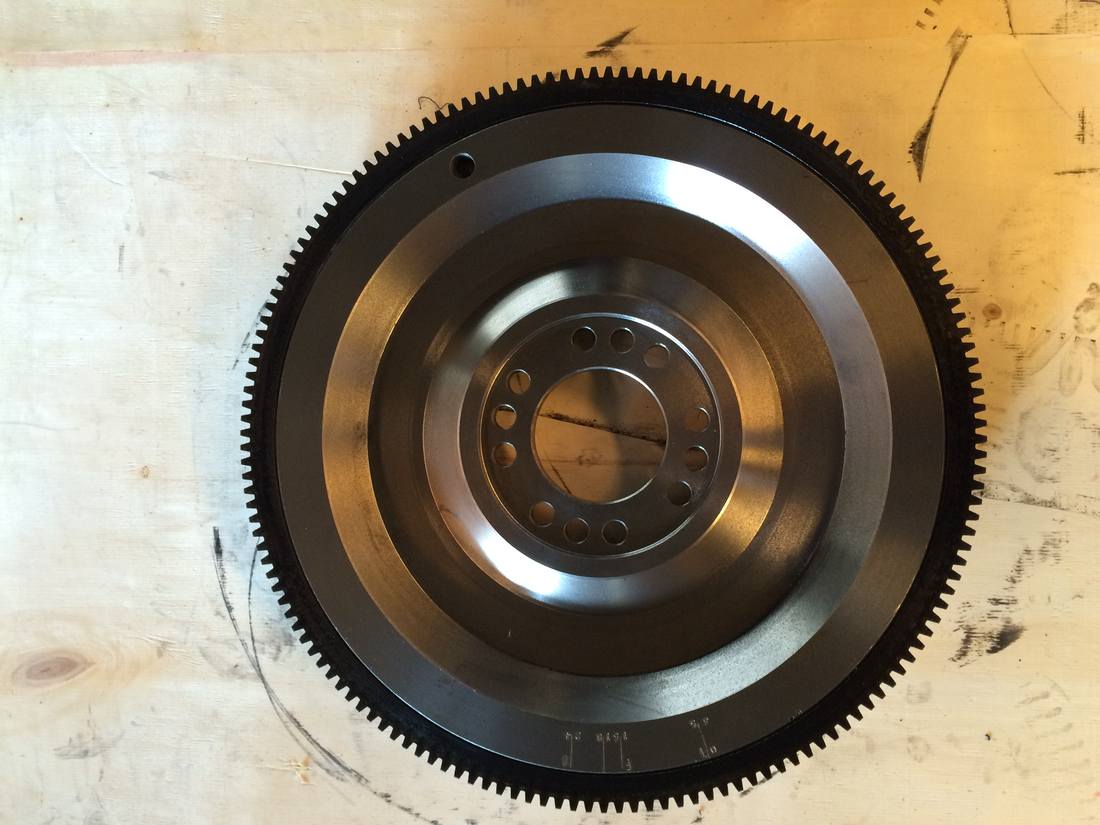
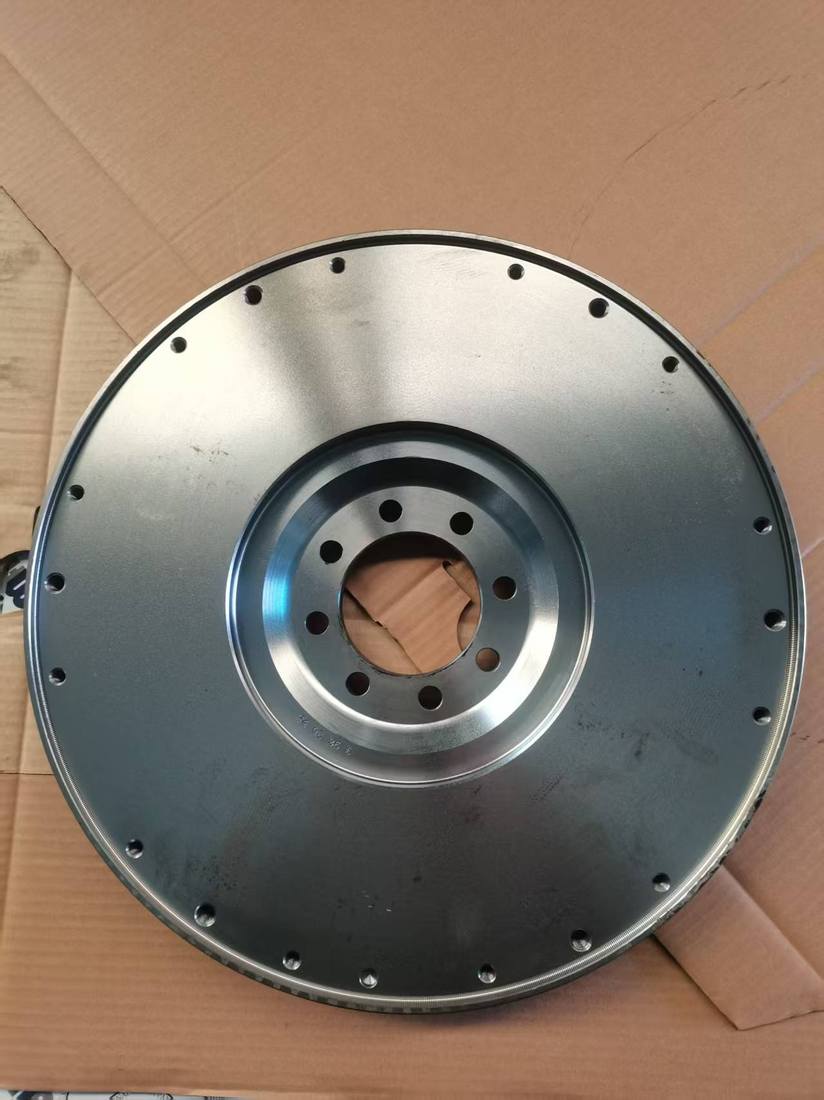
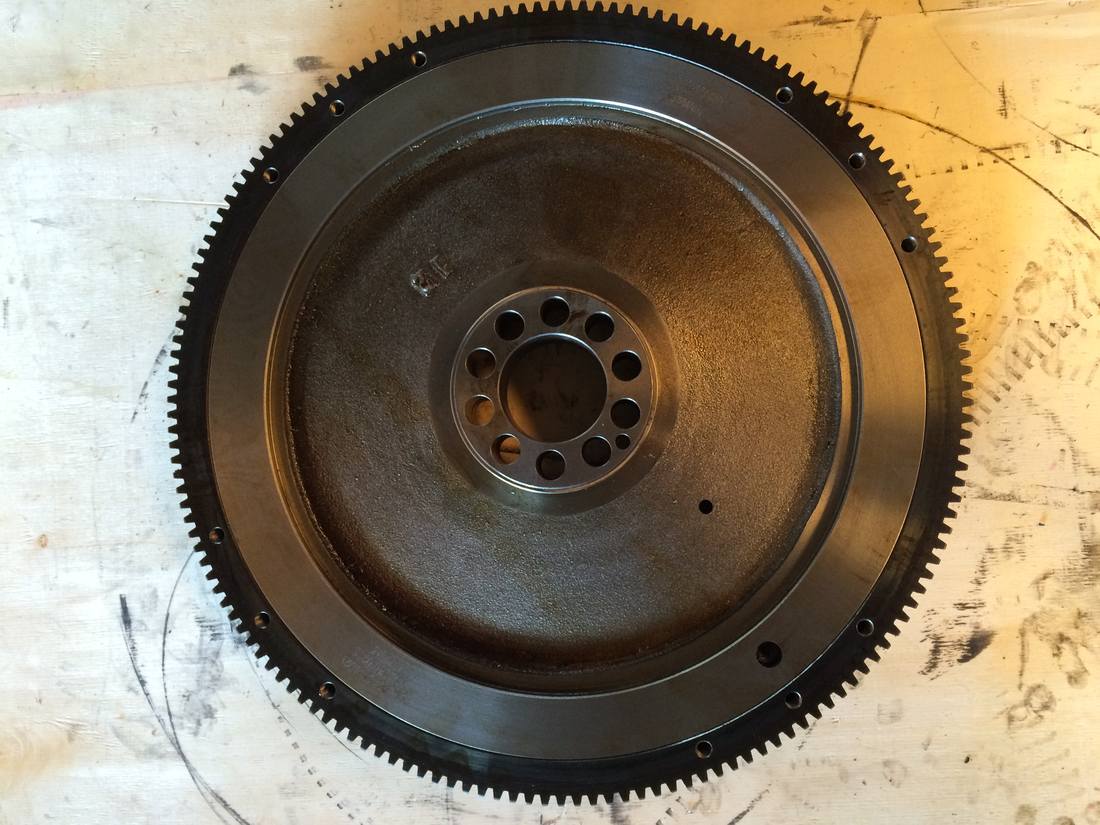
The photographs make this check easy. Turn the part over, photograph the hub straight on, and count the holes. Ten or twelve is visible in any phone picture.
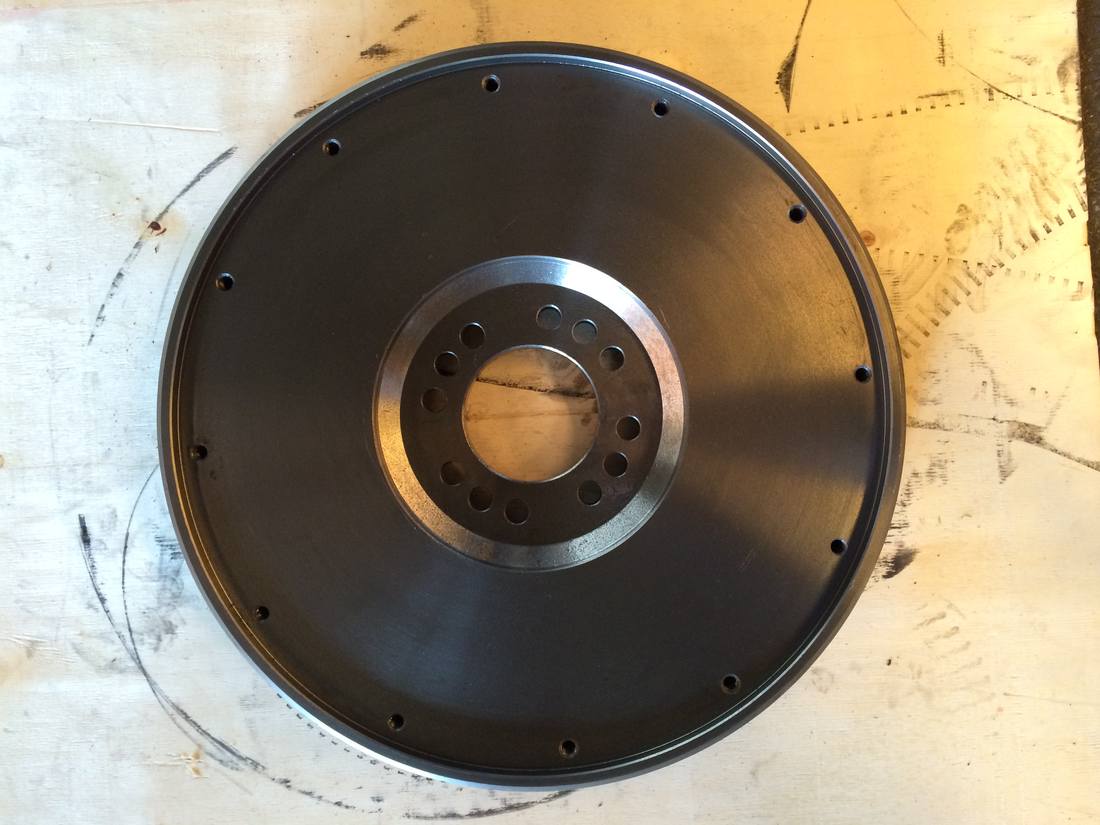
442 series flywheels share the same ten-hole pattern on the same 88 mm circle. Side by side with the 355 part, the difference is the count, not the look.
One Number, Two Tooth Counts
The 403 030 14 05 is quoted with 158 teeth in one set of listings and 160 teeth in another. Both sets point at the same febi article, 06057, and both quote the same 450 mm cover circle and the same 475 mm cover.
That is not a difference between two parts. That is a difference between two databases. And it is the single most expensive kind of error in this trade, because the buyer cannot see it. He reads one line, orders, and finds out at the starter.
So we do not print 158 as a fact, and we do not print 160 as a fact either. What we can say is this. Independent brands that build their own catalogue entry for this number — KAWE under V6003N, TRUCKTEC under 01.11.028, BF under 20090340301 — all give 160 teeth. Several resellers of the febi sheet give 158. Our own earlier note on this family recorded 160.
Four sources do not outweigh one another by vote, but the balance is clear enough to warn you: do not order this number on a tooth count you read on a website, ours included.
What stays true regardless of which figure wins is the reason the count matters. A two-tooth error on a ring of about 160 is a little over one percent of the circumference. The starter pinion still reaches the teeth. It just reaches them at the wrong depth. A pinion set for 160 against a 158 ring engages slightly deep and the noise starts on the drive side. A pinion set for 158 against a 160 ring engages shallow, wears the tips and chews the front edge of the ring. In both cases the flywheel is blamed first and the starter second, and the cause is the number.
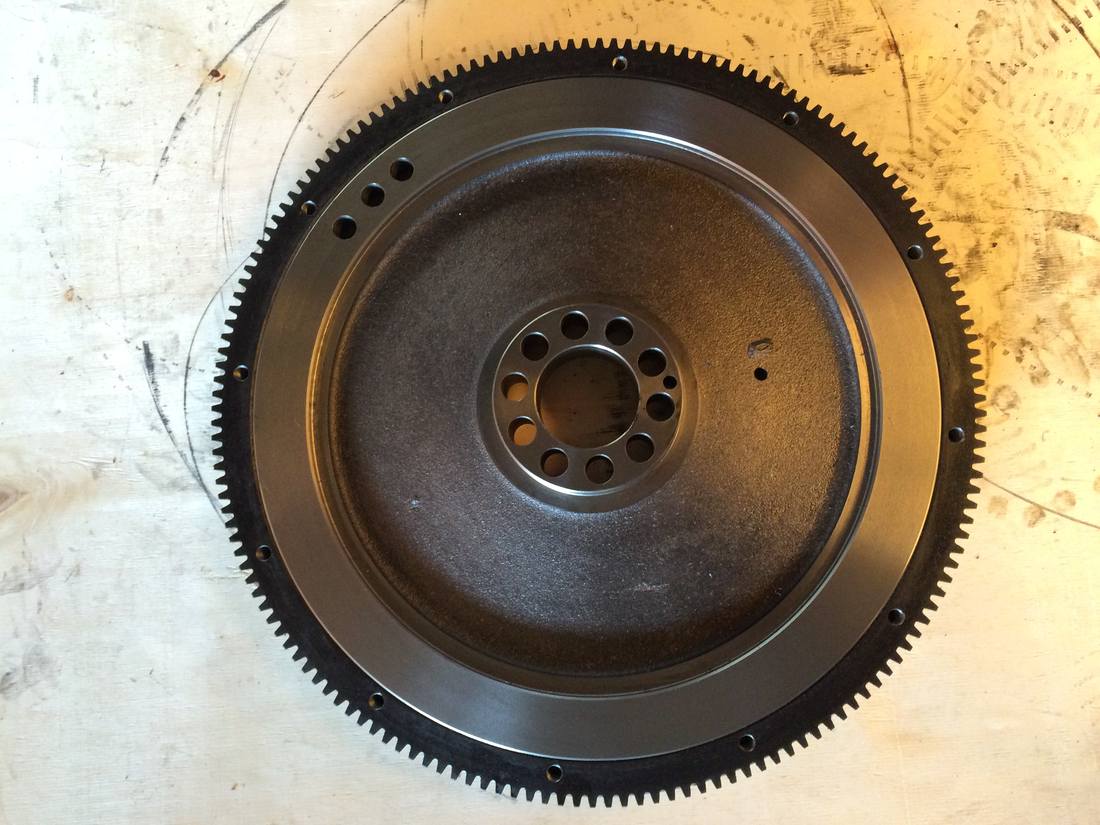
Counting is not difficult and does not need a gauge. Start at any tooth, mark every tenth tooth with chalk or a paint pen, go once around to the start, and add the remainder. Two parts that differ by two teeth show it on the first lap.
Three Numbers Behind a MAN Label
The same casting is sold under more than one brand, and the catalogue cross-references prove it.
The 442 030 02 05 is cross-referenced to MAN 51.02301.5034, 51.02301.5068, 51.02301.7387, 51.02301.7411 and 51.02301.7414, and to Neoplan 51.02301.7414. The 403 030 14 05 is cross-referenced to MAN 51.02301.7300, 51.02301.7307, 51.02301.0300, 51.02301.0307, 51.02301.5002, 51.02301.7293, 51.02301.7326, 51.02301.7333 and 51.02301.7335.
A MAN box can therefore hold a part with a Mercedes number cast or lasered on it. This matters in two directions. A buyer shopping by brand may pay a premium for the same part. A buyer who finds a MAN number on a used part and cannot match it may conclude the part is unavailable, when the Mercedes number is in every catalogue.
The vehicle lists point the same way. The 442 030 02 05 is listed for Mercedes NG, SK, O 303, O 304, O 330, O 340, O 403 and O 404, and for MAN F90, F2000 and M90. The 541 030 01 05 is listed for Actros and for Setra Series 400 coaches. The 403 030 14 05 appears against NG 1222 as well as MAN F8 and ERF applications. The 355 030 13 05 is listed for the T2/L 2624 chassis.
What the Photographs Show
Our photographs do not carry readable numbers, so treat them as shape evidence only. They were taken in our own warehouse, on the parts we stock.
What they do show is how much the four “same” parts differ once the light is right.
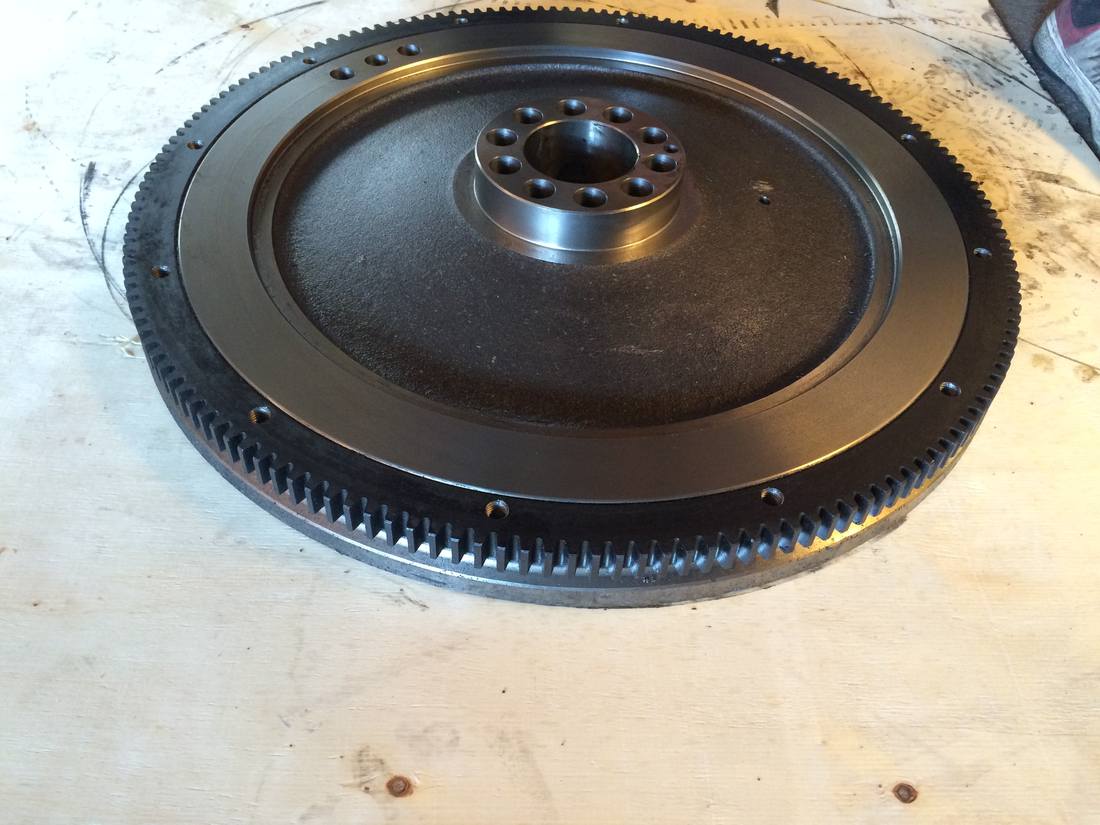
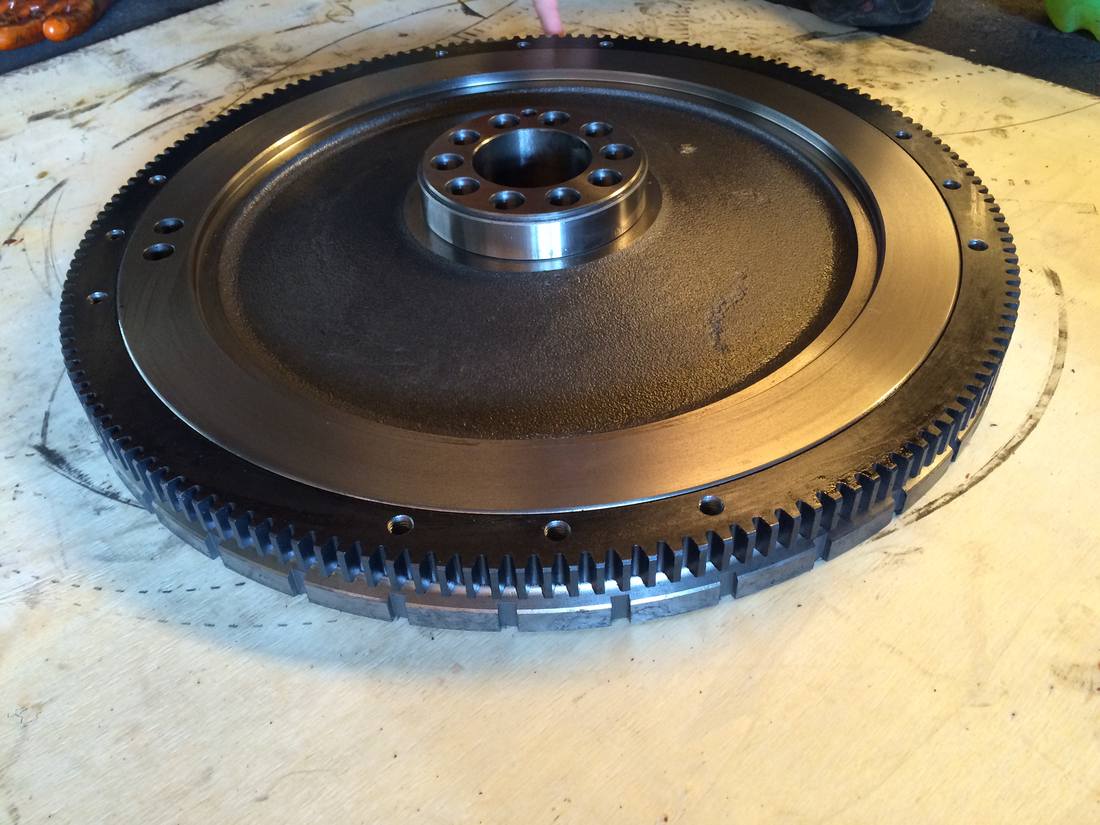
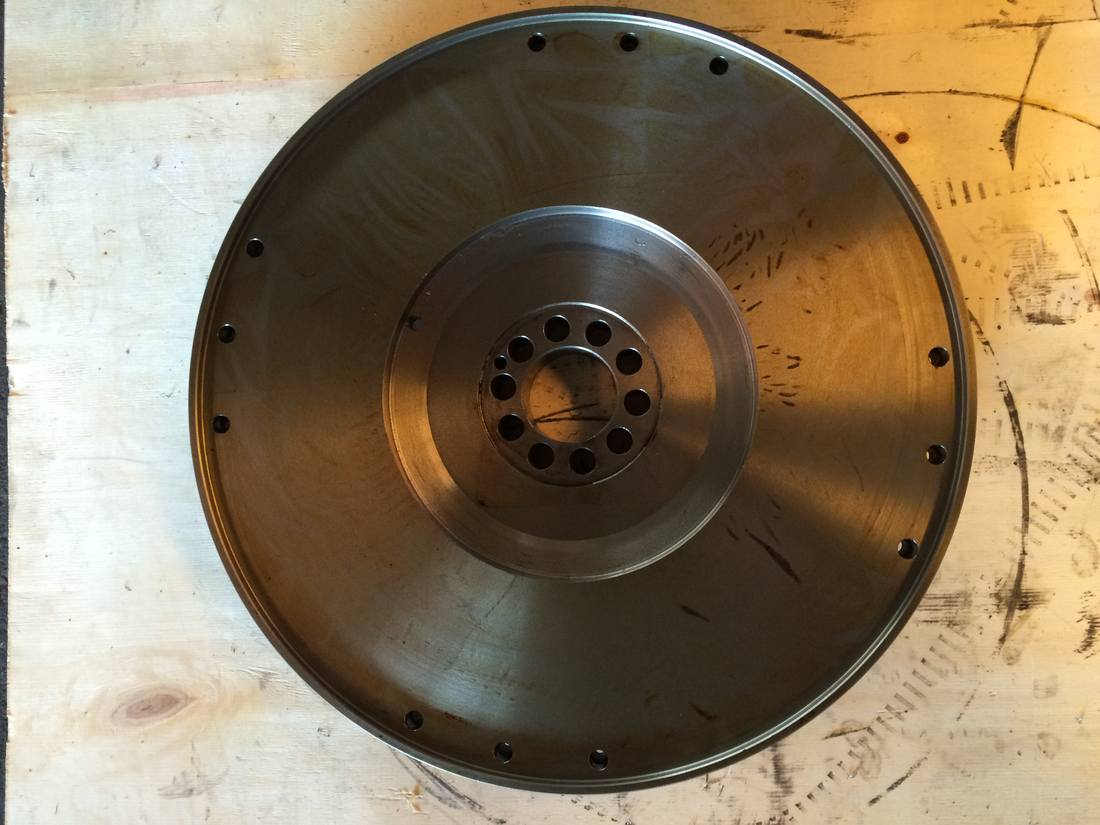
The 403 030 14 05 carries a taller hub boss than the 442 numbers. Put the two reverse sides next to each other and the difference is visible without a caliper, which is useful, because the catalogue figures for this number are exactly the ones we have just told you not to trust.
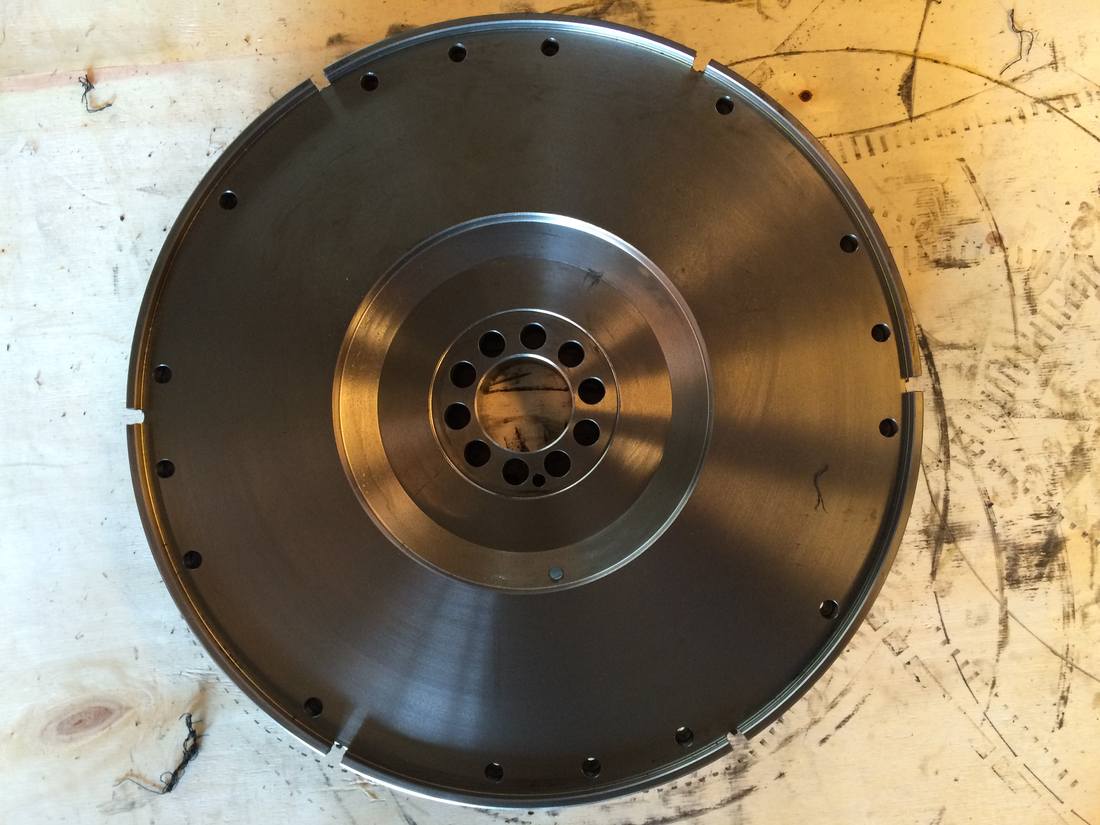
The 442 030 19 05 shows small holes near the rim on the reverse side. The febi listing gives six EDC bores or notches for this number, which is the pattern an engine speed sensor reads. A part without them will run, but the tachograph and the engine ECU will not see the crank.
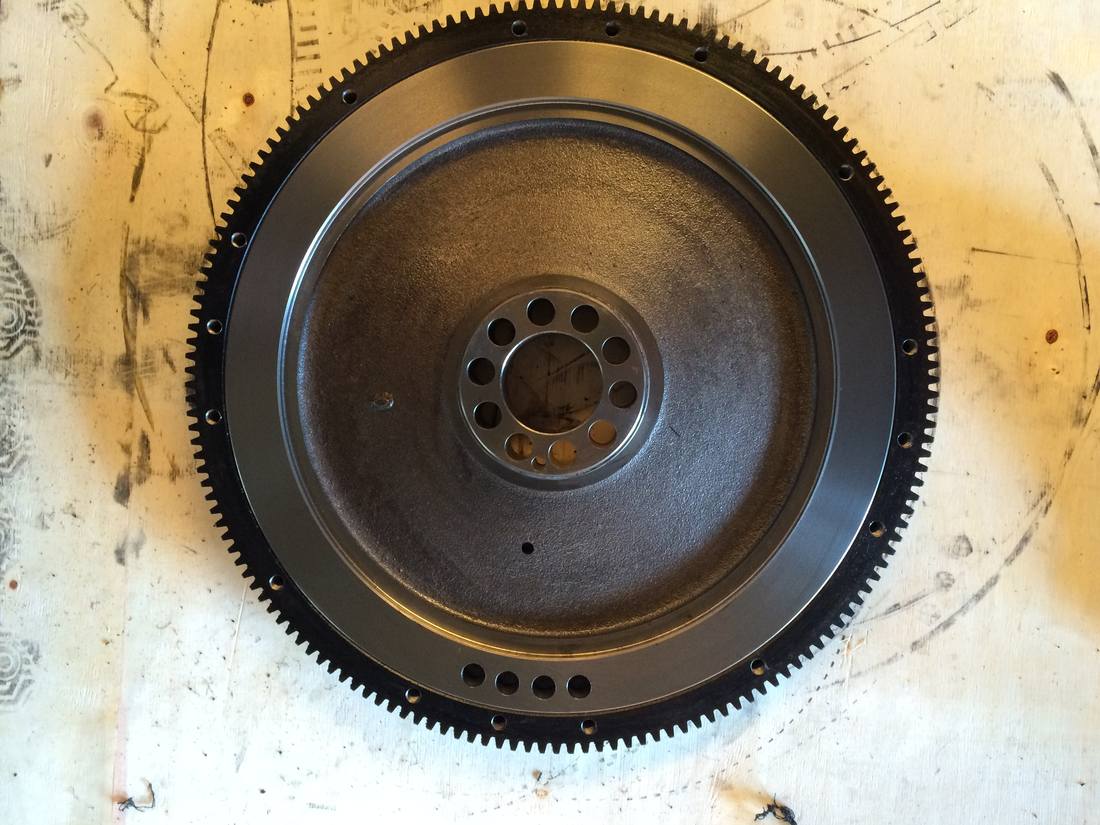
The 541 030 01 05 looks like a 442 part until you put it beside one. The dish is shallower, the ring sits at a different height, and the weight is a kilogram or two lower in most catalogues.
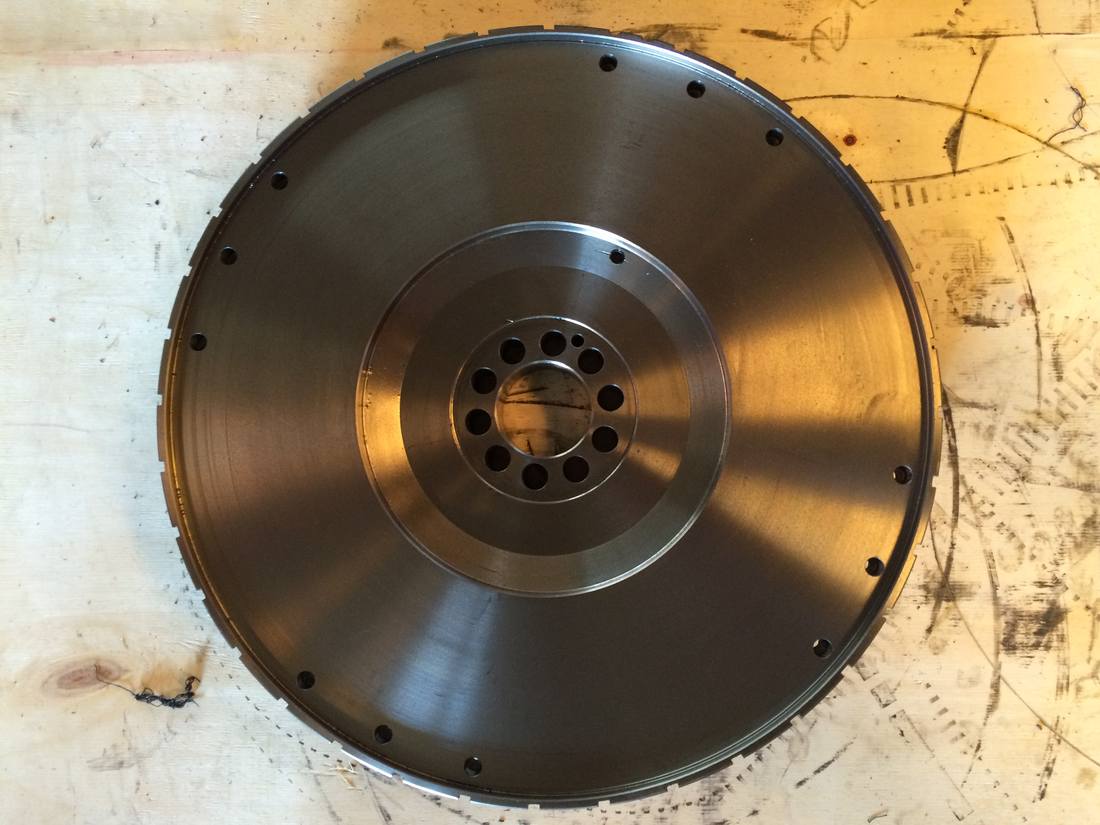
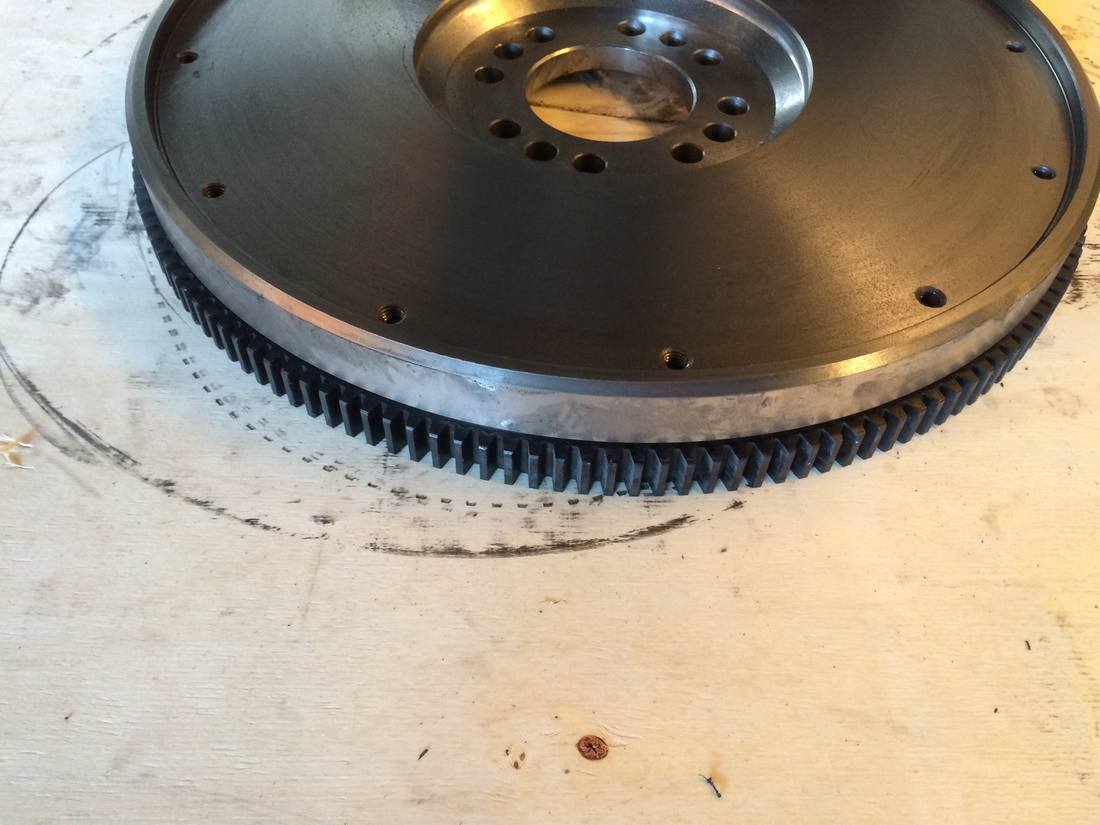
The 355 030 13 05 is the heavy one. At 40 kg in one catalogue it is the heaviest of the six, and the side view shows why: a thick disc, a tall hub and a wide friction band.
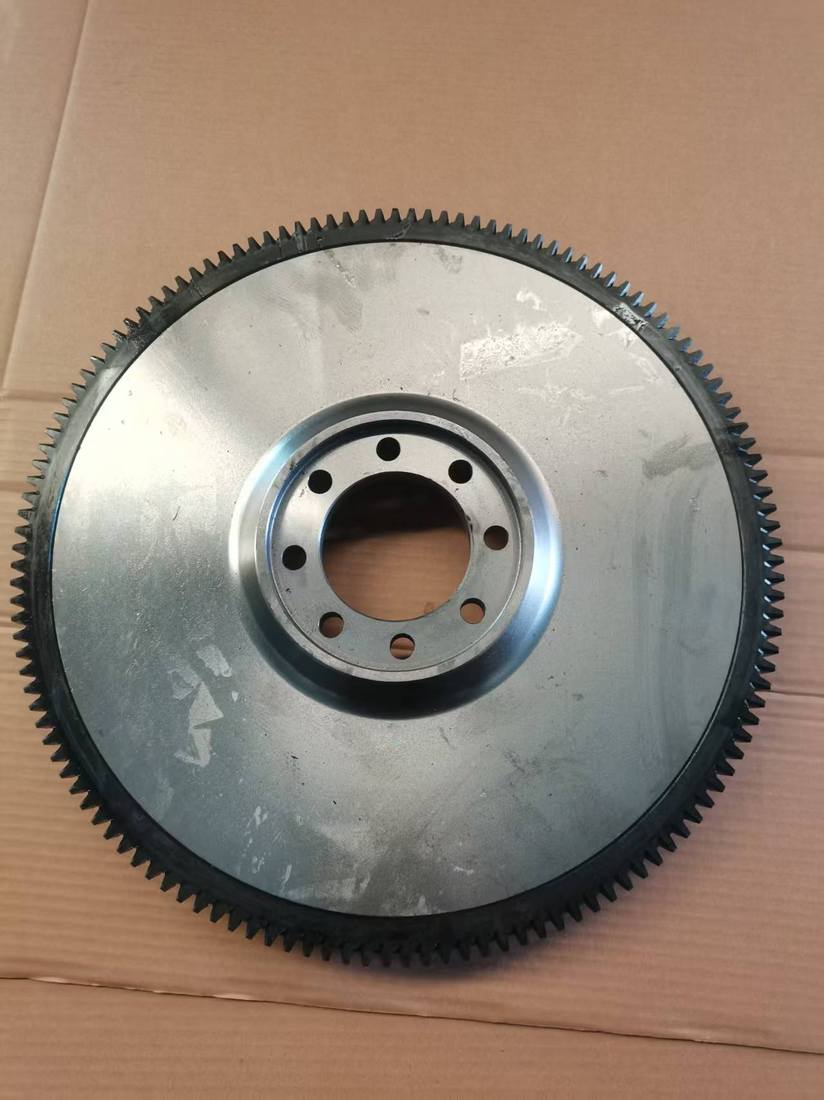
The 376 030 13 05 is the small one in this group. A 404 mm body, a 395 mm cover and 24.8 kg put it in a different class from the 40 kg 355 number, and it is visibly lighter in the hand.
How to Order One of These
Four pieces of information close almost every case.
The number off the old part, read from the part and not from the box. The engine number or the vehicle model and year. A photograph of the reverse side, taken straight on so the hub bolt circle can be counted. The clutch cover diameter, which is usually stamped on the cover.
| What you send | What it settles |
|---|---|
| Number from the old flywheel | Which of the six numbers you are replacing |
| Reverse-side photo, straight on | Ten bolts or twelve, and the bore size |
| Engine or vehicle model and year | Which vehicle list the number belongs to |
| Clutch cover diameter | Whether the 410 mm or the 450 mm family applies |
| Tooth count, if the ring is worn | 133, 154 or 160, counted on your part |
Two things a number alone will not tell you: whether the ring gear on your part is the original one, and whether the flywheel has already been resurfaced. Both change what you should order.
Questions Buyers Ask
Will a 442 030 02 05 replace a 442 030 19 05
In the catalogue they share the hub bolt circle, the 450 mm cover circle and the 475 mm cover, which makes them look interchangeable. The febi listing separates them into two articles, and the 19 05 number carries six EDC notches that the 02 05 listing does not mention. Treat them as two numbers and confirm the sensor pattern on the reverse side before substituting.
Does the 403 030 14 05 have 158 or 160 teeth
We do not know, and we will not pretend to. Two sets of catalogue figures circulate for the same febi article. The independent brands we could check give 160. Either way, this is a number to count on the part in your hand before you commit to a starter.
Can I use a MAN number for a Mercedes flywheel
Often yes, and the catalogue cross-references are the place to check. The 442 030 02 05 and the MAN 51.02301.7387 family point at the same replacement article. Confirm the number against the cross-reference before you buy, and confirm the hub pattern on arrival.
Why do catalogues list different weights
Because they measure different things. Some figures include the ring gear, some do not, and some are copied from a competitor’s sheet. A 3 kg spread on a 31 kg part is normal in this trade, so weight is a rough check rather than proof of identity.
What are the six EDC notches
Small holes or notches near the rim that an engine speed sensor counts. The febi listing gives six for the 442 030 19 05. A flywheel without them fits mechanically and leaves the ECU without a crank signal.
Is the ring gear sold separately
For this family it usually is, and one catalogue sells the 442 030 02 05 as a set with two ring gear part numbers. If the friction face is still within limits, replacing the ring alone is a legitimate repair, provided the interference fit is done properly.
Sources and Evidence Level
| Claim | Source | Level |
|---|---|---|
| 355 030 13 05 is 154 teeth, 455 mm, 12 hub bolts on 125 mm, 410 mm cover | febi 17167, KAWE V6022N, AUGER 58383 | three catalogues, agree |
| 376 030 13 05 is 133 teeth, 404 mm, 8 holes on 105 mm, 395 mm cover | PE 010.585-00A, AUGER 58404, DT 4.61107 | three catalogues, agree |
| 376 030 13 05 also listed as 160 teeth and 430 mm | one trading listing | single source, conflicts with catalogues |
| 403 030 14 05 is 160 teeth, 450 mm cover, 10 bolts on 88 mm, 486 mm over the ring | KAWE V6003N, TRUCKTEC 01.11.028, BF 20090340301, febi 06057 via spareto and carparts247 | four sources, agree |
| 403 030 14 05 is 158 teeth with a 130 mm hub | febi 06057 via autodoc, onlinecarparts, kmotorshop, ak24parts | one datasheet, mirrored by resellers, conflicts |
| 442 030 02 05 is 160 teeth, 450 mm cover, 10 bolts on 88 mm | febi 06055, DT 4.61239, SAMPA 203.065, spareto | four sources, agree |
| 442 030 19 05 is 160 teeth with 6 EDC notches, 475 mm cover | febi 10133, bigspareparts A4420301905 | two sources, agree |
| 541 030 01 05 is 160 teeth, 430 mm nominal, 487 mm over the ring | febi 17176, AUGER 58395, KAWE V6010N | three catalogues, agree |
| 442 030 02 05 cross-references to five MAN numbers and one Neoplan number | spareto cross-reference list | catalogue cross-reference |
| 403 030 14 05 cross-references to nine MAN numbers | febi 06057 cross-reference list | catalogue cross-reference |
| Vehicle applications for each number | febi, spareto, ak24parts vehicle lists | catalogue vehicle lists |
| Weights differ by up to 3.5 kg between catalogues | same catalogues compared line by line | our own comparison |
| Photographs of the six flywheels | our own warehouse, parts we stock | first hand |
Two honesty notes. The numbers attached to our photographs come from our stock records, not from a cast or lasered number that we could read in the pictures. And the tooth counts and dimensions above are catalogue values, not figures we measured on our own parts. If a customer needs a measured value, we measure the part and send the reading. The 403 tooth count is the clearest example of why that matters: the catalogues do not agree with each other, so only a count on the part ends the argument.
Send the Hub Photo
If the number on the old part is gone, the reverse side photograph does most of the work. Hub bolt circle, bore, ring gear and cover circle are all visible in one phone picture taken straight on.
Browse the range on the product overview, compare the ring gear side on flywheel ring gear teeth counts, check the hub measuring method on flywheel bolt circle and PCD, or send your number and photo to the quotation desk.
We reply with the number we can match, the dimensions we can confirm, and the points we still need from you.
Related reading: Mercedes 906 030 flywheel numbers for the medium-duty 133 and 146 tooth family, and the European truck flywheel number chart for MAN, Scania, Volvo and DAF.