
Euro Truck Flywheel Part Numbers: MAN, Mercedes, Scania, Volvo
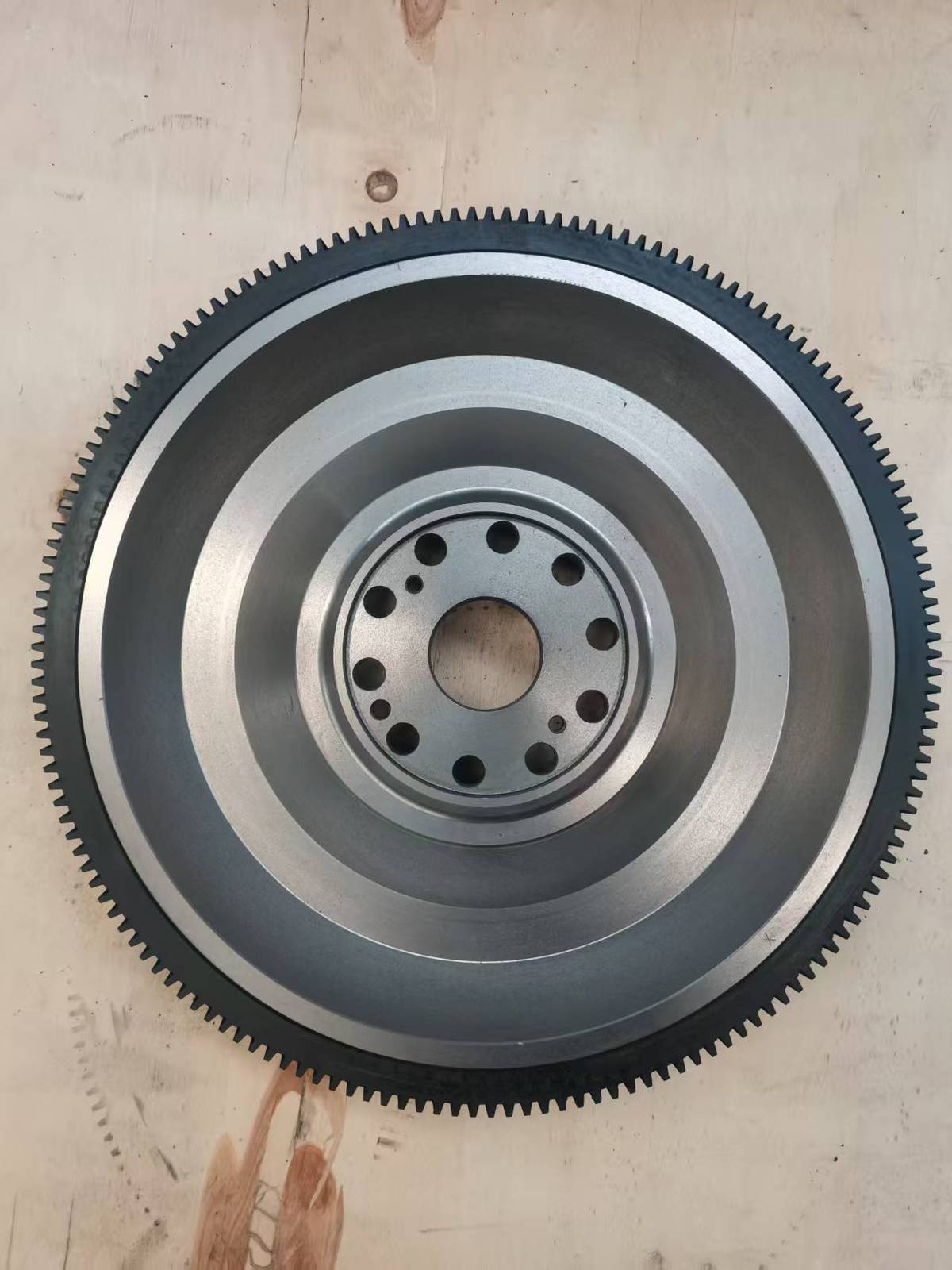
European Truck Flywheel Part Numbers: MAN, Mercedes, Scania, Volvo and DAF Compared
If you work with European trucks, you already know the problem. A Mercedes flywheel and a MAN flywheel can share the same 430 mm diameter and the same 160 teeth, and still be two completely different parts. The number on the catalogue page tells you almost nothing until you line it up against the flange.
This page collects the part numbers we actually build and ship for the five big European truck families: MAN, Mercedes-Benz, Scania, Volvo and DAF. For each one you get the reference number, the diameter, the ring gear teeth and the mounting holes, in one table you can check against.
One thing up front. European heavy truck flywheels run a different teeth standard from Japanese trucks. Where a Hino or Nissan flywheel sits around 129 to 145 teeth, the European trucks cluster at 160. Scania is the outlier at 158. If you are switching a truck from one platform to another, the teeth count alone will tell you the parts are not interchangeable.
Table of Contents
- Why European flywheel numbers are harder than they look
- The MAN flywheel number range
- The Mercedes-Benz flywheel number range
- The Scania flywheel number range
- The Volvo flywheel number range
- The DAF flywheel range
- The master comparison table
- The traps that cost people a month
- What we need from you to quote correctly
- Frequently asked questions
Why European Flywheel Numbers Are Harder Than They Look
Three things make the European numbers harder to read than the Japanese ones.
The first is that the diameter you see quoted is not always the diameter you measure. A flywheel listed as 430 mm usually refers to the clutch contact diameter, not the full outside edge. Put a tape across the same part and you may read 475 mm, or 487 mm, or 480 mm. All of those numbers are correct, because they describe different circles on the same casting.
The second is that a single number can cover several engines. European truck makers built the same flywheel for a whole range of engine models, so one part number may fit a dozen trucks across ten years.
The third is the sensor ring. From roughly the Euro 3 generation onward, flywheels carry a ring of timing notches, called EDC bores or sensor holes, that the engine control unit reads. A flywheel with 58 sensor notches and one without are not interchangeable, and the difference is invisible in a photo unless you know to look for it.
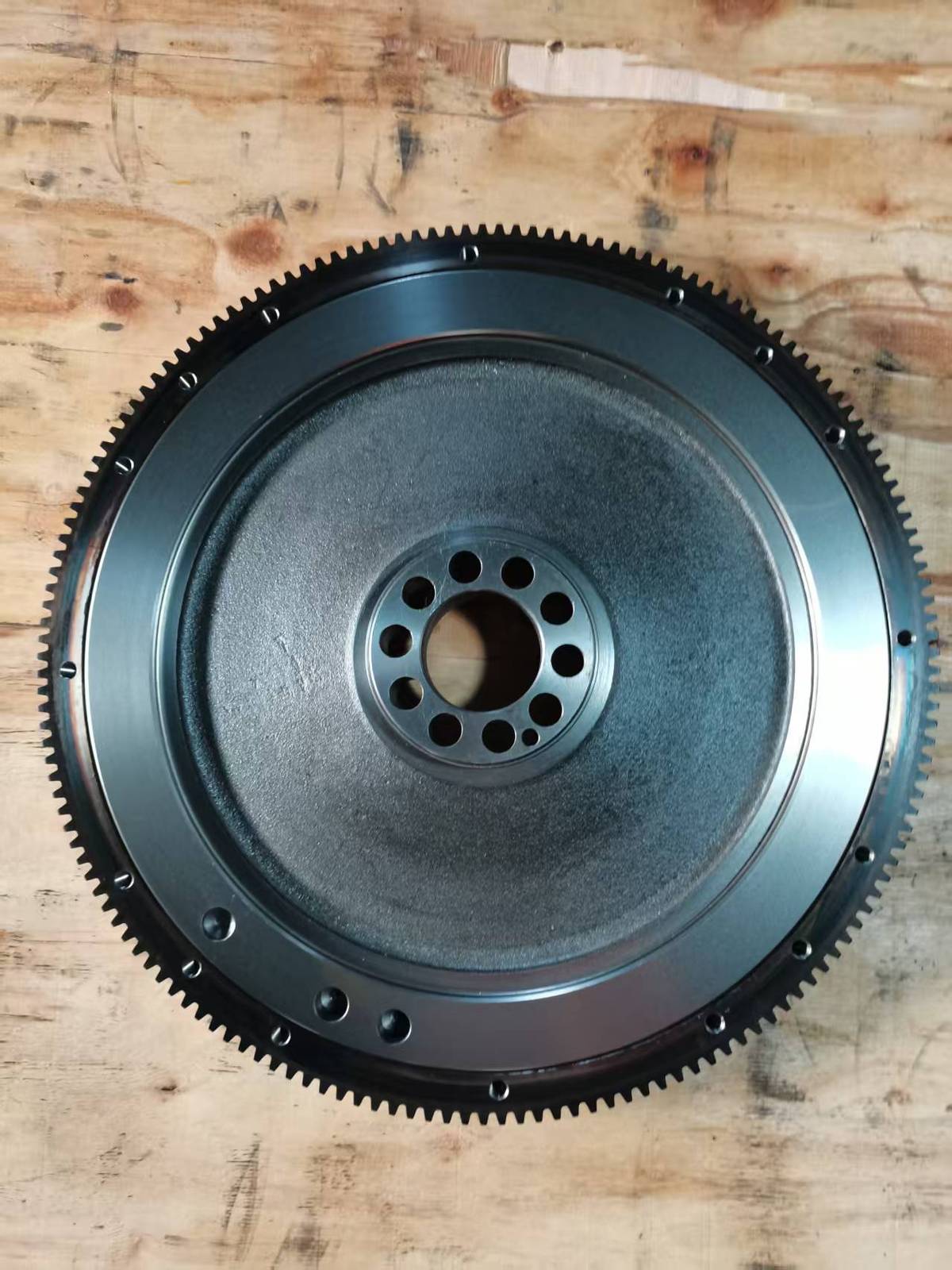
Keep those three in mind and the tables below will make sense.
The MAN Flywheel Number Range
MAN flywheels sit in the 51 02301 xxxx range. The number is often written with spaces, with dots, or run together with no separator at all, and all three forms refer to the same part.
The workhorse number is 51 02301 7440. It is a 430 mm flywheel with a 160 tooth ring gear, ten hub mounting holes, and a 62 mm hub bore.
Here is what makes it interesting. Catalogue pages quote this number with three different diameters. One supplier lists it at 430 mm, another at 475 mm, and a third at 487 mm. None of them is wrong. The 430 mm is the clutch diameter, the 475 mm is the friction running track, and the 487 mm is the full outside edge including the ring gear teeth. If you quote a customer on “the 487 mm MAN flywheel” and they measure 430 mm on their clutch, you will spend a week explaining a part that was correct the whole time.
The 51 02301 7440 number is also one digit away from 51 02301 7439, which is the same 430 mm and 160 teeth but with a five-bolt pattern instead of six. Read that again. One digit, one bolt, two different flywheels.
Other MAN numbers we build include 51 02301 7410 at 400 mm with 160 teeth, 51 02301 7300 at 420 mm with 160 teeth, and 51 02301 7295 at 380 mm with 160 teeth.
The Mercedes-Benz Flywheel Number Range
Mercedes-Benz flywheels use a clean, readable number format: three groups of two or three digits, then 05. Written out, 442 030 02 05 means the 442 series, function group 030, variant 02, revision 05. Once you know the format, you can read any Mercedes flywheel number by sight.
The 030 block in the middle is the clutch and flywheel function group. That is the one you care about. If a number has something other than 030 in the middle, it is a different assembly, not the flywheel.
The two numbers that come up most often in our orders are 442 030 02 05 and 442 030 19 05. Both are 430 mm, both are 160 teeth, both have a 62 mm hub bore. The difference is the clutch mounting. The 02 05 version uses ten mounting bores on the hub, while the 19 05 version uses a six-nut pattern with a 6-notch EDC ring. A customer who quotes you one number when they need the other will get a flywheel that bolts up to the crankshaft and then refuses to take their clutch.
The smaller Mercedes numbers follow the same pattern. 355 030 13 05 is a 380 mm flywheel with 154 teeth and a 410 mm clutch pattern. 403 030 14 05 is a 420 mm flywheel with 160 teeth. 376 030 13 05 is a 380 mm part with 133 teeth. Watch that one carefully, because the teeth count drops well below the 160 that the rest of the family uses.
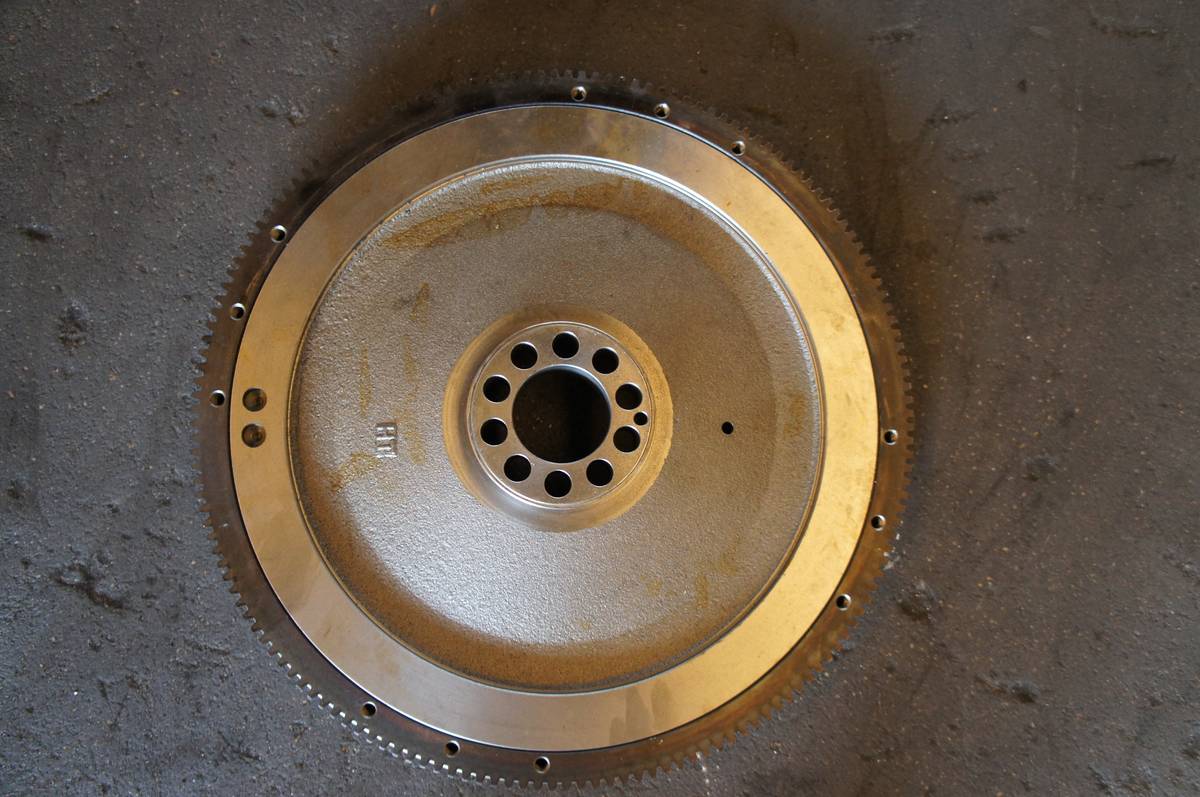
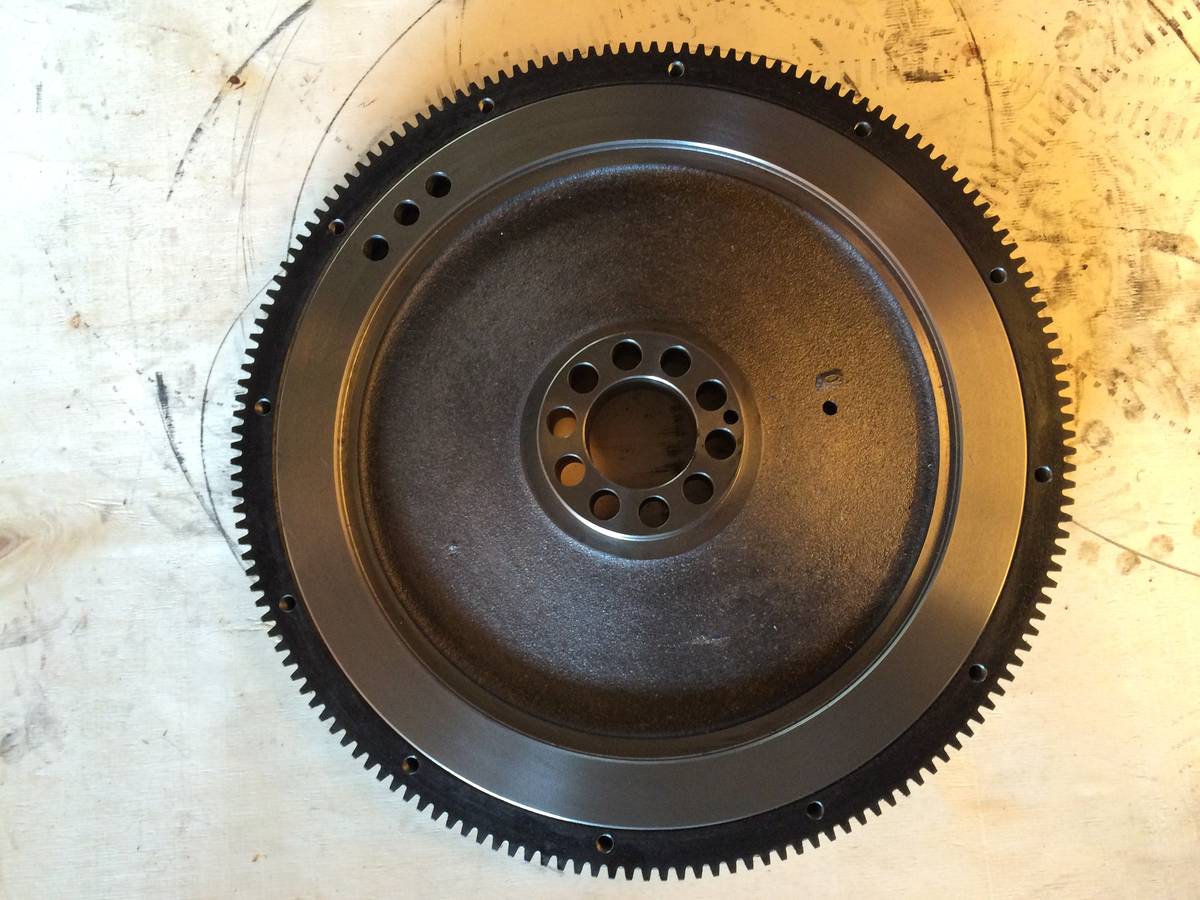
The photo above is the 442 030 02 05. Put it beside the 442 030 19 05 below and the two look like the same casting. The hub pattern is the only thing that tells them apart.
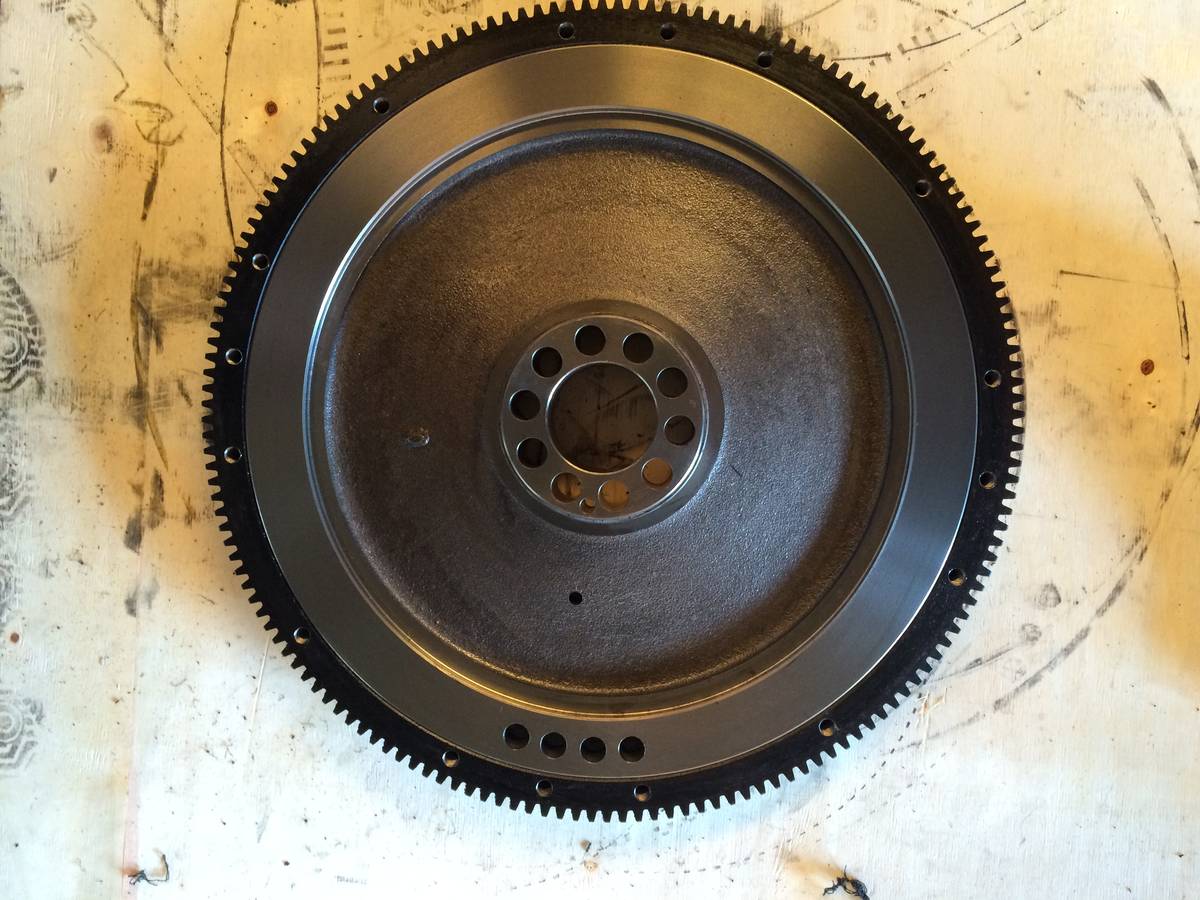
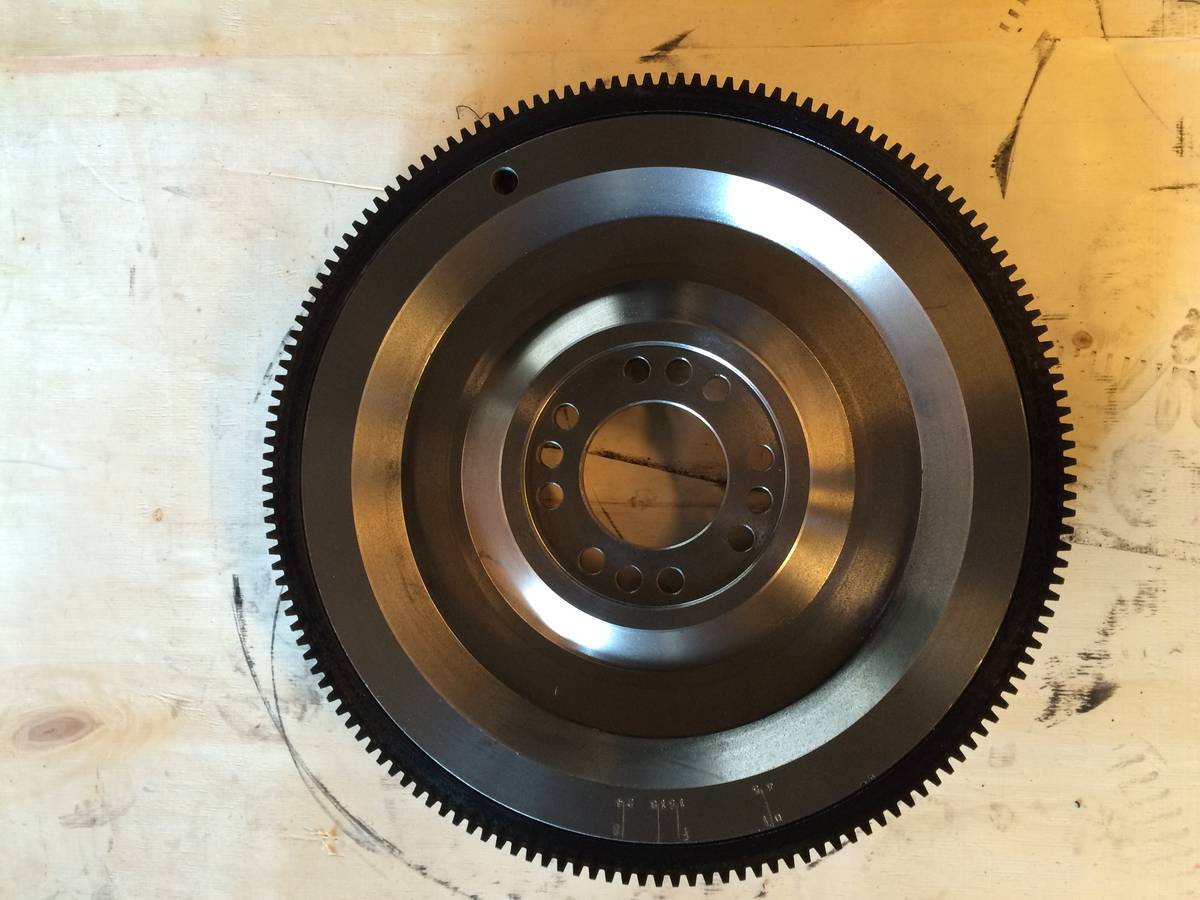
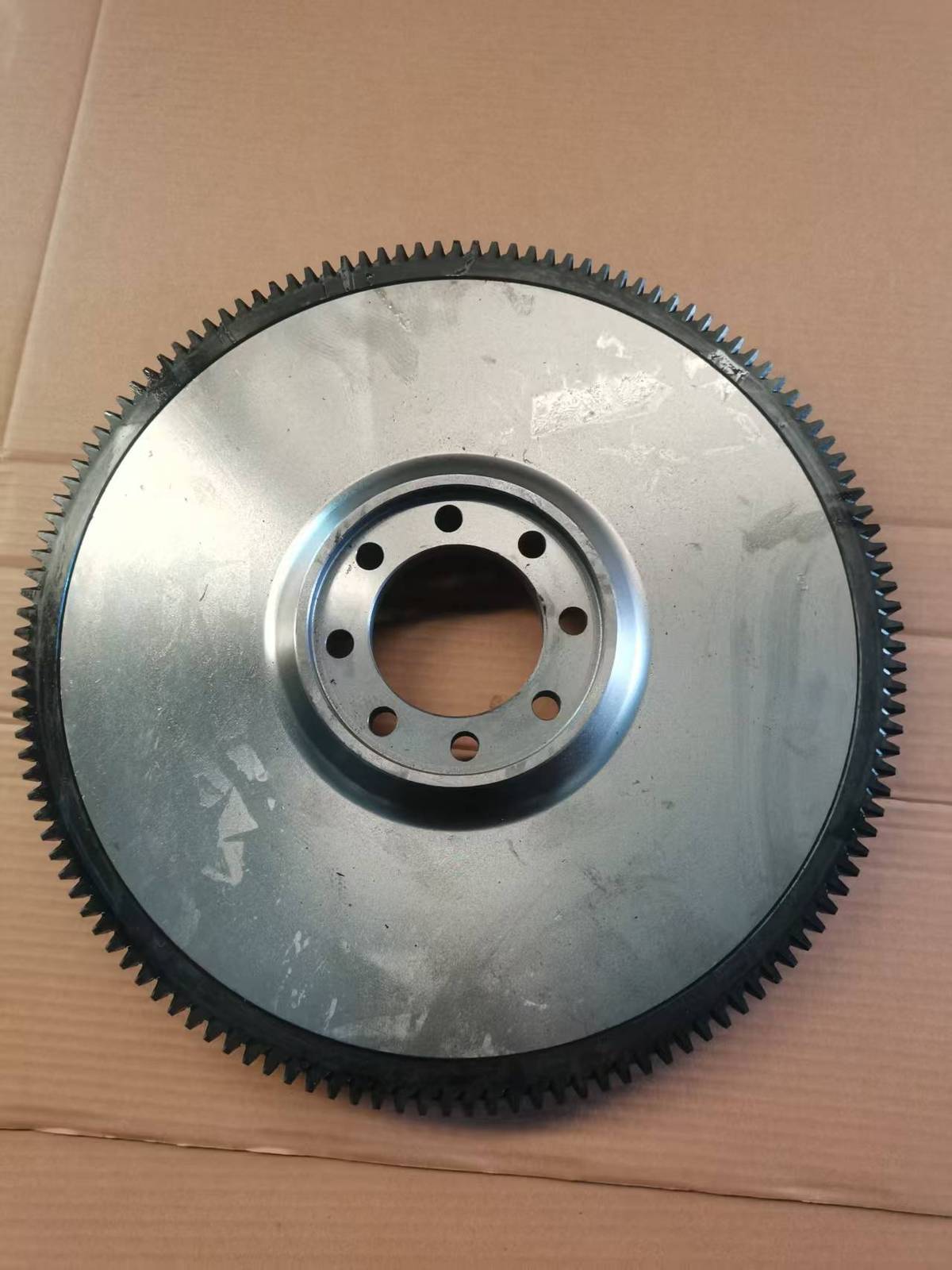
The 355 030 13 05 and the 376 030 13 05 above are both 380 mm, and their teeth counts are 154 and 133. Same diameter, 21 teeth apart. That is a 21 tooth gap on a flywheel that a tape measure cannot see.
The larger 541 030 01 05 is a 430 mm, 160 tooth flywheel used across the Actros, Tourismo and Travego ranges. One supplier lists it with a 37-nut hub pattern, and the hub bolt circle sits at 88 mm with a 450 mm clutch pressure plate circle. It is a bus flywheel as much as a truck one, which is why it turns up in coach orders more often than you would expect.
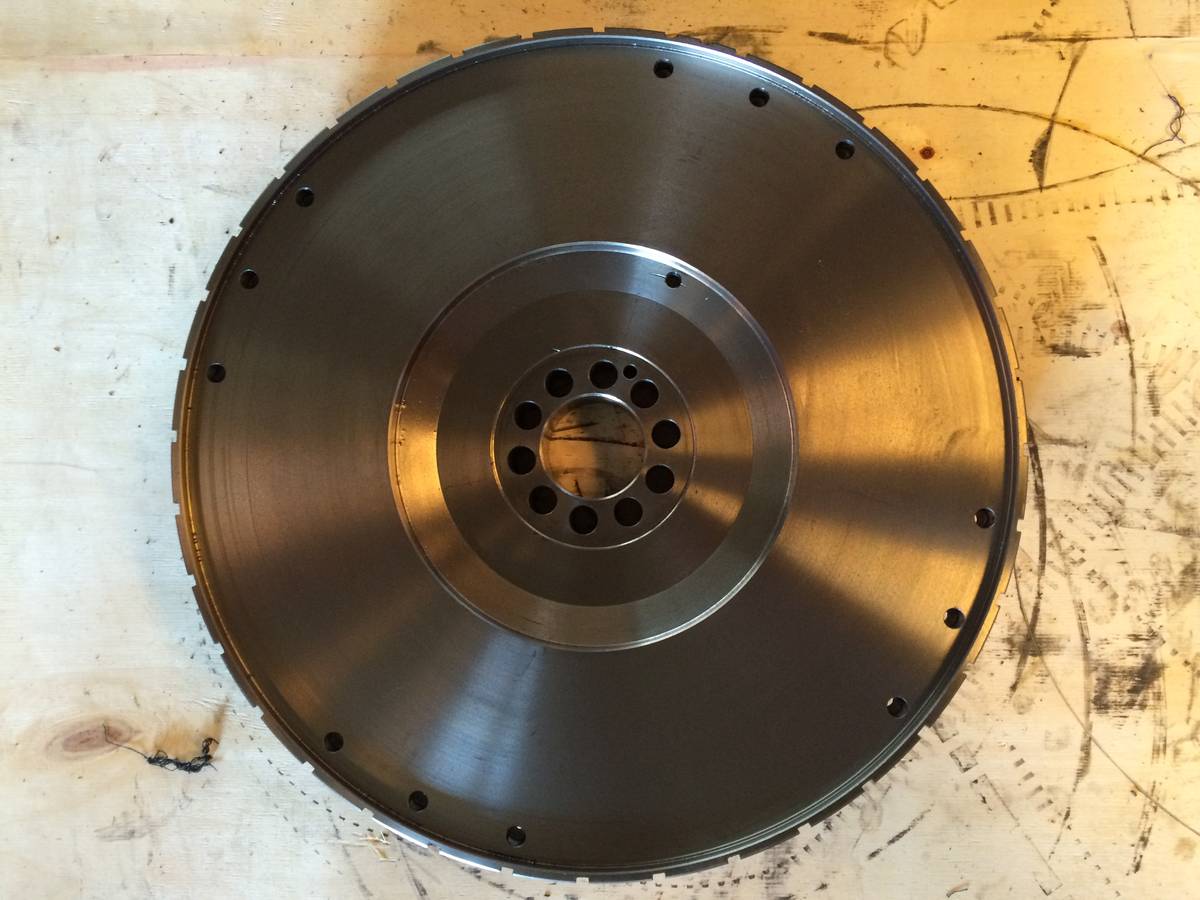
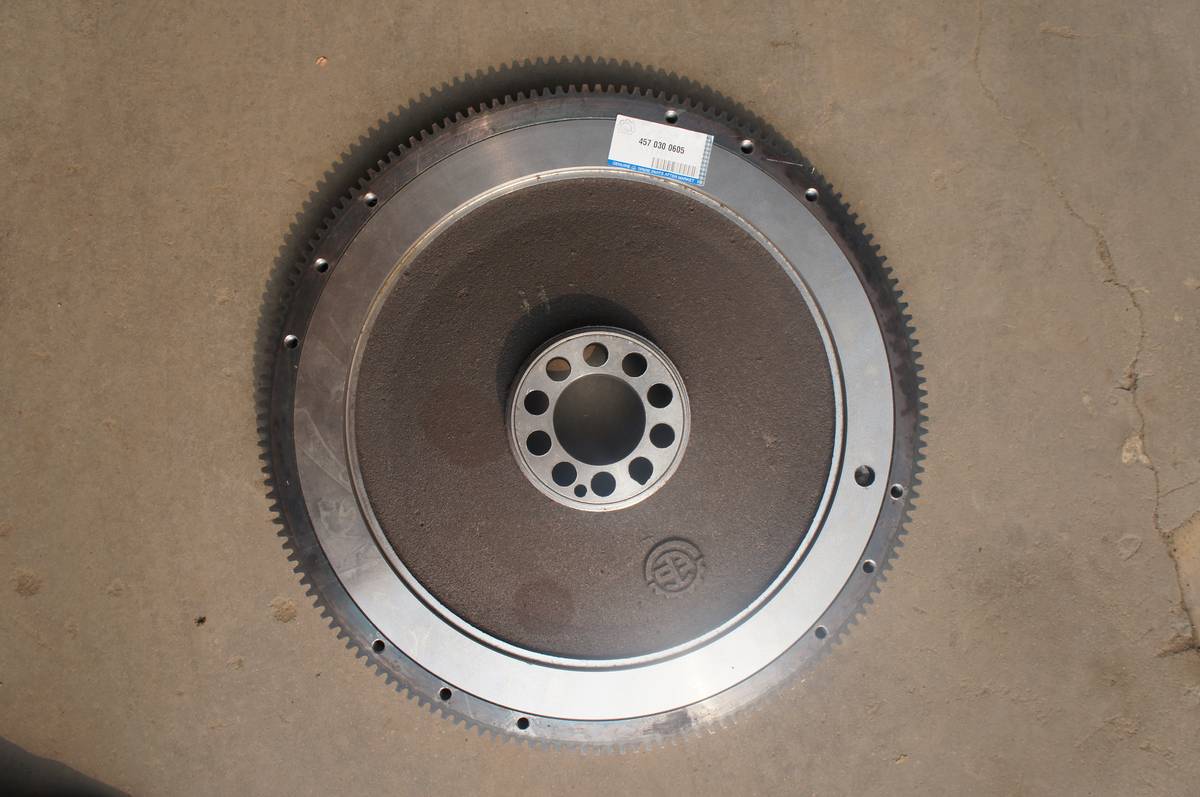
The 457 030 06 05 is the other Mercedes number we hold for the 430 mm, 160 tooth range, used on later Actros generations.
The Scania Flywheel Number Range
Scania numbers do not follow a visible pattern the way the Mercedes ones do. They are seven-digit numbers, and the only way to know what a Scania number fits is to look it up. What we can tell you is what the numbers we build actually are.
The important number here is 1487558. It is a 430 mm flywheel with a 158 tooth ring gear, ten hub mounting holes, and a 62 mm hub bore. The part weighs around 46.7 kg.
The reason 1487558 matters so much is the sensor ring. This flywheel carries 58 EDC notches and 58 sensor positions. It is the electrically controlled version, used on the DSC 12 engines. The mechanically governed Scania engines of the previous generation use a flywheel with no sensor ring at all. The two parts look nearly identical on the bench and are not interchangeable.
393151 is the other number worth knowing. It is also a 430 mm flywheel with a 158 tooth ring gear, and its full outside diameter measures 480.5 mm with a 61.8 mm height. Because it shares the same teeth count as 1487558, the only thing that separates them is the sensor ring and the hub pattern. This is the single most common mix-up in Scania flywheel orders.
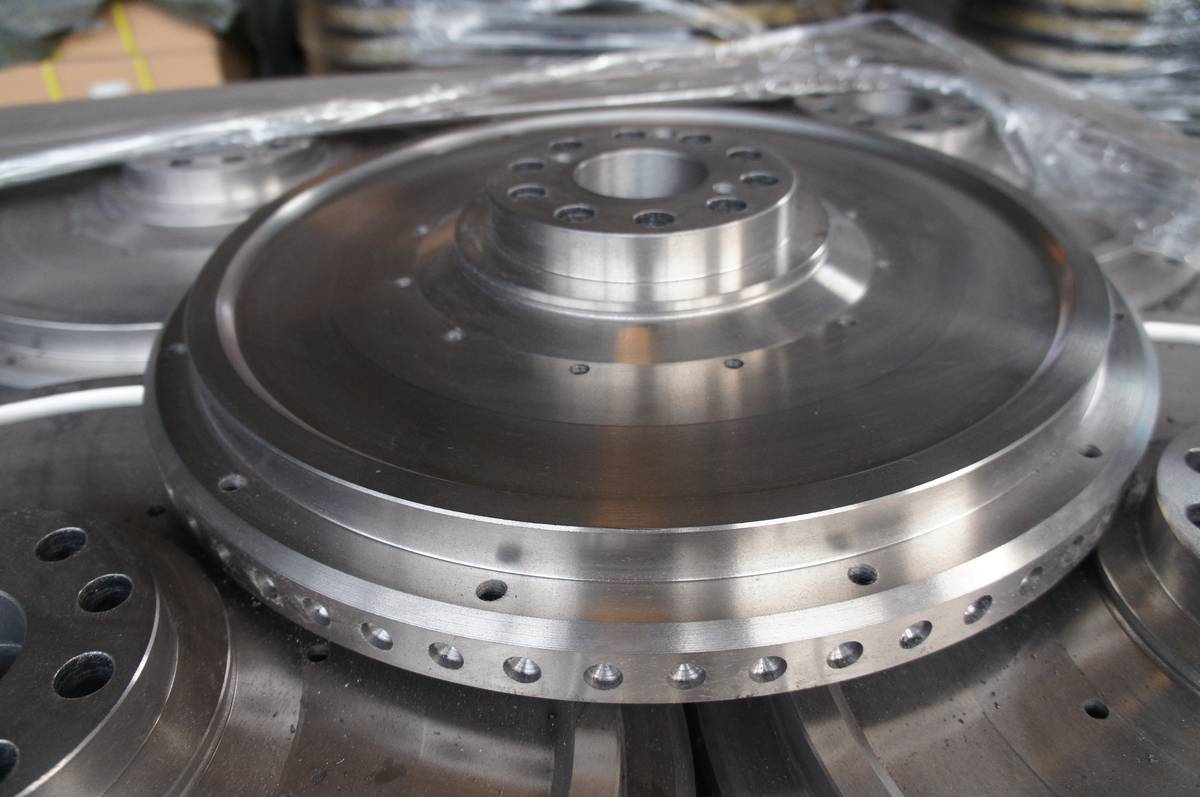
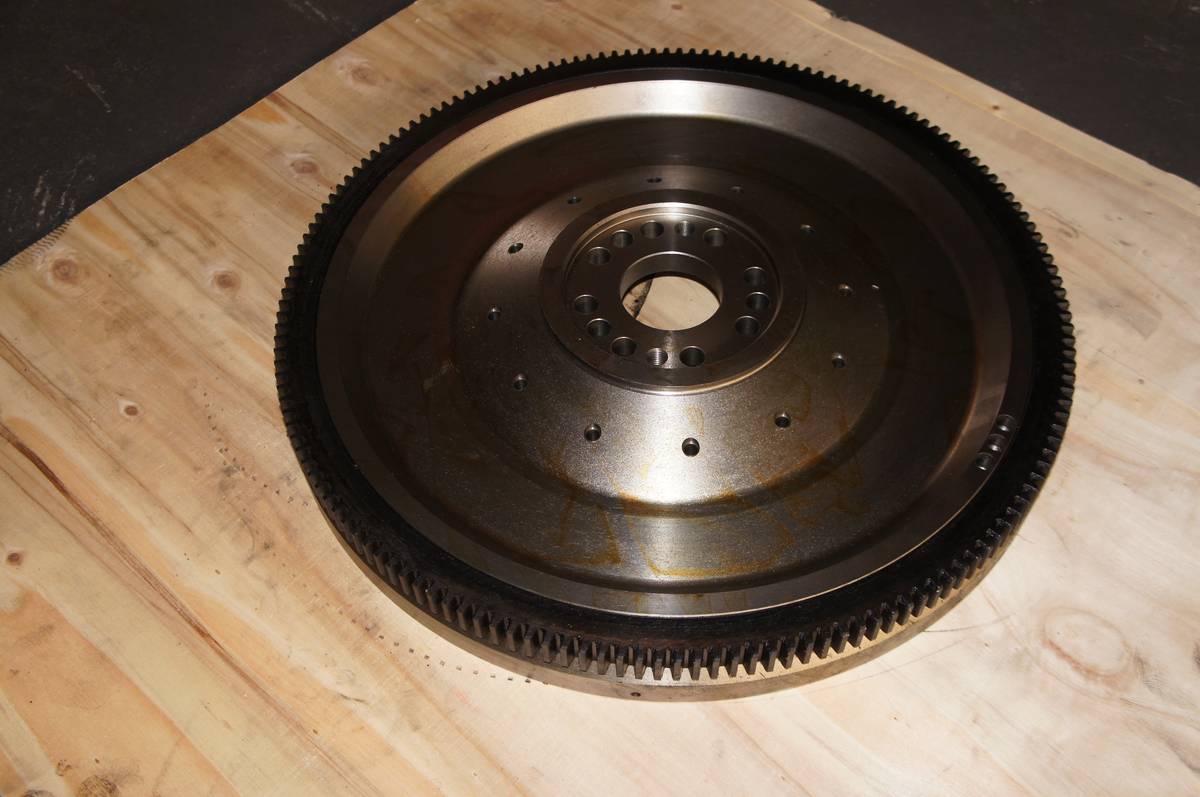
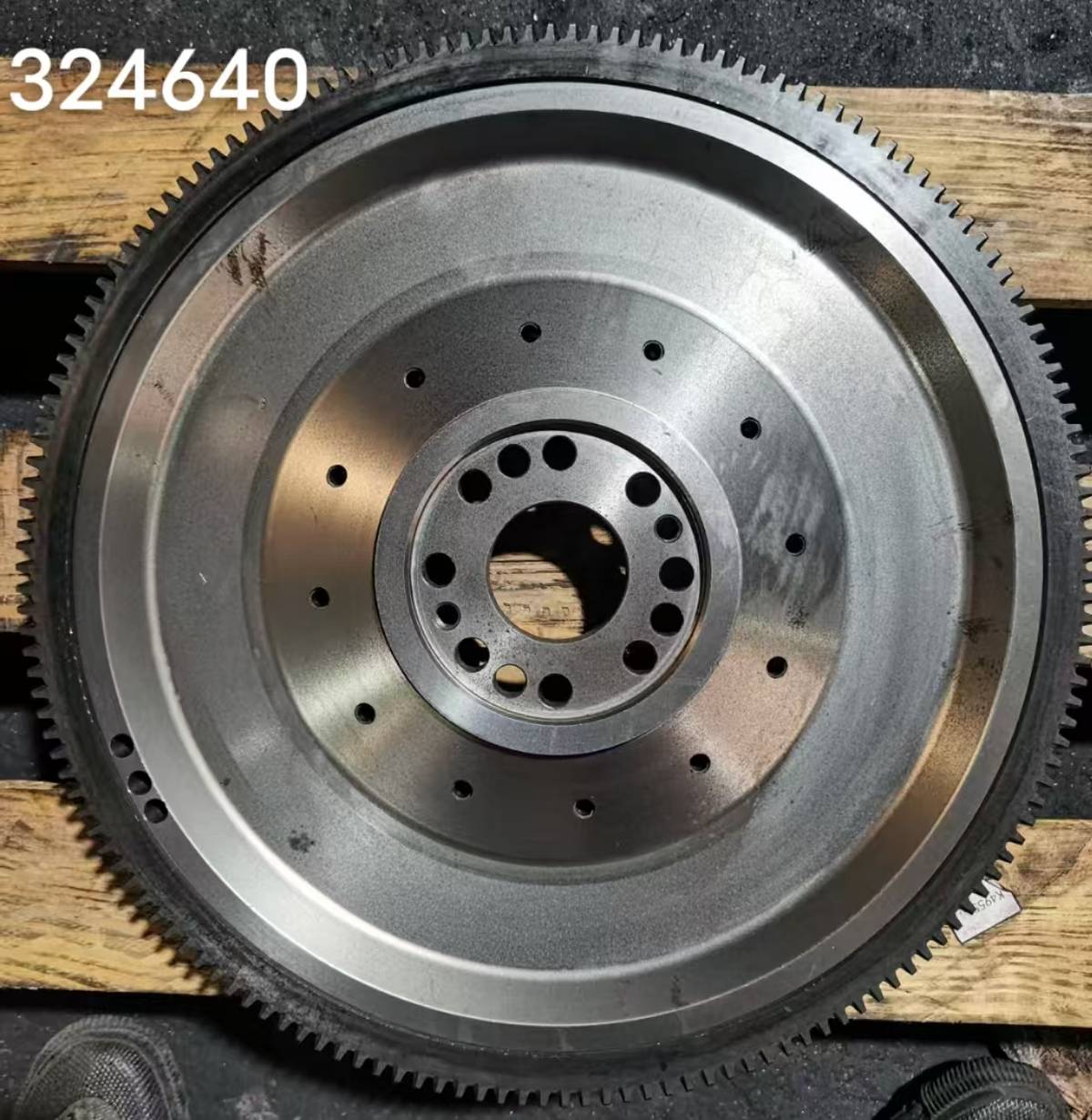
A third Scania number, 1388326, is the 430 mm unit used across the DSC 12 range. 324640 is the smaller 420 mm flywheel for the DSC 9 and DSC 11 engines.
The Volvo Flywheel Number Range
Volvo flywheels cover the widest size span of the five brands, and the numbers do not cluster in one range. Two loose families show up in our stock: the 478xxx numbers for the older D10 engines, and the seven-digit 8xxxxxx numbers for the D12 and later engines.
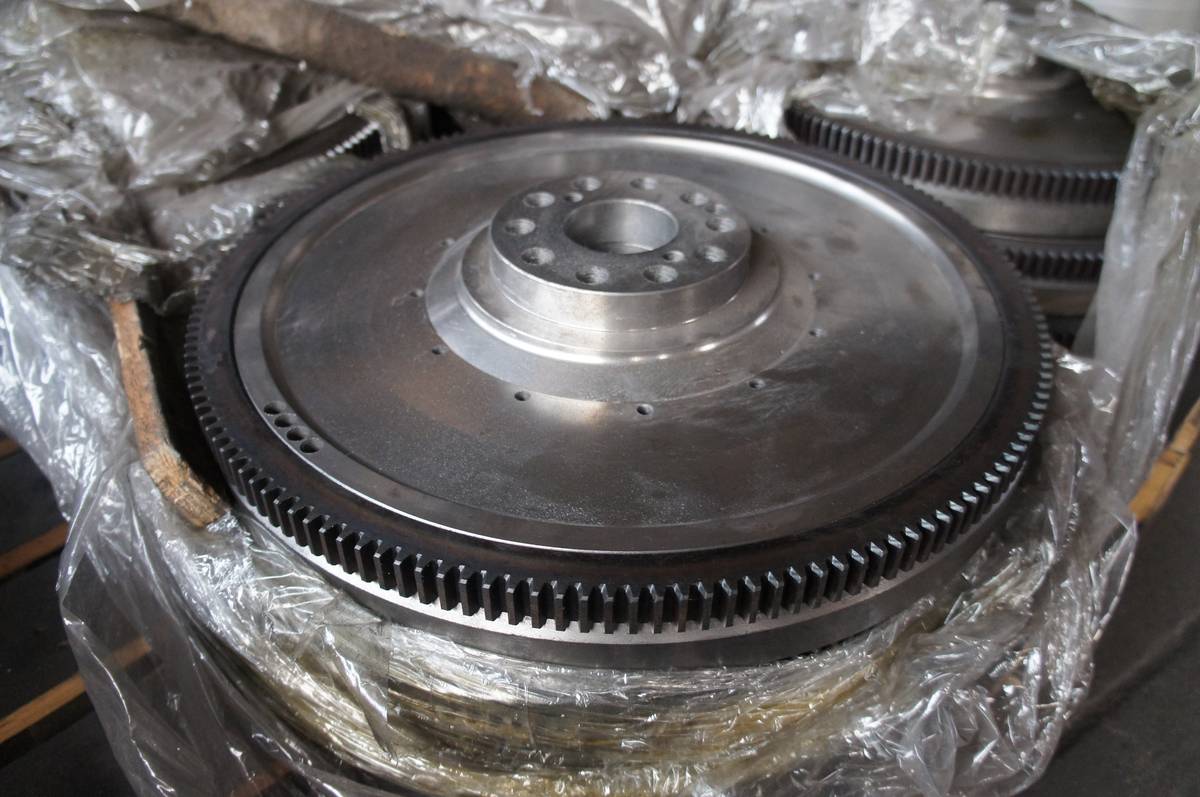
The D12 number is 8170798. It is a 430 mm clutch flywheel with a 153 tooth ring gear, and it is one of the few European flywheels in this whole table that does not sit at 158 or 160 teeth. A customer who assumes “European trucks are all 160 teeth” will order the wrong ring gear for a Volvo every single time.
The full dimensions of 8170798 are worth writing down. The outside diameter is 485 mm, the friction track is 475 mm, the inner diameter is 237 mm, and the height is 75 mm. It has 14 hub fixing holes and 12 clutch mounting holes. Depending on the source, the weight is quoted between 45 and 49 kg.
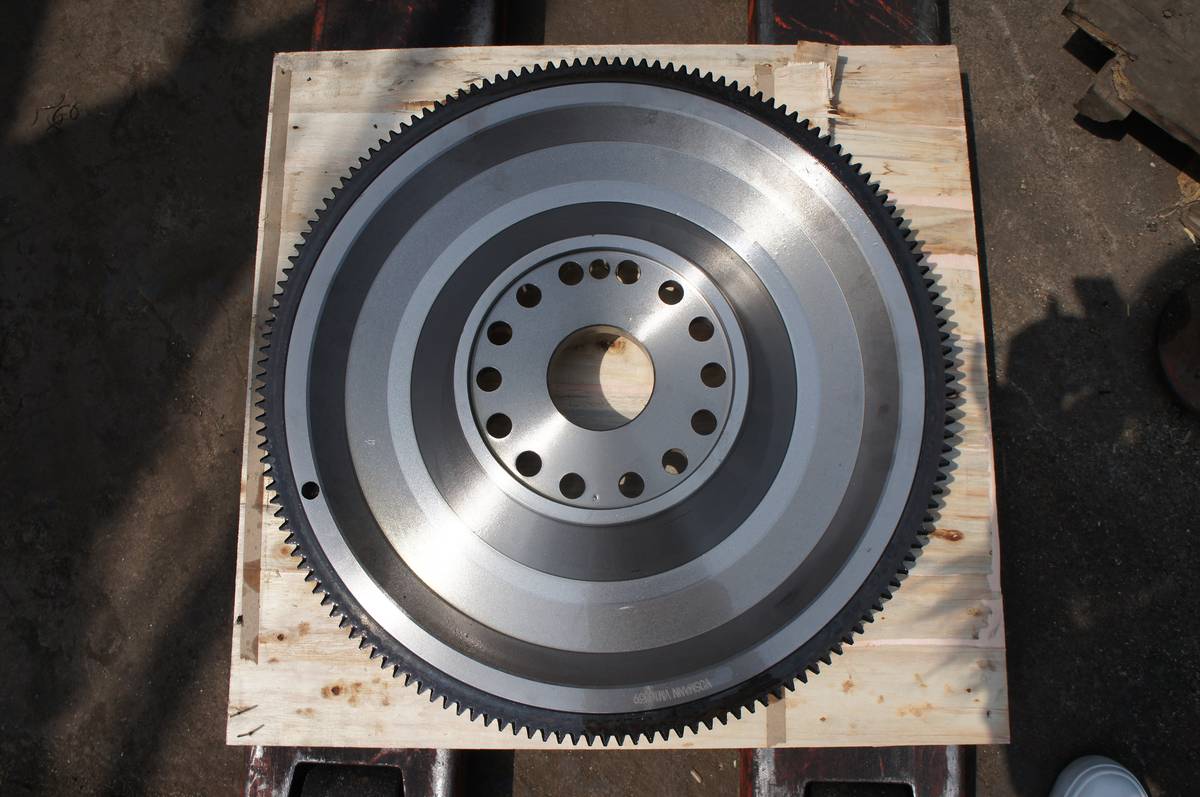
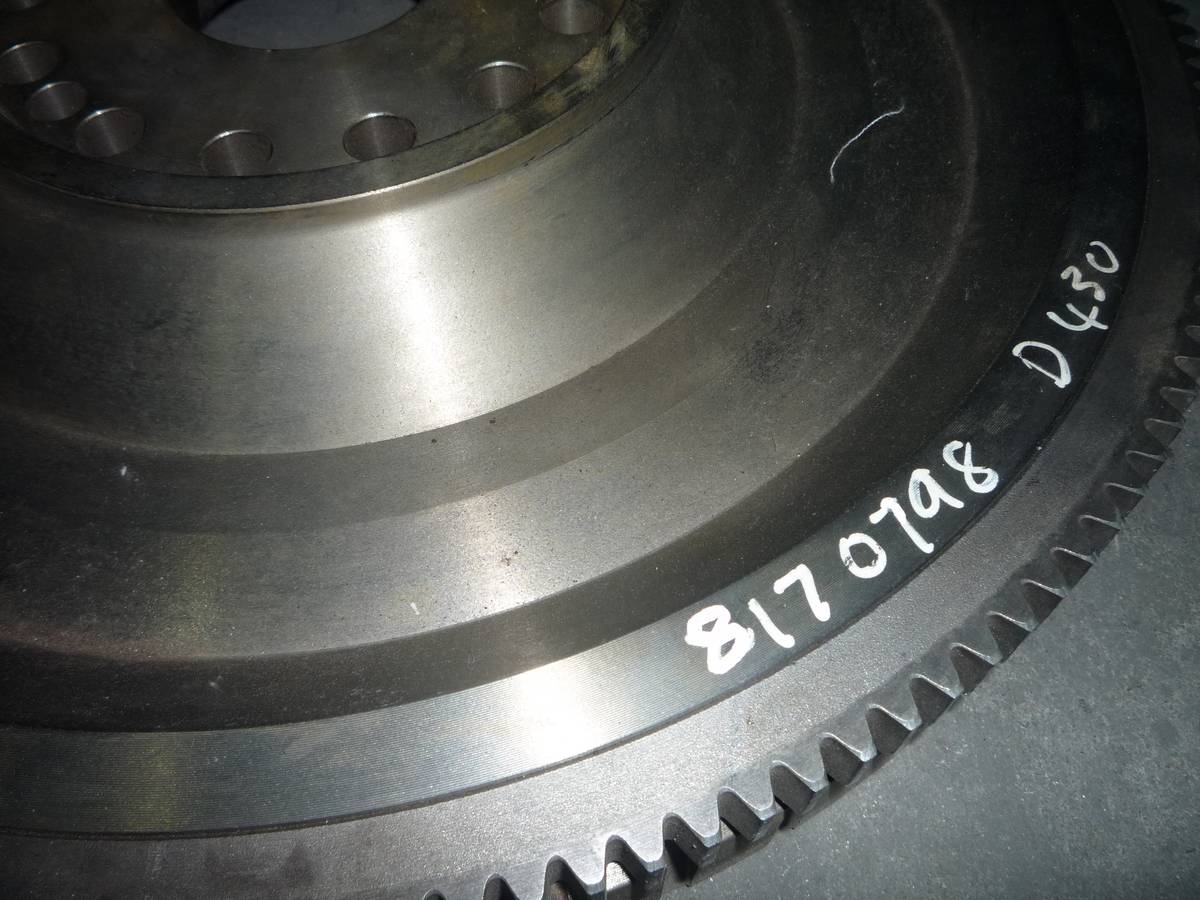
That photo is worth a closer look. The number 8170798 and the clutch size D430 are written directly on the rim of the part. When a customer sends us a photo like that, we can confirm the part number and the clutch size in one glance, without waiting for them to find the paperwork. It is the fastest way to close a Volvo inquiry.
The older 478931 is the D10 flywheel, a smaller unit from the previous engine generation. We build both the D10 and D12 flywheels, and the two are not related even though they share a brand.
The DAF Flywheel Range
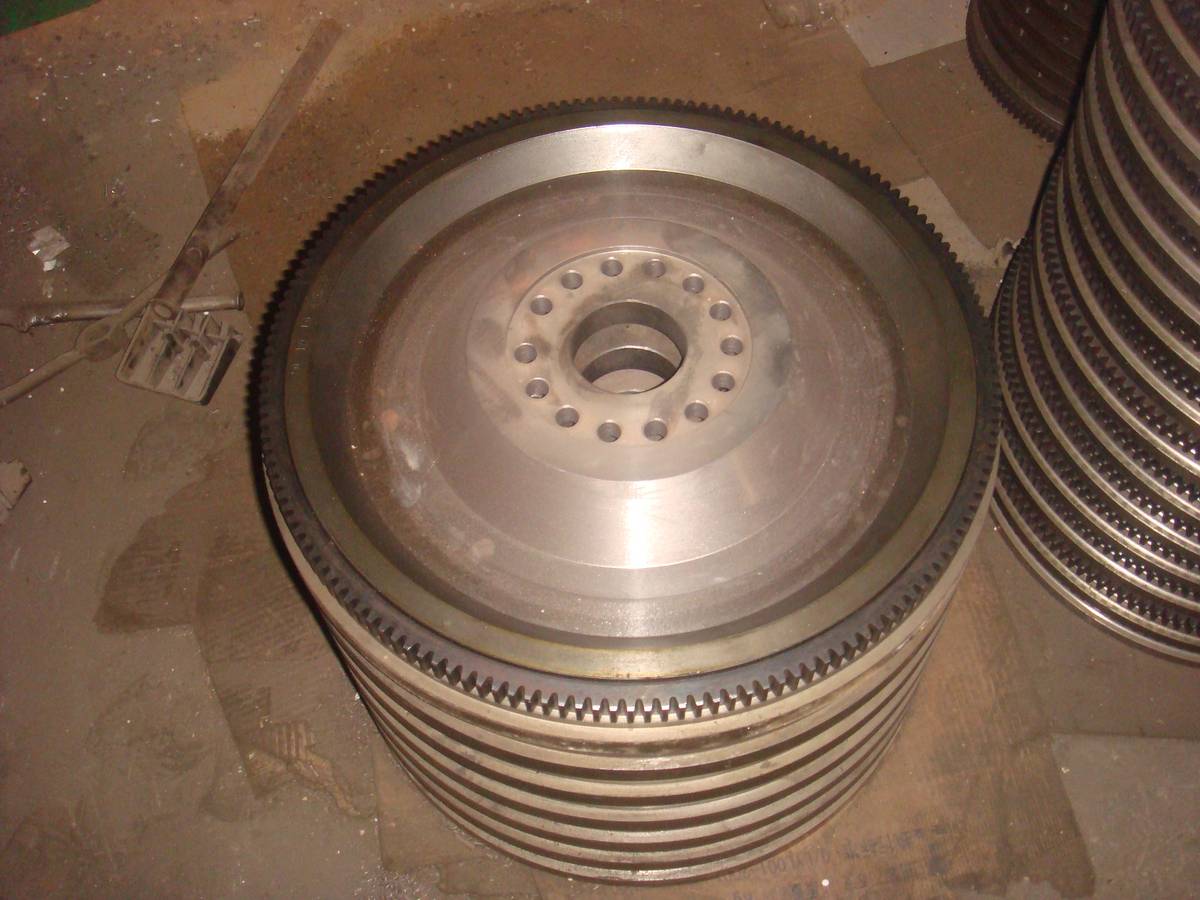
DAF flywheels in our stock run under the 1314029 reference. DAF built these flywheels for the larger tractor units, and they share the 430 mm clutch diameter with the MAN and Mercedes heavy range.
The Master Comparison Table
Here is everything in one place. Treat the sizes as the standard specifications for these numbers. Before you commit to an order, confirm against your own measurement or drawing, because a supplier revision can move a dimension by a millimetre or two without changing the part number.
| Brand | Reference number | Clutch diameter | Ring gear teeth | Hub mounting | Notes |
|---|---|---|---|---|---|
| MAN Trucks & Heavy-Duty Diesel Engines
Surface Treatment |
51 02301 7440 | 430 mm | 160T | 10 holes | 6-nut pattern, hub bore 62 mm |
| MAN Trucks & Heavy-Duty Diesel Engines
Surface Treatment |
51 02301 7439 | 430 mm | 160T | 10 holes | 5-nut pattern, one digit off 7440 |
| MAN Trucks & Heavy-Duty Diesel Engines
Surface Treatment |
51 02301 7410 | 400 mm | 160T | — | — |
| MAN Trucks & Heavy-Duty Diesel Engines
Surface Treatment |
51 02301 7300 | 420 mm | 160T | — | — |
| MAN Trucks & Heavy-Duty Diesel Engines
Surface Treatment |
51 02301 7295 | 380 mm | 160T | — | — |
| Mercedes-Benz | 442 030 02 05 | 430 mm | 160T | 10 holes | 10 clutch mounting bores |
| Mercedes-Benz | 442 030 19 05 | 430 mm | 160T | 10 holes | 6-nut, 6 EDC notches, 450 mm clutch PCD |
| Mercedes-Benz | 541 030 01 05 | 430 mm | 160T | 10 holes | 37-nut, bus and coach use |
| Mercedes-Benz | 403 030 14 05 | 420 mm | 160T | 10 holes | — |
| Mercedes-Benz | 403 030 13 05 | 380 mm | 160T | 10 holes | — |
| Mercedes-Benz | 355 030 13 05 | 380 mm | 154T | 12 holes | 410 mm clutch PCD |
| Mercedes-Benz | 376 030 13 05 | 380 mm | 133T | — | Low teeth count for the family |
| Scania | 1487558 | 430 mm | 158T | 10 holes | 58 EDC sensor notches, approx. 46.7 kg |
| Scania | 393151 | 430 mm | 158T | — | Outside diameter 480.5 mm, height 61.8 mm |
| Scania | 1388326 | 430 mm | — | — | DSC 12 range |
| Scania | 324640 | 420 mm | — | — | DSC 9 and DSC 11 engines |
| Volvo | 8170798 | 430 mm | 153T | 14 holes | 12 clutch mounting holes, D12 engines |
| Volvo | 478931 | — | — | — | D10 engines |
| AF Trucks & Diesel Engines (XF / CF / LF series compatible) | 1314029 | 430 mm | — | — | Heavy tractor range |
Empty cells mean we do not have a sourced figure for that field. We would rather leave a cell blank than fill it with a guess that gets shipped to a customer in the wrong part.
The Traps That Cost People a Month
The 430 mm that is not 430 mm. On almost every Euro truck flywheel, 430 mm is the clutch diameter. The full outside edge is bigger, sometimes by more than 50 mm. When a customer tells us a part is “not 430, it measures 487”, they are usually holding the right part and reading a different circle.
One digit, two bolts. MAN 51 02301 7440 and 51 02301 7439 are the same diameter and the same teeth, and differ by a single digit that also changes the bolt pattern. Scan your number twice on MAN parts.
Same teeth, different sensor ring. Scania 1487558 and 393151 are both 158 teeth at 430 mm. Only 1487558 carries the 58-notch sensor ring. Fit the wrong one and the engine will either not start or will run with a fault the driver learns to ignore until it becomes a breakdown.
Mercedes 02 05 against 19 05. Two numbers, both 430 mm, both 160 teeth, different clutch mounting. This is the single most frequent Mercedes mistake we see.
Volvo is not 160 teeth. Every other brand in this table runs 158 or 160. Volvo runs 153. If you buy a ring gear for a Volvo by assuming it matches a Mercedes, it will not fit.
What We Need From You to Quote Correctly
Send us these and we can quote the same day:
- The part number exactly as it is stamped or printed, including spaces and dots
- One photo of the front face with the ring gear visible
- One photo of the back, showing the hub and the mounting pattern
- The number of ring gear teeth, counted, if you can
- The clutch diameter of the vehicle, if you know it
- The engine model and the truck model and year
With photos and a number, we can match against our stock and tell you within a day whether we hold the part or need to cast it. We are a foundry, not a trader, so we can also work from your drawing if the part is out of production.
Frequently Asked Questions
Are MAN and Mercedes flywheels interchangeable if they are both 430 mm and 160 teeth?
No. Sharing a diameter and a teeth count does not make two flywheels interchangeable. The crankshaft bolt pattern, the hub height, the clutch mounting circle and the sensor ring all have to match as well. A 430 mm flywheel from MAN and a 430 mm flywheel from Mercedes are different castings with different flange geometry.
What does the EDC ring on a flywheel do?
The EDC ring is a series of notches or holes around the flywheel that the engine control unit uses to read crankshaft position and speed. The number of notches has to match what the ECU expects. A flywheel with 58 notches will not substitute for one with a different count, and a flywheel with no sensor ring at all cannot be used on an electronically controlled engine.
Why does the same MAN part number show three different diameters?
Because the three numbers describe three different circles on the same part. The clutch diameter is the surface the clutch disc contacts, the friction track is slightly larger, and the outside diameter includes the ring gear teeth. All three are correct measurements of one flywheel. Always confirm which circle a quoted diameter refers to.
Which European truck uses 153 teeth on the flywheel?
Volvo, on the D12 engines, uses a 153 tooth ring gear. This is lower than the 158 and 160 teeth that Scania, MAN and Mercedes use. Never assume a Volvo flywheel teeth count matches the rest of the European range.
Can you supply a flywheel for a Mercedes Actros or a Scania DSC 12?
Yes. We build flywheels for the Mercedes Actros and coach range including the 442 and 541 series, and for the Scania DSC 9, DSC 11 and DSC 12 engines including the 1487558 and 393151 numbers. Send us the part number and a photo and we will confirm availability.
What is the difference between Scania 1487558 and 393151?
Both are 430 mm flywheels with a 158 tooth ring gear. The 1487558 carries a 58-notch sensor ring for the electronically controlled DSC 12 engines, while the 393151 is used without that sensor ring on mechanically governed engines. They are not interchangeable despite the matching diameter and teeth.
Do you supply the ring gear separately from the flywheel?
Yes. We can supply the flywheel assembly complete with the ring gear fitted, or the ring gear on its own if you only need to replace a worn ring. Tell us the part number and we will quote both options.
What material are your flywheels cast from?
Our flywheels are cast from grey iron, with the ring gear made from a suitable gear steel and hardened on the teeth. The surrounding foundry is certified to IATF 16949, which means the casting, machining and heat treatment are all controlled under one quality system.
Send Your Part Number for a Quote
If you have a European truck flywheel number and you need a reliable foundry source, send it to us with a photo. We are a factory, not a trader, so you deal directly with the people who cast and machine the part. We can work from your part number, your drawing, or your sample.
We ship worldwide from Qingdao, and our engineers can help you confirm the right variant before you commit to an order.
Email Irene at [email protected] or message on WhatsApp and WeChat at +86 199 5366 2121. You can also send your part number through our quote page and we will come back to you with a price and a lead time.
Best regards,
Irene
Changwei International
Email: [email protected]
WhatsApp / WeChat: +86 199 5366 2121
Web: https://changweiintl.com
Related Reading
- Flywheel and Ring Gear Teeth Count Guide — why the same engine can carry two different teeth counts
- HINO Flywheel Part Numbers 13450 — the Japanese counterpart to this table
- Nissan UD Flywheel Part Numbers — FE6, PE6, RE8 and RD8 sizes
- European engine flywheel range — our full European truck flywheel catalogue
- Ring gear range — replacement ring gears by teeth count