
ISUZU Flywheel Part Numbers: 6BG1, 6HE1, 6HK1, 6SD1, 6WF1, 6WG1 Size and Teeth Chart
ISUZU Flywheel Part Numbers: 6BG1, 6HE1, 6HK1, 6SD1, 6WF1, 6WG1 Size and Teeth Chart
An ISUZU flywheel arrives at your counter with no label. It is 350 mm across, the ring gear carries 129 teeth, and the centre hub has six bolt holes. You order the part you think it is. It arrives, it is also 350 mm with 129 teeth, and it will not go onto the crankshaft.
That is the most expensive mistake in ISUZU flywheel buying, and it does not come from carelessness. It comes from the fact that ISUZU built the same diameter and the same tooth count in more than one bolt pattern, and the difference is only visible when you count the holes in the crankshaft flange.
The chart below is built from parts we manufacture and can check against a physical flywheel in the shop. Every diameter, tooth count and bolt count in it has been matched to a real part, not copied from a catalogue.
Table of Contents
- Why an ISUZU engine code is not enough
- The ISUZU flywheel size and teeth chart
- Three bolt families: six, eight and ten
- Trap one: 350 mm and 129 teeth come in two bolt patterns
- Trap two: 430 mm and 139 teeth split into eight and ten bolts
- Trap three: one engine code, two flywheel sizes
- The electronic divide: what the signal ring tells you
- Reading an ISUZU flywheel part number
- How to confirm the right flywheel before you order
- FAQ
- Where to go next
Why an ISUZU engine code is not enough
Most buyers start with the engine code, and it gets them close. It does not get them to one part.
Take 6BG1. It is a 6-cylinder industrial and truck engine, and ISUZU built it with a 350 mm flywheel carrying 129 teeth and six crankshaft bolts, and also with a 350 mm flywheel carrying 140 teeth and six crankshaft bolts. Two parts, one engine code, one diameter.
Take 6HK1. It came with a 380 mm flywheel at 129 teeth on a six-bolt crank, and a 380 mm flywheel at 140 teeth on an eight-bolt crank.
The reason is that these engines were sold as truck engines, bus engines, industrial power units and generator drive engines, and each application needed a different clutch, a different starter position and often a different crank flange. The factory that built the 6BG1 did not build one flywheel for it. It built four.
The 6H engine family makes the point clearly. It is an inline six sold from the late 1980s into the 2000s:
- 6HE1, 7.1 L, 110 mm bore, 125 mm stroke, naturally aspirated or turbocharged
- 6HL1, 7.2 L
- 6HK1, 7.8 L, 115 mm bore, 125 mm stroke, common rail, 200 to 300 hp
- 6HH1, 8.2 L, 115 mm bore, 132 mm stroke, naturally aspirated
Four displacements, one engine family, and a flywheel list that runs from 325 mm to 430 mm.
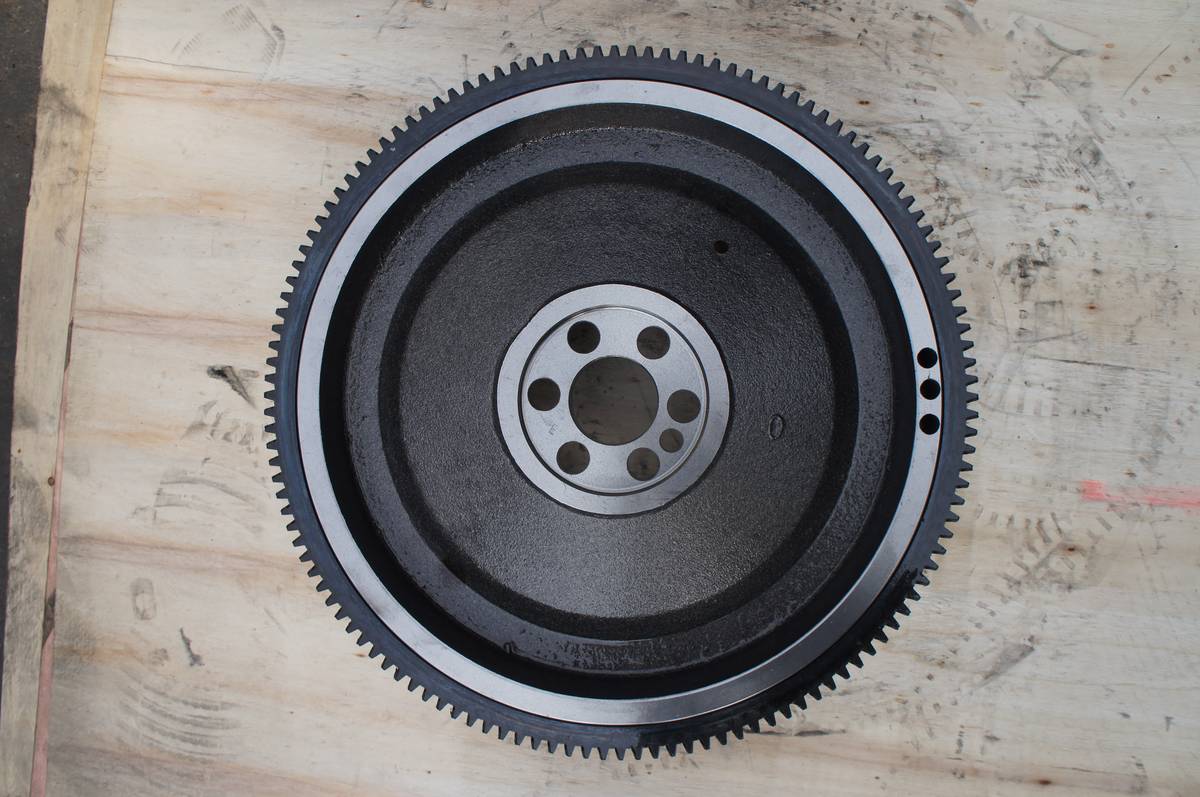
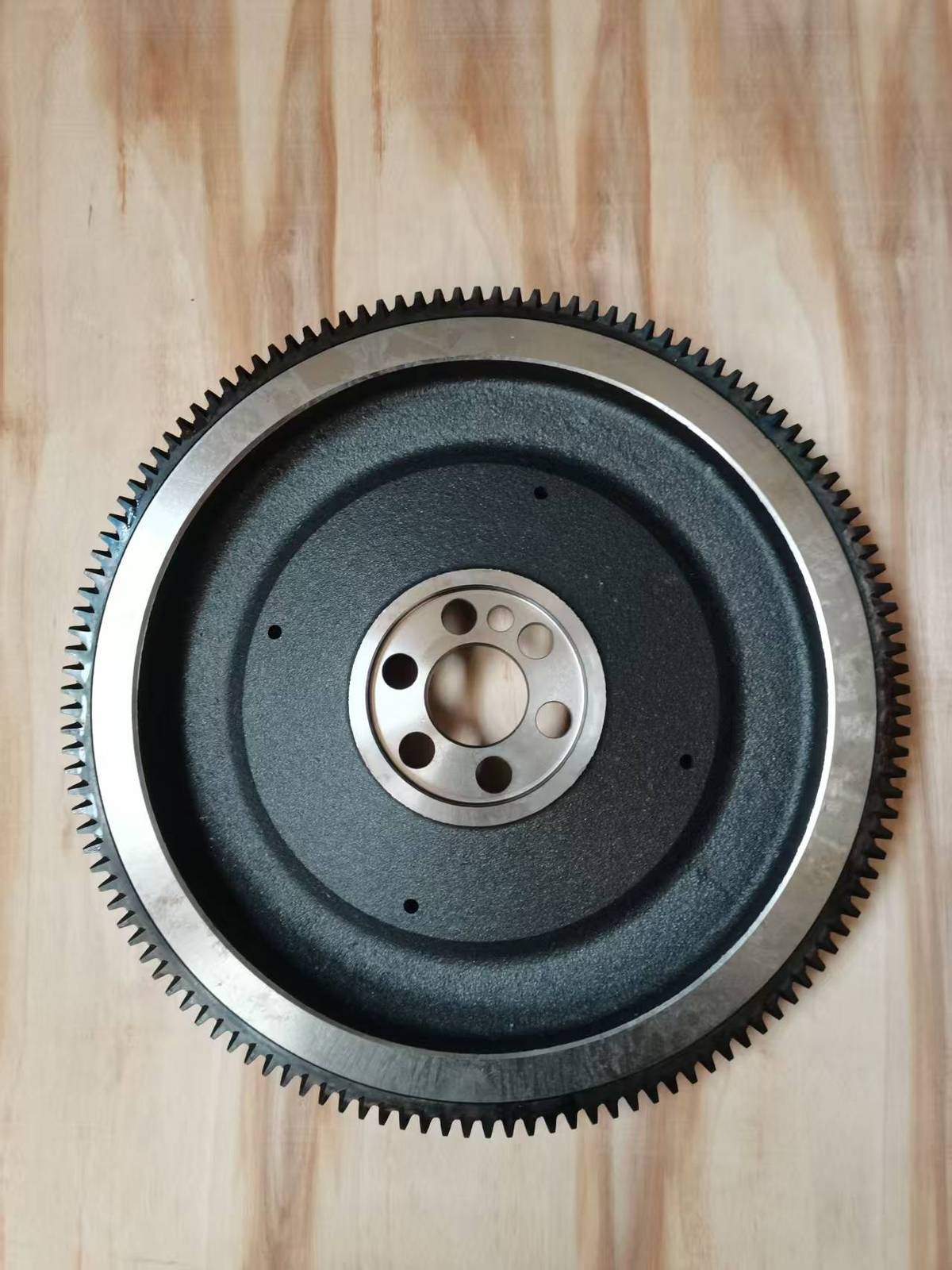
This 6BG1 flywheel is the reference part for the six-bolt family. Six crankshaft holes in the centre hub, 129 teeth on the ring gear, and a machined friction ring that sits inside the cast rim.
The ISUZU flywheel size and teeth chart
Sorted by diameter so the overlap is visible. The part numbers are the ones our customers most often quote, in the form they usually arrive in.
| Flywheel OD | Ring gear teeth | Crank bolts | Engine codes | Reference part number |
|---|---|---|---|---|
| 260 mm | 108T | 8 | 4JB1 | 8-94425-192-0 |
| 280 mm | 128T | 6 | 4BE1 | – |
| 325 mm | 128T | 6 | NPR / NKR | – |
| 325 mm | 128T | 8 | 4HK1 | – |
| 325 mm | 129T | 8 | 6HE1 | 1-12339-9080 |
| 325 mm | 138T | 8 | 4HF1 | 8-97326227-0 |
| 350 mm | 129T | 6 | 6BD1, 6BG1 | 1-12331-164 |
| 350 mm | 129T | 8 | 6HE1, 6HH1 | 8-94395450 |
| 350 mm | 140T | 6 | 6BG1 | 1-12331-158 |
| 350 mm | 140T | 8 | 6HH1 | 1-12331-5140 |
| 380 mm | 129T | 6 | 6HK1 | – |
| 380 mm | 140T | 8 | 6HK1, 6SA1, 6SD1 | 8-94390943 / 1-12331-162 |
| 420 mm | 164T | 8 | 10PB1 | 1-12331-1410 |
| 430 mm | 139T | 8 | 6RA1, 6RB1 | – |
| 430 mm | 139T | 10 | 6WA1TC, 6WF1, 6WG1, 6UZ1 | 1-12330-442 |
| 430 mm | 160T | 8 | 6SD1 | – |
| 430 mm | 164T | 8 | 10PC1, 10PD1, 10PE1 | 1-12331258-0 |
Read the table by diameter, not by engine code. Two rows with the same diameter and the same tooth count can still be different parts, and the last column of the difference is the bolt count.
Three bolt families: six, eight and ten
ISUZU flywheels in this range divide into three crankshaft bolt patterns. Almost every part falls into one of them.
The six-bolt family covers 6BD1 and 6BG1, and the four-cylinder engines with a much smaller flywheel. The 6BG1 part is 350 mm at 129 teeth, or 350 mm at 140 teeth.
The eight-bolt family is the largest group: 6HE1, 6HH1, 6HK1, 6SA1, 6SD1, 6RB1, and the ten-litre engines 10PB1, 10PC1, 10PD1 and 10PE1.
The ten-bolt family is the heavy end: 6WA1 and 6WA1TC, 6WF1, 6WG1 and 6UZ1, all at 430 mm with 139 teeth.
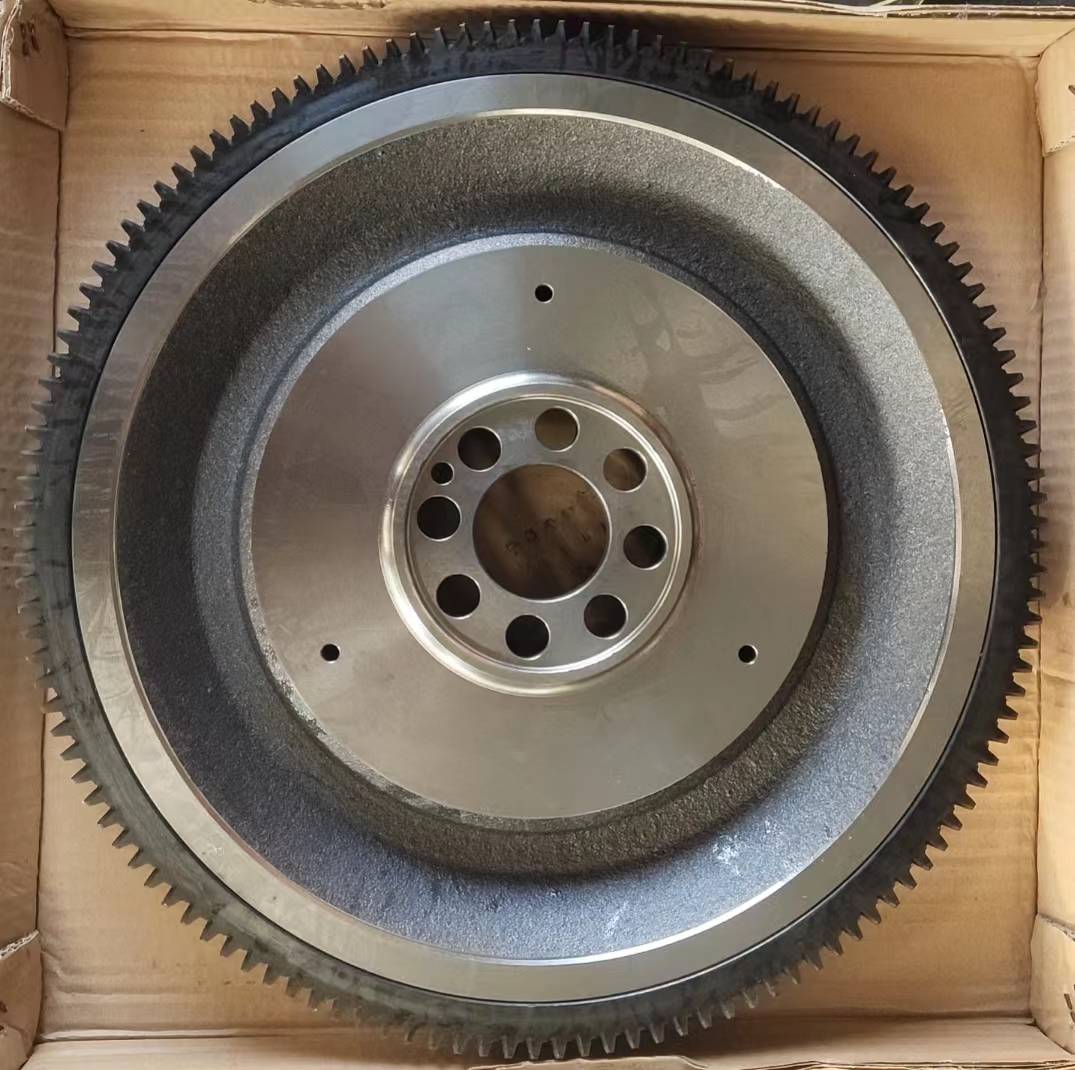
This is the 6HE1 flywheel: 350 mm, 129 teeth, exactly like the 6BG1 part above. The crankshaft hub carries eight holes, not six. Nothing else about it looks different in a photograph.
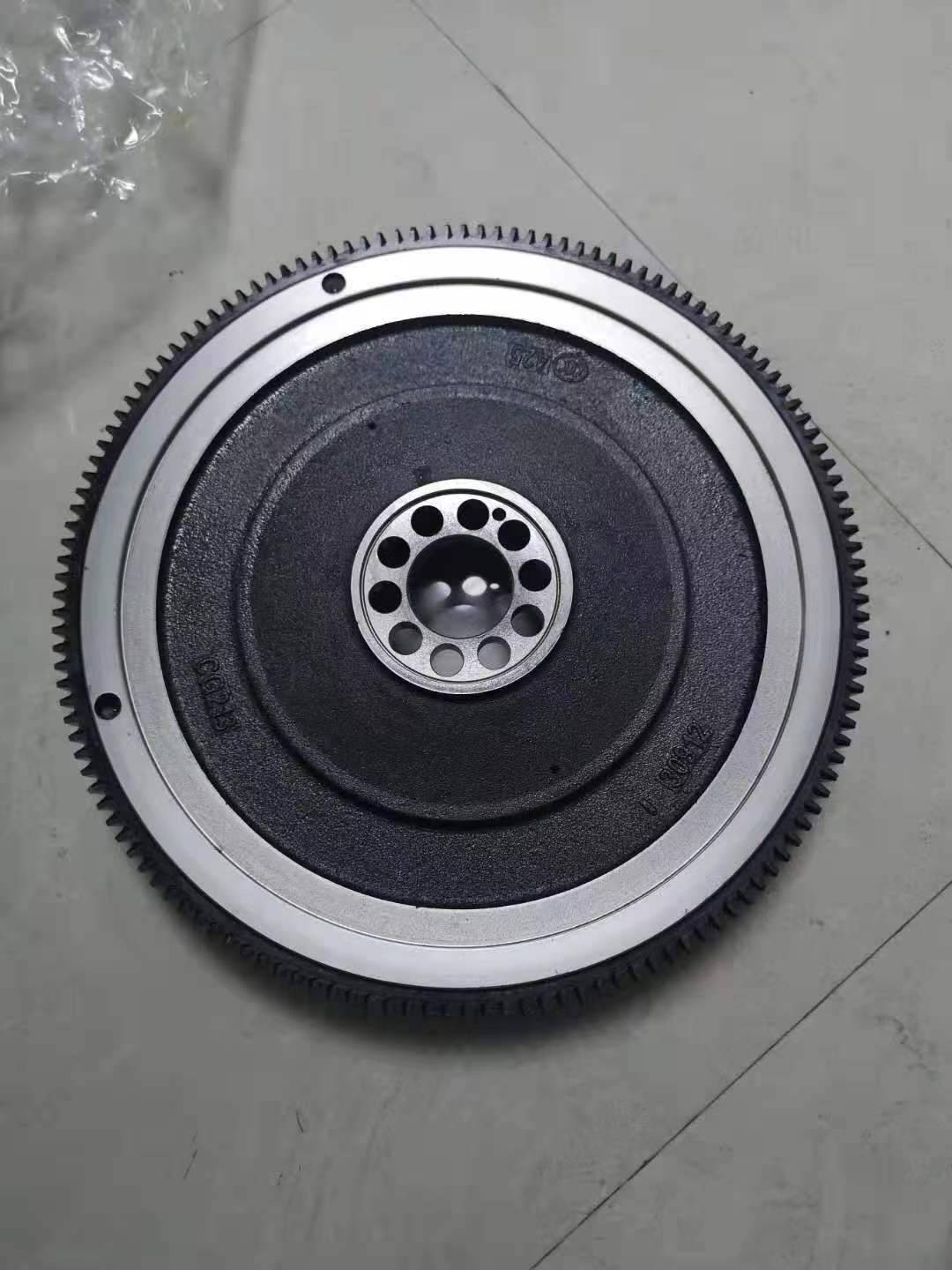
The 6WF1 sitting at the top of the range: 430 mm diameter, 139 teeth, ten crankshaft holes. The hub pattern, not the diameter, is what puts it in a different family from the 6RB1 below.
One caution before you use bolt count on its own. Four-cylinder ISUZU engines such as 4JB1 and 4BE1 also use a six-bolt crank, but with a flywheel under 300 mm. Bolt count narrows the field. It does not finish the job.
Trap one: 350 mm and 129 teeth come in two bolt patterns
This is the part that catches most buyers, and it is worth stating flatly.
At 350 mm with 129 teeth, ISUZU used two different crankshaft flanges:
- 6BD1 and 6BG1, six crankshaft bolts, reference 1-12331-164
- 6HE1 and 6HH1, eight crankshaft bolts, reference 8-94395450
Same outer diameter. Same tooth count. Same clutch face diameter in most applications. Different number of bolt holes in the centre.
A buyer who measures the diameter, counts the ring gear teeth, and orders on those two numbers has a fifty per cent chance of being wrong. The part will be the right size and will not bolt on.
And 350 mm carries four distinct parts in total, because the tooth count also changes:
- 350 mm, 129 teeth, six bolts, for 6BD1 and 6BG1
- 350 mm, 140 teeth, six bolts, for 6BG1, reference 1-12331-158
- 350 mm, 129 teeth, eight bolts, for 6HE1 and 6HH1
- 350 mm, 140 teeth, eight bolts, for 6HH1, reference 1-12331-5140
A second 6BG1 variant from our shop, marked F4. The crankshaft hub is still six holes, but the machined friction ring runs much wider toward the rim and the hub face carries extra small holes. This is the same engine code as the first 6BG1 photograph, and a different casting.
Trap two: 430 mm and 139 teeth split into eight and ten bolts
At the top of the range ISUZU used 430 mm with 139 teeth across six engine codes, and split it into two bolt patterns.
Eight bolts:
- 6RA1 and 6RB1
Ten bolts:
- 6WA1 and 6WA1TC
- 6WF1, in two versions that suppliers list as 403 and 418
- 6WG1, reference 1-12330-442
- 6UZ1
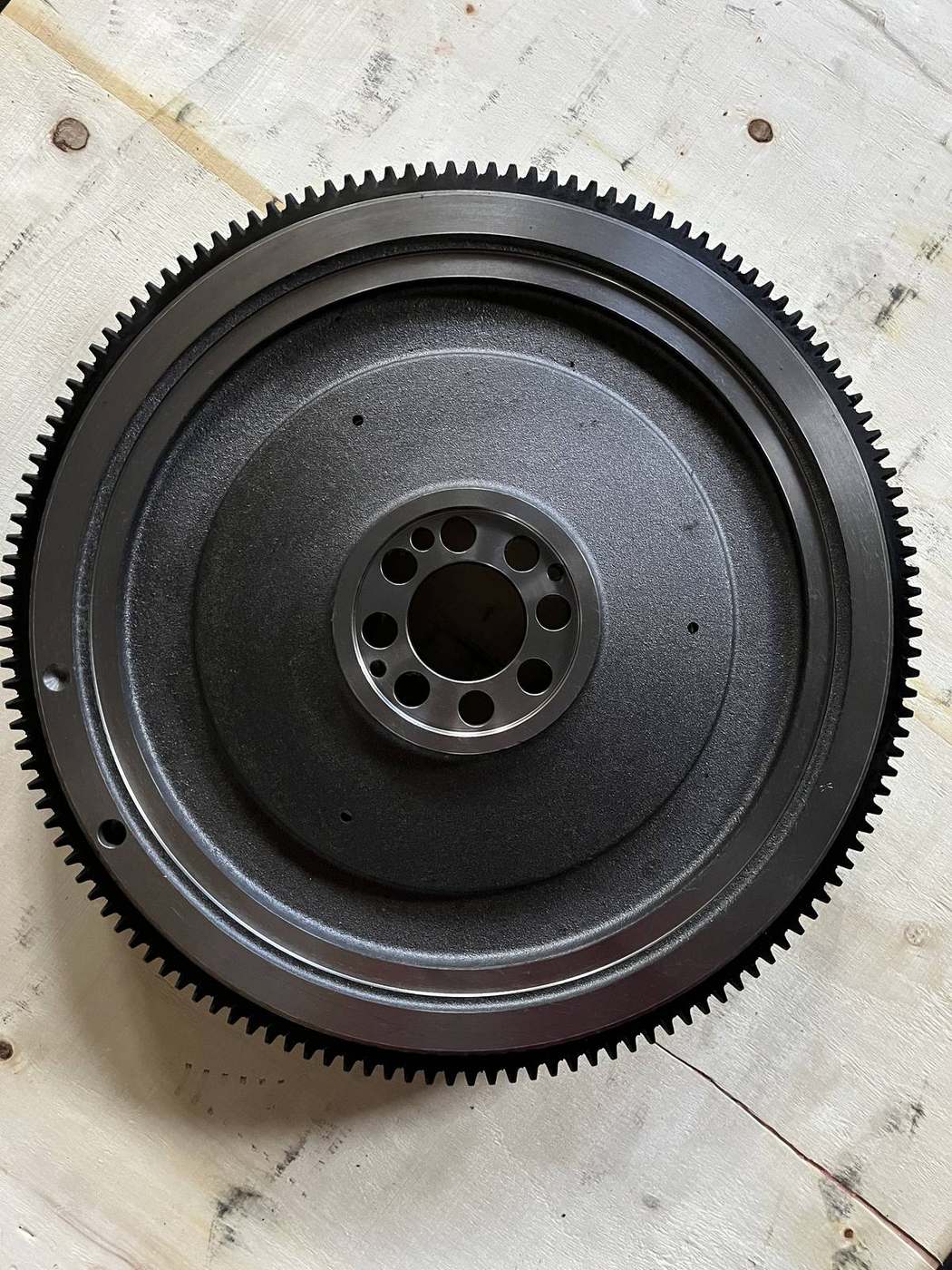
The 6RB1 flywheel is 430 mm with 139 teeth and eight crankshaft holes. Put it next to the 6WF1 above and the only difference you can see is the hub.
A 6WG1 flywheel will not go onto a 6RB1 crankshaft, and the reverse is also true. Both are 430 mm. Both have 139 teeth. There is no adapter and no redrilling worth doing, because the crankshaft flange is machined to take the bolts it was designed for.
The 6WG1 part is the heaviest of the group. One supplier lists it at 493 mm overall outside diameter with a 96 mm height, a 62 mm pilot bore, a 456 mm bolt circle and a weight around 40 kg. The 430 mm figure is the clutch coupling size, not the rim. When you are measuring at the bench, measure the rim.
Trap three: one engine code, two flywheel sizes
Not every trap is about bolt count. Some engine codes were built with two entirely different flywheel diameters as the design changed.
6SD1 appears in supplier catalogues at both 430 mm with 160 teeth and 380 mm with 140 teeth. Same engine code, two sizes, both listed as current. If you are ordering a 6SD1 flywheel you need the build year or the old part in your hand.
6HK1 appears at 380 mm with 140 teeth on eight bolts, and at 380 mm with 129 teeth on six bolts. The bolt count tells you which one you have, but only if you check it.
6HE1 appears at 325 mm with 129 teeth and at 350 mm with 129 teeth.
6BG1 appears at 350 mm with 129 teeth and at 350 mm with 140 teeth.
The working rule is that the engine code gets you to two or three candidates. The old part picks one. A photograph of the old part, taken square to the face and to the rear, usually settles it in one exchange.
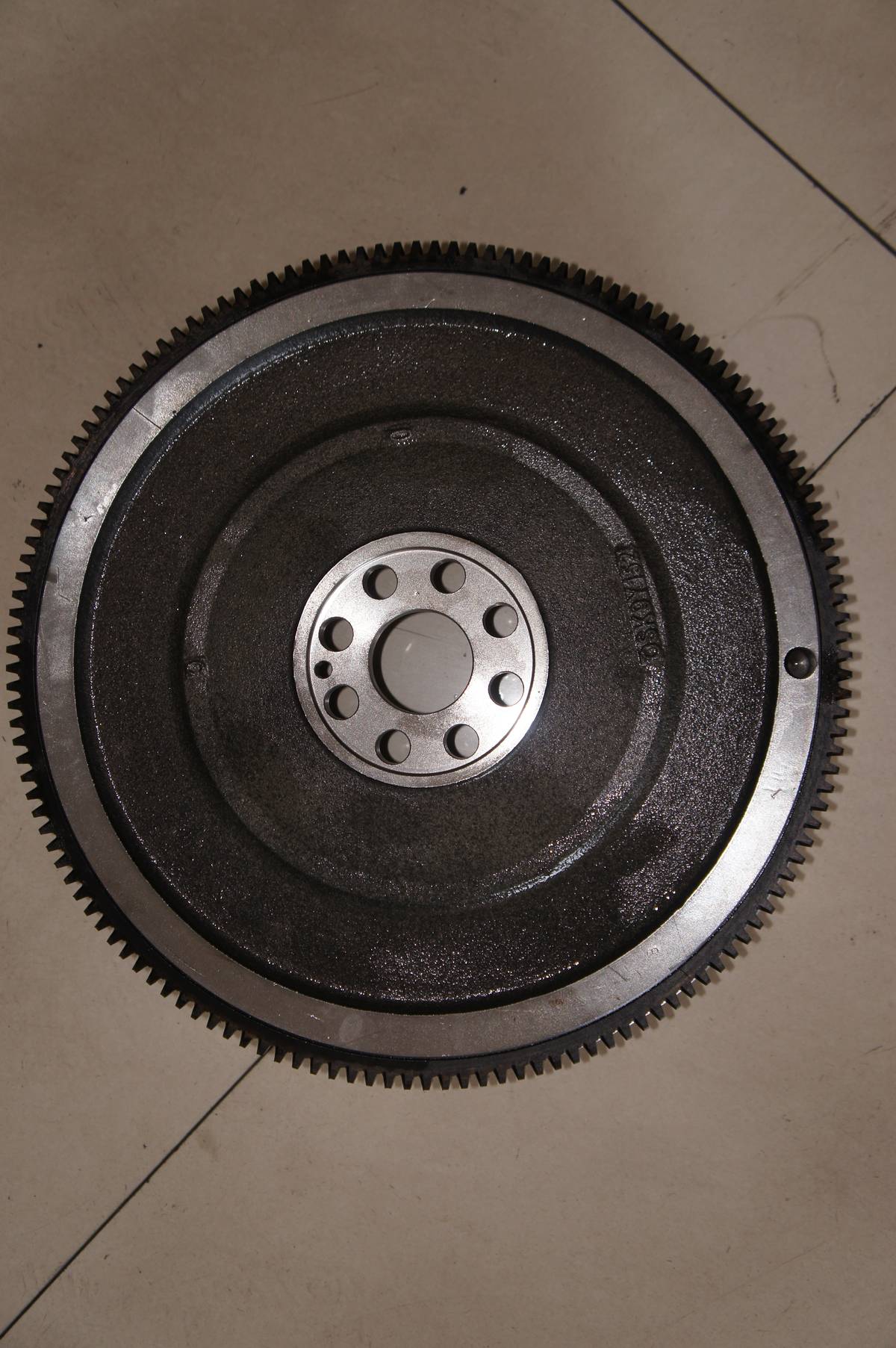
The 6SA1 flywheel at 380 mm with 140 teeth and eight crankshaft holes. ISUZU supplied 6SA1 in an earlier version and in this later one, and the two are not interchangeable on every build.
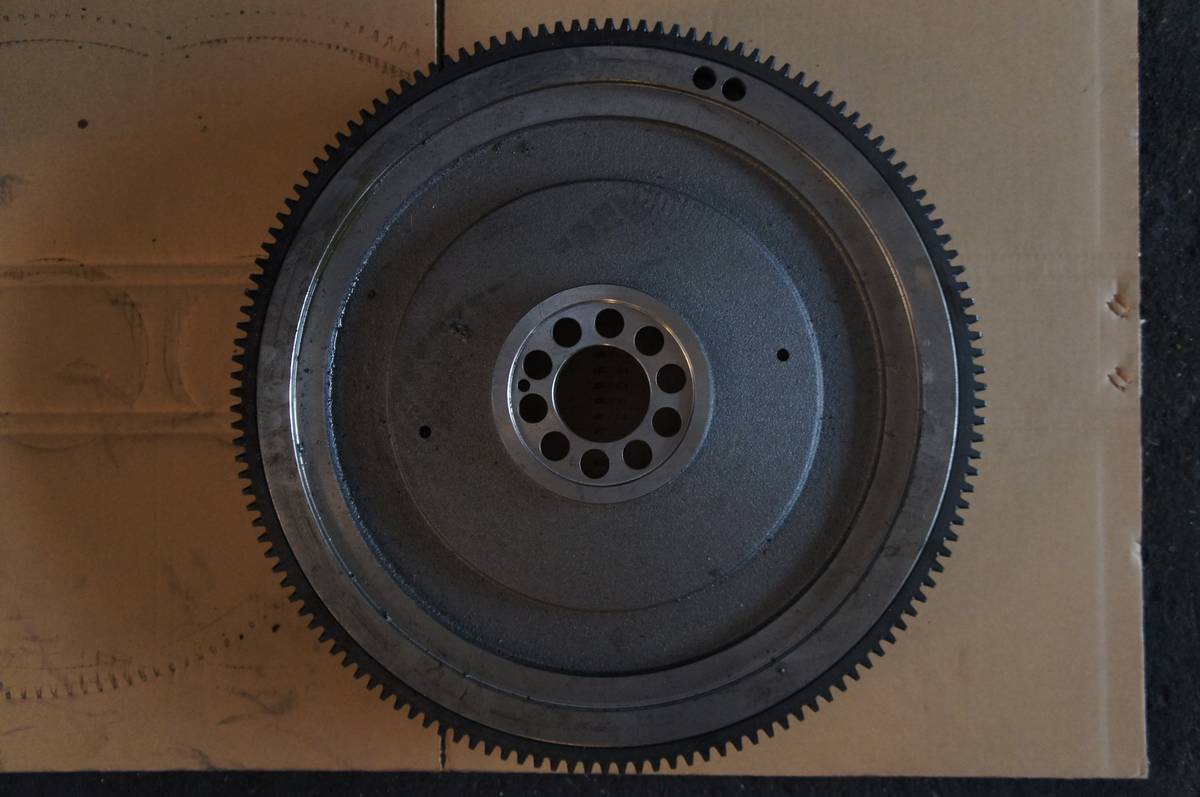
The 6WA1TC, workshop-marked 139T and 10H on the photo. 430 mm, 139 teeth, ten crankshaft holes, and a second pair of small holes on the rim for timing.
The electronic divide: what the signal ring tells you
Everything above is about mechanical fit. There is a second question that decides whether the engine will run: does the flywheel carry a crankshaft position target.
An electronically controlled diesel needs to know exactly where the crankshaft is. ISUZU solved this in two ways. On some engines the target is machined into the flywheel rim. On others it is a ring of small holes turned into the face next to the friction ring, which a sensor reads as the crankshaft turns.
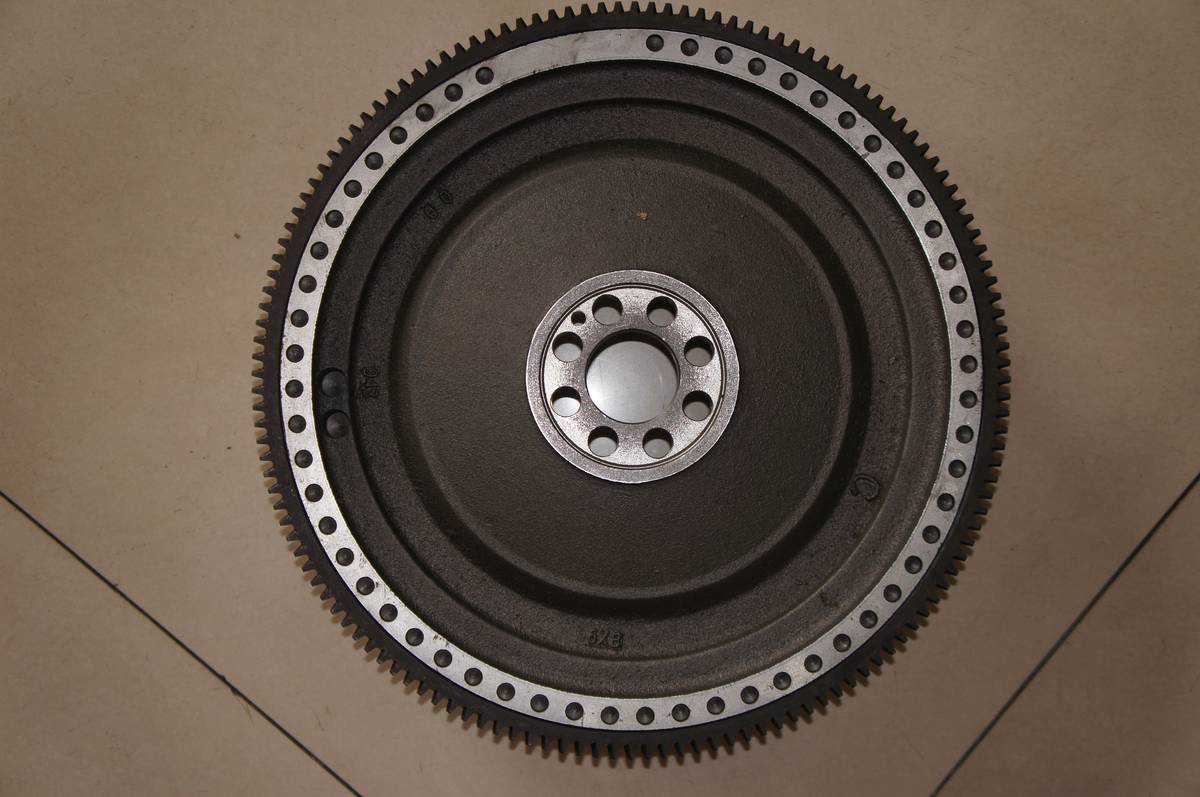
This is a 6HK1 flywheel. Look at the ring of small holes running around the inside of the friction face. Our workshop calls this part the 56 signal hole version, and the count matters: 56 holes is the crankshaft position pattern this engine expects. The flywheel itself is 380 mm with 140 teeth and eight crankshaft bolts, all of which you can read from the outside. The signal holes are the part that is easy to miss.
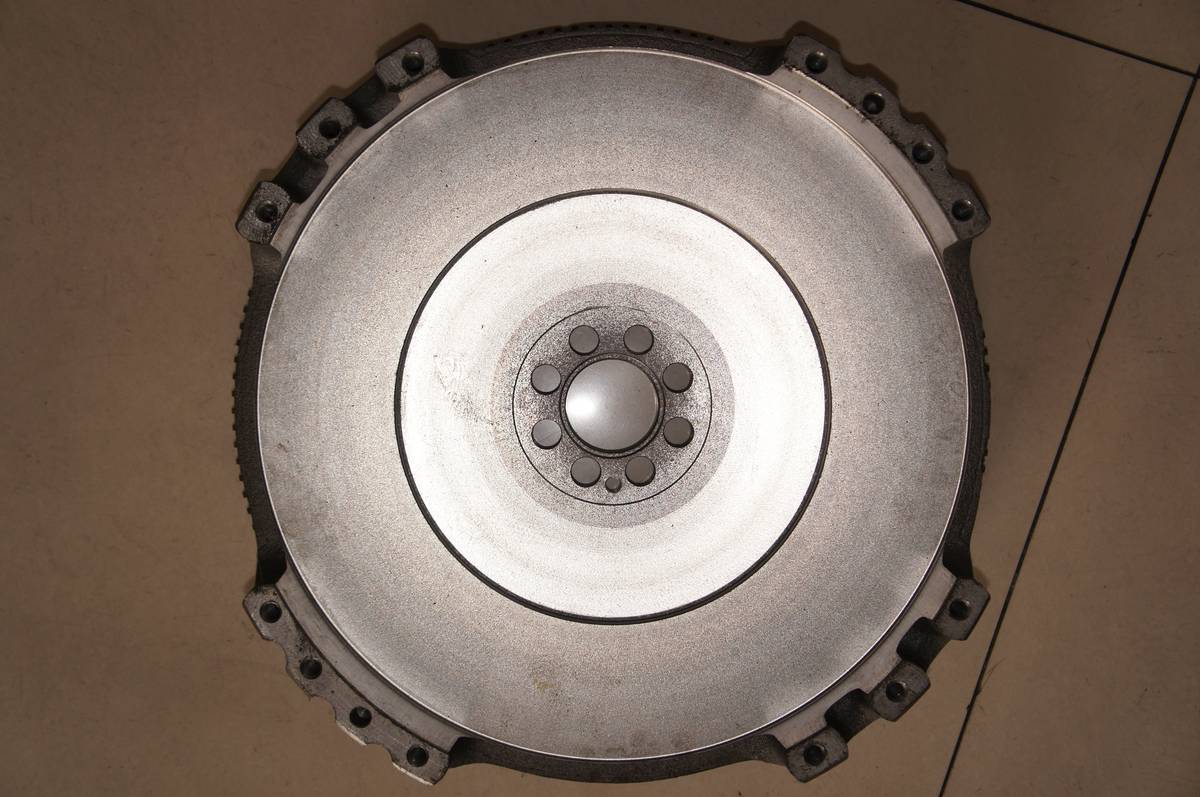
The same part from the rear. The crankshaft hub is on the left of the pattern, and the ring gear sits at the rim. The signal holes pass right through the disc, which is why they are visible from both sides once you know to look.
Three things follow from this.
First, the signal pattern is machined into the casting. It cannot be added afterwards, and it cannot be removed. A mechanical-era flywheel has no ring at all. If you fit one to an electronic engine the ECU never sees a crank signal and the engine does not start. If you fit an electronic flywheel to an engine that does not expect it, the extra holes are simply ignored, and the engine runs, which is why the mistake often goes unnoticed until a rebuild.
Second, the engine code alone will not tell you which one you need. 6SA1 was supplied in a non-electronic version and in a later version with the signal pattern. 6SD1 appears with a signal ring turned into the 380 mm rim. 6HK1 is the common rail successor to the 6HE1, and the electronic flywheel is part of that change.
Third, a photograph settles it faster than any number. A signal ring is obvious in a picture of the front face and invisible in a part number. If you are buying remotely, photograph the rim.
Reading an ISUZU flywheel part number
ISUZU flywheel numbers arrive in two families, and the same number is written several ways depending on who typed it.
The older form looks like 1-12331-164 or 1-2331164. The later service form looks like 8-94395-450 or 8-97326227-0. The leading digit is a rough age marker: numbers beginning with 8 are usually the newer service replacement.
The formatting is the real problem. These are all the same number:
- 1-12331-164
- 1-12331-164-3
- 1123311643
- 1-2331164
Dashes removed, trailing revision dropped, leading zeros trimmed. If a search on a part number returns nothing, retype it in the other styles before you conclude the part does not exist. This one habit solves a large share of sourcing dead ends.
Numbers we work with regularly, in the form customers send them:
| Engine | Flywheel | Reference part number |
|---|---|---|
| 4HF1 | 325 mm, 138T, 8 bolts | 8-97326227-0 |
| 6BG1 | 350 mm, 129T, 6 bolts | 1-12331-164 / 1-2331164 |
| 6BG1 | 350 mm, 140T, 6 bolts | 1-12331-158 / 1-2331158 |
| 6HE1 | 350 mm, 129T, 8 bolts | 8-94395450 |
| 6HH1 | 350 mm, 140T, 8 bolts | 1-12331-5140 |
| 6HK1 | 380 mm, 140T, 8 bolts | 8-94390943 |
| 6SA1 | 380 mm, 140T, 8 bolts | 1-12331-162 |
| 6WG1 | 430 mm, 139T, 10 bolts | 1-12330-442 |
One habit to drop: do not treat a number cast or stamped into the flywheel as the part number. Cast marks on flywheels are usually mould numbers, heat numbers or traceability codes. A seven-digit string with no prefix, or a short code mixing letters and digits, is almost always a traceability mark rather than a service number. Only a number that resolves in a parts system is a part number.
How to confirm the right flywheel before you order
Six measurements decide it. If you have the old flywheel, take all six. If you do not, send what you can and we will work from the engine code and the vehicle.
- Engine code, and the build year if you know it
- Flywheel outer diameter, measured across the rim, not the friction face
- Ring gear tooth count
- Crankshaft bolt hole count and the bolt circle diameter, not just the count
- Whether there is a signal ring, and how many holes are in it
- Clutch diameter and clutch cover bolt pattern
Measure the bolt circle, not only the number of holes. Two flywheels with six crankshaft bolts can still have different hole sizes and different circles.
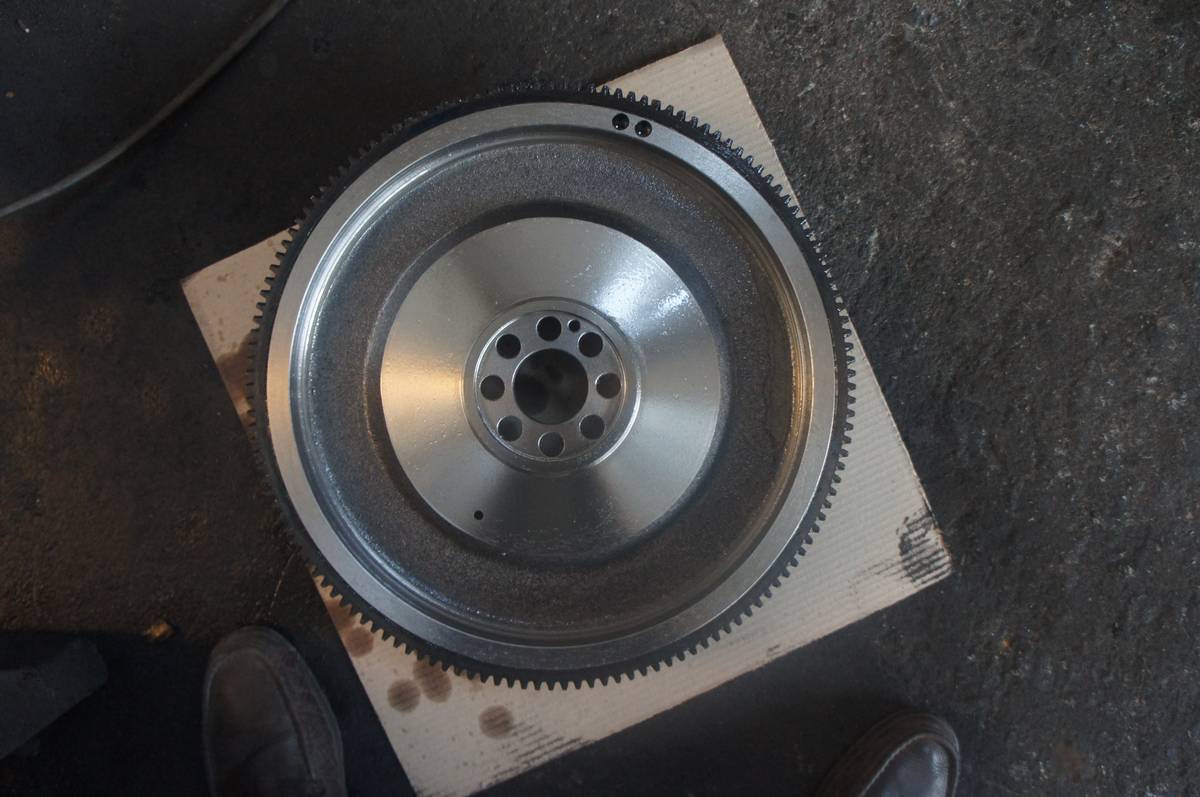
The 6HH1 flywheel, 350 mm with 140 teeth and eight crankshaft holes. The mark cast on this part is WF-41, our internal drawing code for this 6H family casting, and the workshop normally marks the 6HH1 by it. Marks in this series, WF-2, WF-35 and WF-41, appear across the 6H family. They are not part numbers, but when the service number has worn off or was never cast in, a clear photo of the mark lets us match the casting to the right engine and tell you what it is.
If you do not have the old part, send us the engine code, the truck or machine model and year, and a photo of the rear face where the crankshaft bolts go. In most cases that is enough to name the part, and where it is not we will say so rather than guess.
FAQ
Does a 6BG1 flywheel fit a 6HE1?
No. Both came at 350 mm with 129 teeth, but the 6BG1 crankshaft takes six bolts and the 6HE1 takes eight. The flywheel is the right diameter and the wrong flange. Check the bolt count on both parts before you buy either.
How many teeth does an ISUZU flywheel ring gear have?
Across the range we produce, from 108 teeth on the four-cylinder 4JB1 up to 164 teeth on the ten-litre engines. In the six-cylinder truck range the common counts are 129, 138, 139, 140 and 160. The count has to be measured on your part; it cannot be inferred from the engine code.
What is the ISUZU 6HK1 signal hole flywheel?
It is the version with a ring of small holes machined into the face next to the friction ring, which tells the crankshaft position sensor where the crank is. The 6HK1 part we produce carries 56 of these holes. A flywheel without the ring will not run an electronically controlled engine, so the signal face has to match as well as the bolt pattern.
Can I use a flywheel from a 6RB1 on a 6WG1?
No. Both are 430 mm with 139 teeth, but the 6RB1 crankshaft takes eight bolts and the 6WG1 takes ten. There is no safe way to adapt one to the other.
Why do I find two different sizes for the 6SD1 flywheel?
Because ISUZU built it in more than one configuration. Supplier catalogues list 6SD1 at both 430 mm with 160 teeth and 380 mm with 140 teeth. If your listing shows both and your engine code does not resolve it, the build year or the old part will.
What does the 8- prefix on an ISUZU part number mean?
It marks the later service numbering series against the older 1- form. Numbers beginning with 8 are usually the newer replacement for the same physical part. Both forms describe the same family of flywheels, and both are written with and without dashes.
Can I redrill a six-bolt flywheel to fit an eight-bolt crank?
Not to a standard we would stand behind. The crankshaft flange is machined for a specific bolt circle and hole size, and redrilling a cast flywheel leaves a part that is neither balanced nor dimensionally predictable. On a safety-relevant rotating part, order the correct part.
What do you need to quote an ISUZU flywheel?
The engine code, the flywheel outer diameter, the ring gear tooth count, the crankshaft bolt count and bolt circle, whether the part carries a signal ring and how many holes, and the clutch diameter. If you have the old flywheel, a photo of the front face and the rear face is worth all of it. Send those to Irene at [email protected], or call +86 19953662121. We produce these flywheels at our foundry in Changyi Wangke Industrial Park, Shandong, and ship FOB Qingdao.
Where to go next
If you are working through more than one brand, the same trap exists elsewhere. Our Fuso flywheel part number chart covers how 129 teeth spans four different diameters on the Mitsubishi range, and our ring gear tooth count guide explains why the tooth count can never be taken from the engine code alone.
For the specific ISUZU parts, see the ISUZU engine flywheel range and the matching ISUZU flywheel ring gear. If you need another Japanese engine covered in the same format, the 4HF1 flywheel page goes deeper on one engine, and the Japanese engine flywheel and ring gear range lists what we cast across the brands.
Send a part number, or send a photo of both faces, and we will tell you which part it is. Request a quote and we will come back with the price and the lead time.