
Cast Iron Grade Conversion: HT250 & QT500-7 vs ASTM, EN, JIS, GOST
Cast Iron Grade Conversion: HT250 & QT500-7 vs ASTM, EN, JIS, GOST
A Russian buyer asks for “SCh25”. A Brazilian buyer wants “ASTM A48 Class 35”. A Japanese buyer says “FC250”. Three enquiries, three different naming systems — and all three are asking for the same thing: a gray iron with minimum tensile strength around 250 MPa. In China that grade is called HT250.
Grade mismatch is one of the most avoidable sources of friction in cross-border sourcing. The buyer knows the standard from their own country but not what to ask a Chinese supplier for; the supplier answers “we have HT250” and the buyer cannot confirm it matches. Three rounds of email later, a week is gone.
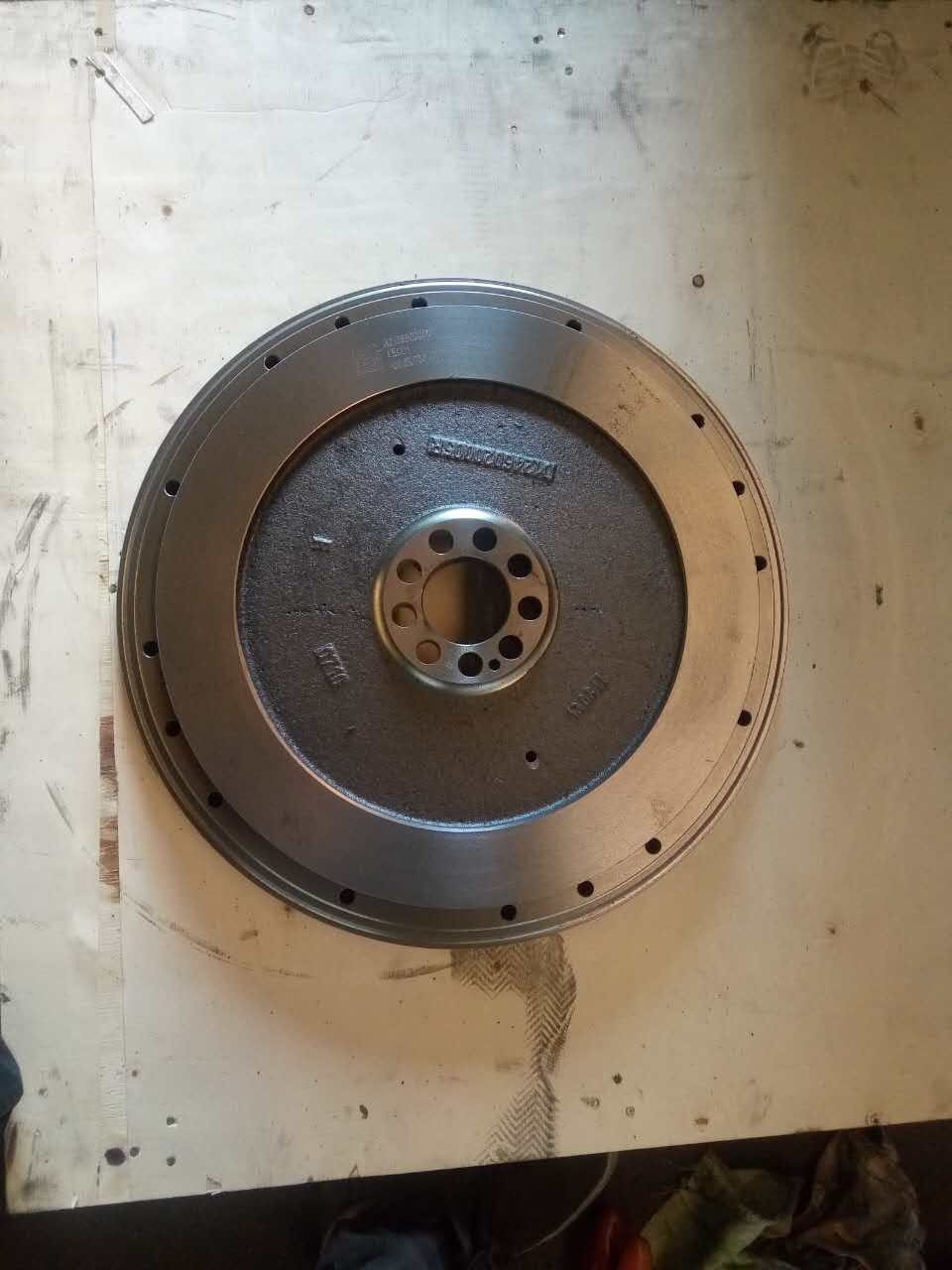
This article lines up the common cast iron grades across the Chinese, European, American, Japanese and Russian systems, then covers three things that matter more than the grade itself: wall-thickness effects, test bar types, and how to read a material report. We are an IATF 16949 certified iron foundry producing flywheels, ring gears, timing gear housings and cylinder blocks — this conversion table is what we actually use in daily production.
Table of Contents
- Two Families First: Gray Iron vs Ductile Iron
- Gray Iron Grade Conversion Table
- Ductile Iron Grade Conversion Table
- Malleable Iron (Pipe Fittings)
- The Grade Is Not Enough: Wall Thickness Effects
- Test Bar Type: Separately Cast, Cast-On, or Cut From Casting
- How to Read a Material Report
- Common Traps
- RFQ Checklist
- FAQ
- Talk to Our Engineering Team
Two Families First: Gray Iron vs Ductile Iron
Engine castings fall into two main families. Get this straight and half the conversion problem is solved.
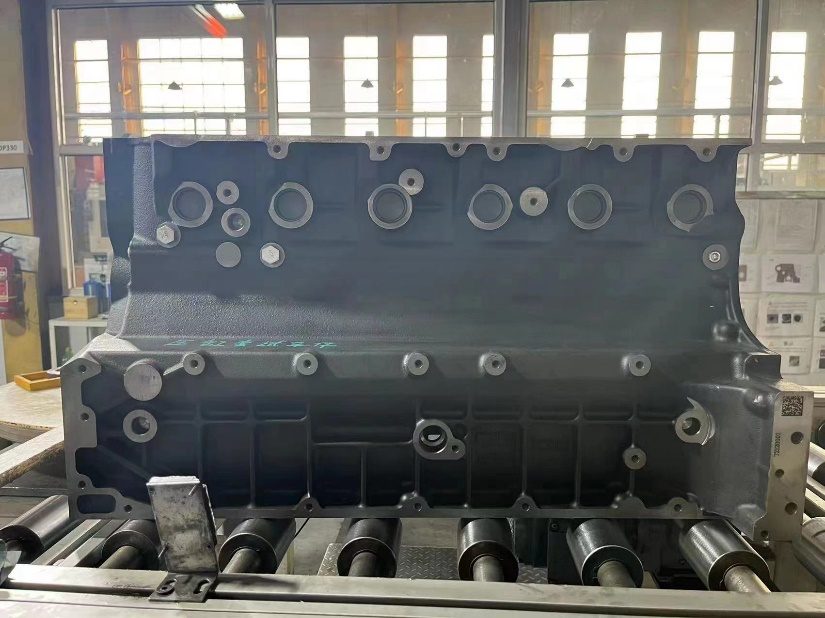
Gray iron: carbon sits in the structure as flakes. The fracture face looks gray — hence the name. It damps vibration extremely well (6–10 times better than steel), casts easily, and costs less. The trade-off is brittleness: almost no elongation. Typical uses: cylinder blocks, cylinder heads, flywheel housings, timing gear housings, brake drums, exhaust manifolds. Chinese grades carry the HT prefix.
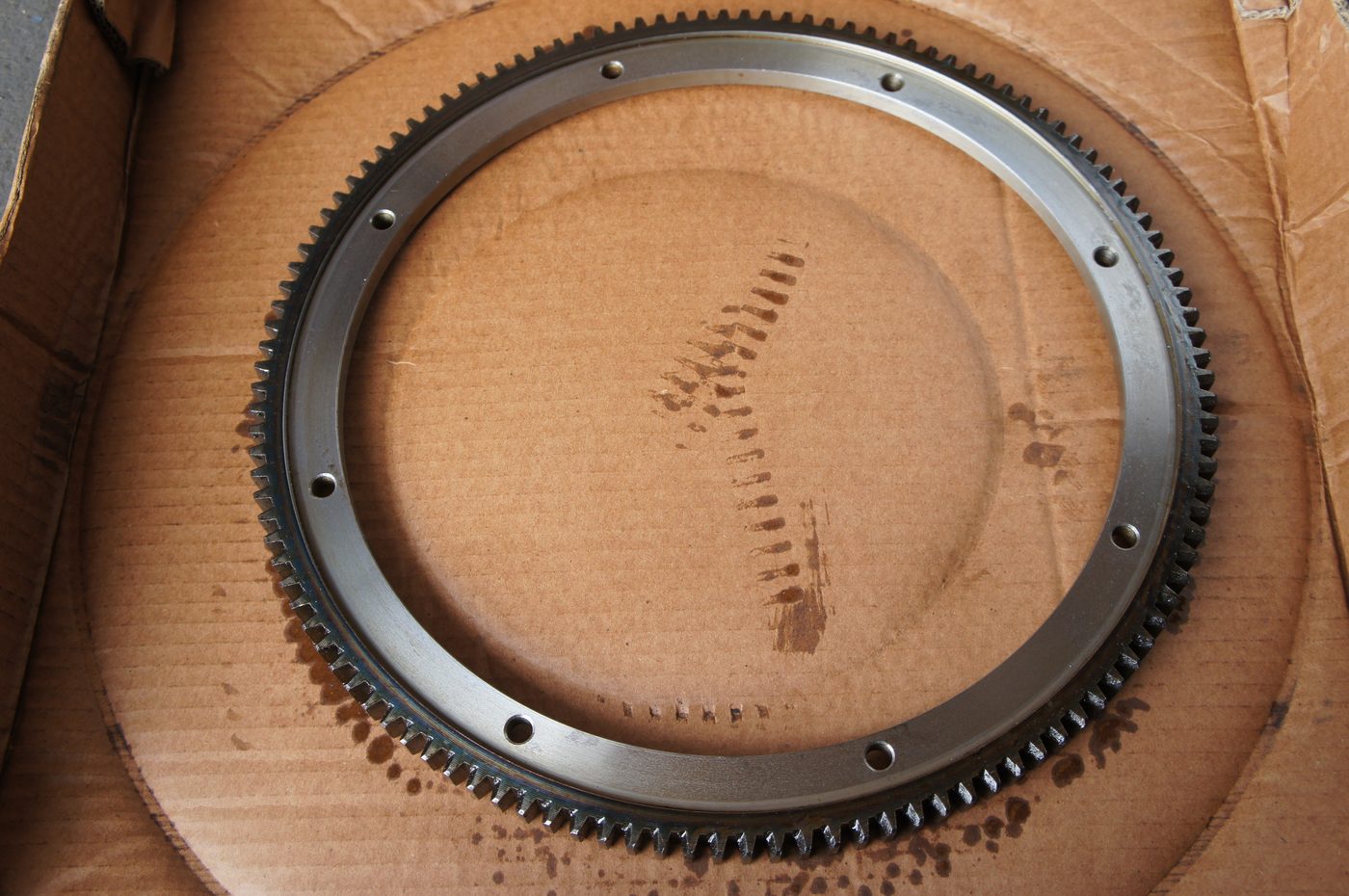
Ductile iron: magnesium or rare-earth treatment makes the graphite form spheres instead of flakes. Strength approaches steel while keeping the castability and damping of iron. Typical uses: crankshafts, flywheels, ring gears, heavy-duty gear housings, wheel hubs. Chinese grades carry the QT prefix.
The one-line rule: choose gray iron where damping and cost lead; choose ductile iron where strength and toughness lead.
Gray Iron Grade Conversion Table
In Chinese GB/T 9439 the number after HT is the minimum tensile strength in MPa (measured on a 30 mm separately cast test bar). European EN 1561 uses the same convention after EN-GJL, so those two align almost directly. American ASTM A48 Class numbers are in ksi — multiply by 6.895 to get MPa.
| China GB/T 9439 | ISO 185 | Europe EN 1561 | USA ASTM A48 | Japan JIS G5501 | Russia GOST 1412 | Min. tensile |
|---|---|---|---|---|---|---|
| HT150 | JL/150 | EN-GJL-150 | Class 20 (138 MPa) | FC150 | SCh15 | 150 MPa |
| HT200 | JL/200 | EN-GJL-200 | Class 30 (207 MPa) | FC200 | SCh20 | 200 MPa |
| HT250 | JL/250 | EN-GJL-250 | Class 35 (241 MPa) | FC250 | SCh25 | 250 MPa |
| HT300 | JL/300 | EN-GJL-300 | Class 40 (276 MPa) | FC300 | SCh30 | 300 MPa |
| HT350 | JL/350 | EN-GJL-350 | Class 45 (310 MPa) | FC350 | SCh35 | 350 MPa |
Notes worth keeping:
- ASTM Class is a minimum, not a typical value. Class 35 means tensile not below 241 MPa; actual production usually lands at 250–270 MPa. So HT250 covers Class 35 with margin, and a Class 35 drawing requirement is satisfied by HT250.
- SCh is the Latin transliteration of the Cyrillic СЧ. In GOST 1412 you will see СЧ20, СЧ25 — transliterated as SCh20, SCh25. If the prefix is VCh (ВЧ), you are looking at ductile iron.
- Cylinder blocks and heads are mostly HT250, moving up to HT300 on highly rated engines. On the DEUTZ, VOLVO and CUMMINS series we produce, the base material sits at HT250 in most cases.
Ductile Iron Grade Conversion Table
In Chinese GB/T 1348, the two numbers after QT are tensile strength (MPa) and elongation (%). QT500-7 means 500 MPa tensile and 7% elongation. European EN 1563 follows the same logic after EN-GJS. American ASTM A536 uses three numbers: tensile ksi — yield ksi — elongation %.
| China GB/T 1348 | ISO 1083 | Europe EN 1563 | USA ASTM A536 | Japan JIS G5502 | Russia GOST 7293 |
|---|---|---|---|---|---|
| QT400-18 | JS/400-18 | EN-GJS-400-18 | 60-40-18 | FCD400 | VCh40 |
| QT450-10 | JS/450-10 | EN-GJS-450-10 | 65-45-12 | FCD450 | VCh45 |
| QT500-7 | JS/500-7 | EN-GJS-500-7 | 70-50-05 | FCD500 | VCh50 |
| QT600-3 | JS/600-3 | EN-GJS-600-3 | 80-55-06 | FCD600 | VCh60 |
| QT700-2 | JS/700-2 | EN-GJS-700-2 | 100-70-03 | FCD700 | VCh70 |
The ASTM A536 triple, expanded for the row that gets asked about most:
- 70 = 70 ksi ≈ 483 MPa tensile
- 50 = 50 ksi ≈ 345 MPa yield
- 05 = 5% elongation
So QT500-7 ≈ EN-GJS-500-7 ≈ ASTM A536 70-50-05 ≈ FCD500 ≈ VCh50. This is the workhorse grade for flywheels and ring gears, and it is our main production material.
Malleable Iron (Pipe Fittings)
If you work with pipe fittings — elbows, tees, unions — that is a third family: malleable iron. White iron is annealed at high temperature so the graphite takes a temper-carbon (flocculent) shape, giving it real toughness.
| China GB/T 9440 | Europe EN 1562 | USA ASTM A47 | Use |
|---|---|---|---|
| KTH300-06 | EN-GJMB-300-6 | 32510 | General fittings |
| KTH350-10 | EN-GJMB-350-10 | 35018 | High-toughness fittings |
In the fittings trade the standard actually quoted is usually ASTM A197 (malleable iron pipe fittings), not A47. Quote A197 when buying fittings.
The Grade Is Not Enough: Wall Thickness Effects
This is the trap that catches most gray iron buyers, and the reason behind many “the grade matched but the part still failed” stories.
The tensile strength of gray iron drops significantly as wall thickness increases. Same heat, same nominal HT250:
- At 10–15 mm wall, measured strength may reach 280–300 MPa
- At 40–60 mm wall, measured strength may fall to 190–220 MPa
The reason is simple: thick sections cool slowly, the graphite flakes grow coarse, and they cut the matrix more severely.
What this means in practice: buy a thin-wall flywheel housing and HT250 is fine. Buy a heavy cylinder block or a large flywheel, also stamped HT250, and the strength at critical sections may never reach 250 MPa.
The right way to buy heavy sections:
- State the critical wall thickness on the drawing or in the order
- Ask the supplier to commit strength at that wall thickness (EN 1561 itself gives strength by thickness band)
- Or take a step back and agree a hardness range at defined locations — hardness is easy to check and does not destroy the part
On cylinder blocks and large flywheels we cast on test bars and specify body hardness requirements, precisely to avoid this argument later.
Test Bar Type: Separately Cast, Cast-On, or Cut From Casting
Where the strength number on the report came from decides how much that number is worth. Three options:
| Type | Description | Representativeness | Cost |
|---|---|---|---|
| Separately cast | A bar poured on its own from the same heat | Poor — cooling conditions differ completely from the casting | Low |
| Cast-on | The bar is cast attached to the casting, same heat and cooling | Reasonable | Medium |
| Cut from casting | A section is cut out of the actual casting | Best — closest to reality | High (destroys the part) |
Chinese standards default to separately cast bars (30 mm diameter). A separately cast bar only proves “this heat of iron was sound”; it does not prove “your casting is sound”.
For safety-critical parts — flywheels, brake drums, suspension components — specify in the order:
- Cast-on test bars, with the bar location marked on the casting
- Or agreed body hardness test points and acceptable range
- For volume production, an agreed rate of destructive sampling from the body
How to Read a Material Report
A proper foundry ships with a material report, usually EN 10204 3.1 — issued by the manufacturer, declaring conformity to the order with actual measured results. Type 3.2 involves third-party witness and is normally only required for classification societies, nuclear and similar work.
A usable 3.1 report should carry at least these seven items:
| Item | What to check | Note |
|---|---|---|
| Heat / batch number | Can you trace it back to a specific heat? | A report without a heat number is worth nothing |
| Grade + standard number | Is it GB or ASTM, and which year’s edition? | Requirements can shift a lot between editions |
| Chemical composition | C, Si, Mn, P, S (plus Mg and RE for ductile iron) | Measured on a spectrometer |
| Tensile strength | Actual value, not just “pass” | Note which type of test bar |
| Hardness | HBW value plus test location | The most practical thing to verify on site |
| Metallography | Graphite form, nodularity (ductile), pearlite content | Nodularity usually required ≥ 80% |
| Heat treatment condition | As-cast / annealed / normalized / stress-relieved | Same grade, very different properties by condition |
Typical composition ranges for cross-checking (not acceptance limits):
- HT250: C 3.0–3.4%, Si 1.4–2.0%, Mn 0.6–1.0%, P < 0.15%, S < 0.12%
- QT500-7: C 3.5–3.9%, Si 2.3–2.9%, Mn 0.3–0.6%, P < 0.08%, S < 0.025%, residual Mg 0.03–0.06%
Hardness reference:
- HT250: 180–220 HBW (commonly 190–210)
- QT500-7: 170–230 HBW
We run a SPECTRO spectrometer on every heat, an infrared carbon-sulfur analyzer to confirm C and S, and metallographic microscopy for nodularity and graphite form. Those numbers all go into the report.
Common Traps
- “Equivalent” does not mean “interchangeable.” The tables align on tensile strength; chemical composition, metallographic requirements and heat treatment condition differ between systems. Where a drawing carries a mandatory requirement, inspect to the original standard — do not simply swap the grade.
- Specifying a grade without hardness. The grade guarantees test-bar strength; hardness is what you can actually verify on the shop floor. For flywheels and ring gears, agree a hardness range too.
- Ignoring heat treatment condition. As-cast and annealed QT500-7 can differ by a factor of two in elongation. State the condition in the order.
- Ordering ductile iron without a nodularity requirement. Poorly nodulized ductile iron loses strength off a cliff. Ask for nodularity figures or photomicrographs in the report.
- Copying a thin-wall grade onto a heavy section. Back to wall thickness — re-confirm strength against the actual section.
- Not pinning the standard edition. GB/T 9439 has 1988 and 2010 editions; ASTM A48 has been revised too. Older editions can be more lenient.
RFQ Checklist
Include these and you will cut two or three email rounds out of the process:
- Grade + standard number + edition year (e.g. ASTM A48 Class 35 / ASTM A48M-22)
- Critical wall thickness of the part (mandatory for heavy sections)
- Required hardness range and test locations
- Heat treatment condition (as-cast / annealed / normalized / stress-relieved)
- Test bar type (separately cast / cast-on / body sampling rate)
- Whether an EN 10204 3.1 report is needed, and whether third-party witness is required
- Quantity, destination port, and whether third-party inspection (SGS / TUV / BV) applies
Not sure which Chinese grade matches the one in your hand? Send a screenshot of the standard or the material requirements page of the drawing and we will match it for you.
FAQ
Is SCh25 the same as HT250?
Yes. SCh25 (GOST 1412, Cyrillic СЧ25) is a gray iron with 250 MPa minimum tensile — the same strength tier as HT250, EN-GJL-250 and FC250. Watch the prefix: VCh (ВЧ) is ductile iron, so VCh50 corresponds to QT500-7.
What material should I use for ASTM A48 Class 35?
HT250 generally satisfies it. Class 35 requires tensile not below 241 MPa while HT250 is specified at 250 MPa, leaving margin. If the drawing also calls out hardness, check against that as well.
Can the conversion tables be used directly for a design substitution?
Not recommended. The tables align on strength, but composition and metallographic requirements differ between systems. Where a drawing has a mandatory requirement, inspect to the original standard; the table is a good starting point when you are simply qualifying an alternative source.
Why is the same HT250 so much weaker in a thick section?
Coarse graphite flakes form where cooling is slow, cutting the matrix more severely, and strength falls with them. It is inherent to gray iron; ductile iron is far less sensitive to section size.
Does separately cast vs cast-on really matter much?
Little on thin-wall parts; on heavy sections the difference can reach 30–50 MPa. For safety-critical parts, ask for cast-on bars or body hardness.
Is an EN 10204 3.1 report mandatory?
3.1 is enough for normal trade. 3.2 (third-party witness) is normally reserved for classification societies, pressure vessels and nuclear work, and costs considerably more.
What nodularity counts as acceptable for ductile iron?
Conventionally ≥ 80% (GB/T 1348 grades by level; most industrial parts work to grade 3 or better). Critical parts can specify ≥ 90%.
Can you produce and certify to ASTM or EN?
Yes. We produce to whichever system the customer names and can issue reports in GB, EN or ASTM format, with chemical composition, mechanical properties, hardness, metallography and heat traceability.
Can you work from a sample part if there is no drawing?
Yes. Send the sample and we will measure composition (spectrometer), hardness and key dimensions, then match a grade in your target standard system and quote.
What is the usual MOQ and lead time?
Castings typically start at 50 pieces depending on size and tooling. With existing tooling, 7–10 days; new tooling, 20–30 days. FOB Qingdao.
Talk to Our Engineering Team
Need to convert an ASTM, EN, JIS or GOST grade into a Chinese one, or want to confirm whether your drawing’s material requirement can be met? Send the standard number or the material requirements page of the drawing and we will come back with the matching grade, a material proposal and a quotation. IATF 16949 certified iron foundry — FOB Qingdao.
- Email: [email protected]
- Phone / WeChat / WhatsApp: +86 19953662121
- Factory: Wangke Industrial Park, Changyi, Weifang, Shandong, China
- Online inquiry: https://www.changweiintl.com/en/inquiry
Related reading:
– Cast Iron vs Steel Flywheels: Which Should You Choose
– Timing Gear Housing Oil Leaks, Noise & Timing Faults: Diagnosis & Replacement Guide
– Ring Gear Manufacturing: Process & Quality Control
– Why IATF 16949 Certification Matters to Engine Parts Buyers