
Nissan UD Flywheel Part Numbers: FE6, PE6, PE6T, RE8, RD8 Size and Teeth Chart
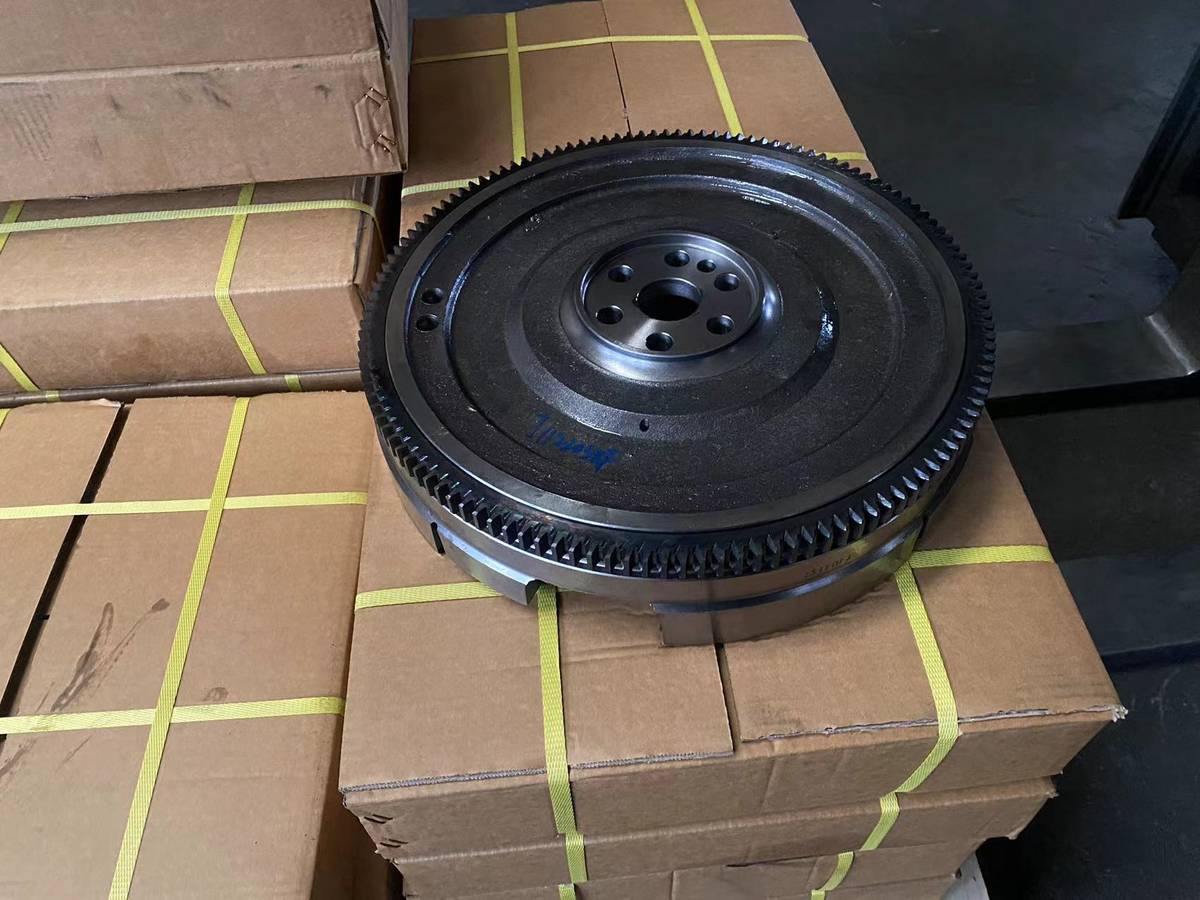
Nissan UD Flywheel Part Numbers: FE6, PE6, PE6T, RE8, RD8 Size and Teeth Chart
Most Nissan UD flywheel inquiries we receive start the same way: a photo of a worn flywheel, a tape measure laid across the ring gear, and a message that says 430 mm, 140 teeth. That is a good start, but it is not enough to identify the part.
At 430 mm, the Nissan UD range used at least four different flywheels. Two of them share the same 140-tooth ring gear and differ only in the bolt pattern. If you order on diameter and teeth alone, you have a real chance of receiving a flywheel that will not bolt to your crankshaft.
This page collects the part numbers and dimensions we can cross-check against more than one source, explains the three engine families behind them, and tells you exactly what to send us so the quote is right the first time.
Table of Contents
- The Three Engine Families Behind These Flywheels
- Part Numbers and Dimensions We Can Verify
- Why 430 mm Covers Four Different Flywheels
- How to Read a Nissan UD Flywheel Specification
- One Engine, Two Flywheels
- The Nissan UD Flywheel Range We Hold in Stock
- Cast Marks That Are Not Part Numbers
- What to Send With Your Inquiry
- FAQ
The Three Engine Families Behind These Flywheels
Nissan Diesel, now sold as UD Trucks, built its heavy truck range around three engine groups. The flywheel changed with the group, not with the truck badge.
The first group is the small six. FE6 and NE6 are inline sixes with a bore in the 108 to 110 mm range. FE6 displaces 6,925 cc with a 108 x 126 mm bore and stroke, naturally aspirated. These engines take a 350 mm flywheel.
The second group is the big six. PD6, PE6, PE6T and PF6 share a bore between 125 and 133 mm. PE6 displaces 11,670 cc on a 133 x 140 mm bore and stroke in naturally aspirated form, and the same block runs to 280 PS when turbocharged as the PE6-T. PF6-TA and PF6-TB stretch the stroke to 150 mm for 12,503 cc. These engines take a 430 mm flywheel.
The third group is the V8. RD8, RE8, RF8, RG8 and RH8 run eight cylinders. RE8 displaces 15,115 cc on a 135 x 132 mm bore and stroke. RF8 is 16,991 cc, and RH8 reaches 21,205 cc on a 150 x 150 mm bore and stroke. These engines also take a 430 mm flywheel.
That last sentence is the reason this page exists. An inline six and a V8 share the same flywheel diameter. Diameter alone tells you nothing.
Part Numbers and Dimensions We Can Verify
The table below lists the flywheels where we found the same part number and the same dimensions in more than one independent catalogue. We only publish numbers we could cross-check. Numbers that appeared in a single listing are left out.
| Engine | OEM part number | Diameter | Ring gear teeth | Bolt holes | Thickness |
|---|---|---|---|---|---|
| FE6 | 12310-Z5705 | 350 mm | 129T | 6H | 16.5 mm |
| PE6T | 12311-90228 | 430 mm | 153T | 9H | 16.5 mm |
| RD8 / RF8 | 12310-97619 | 430 mm | 140T | 10H | 16.5 mm |
Two things are worth pointing out.
First, note the 16.5 mm thickness in every row. Thickness is not a useful identification field on Nissan UD flywheels because so many of them use the same one.
Second, the FE6 row gives two different units in the same catalogue entry: diameter quoted as both 14 inch and 350 mm, weight 34 kg. Nothing unusual. This is an inch-based part family that the aftermarket has re-described in metric, and both numbers survive in circulation.
Why 430 mm Covers Four Different Flywheels
Here is the full 430 mm group as it appears in our workshop records and in supplier catalogues.
| Diameter | Teeth | Bolt holes | Engine |
|---|---|---|---|
| 430 mm | 140T | 9H | RE8 |
| 430 mm | 140T | 10H | RD8 / RF8 |
| 430 mm | 145T | 6H | PE6 |
| 430 mm | 153T | 9H | PE6T |
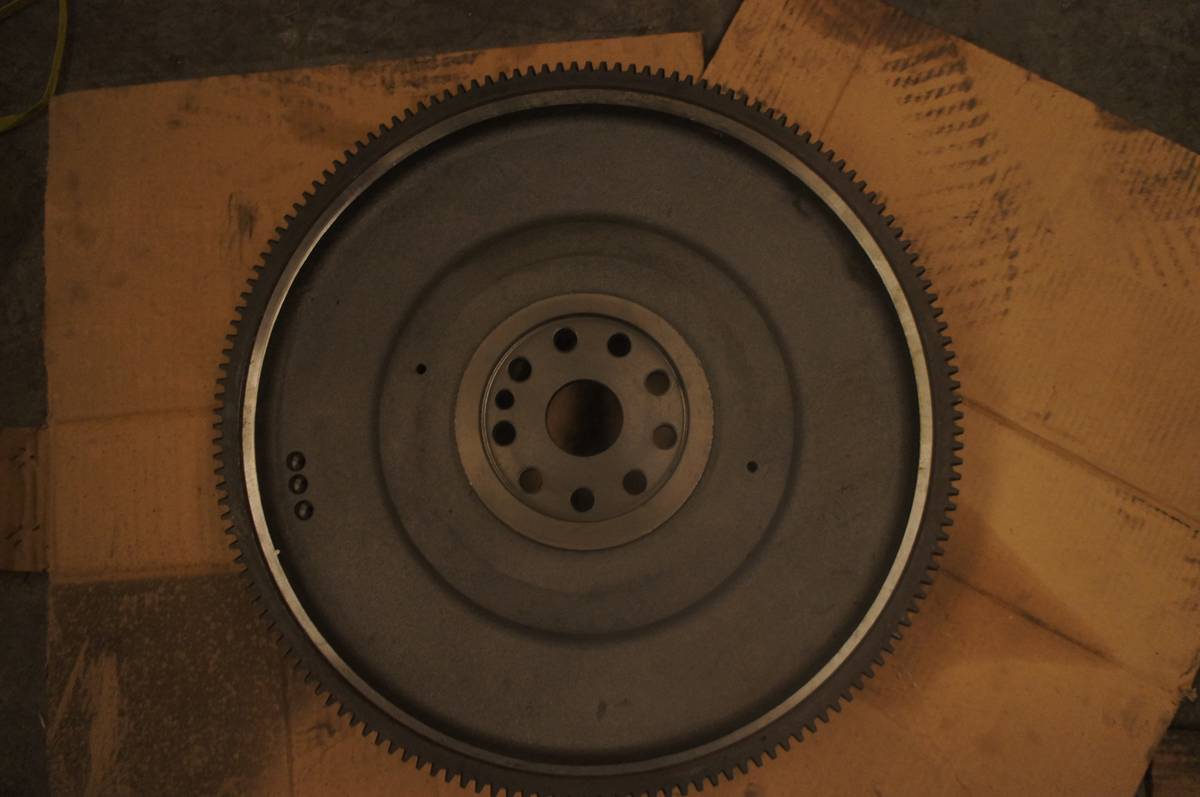
Read the first two rows together. RE8 and RD8 both run a 140-tooth ring gear at 430 mm. The only difference is the number of bolt holes at the crankshaft flange. A buyer who measures the diameter, counts the ring gear teeth, and orders has no way to separate these two parts.
At the same diameter, the tooth count also moves: 140T, 145T, 153T. So the teeth do narrow the field, but they do not close it, because 140T is not unique.
The practical rule is this. Diameter narrows the search. Teeth narrow it further. Bolt holes decide it.
How to Read a Nissan UD Flywheel Specification
Aftermarket listings for these flywheels are usually written in a four-part shorthand. Here is one taken from a supplier listing for the RD8 flywheel:
17″ x 140T x 10H x 16.5 mm
Each block means something specific.
The first block is the outside diameter, written in inches. 17 inch is 431.8 mm, which is the same part family referred to as 430 mm in metric catalogues. Both spellings are in use for the same flywheel.
The second block is the ring gear tooth count. T stands for teeth. German-language sources write this as Z, for Zahne, and both appear in the same catalogues.
The third block is the bolt hole count. H stands for holes.
The fourth block is the thickness in millimetres. Note that the diameter is imperial and the thickness is metric in the same string. That is normal here, not a transcription error.
One warning about the third block. Suppliers are not consistent about which holes they are counting. Depending on who wrote the listing, 10H can mean the crankshaft bolts, the clutch pressure plate bolts, or the ring gear retaining holes. On the RD8 flywheel the figure is generally read as the crankshaft bolts, but you should confirm which pattern a specific listing means before you commit to an order.
One Engine, Two Flywheels
The PE6T is the clearest example of why this matters.
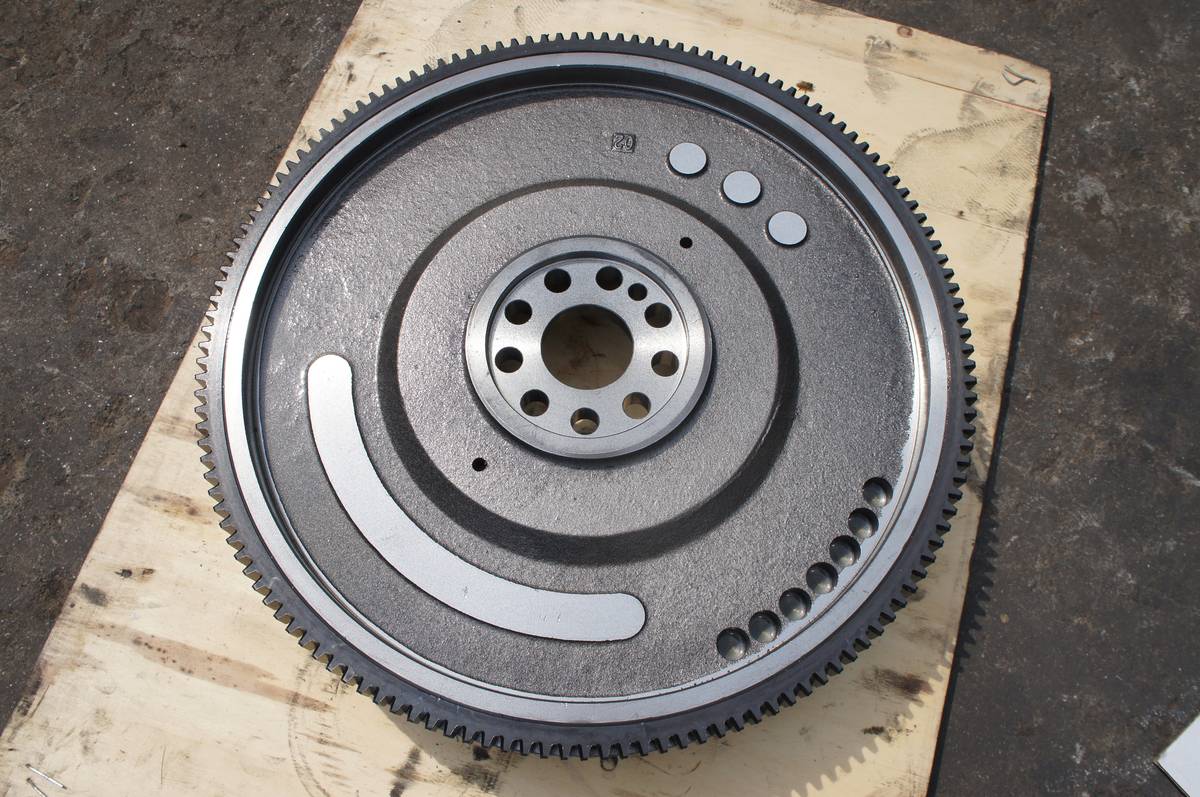
Our workshop records hold two separate PE6T flywheels, both with a 153-tooth ring gear at 430 mm. One has nine bolt holes at the crankshaft flange. The other has ten. They are different parts, in stock as different items, and a customer asking for a PE6T flywheel on the basis of teeth and diameter alone will get whichever one the supplier happens to pull off the shelf.
The published catalogue entry for 12311-90228 specifies 153T with 9H. That gives us a reference point for the nine-bolt version. The ten-bolt version is a separate number.
When you ask for a PE6T flywheel, the useful question is not what engine it came from. It is how many bolts hold it to the crank.
The Nissan UD Flywheel Range We Hold in Stock
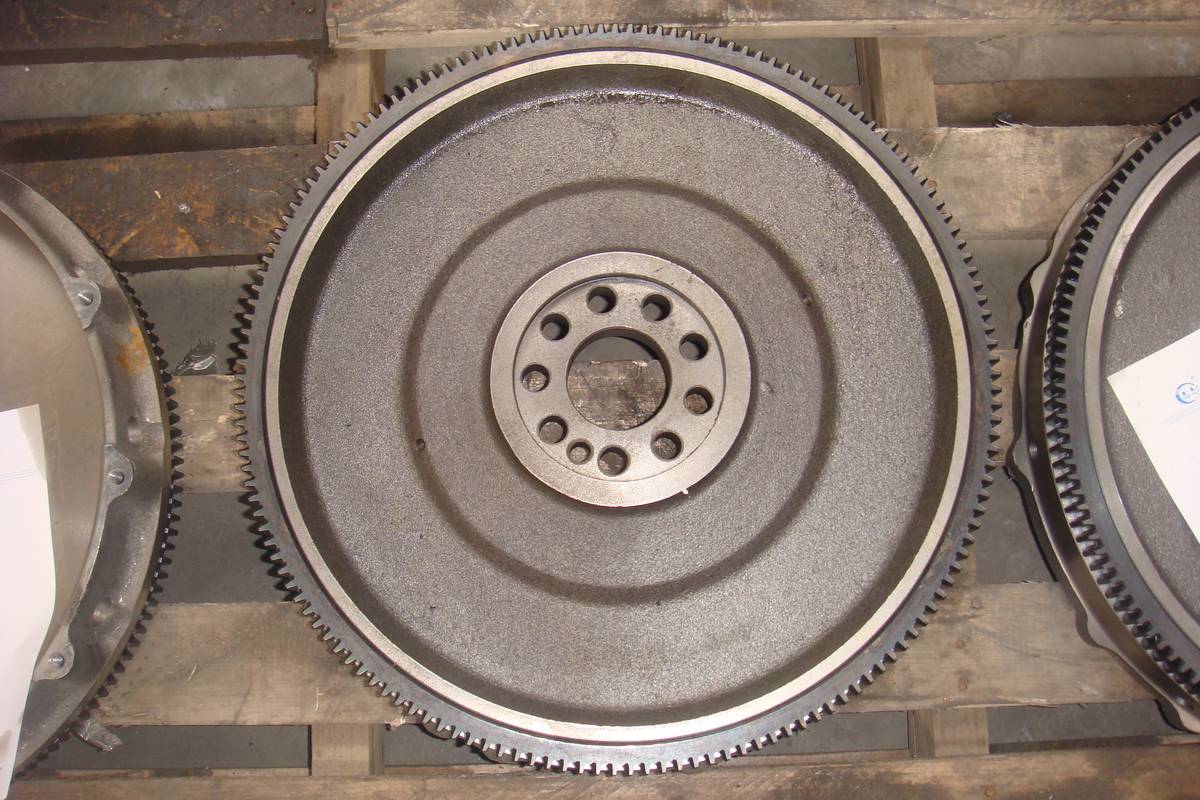
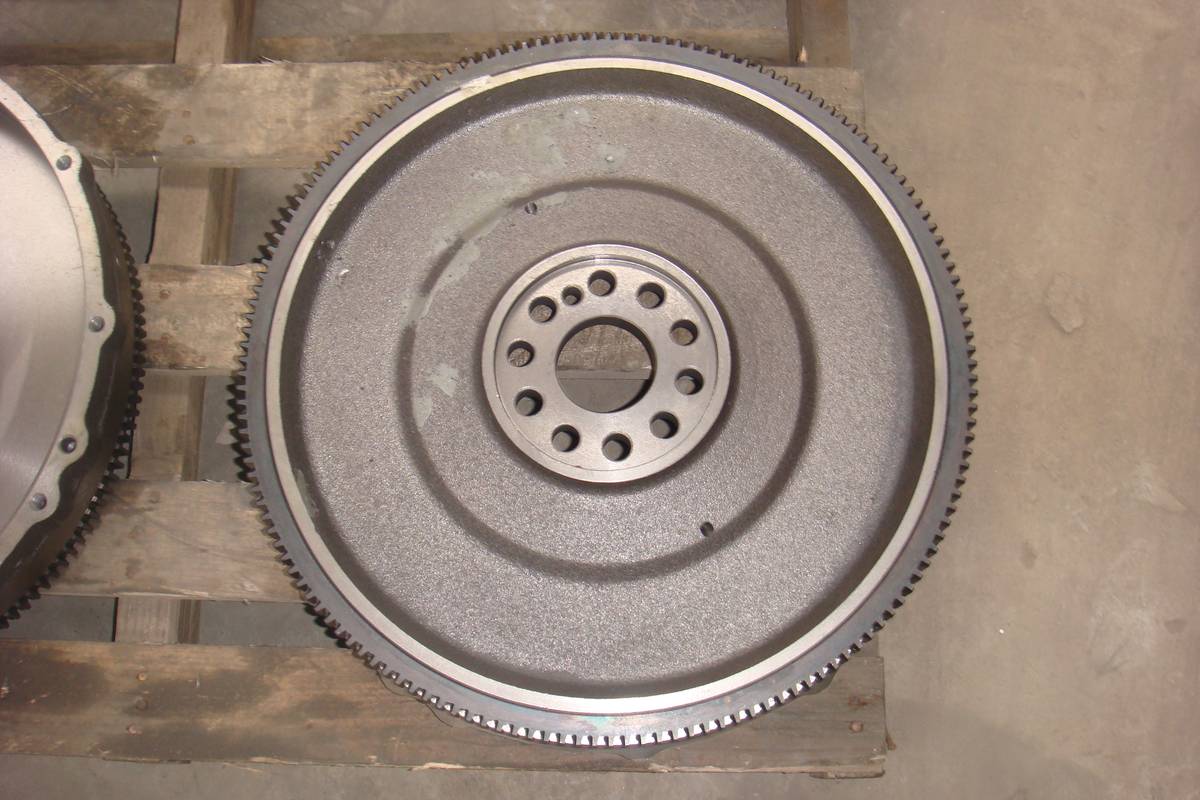
The table below is what our workshop recorded against the parts currently in our racks. Where a figure is blank, we have the flywheel photographed but have not recorded that dimension against it, so we do not publish a number for it.
| Engine | Ring gear teeth | Bolt holes | Where the figure comes from |
|---|---|---|---|
| FE6 | 129T | 6H | catalogue and workshop record |
| PE6 | 145T | 6H | workshop record |
| PE6 | 153T | not recorded | workshop record |
| PE6T | 153T | 9H and 10H | workshop record, catalogue for the 9H |
| RE8 | 140T | 9H | workshop record |
| RD8 | 140T | 10H | catalogue |
| NE6, PD6 | not recorded | not recorded | photographed only |
If your engine is not listed, that does not mean we cannot supply it. It means we have no verified dimension recorded for it here, and we would rather ask you for the measurement than print a guess.
Cast Marks That Are Not Part Numbers
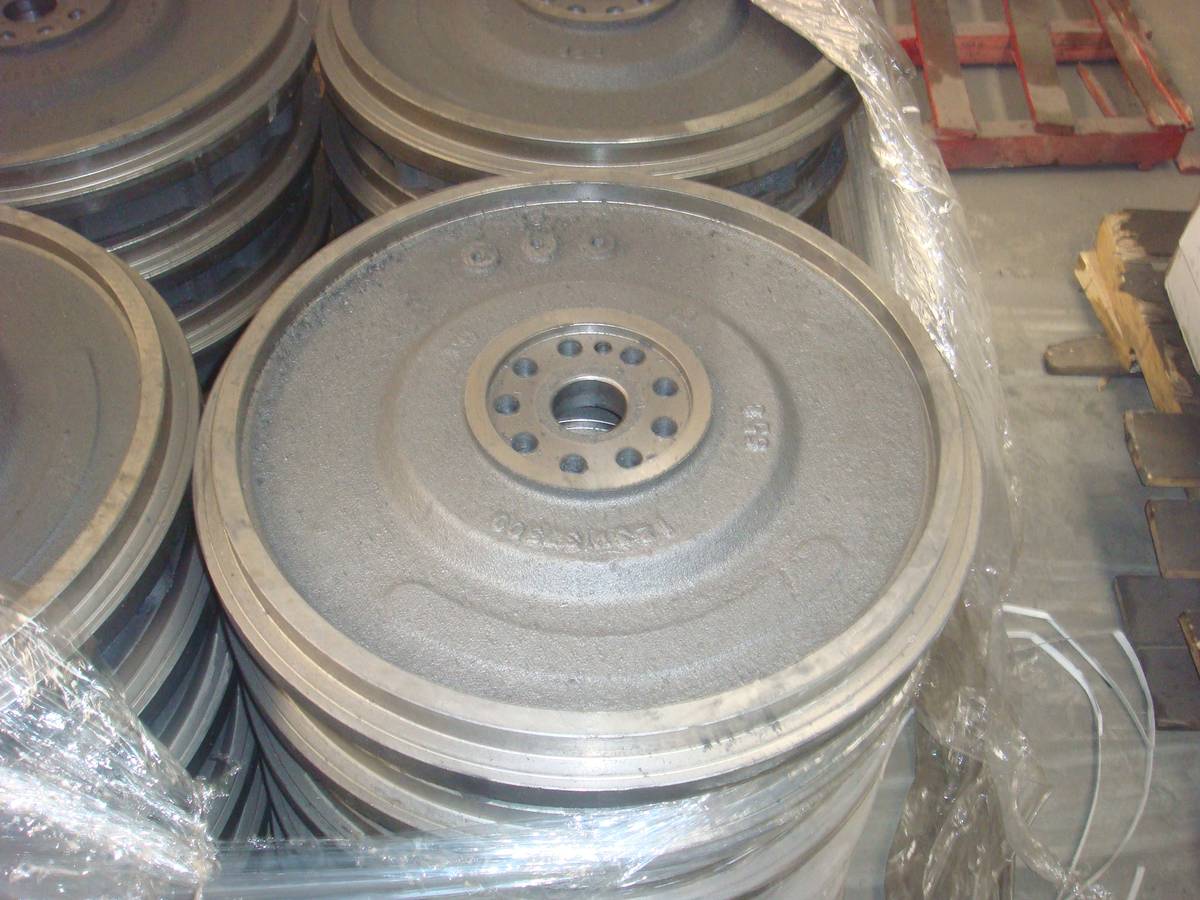
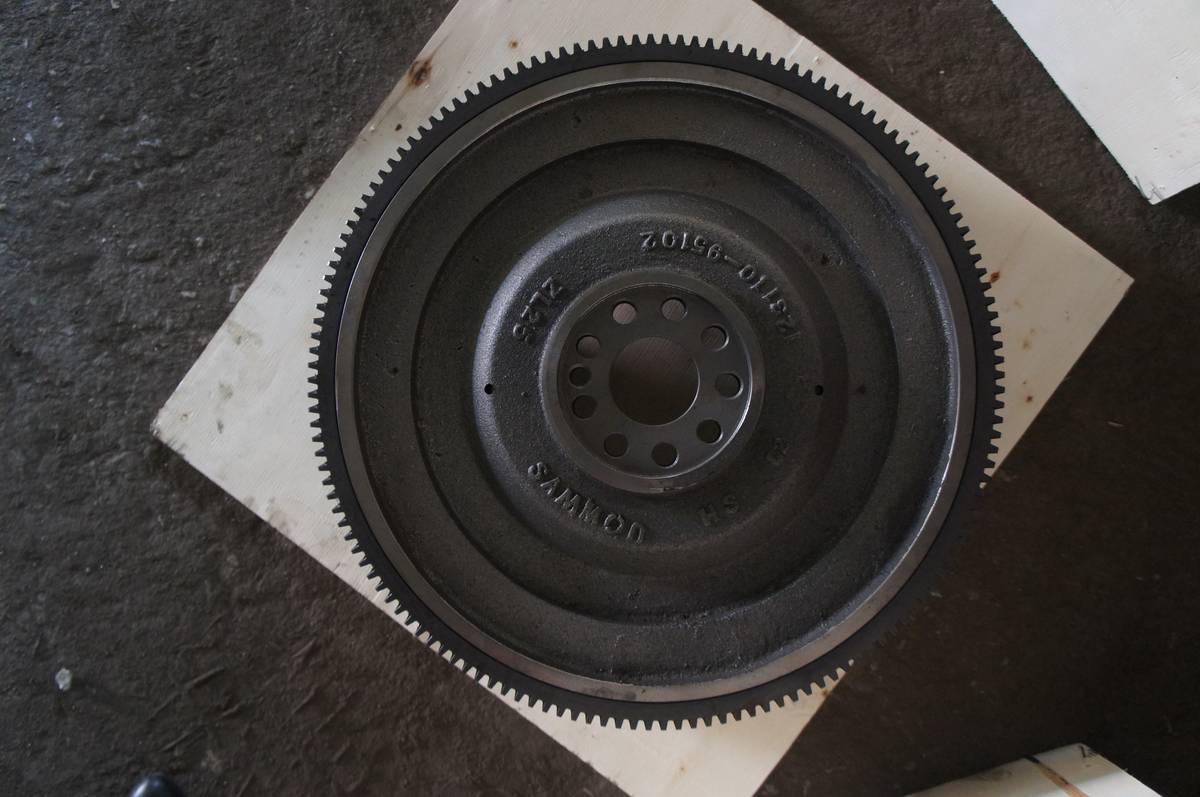
Photographs of these flywheels usually show cast-in characters on the face. It is tempting to read them as part numbers. Most of the time they are not.
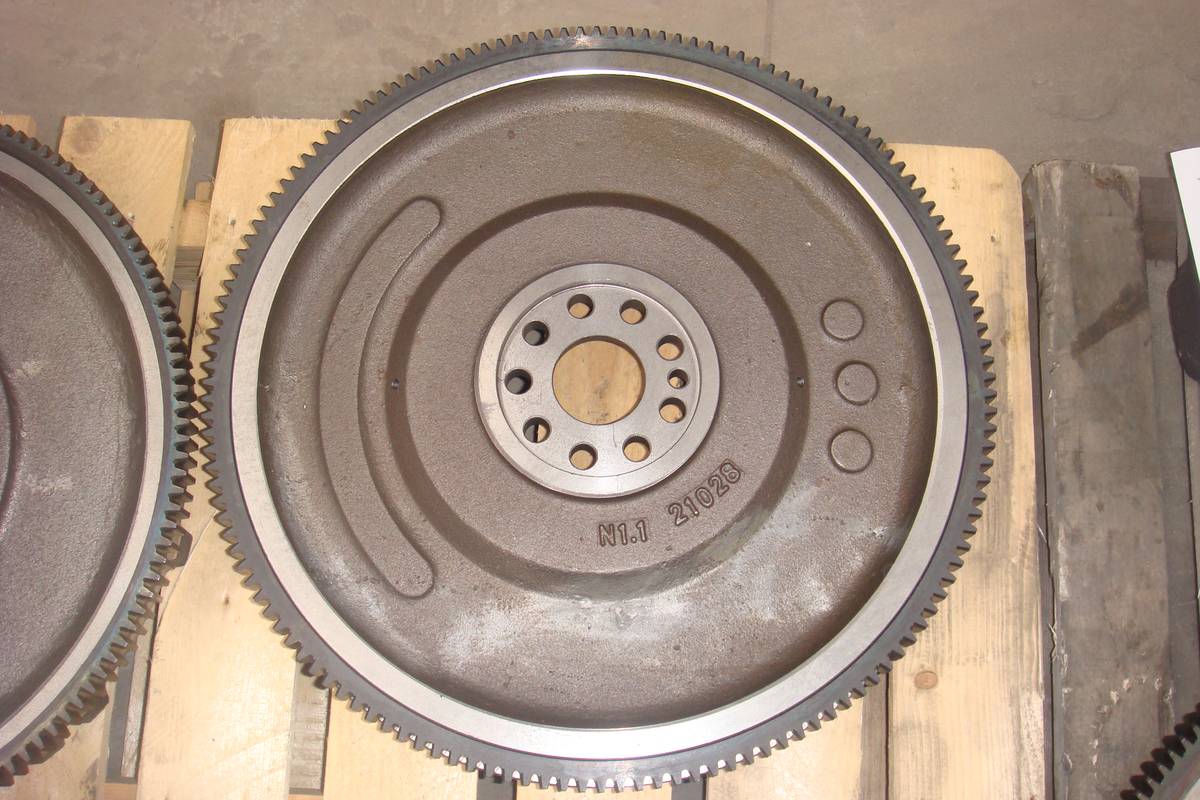
The RE8 flywheel in our stock, for example, carries the cast marks N1.1 and 21028 on its friction face. We checked both against Nissan parts catalogues. Neither is a part number. They are pattern and traceability marks left by the mould.
A real Nissan part number for this family looks like 12310-Z5705, 12311-90228 or 12310-97619. Pattern marks like 21028 do not fit that shape.
This matters because buyers sometimes photograph a cast number, search for it, find nothing, and conclude the part is unidentified. It usually is not. The number you want is on the invoice, the box label, or the truck’s parts catalogue, not cast into the iron.
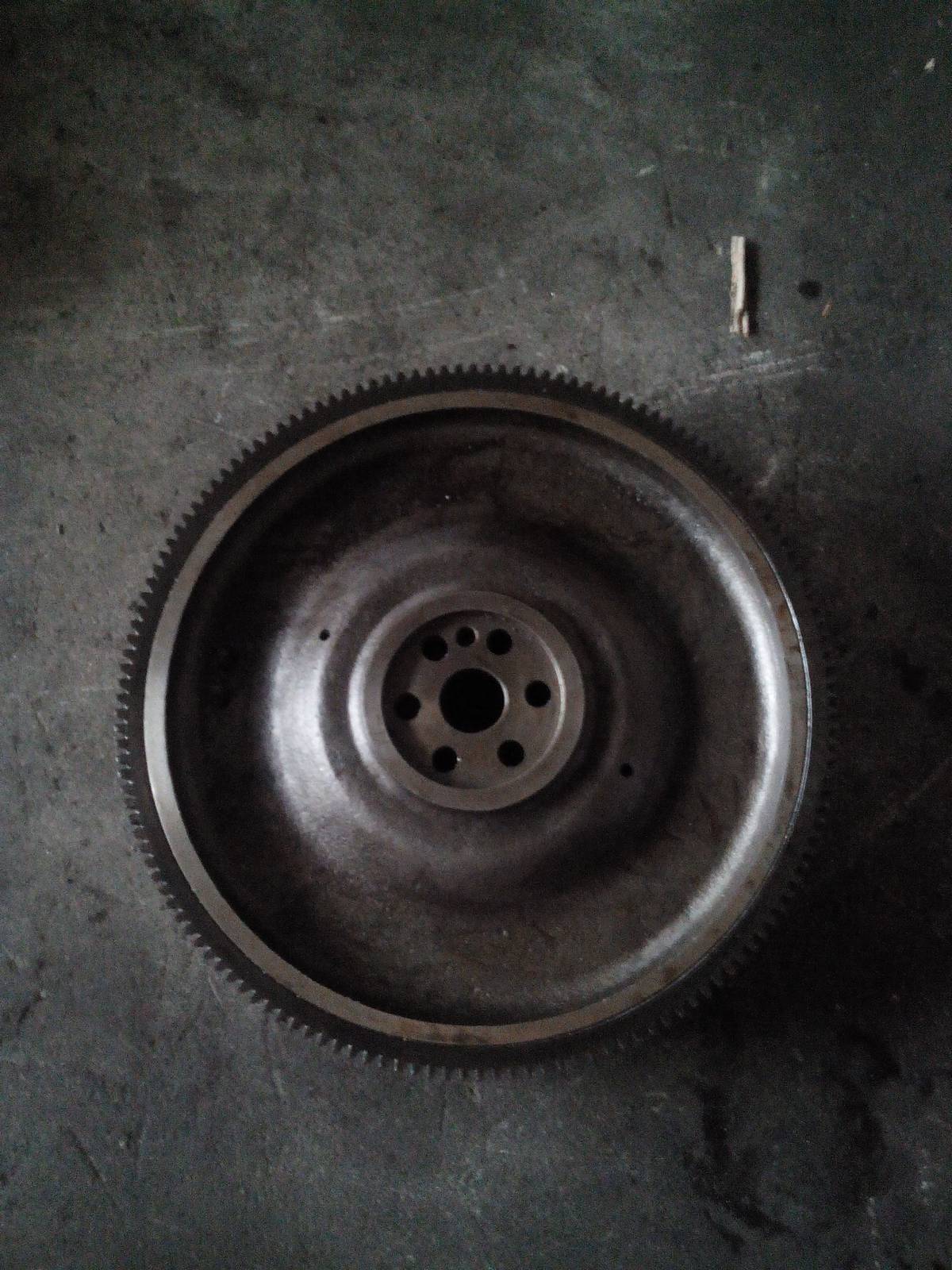
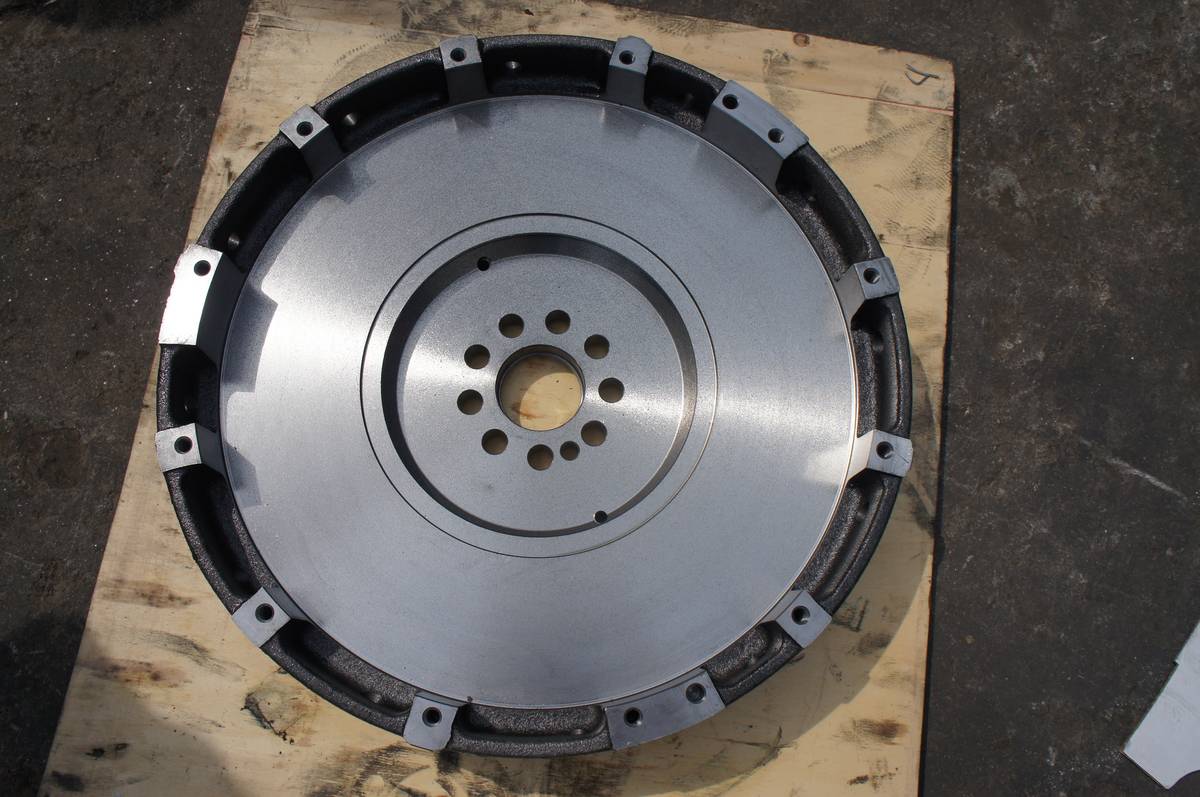
If you only have the cast mark, send us a photograph of both faces of the flywheel instead. We identify flywheels by bolt pattern, ring gear teeth and hub geometry, not by the mould number.
What to Send With Your Inquiry
If you send us five pieces of information, we can quote without a back-and-forth.
- Ring gear tooth count, counted on the part rather than read from a catalogue
- Outside diameter across the ring gear teeth, in millimetres or inches
- Number of bolt holes at the crankshaft flange
- Bolt circle diameter and hole diameter if you have calipers to hand
- One photograph of each face of the flywheel
The photographs matter more than they look like they should. On a 430 mm Nissan UD flywheel, the difference between a nine-bolt and a ten-bolt part is visible in a single photograph and invisible in a dimension list.
FAQ
What is the Nissan UD FE6 flywheel part number?
12310-Z5705. It measures 350 mm across the ring gear, has 129 teeth and six bolt holes at the crankshaft flange, with a nominal thickness of 16.5 mm. The same catalogue entry lists the diameter as 14 inch and the weight as 34 kg.
How many teeth does a Nissan UD RD8 flywheel have?
140 teeth on a 430 mm ring gear, with ten bolt holes at the crankshaft flange. The OEM reference is 12310-97619.
Are RE8 and RD8 flywheels interchangeable?
No. Both use a 140-tooth ring gear on a 430 mm diameter, which makes them look identical on a tape measure and a tooth count. The crankshaft bolt pattern differs, so they are not interchangeable. Confirm the number of bolt holes before ordering either.
What does 10H mean in a flywheel specification?
H stands for holes, so 10H means ten bolt holes. Be careful with which holes the listing means. Depending on the supplier, this can refer to the crankshaft bolts, the clutch pressure plate bolts, or the ring gear retaining holes. Ask, or send a photograph of the flange.
Is the Nissan UD PE6T flywheel a nine-bolt or ten-bolt part?
Both exist in our stock at 430 mm with 153 teeth. The published catalogue entry for 12311-90228 specifies nine bolt holes. The ten-hole version is a separate part. This is one of the most common mix-ups on these engines.
Why does the same flywheel appear as both 17 inch and 430 mm?
They are the same dimension. 17 inch converts to 431.8 mm, and metric catalogues round this to 430 mm. The imperial figure survives because the part family was originally specified in inches. Either number will bring you to the same flywheel family, but neither identifies a single part.
Can I identify a flywheel from the cast number on the face?
Usually not. Cast marks on these flywheels, such as N1.1 and 21028 on our RE8 stock, are pattern and traceability numbers rather than part numbers. They do not resolve in parts catalogues. Use the bolt pattern, ring gear teeth and hub geometry instead, or send us photographs of both faces.
Do you manufacture these flywheels or only supply originals?
We are a foundry, not a trading company. Flywheels are cast in our own works in Changle, Weifang, machined on our own lines, and supplied with material certificates traceable to the heat. Send a part number, a sample, or a drawing and we will quote against it. We can also work from a customer drawing where the original number is no longer available.
Send Your Part Number for a Quote
The fastest way to get an accurate price is to send the part number together with a photograph of each face of the flywheel. If the number is worn off, send the photographs and we will identify the pattern.
Irene
Changwei International
Email: [email protected]
WhatsApp and WeChat: +86 199 5366 2121
Wangke Industrial Zone, Changle, Weifang, Shandong, China
Terms: FOB Qingdao
Related Reading