
DAF 1314029 Flywheel Part Number: 161 Teeth, Three OE Numbers
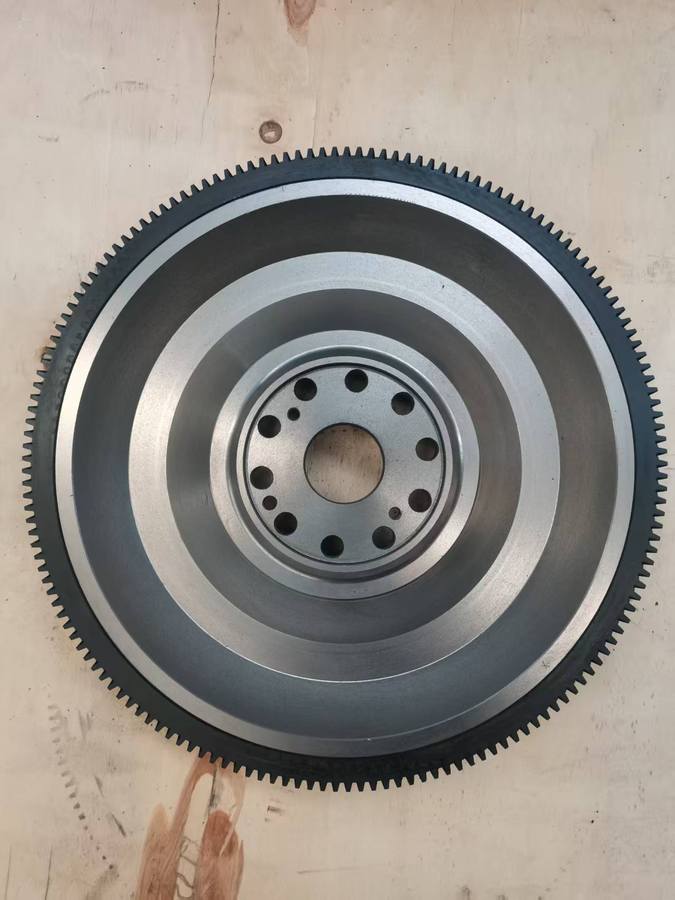
A DAF 1314029 flywheel part number looks like a settled question. One number, one disc, one price. Then you open three catalogues and the same disc is 475 mm wide in one, 488 mm in the next, and 489 mm in the third.
We pulled nine photographs of this flywheel out of our own stock and compared them with twelve aftermarket brands. The tooth count holds across every listing we found. The diameter does not.
This page sets out what the catalogues agree on, where they split, and the five measurements that settle a quote before money moves.
Table of Contents
- The Number And What Hangs On It
- Specifications, Graded By Source
- Three DAF Numbers, One Aftermarket Part
- Why The Diameter Reads 475, 488 And 489
- Three Inner Diameters In One Row
- What Our Own Stock Shows
- The Weight We Record And The Weight They Quote
- Fitment Lists And Their Limit
- What To Measure Before You Order
- Reading The Marks On The Casting
- Questions Buyers Ask
- Sources And Evidence Level
- Send The Measurements
The Number And What Hangs On It
1314029 is a DAF reference for a truck flywheel. DAF built these discs for the CF and XF tractors, and the aftermarket still sells them into West Africa, the Middle East and Eastern Europe.
Two things decide whether a used or copied disc fits. The first is the tooth count, because the starter has to mesh. The second is the clutch interface, because the pressure plate has to bolt to it.
A disc of this size weighs close to sixty kilos. Wrong guess, and you pay freight twice.
Specifications, Graded By Source
The table below is the trade specification. Read the last column before the second one. Most of these figures come from one data pool that many brands republish, which is not the same as many independent sources.
| Item | Value | Who publishes it | Evidence |
|---|---|---|---|
| Ring gear teeth | 161 | every brand we checked | catalogue cluster, one origin |
| Outer diameter | 488 mm | DT 5.40310, PETERS 100.013-00A, AUGER 58461, SAMPA 051.282 | catalogue cluster |
| Outer diameter | 475 mm | BF 200909XF095, CEI 196.286 | conflicts |
| Outer diameter | 489 mm | KAWE V6013N | conflicts |
| Clutch size | 430 mm | febi 32006, DT 5.40310 | catalogue cluster |
| Overall width | 70 mm | BF 200909XF095 | single brand |
| Hub diameter | 154 mm | AUGER, SAMPA, febi | catalogue cluster |
| Hub bolt circle | 130 mm | AUGER, SAMPA, PETERS, febi | catalogue cluster |
| Hub bore | 62 mm | AUGER, SAMPA, PETERS, febi | catalogue cluster |
| Bolt hole diameter | 17 mm | AUGER, SAMPA, febi | catalogue cluster |
| Holes in the hub | 10 | AUGER, SAMPA, PETERS, febi | catalogue cluster |
| Clutch cover bores | 12 | AUGER, SAMPA, PETERS, febi | catalogue cluster |
| Thread in the cover bores | M10 x 1.5 | AUGER, SAMPA, febi | catalogue cluster |
What The Catalogues Agree On
Teeth, hub pattern, clutch size and the two thread details agree everywhere. That block of agreement is worth having. It means a disc with ten hub holes and a 130 mm bolt circle is the right family.
Where They Split
Diameter and weight are the two fields that disagree. Both matter to a buyer. One decides whether the bell housing clears. The other decides what the crate costs to ship.
Three DAF Numbers, One Aftermarket Part
febi lists three DAF references against one flywheel: 1209798, 1249198 and 1314029. DT lists two, 1314029 and 1249198.
The aftermarket therefore sells one disc against three original numbers. That is common on trucks built over a long run, where DAF superseded a number without changing the casting.
What The Cross Reference Does Not Prove
It does not prove the three DAF numbers are the same disc. It proves that one aftermarket part is offered for all three.
Those are different statements. A superseded number can cover a running change in balance drilling or in the ring gear supplier. If your chassis card says 1249198, ask the supplier to confirm that specific number in writing.
Why This Pattern Recurs
We saw the same shape of problem on the Mercedes heavy range, where one casting served several brand numbers. That page is Mercedes truck flywheel part numbers, and the lesson there transfers here without change.
Why The Diameter Reads 475, 488 And 489
Fourteen millimetres separate the smallest and largest figure. No foundry holds a flywheel diameter to fourteen millimetres. So the three numbers are not measuring the same circle.
A truck flywheel of this type has several circles worth measuring. There is the outside of the ring gear teeth. There is the outer edge of the machined friction ring. There is the clutch nominal size, which every brand agrees is 430 mm.
Three Circles On One Disc
Each catalogue picks one of those circles and prints it as “diameter”. None of the pages we read says which circle it measured.
That is why a buyer comparing two brands sees a size difference that does not exist on the part.
What To Do With The Number
Treat any single diameter figure as a hint, not a specification. Measure the circle you care about on the disc in front of you, or ask the supplier which circle his figure refers to.
Our page on measuring a flywheel bolt circle covers the same trap on the bolt pattern, where a wrong reading costs a clutch.
Three Inner Diameters In One Row
One catalogue row for 1314029 carries three different “inner diameter” values: 236 mm, 62 mm and 17 mm.
They are three different features. 236 mm is the inner edge of the friction ring. 62 mm is the hub bore that centres the disc on the crankshaft. 17 mm is the diameter of a bolt hole.
A buyer who asks for “62 mm inner diameter” is specifying the hub bore. A buyer who asks for “236” is specifying the friction ring. Same row of data, three different parts of the disc.
What Our Own Stock Shows
The photographs on this page come from our own shelf. We shot them in two sessions, and we did not clean the surfaces first.
What follows is what the castings show. It is not a catalogue reading.
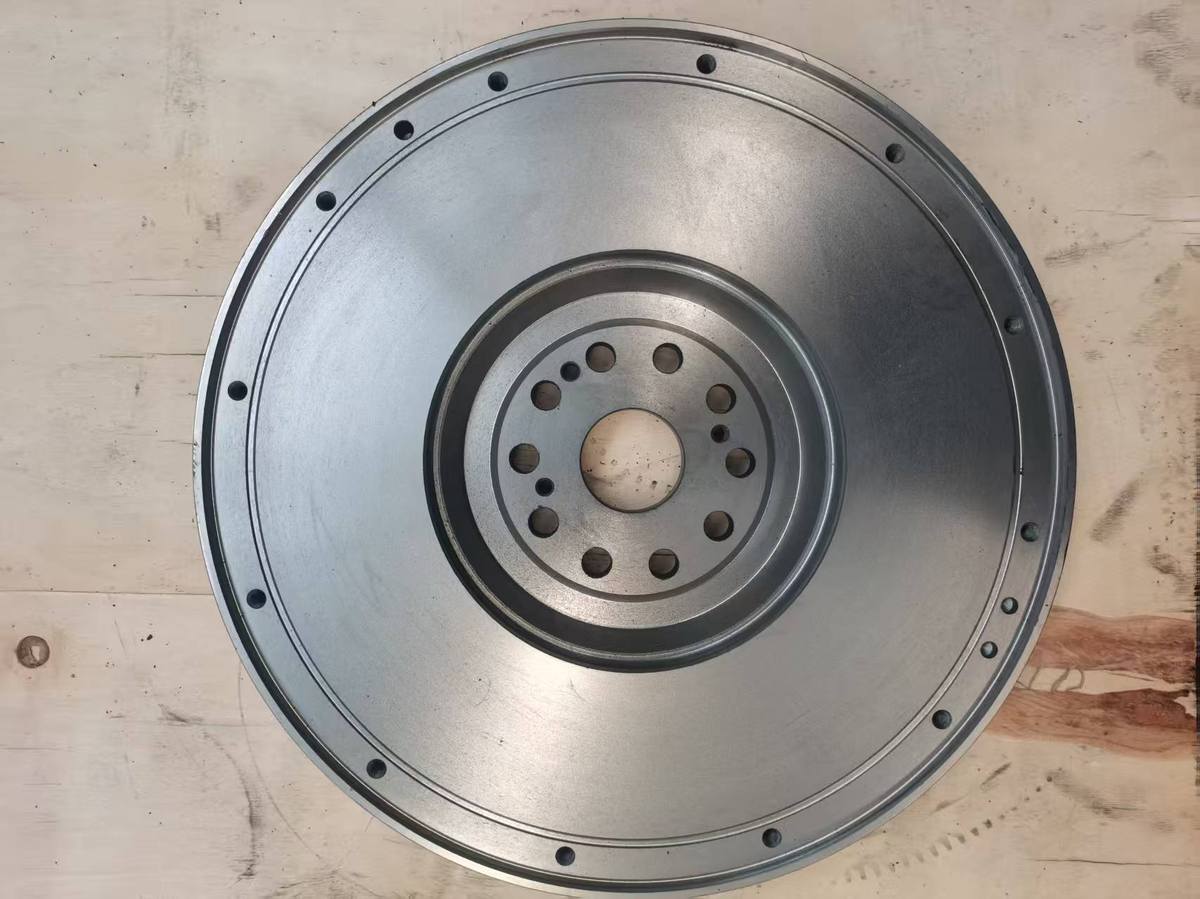
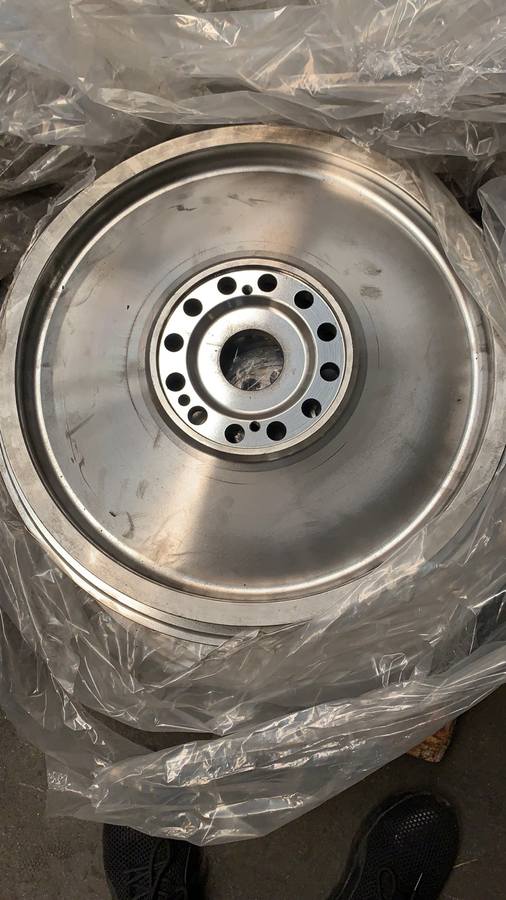
Ten Bores In The Hub
The hub carries ten large bores, evenly spaced around the centre. Between them sit three or four smaller holes, and those are not evenly spaced.
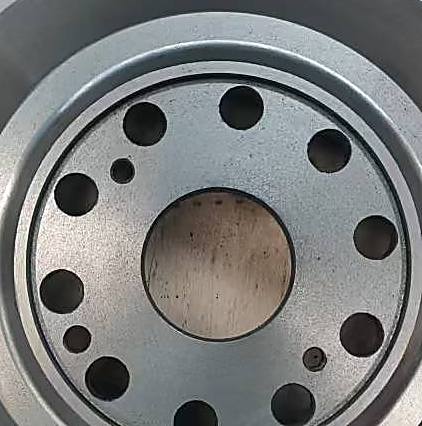
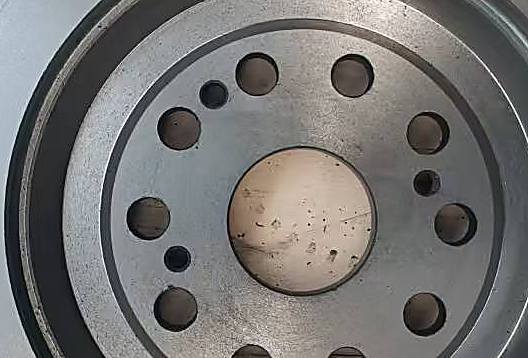
Ten bores and a 130 mm circle match the catalogue figure. That match is the strongest single link between our physical disc and the published specification.
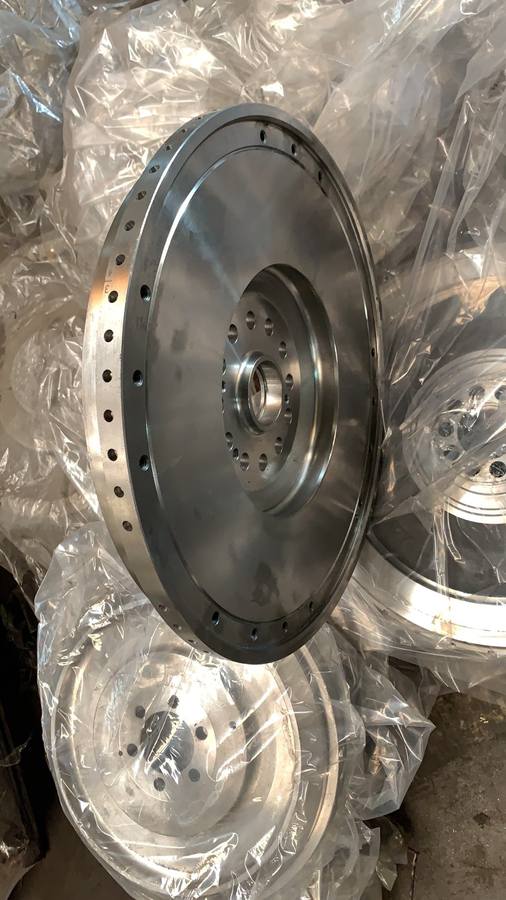
Twelve Bores Near The Rim
The other face carries a ring of twelve bores close to the outer edge, in the band where a clutch cover sits.
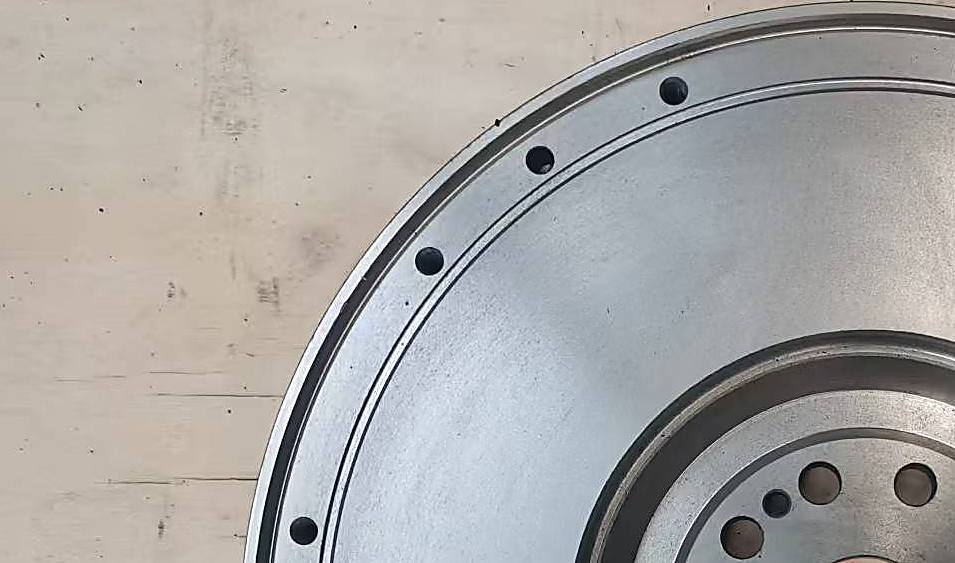
Twelve again matches the catalogue field for clutch cover bores. Two rings, two counts, both confirmed on the part.
The Ring Gear Is A Pressed Ring
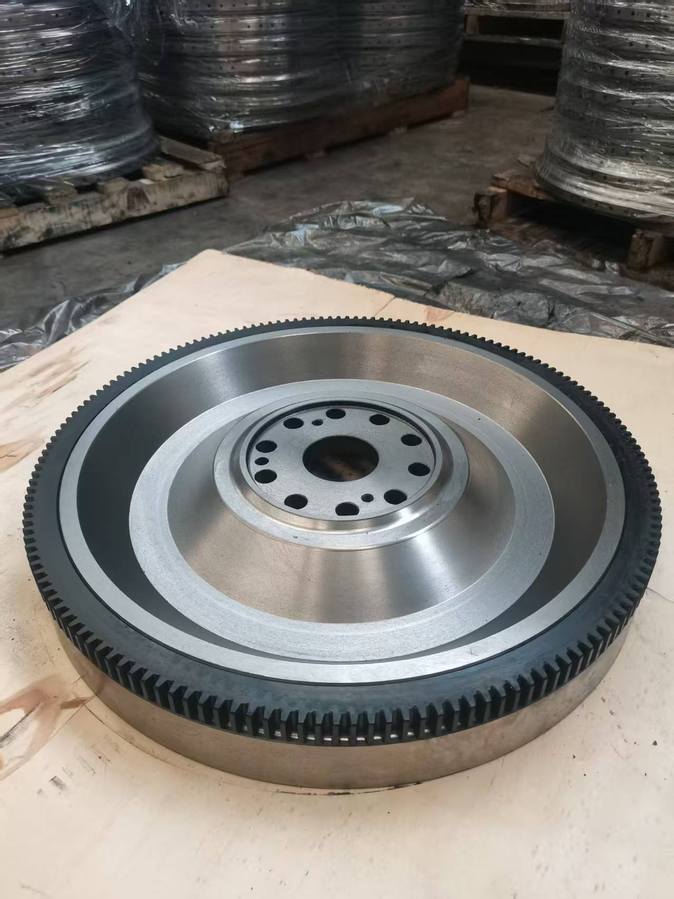
The toothed ring is a separate steel ring shrunk onto a machined shoulder at the rim. There is a visible joint line where the ring meets the casting.
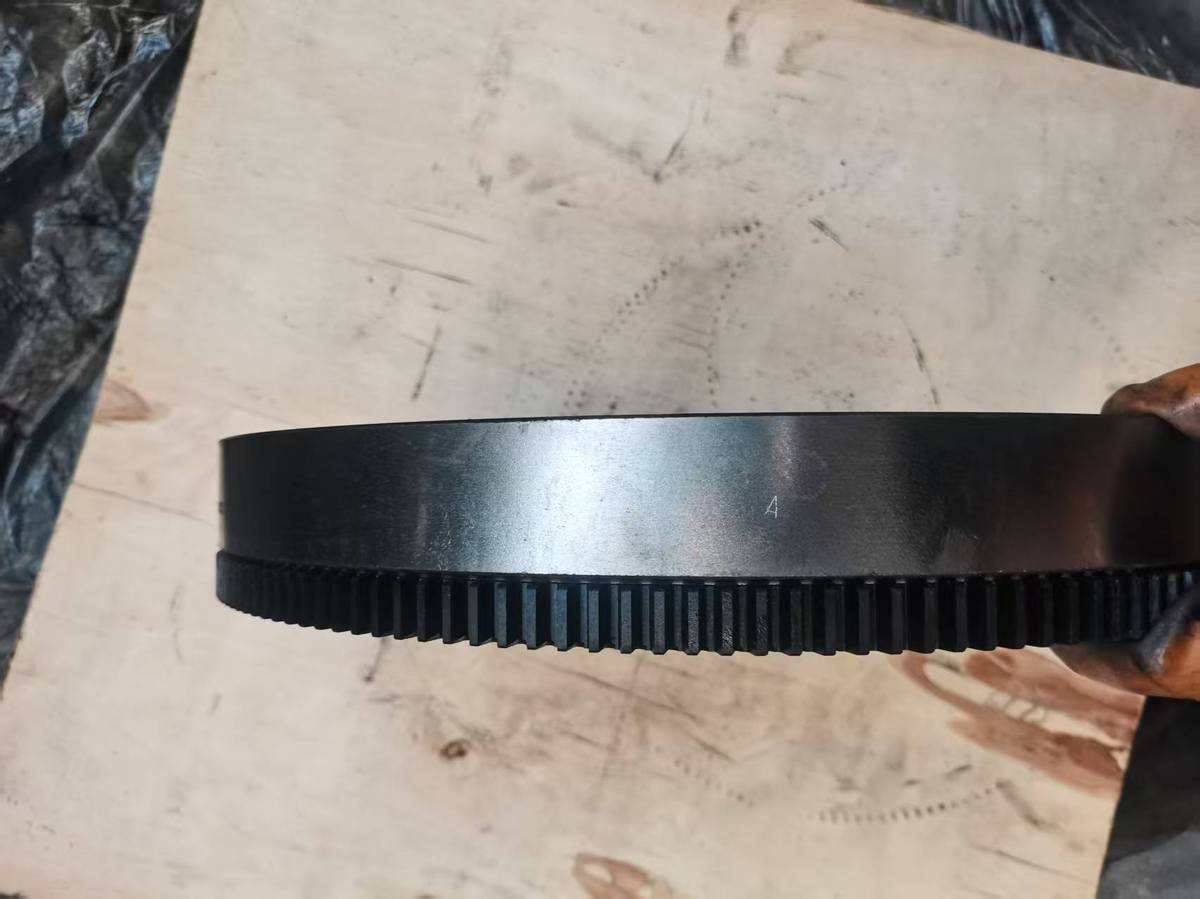
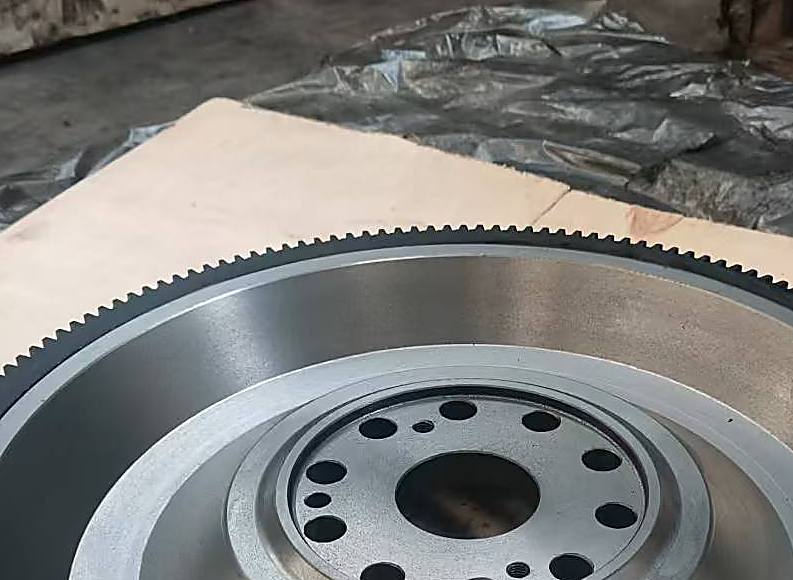
Two practical consequences. A worn ring gear can be replaced without scrapping the flywheel. And a quotation can include the ring gear or leave it out, under the same base number.
If one price is far below the others, ask whether the ring is included. Our page on ring gear teeth counts explains why the tooth count decides interchangeability more often than the flywheel number does.
Two Hub Styles Under One Reference
Here is something the catalogues do not mention. Our two photo sessions show two hub treatments.
One disc has a raised boss around the centre bore. The other has a flat, recessed hub face with the bore sunk into it.
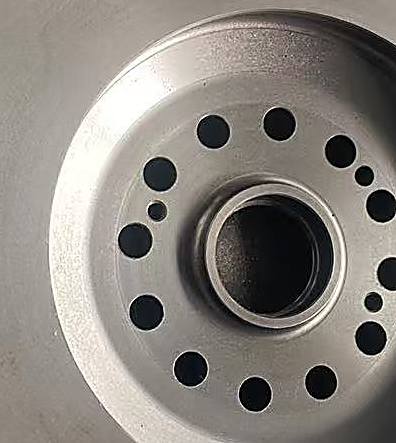
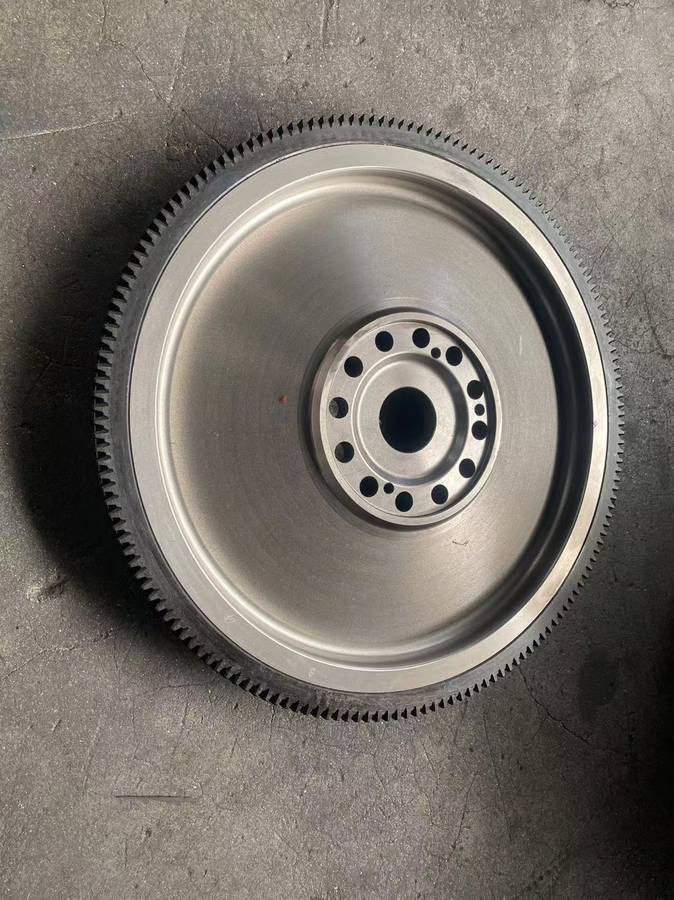
Both carry ten hub bores and twelve rim bores. We have not established whether these are two castings or one casting photographed twice under different light.
We therefore do not assign a second part number to either. If your disc differs from ours at the hub, send the photograph before ordering.
The Weight We Record And The Weight They Quote
Our internal weight sheet records this number at 52 kg. The catalogues print four different figures.
| Source | Weight | Note |
|---|---|---|
| DT 5.40310 | 57.86 kg | listed as net weight |
| febi 32006 | 59.094 kg | one page also shows 60 kg |
| AUGER 58461, SAMPA 051.282 | 60.2 kg | two brands, one figure |
| PETERS 100.013-00A | 61 kg | rounded |
| our own weight sheet | 52 kg | internal record, no date |
Nine kilos separate our record from the heaviest catalogue figure. That is not rounding. Either our record describes a bare casting, or it belongs to a different variant on the same shelf.
What To Do With A Weight
For freight, use the heavy figure. A crate is charged on gross weight, and the gross weight includes the ring gear, the crate and the blocking.
For identification, a weight is weak evidence. Our page on flywheel weight by part number explains why the same number can carry two weights without either seller being wrong.
Fitment Lists And Their Limit
One listing fits this disc to CF 65, CF 85, LF 45, XF 95, the 75, 85 and 95 ranges, the F 1100 and the SB 4000. Another adds “DAF 1160 engines, 6, 8 and 11 litre”.
Why LF 45 Worries Us
An LF 45 is a distribution truck. An XF 95 is a long haul tractor. A 488 mm disc weighing sixty kilos does not serve both.
What those lists map is the original number to a vehicle, not the casting to a bell housing. Treat them as a starting point for a parts lookup, then confirm on the disc.
What To Measure Before You Order
Five numbers settle this part. None of them needs a catalogue.
The Five Numbers
| Measurement | Where to take it | Value to expect |
|---|---|---|
| Ring gear teeth | count on the part, not on a photo | 161 |
| Hub bolt circle | across the bore centres, then compare | 130 mm, 10 holes |
| Hub bore | inside the centre bore | 62 mm |
| Clutch cover bores | count the ring near the rim | 12 |
| Clutch size | pressure plate diameter | 430 mm |
What A Photograph Must Show
One photograph of each face. One of the rim edge with light across it, so the ring gear joint reads. One with a rule laid across the hub bore.
Do not send a photograph of the clutch face alone. In this family, the hub and the rim carry the differences.
Reading The Marks On The Casting
We looked at all twelve frames for a cast or etched number. On our discs, none is legible.
That matters for a buyer who expects to confirm a part from the metal. On this family, the number often sits on the rim, or is stamped lightly after machining, and it wears away with the ring gear.
Our identification therefore comes from our own shelf record, not from a casting mark. We say so, because a page that claims a cast number it never read is worse than no page.
The rule holds across brands. Cast characters are part numbers only when they are raised from the mould. A stamped date, a batch code and a warehouse marker all look like numbers and none of them buys a part.
Questions Buyers Ask
Is 1314029 the same as 1249198?
One aftermarket flywheel is sold against both, and febi also lists 1209798. That does not prove the three are one casting. Ask the supplier to confirm your number in writing.
How many teeth does this flywheel have?
161, in every catalogue we checked. Count them on your own disc before ordering, because a photograph cannot be counted reliably.
What does it weigh?
Between 57.9 and 61 kg in the catalogues, and 52 kg on our own sheet. For freight, budget 61 kg plus the crate.
Will it fit my CF 85?
The catalogues list CF 85. We cannot confirm a truck from a model name. Send the five measurements and we will match against the discs we hold.
Do you cast this, or resell it?
We are a foundry. Flywheels are cast, machined and balanced in our plant, and ring gears are a separate line. The product overview shows the ranges, and the gear ring page covers the toothed ring.
Can you work from a sample?
Yes. A sample or a drawing with the five measurements is enough to quote. For the wider DAF and European range, see our European truck flywheel chart.
Sources And Evidence Level
| Claim | Source type | Level |
|---|---|---|
| 161 teeth | eight brand listings with a published count, four more as cross references | catalogue cluster, one data origin |
| 488 mm outer diameter | four brands | catalogue cluster |
| 475 mm and 489 mm | three brands | conflicts with the above |
| 430 mm clutch, 154 mm hub, 130 mm circle, 62 mm bore, 10 hub bores, 12 cover bores | several brands, identical wording | catalogue cluster |
| Three DAF references against one part | febi listing, DT listing | single data origin |
| Fitment to CF 65, CF 85, LF 45, XF 95 | aftermarket fitment tables | single origin, internally inconsistent |
| 57.86 to 61 kg | four brands | catalogue cluster |
| 52 kg | our own weight sheet | our record, undated |
| Ten hub bores, twelve rim bores | our own photographs | our own evidence |
| Ring gear is a separate pressed ring | our own photographs | our own evidence |
| Two hub treatments under one reference | our own photographs | our own evidence, unresolved |
| No legible cast number on our discs | our own photographs | absence of evidence |
Two things we deliberately did not do. We did not count teeth from a photograph, ours included. We did not reconcile our 52 kg record with the catalogue figures, because a scale would settle it and a catalogue cannot.
Send The Measurements
If you are holding a DAF flywheel and the label is gone, send four photographs and the five measurements. Both faces, the rim edge, and a rule across the hub bore. Add the tooth count you made yourself.
We will come back with the numbers that match, and with the ones that do not, including the three where our own sources disagree.
Send your part number or photographs for a quote.
Irene
Changwei International
Email: [email protected]
WhatsApp and WeChat: +86 199 5366 2121
Weifang, Shandong, China. FOB Qingdao.