
Scania Flywheel Part Numbers: 1388326, 1487558, 393151
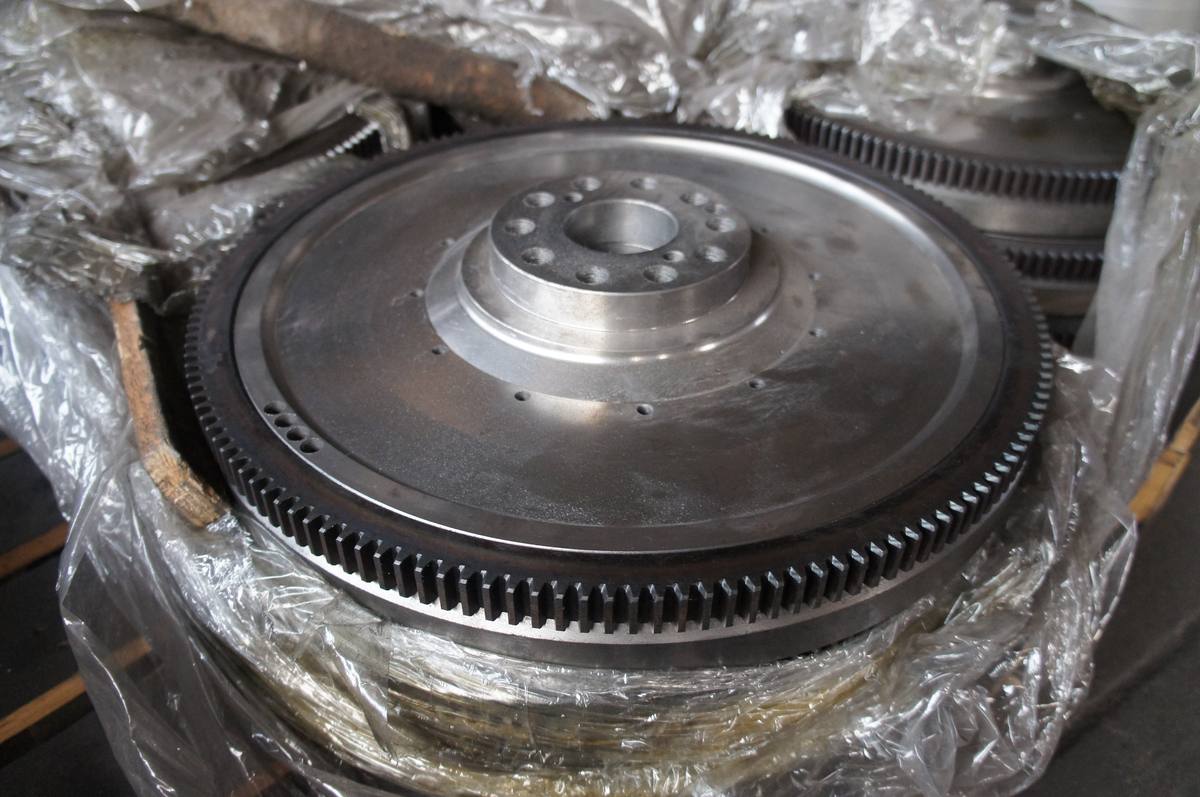
Four Scania flywheels sit on one rack in our shop. All four measure 480 mm across the starter ring. All four carry 158 teeth. Put a tape on any of them and you get the same answer, which is precisely why so many Scania flywheel orders go wrong.
The trade treats tooth count as the identifier. On Scania heavy truck engines it is not. The teeth are the one thing these parts share. What separates them is a circle of small holes near the rim, and a circle of bolts in the hub.
This article covers four numbers we keep in stock: 1388326, 1487558, 393151 and 324640. Every dimension quoted comes from a named catalogue article. Every shape described comes from a photograph we took ourselves. Where two catalogues give different figures, both are printed and neither is chosen.
Table of Contents
- Four Numbers On One Rack
- One Tooth Count For All Four
- The Four Numbers Side By Side
- The Sensor Ring Decides
- One Digit Apart
- Where The Catalogues Disagree
- What Our Photographs Show
- What A Photograph Cannot Prove
- How To Order Without Guessing
- Questions Buyers Ask
- Sources And Evidence Level
- Send The Hub Photo
Four Numbers On One Rack
A truck flywheel is a cast iron disc with a hardened ring of teeth on its rim. Every part in this article answers that description. From two metres away they are the same object, and even from one metre the difference is easy to miss.
Three features decide whether a flywheel will work on a given engine. The centre bore that locates the part on the crankshaft. The circle of bolt holes around that bore. The trigger ring the crankshaft sensor reads.
The first two fail loudly. A wrong bore will not go on. A wrong bolt circle will not line up, or will go on with the wrong bolts and then run out. The third fails quietly. A flywheel with the wrong trigger pattern bolts up perfectly, starts normally, and then the engine will not run clean or the ECU logs a position fault that nobody traces back to the flywheel.
One Tooth Count For All Four
The shorthand in the trade is that Scania flywheels run 158 teeth. For once the shorthand is right, and that is the problem.
DT Spare Parts lists 158 teeth for all four of our numbers: article 1.10463 for 393151, 1.10466 for 324640, 1.10468 for 1388326 and 1.10736 for 1487558. febi Bilstein lists the same 158 for 09924, 17165, 22116 and 35302, the four articles that carry the same four OE numbers. AUGER, SAMPA, KAWE and Stellox all publish 158 as well.
Four independent brands, four numbers, one tooth count. So if a customer tells you the part they need is a 158 tooth Scania flywheel, you have learned almost nothing. You have learned it is a Scania heavy truck flywheel, which you already knew from the inquiry.
The Four Numbers Side By Side
The table below uses published catalogue figures only. Empty cells are empty because no catalogue in our set publishes that figure, not because the figure is unimportant.
| Number | Teeth | Outer diameter | Clutch diameter | Hub bore | Hub bolt circle | Hub bores | Clutch cover circle | Weight in catalogues | Catalogue articles |
|---|---|---|---|---|---|---|---|---|---|
| 1388326 | 158 | 480 mm | 430 mm | 62 mm | 112 mm | 12 | not published | 46.2 to 49 kg | DT 1.10468, febi 17165, AUGER 58454, SAMPA 042.423, Stellox 81-28321-SX |
| 1487558 | 158 | 480 mm | 430 mm | 62 mm | 112 mm | 10 | 450 mm | 46.7 to 47.3 kg | DT 1.10736, febi 22116, LEONPART 5512149 |
| 393151 | 158 | 480 mm | 430 mm | 62 mm | 105 or 130 mm | 11 or 8 | 450 mm | 39.4 to 40.5 kg | DT 1.10463, febi 09924, AUGER 58451, KAWE V6019N |
| 324640 | 158 | 480 mm | 430 mm | 62 mm | 105 mm | 11 | 450 mm | 38.2 to 38.9 kg | DT 1.10466, febi 35302 |
Read the first four columns and the parts look identical. Same teeth, same outer diameter, same clutch diameter, same 62 mm bore. A quotation built on those four columns is a quotation built on nothing.
Now read the last four columns. Two bolt circles in one row, because two catalogues disagree. Two bore counts in the same row, for the same reason. Weights that spread from 38 kg to 49 kg across the family, on parts that all measure the same across the ring.
The Sensor Ring Decides
From the Euro 3 generation onward, a Scania flywheel is also a timing wheel. The engine control unit needs to know where the crankshaft is, and it reads that from holes or notches machined into the flywheel.
febi publishes the count for two of our four numbers. Article 22116, which carries 1487558, is listed with 58 EDC bores or notches. Article 35302, which carries 324640, is listed with 6. DT Spare Parts describes its article for 324640, 1.10466, as a flywheel without EDC bores.
That is a direct conflict, and it matters. A 58 notch ring and a 6 notch ring are not the same signal. If the ECU expects a fine ring and gets a coarse one, the engine will not run correctly, and no amount of correct bolt torque will fix it.
For 393151, no catalogue in our set publishes a notch count at all. That cell stays empty on purpose.
The honest position for a buyer is this. Ask the supplier for the notch count in writing, and count the holes on the part you are replacing. It takes two minutes with a marker and a photograph, and it prevents the most expensive kind of wrong delivery, the kind that fits and then does not work.
One Digit Apart
Scania OE numbers are seven digits and they do not follow a pattern you can read. Two of them differ by a single digit and by almost nothing else on paper.
1388326 cross-references to 1487557. febi article 17165 lists 1364259, 1388326, 1465411 and 1487557 against one flywheel. DT article 1.10468 lists 1487557. So one casting answers to four Scania numbers.
1487558 cross-references to 1388336. febi article 22116 lists 1388336, 1405313, 1453292, 1465412, 1487558 and 1801178. A second casting, answering to six numbers.
Two Castings, Ten Numbers
Put those two lists next to each other and the trap is visible. 1388326 and 1388336 are one digit apart, and they belong to two different flywheels. 1487557 and 1487558 are one digit apart, and they belong to those same two different flywheels, in the opposite pairing.
| What the buyer says | What it belongs to | What it actually is |
|---|---|---|
| 1388326 | the 1487557 group | 46.2 to 49 kg, 12 hub bores, no published notch count |
| 1388336 | the 1487558 group | 46.7 to 47.3 kg, 10 hub bores, 58 notches |
| 1487557 | the 1388326 group | same part as above, second number |
| 1487558 | the 1388336 group | same part as above, second number |
A typist who drops or adds one digit turns a 46.7 kg part into a different 46.7 kg part of the same diameter with a different trigger ring. Nothing on the outside of the crate will tell you. The weight will barely tell you.
Where The Catalogues Disagree
Three disagreements are worth printing, because each one costs a buyer money if it is smoothed over.
The Hub Circle On 393151
The first is the hub bolt circle on 393151. febi article 09924 gives 105 mm, with 11 mounting bores and a 15 mm bore. AUGER article 58451 gives 130 mm, with 8 holes and a 14.5 mm bore. Both brands sell a flywheel for the same OE number. We are not choosing between them in print. Measure the crank flange before you order, because 105 and 130 are not interchangeable and a 25 mm error cannot be shimmed.
The Trigger Ring On 324640
The second is the trigger ring on 324640. DT says without EDC bores. febi says 6 notches. One of those two descriptions is wrong, or the two brands are describing two different production stages of the same number. Count the holes on your core.
Our Own Earlier 420 mm Line
The third is a correction to our own earlier table. In our five brand European flywheel comparison, published before we had these parts on the bench, we listed 324640 at 420 mm. DT and febi both give 480 mm outer and 430 mm clutch for that number. The 420 mm figure is not supported by either catalogue in front of us, so we are not repeating it as fact. Treat 480 outer and 430 clutch as the working figure, and the older 420 mm line as unconfirmed.
What Our Photographs Show
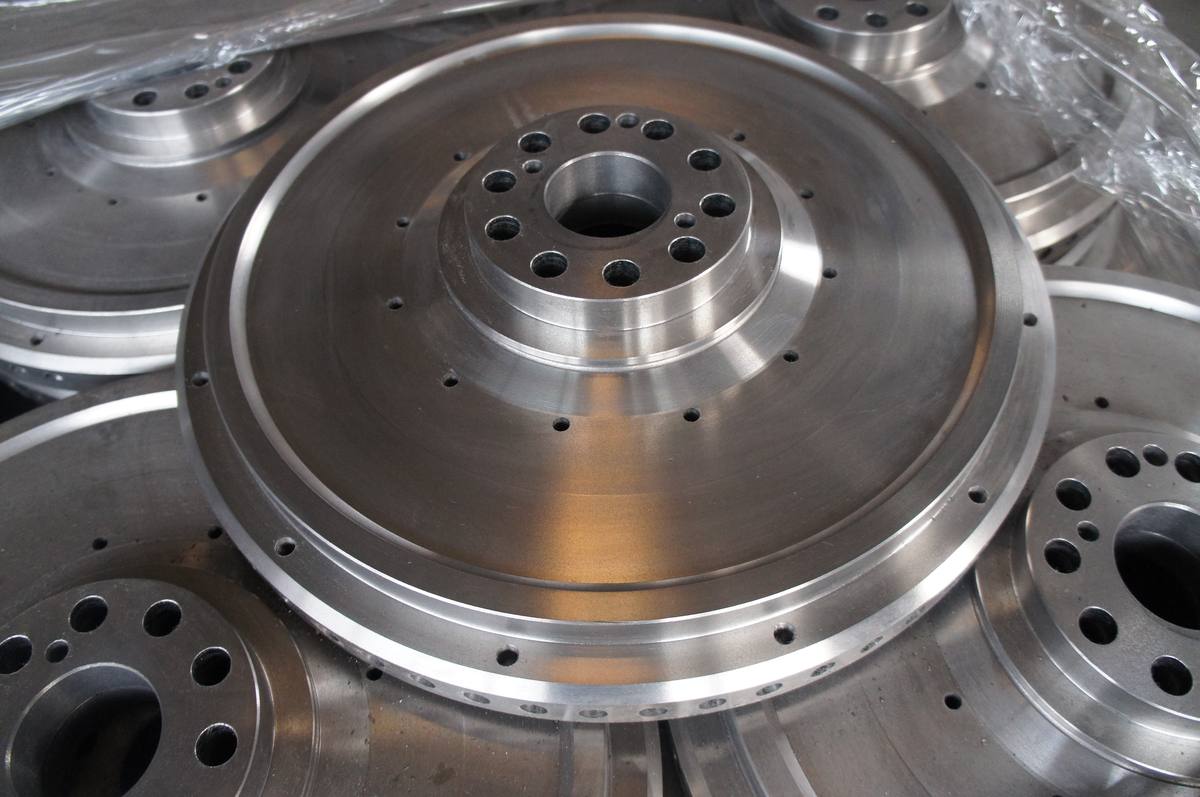
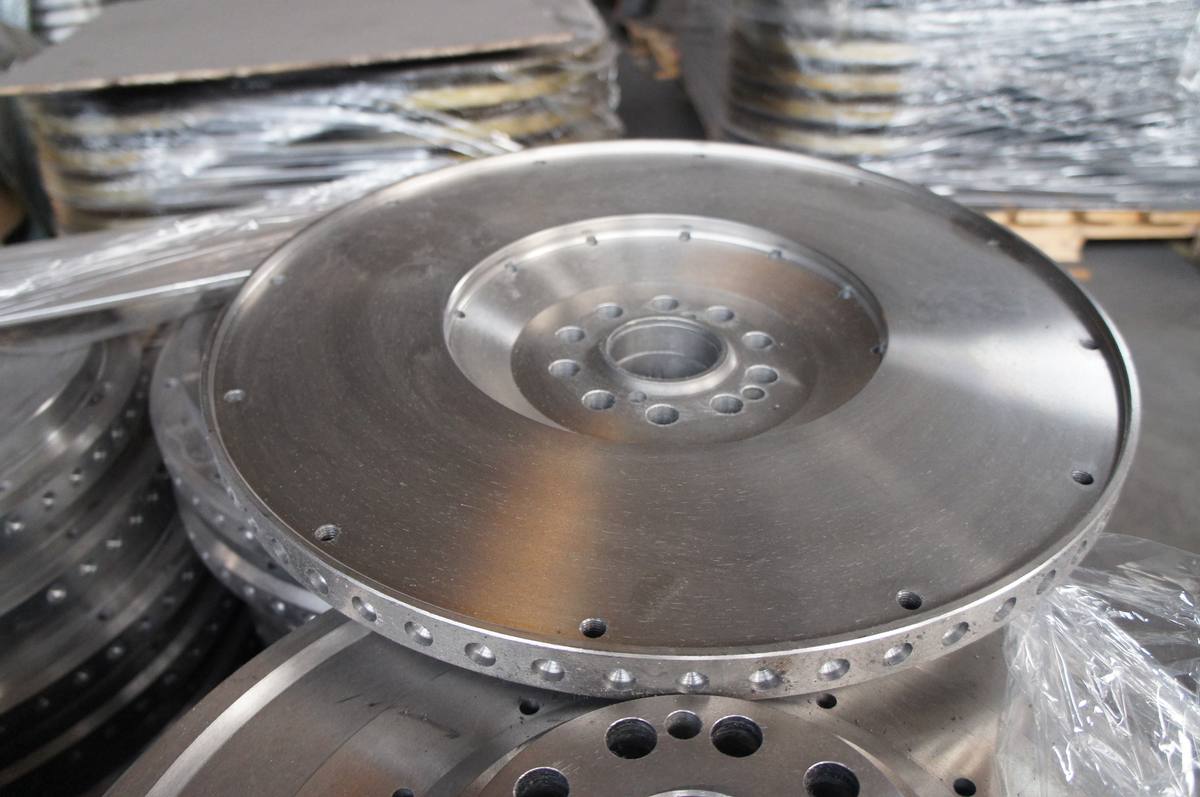
Four parts, fourteen photographs, one clear pattern. This is the part of the article a catalogue cannot give you.
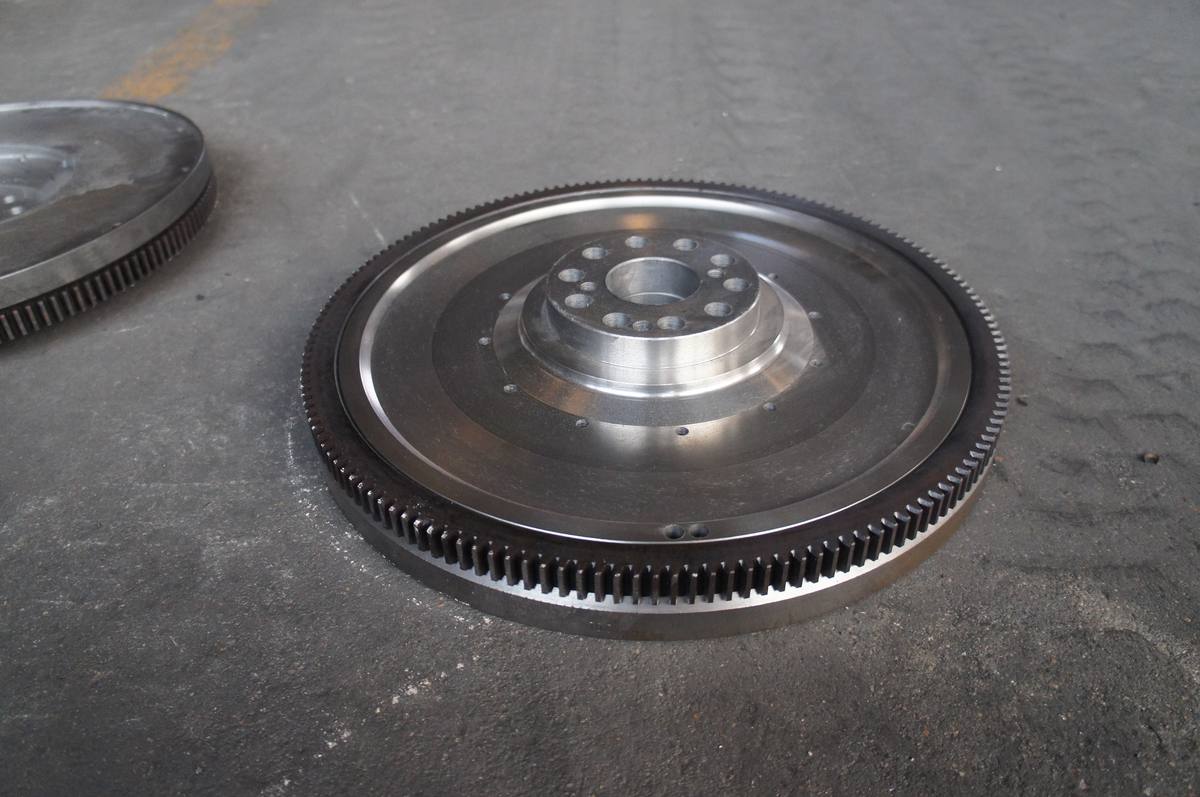
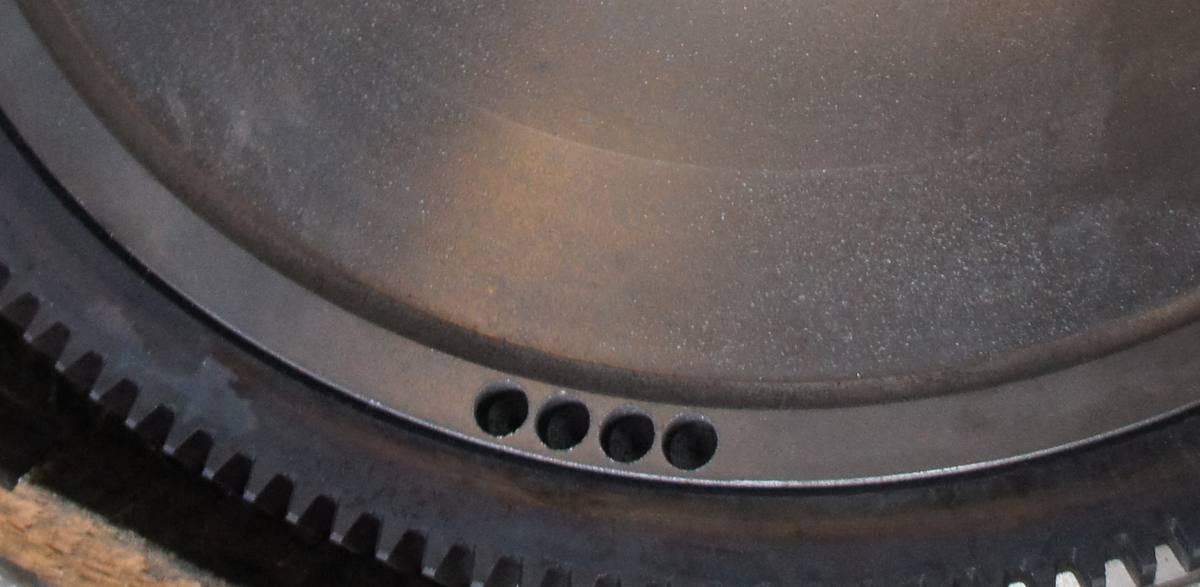
One Short Group On 1388326
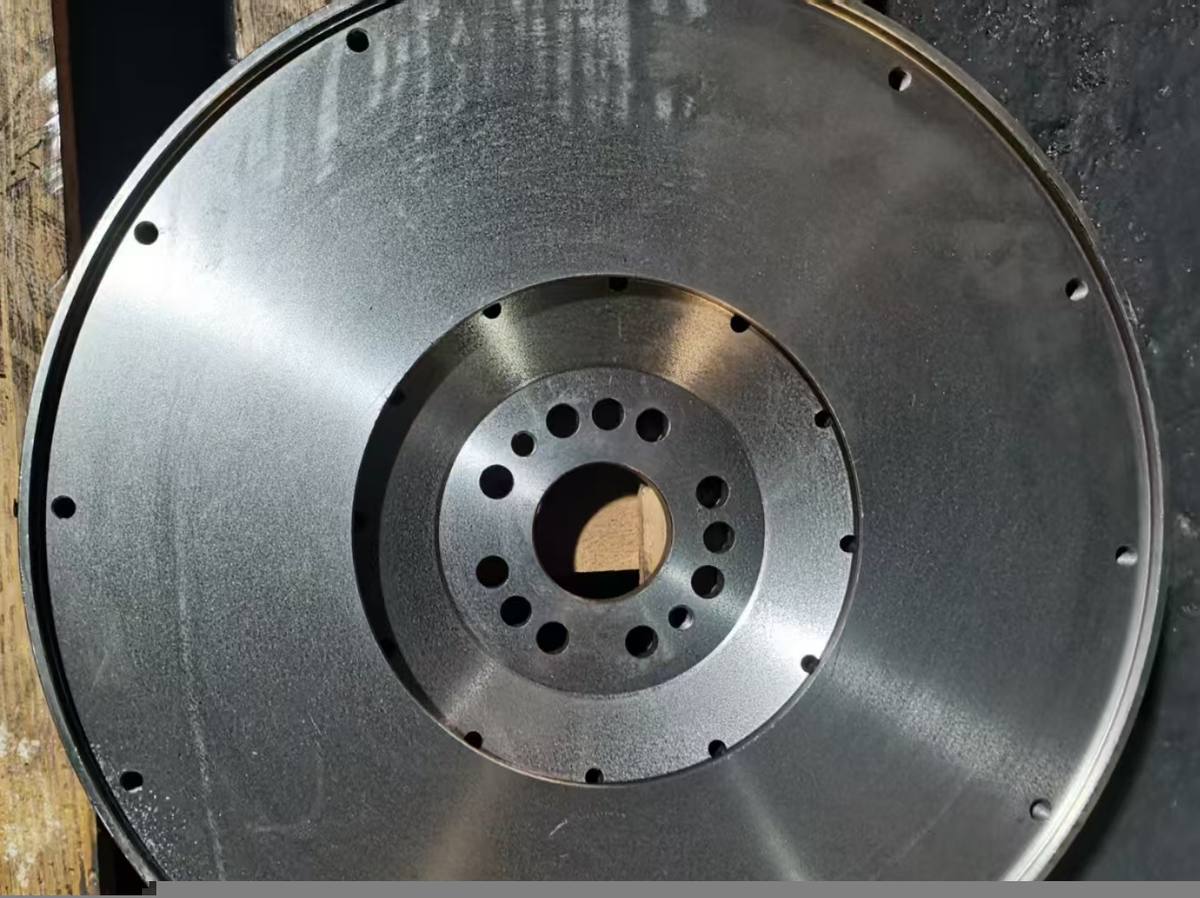
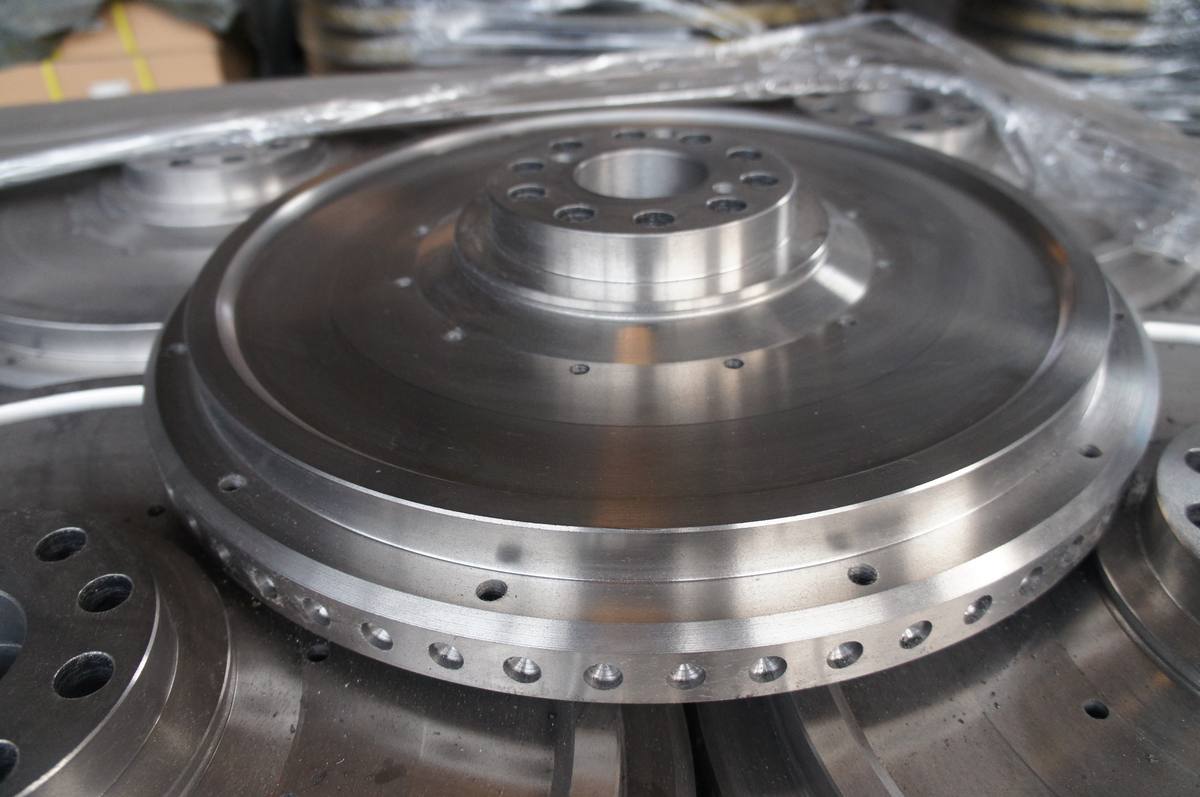
On 1388326, the machined band just inside the ring gear carries one short group of four small holes. Nothing else on that band. No continuous ring.
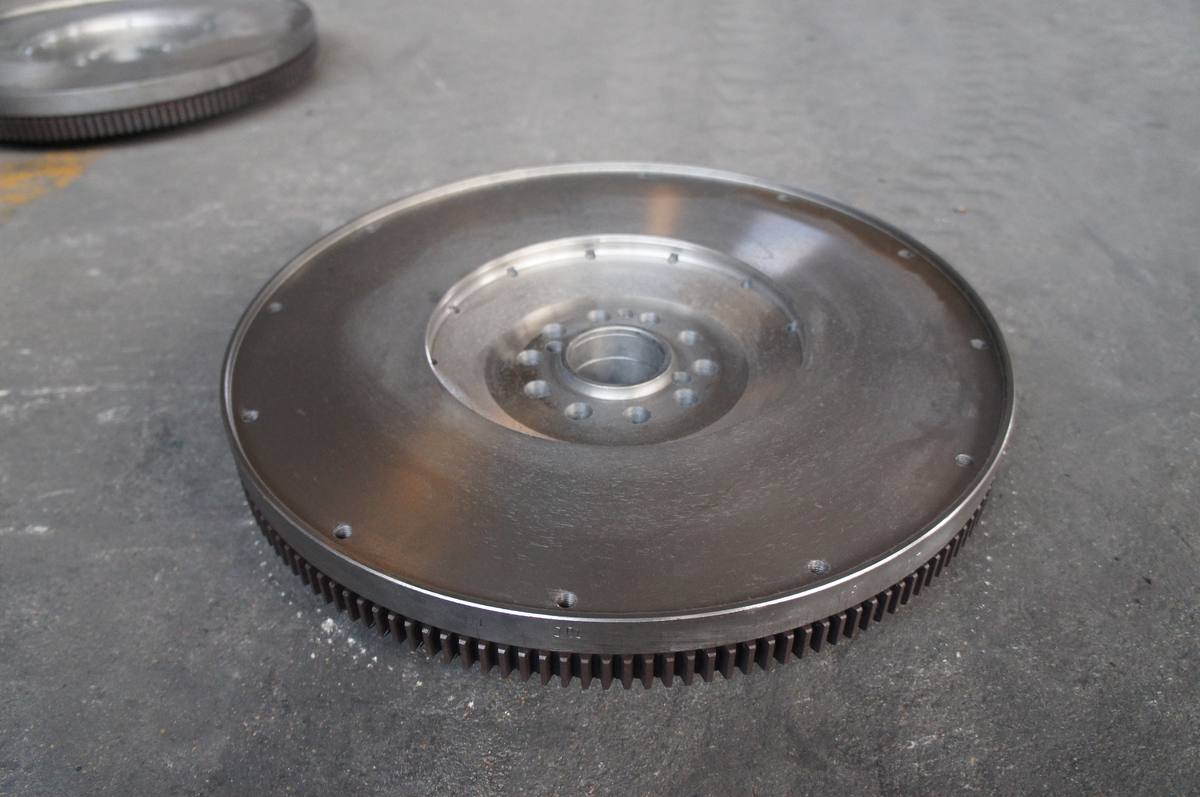
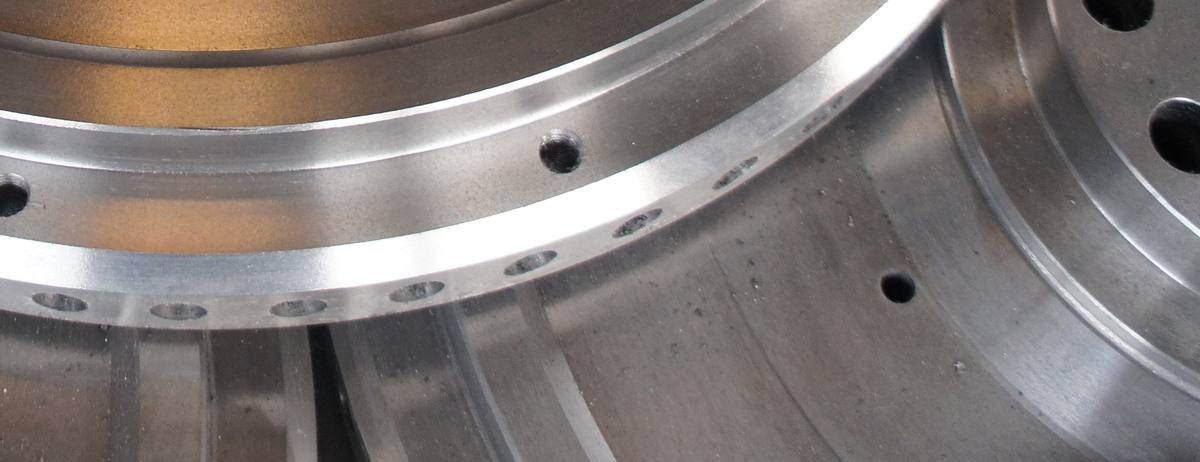
A Ring All The Way Round On 1487558
On 1487558, the same band carries holes all the way around. In a single frame we count five or six of them within a short arc, spaced evenly, with one larger bore among them. That is what a 58 notch ring looks like when you photograph a section of it.
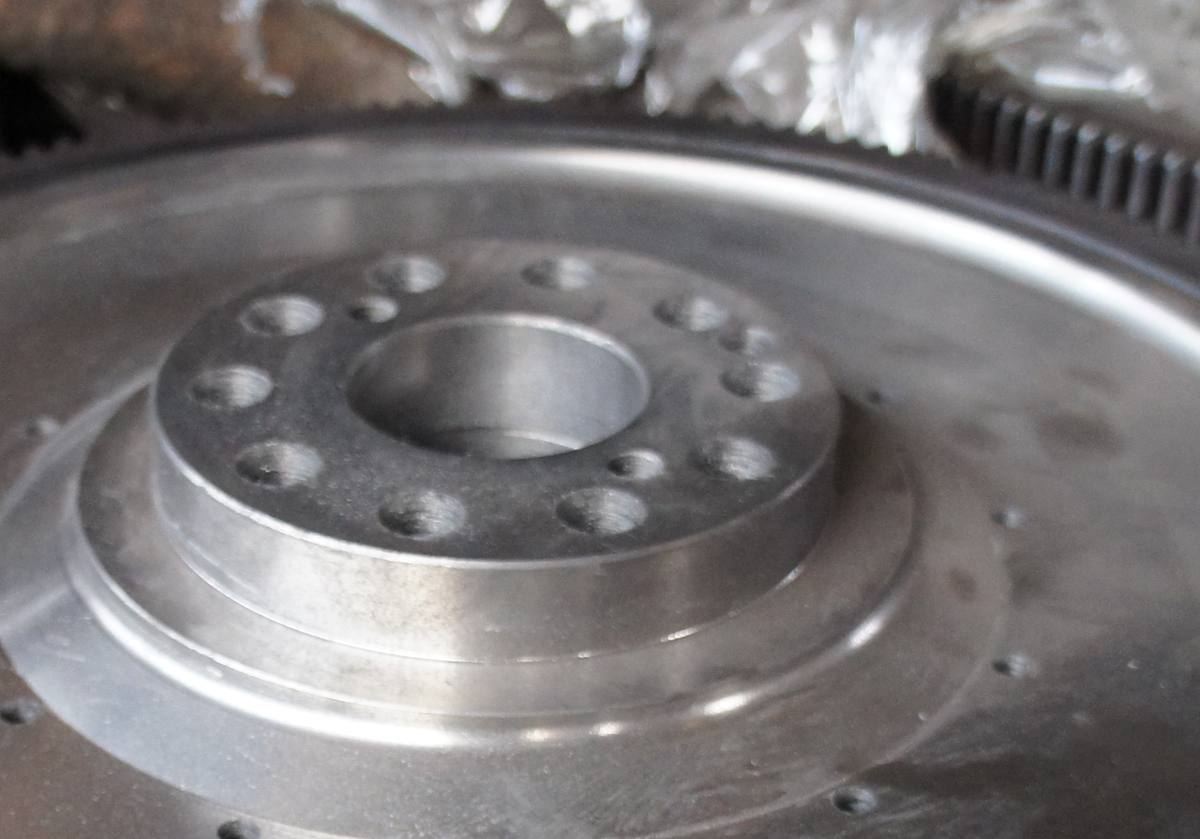
Shorter Groups On 393151 And 324640
On 393151, the group is short again, about five holes in one place on the band, with bare machined surface on both sides of it.
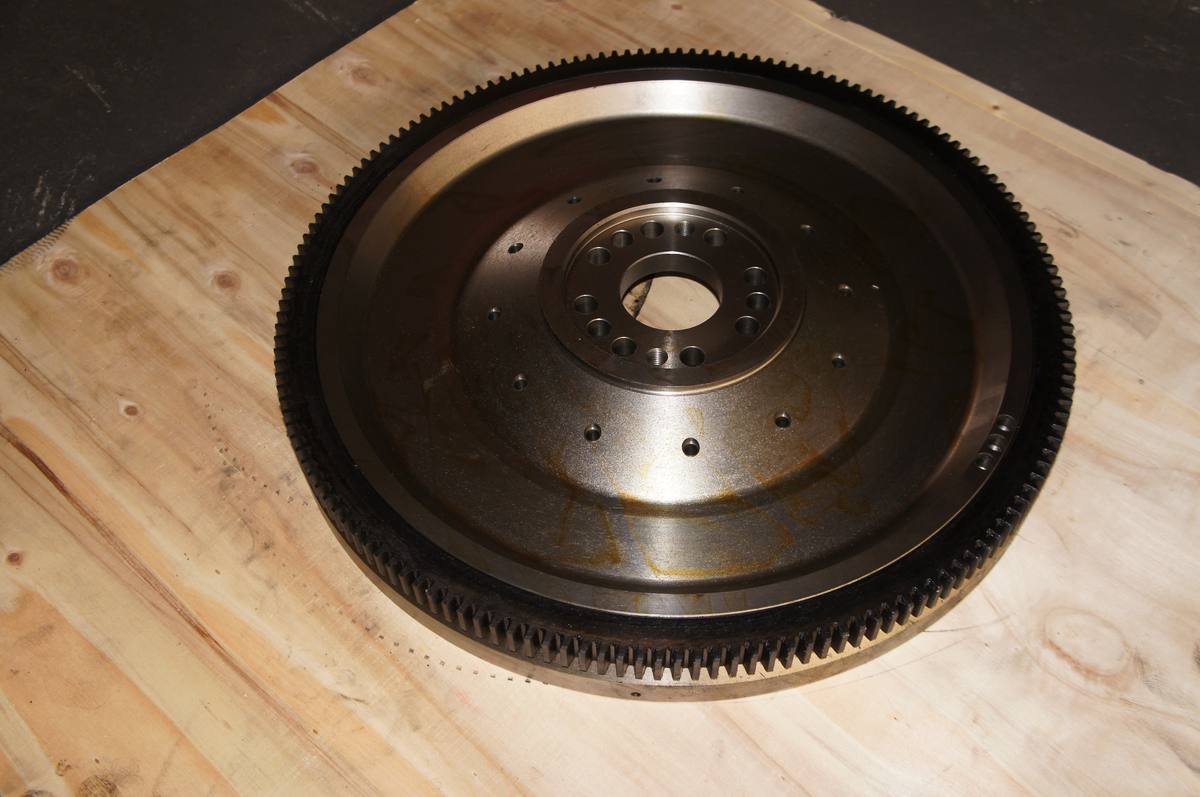
On 324640, the group is shorter still, three holes visible in the frame, again in one place only. The number across the top of that photograph is a shelf label we wrote, not a casting mark from the foundry.
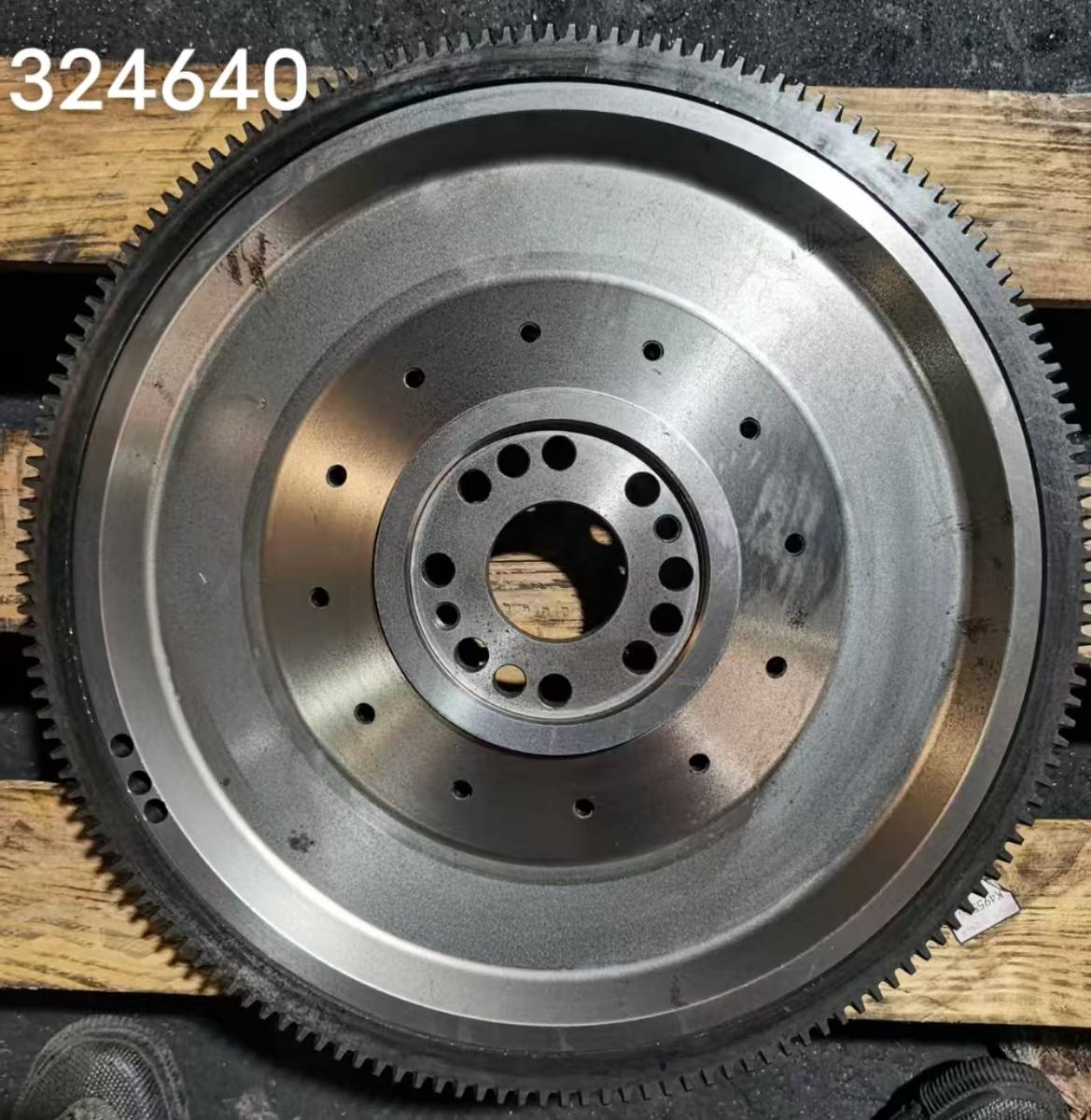
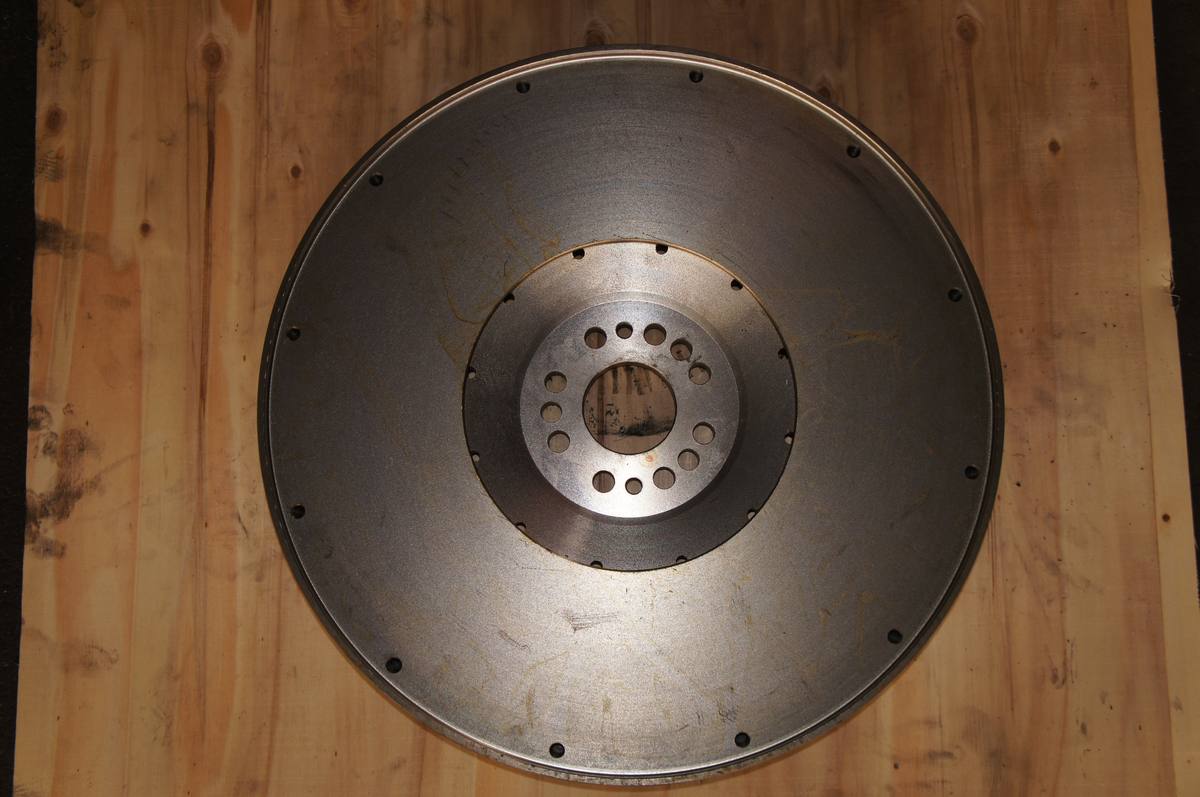
So the photographs and the catalogues tell the same story from two directions. The only part in our set with a dense ring of sensor holes is 1487558, the part febi gives 58 notches. The parts with a short group are the ones the catalogues either give a low count or give no count at all.
That is not proof. It is corroboration, and the distinction matters when a customer is about to spend money on four of these.
What A Photograph Cannot Prove
Four things sit outside what these photographs can settle.
No casting number is legible on any of the four parts in our set. Scania does not cast the seven digit number into the rim in a way we can read in a photograph, and where a number appears on a picture in this article it is a shelf label we wrote ourselves, not a marking from the foundry. If you are identifying a core, a photograph of the number is worth less than a measurement of the hub.
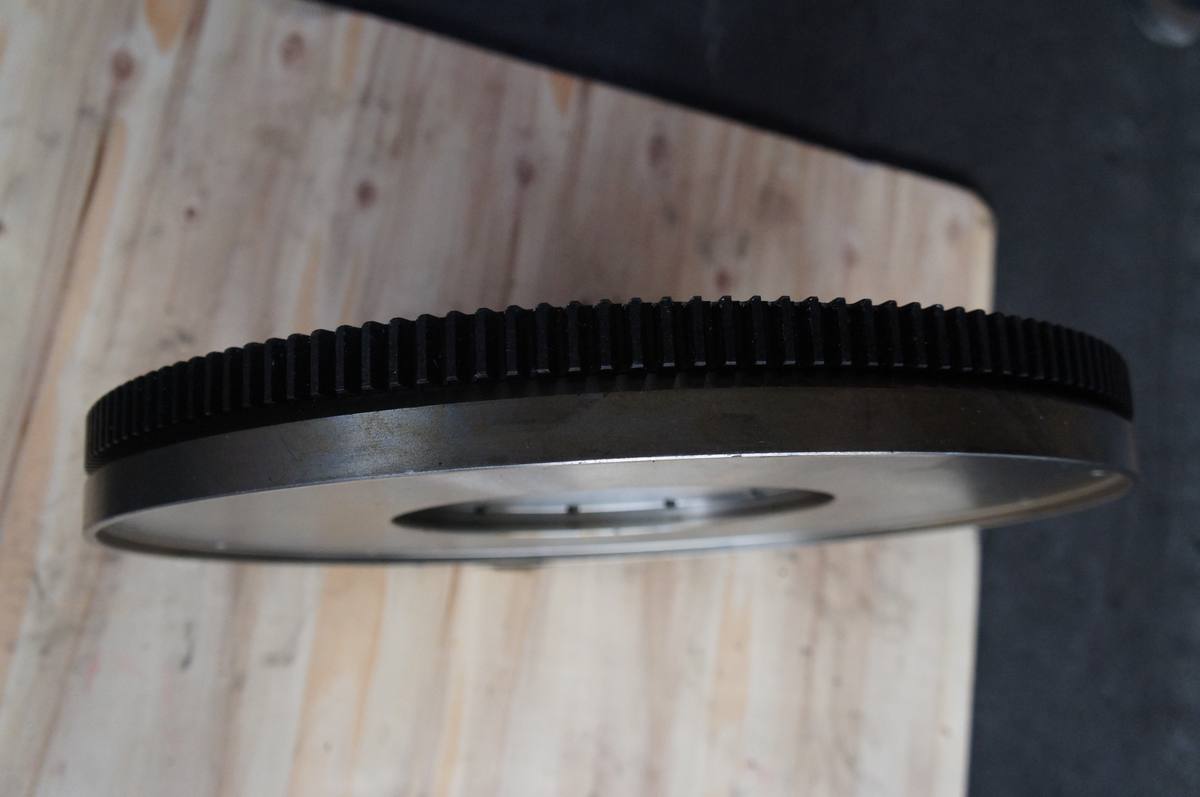
The tooth count cannot be counted from a photograph. 158 teeth on a 480 mm ring are fine enough that a picture at any useful angle produces double counting and false edges. We tried automated counting on a previous article in this series and the results drifted between 154 and 160 on parts whose tooth count was known. We do not publish counts taken from pictures.
Wall thickness and weight cannot be read from the surface. Two parts of identical diameter can differ by 9 kg, as 393151 and 1487558 do in the catalogues, and nothing on the outside explains where the iron went.
And the notch count on 393151 remains unknown to us. Our photograph shows a short group. Whether that group is five notches, six notches, or a mounting feature rather than a trigger, we cannot say from the picture, and no catalogue in our set publishes the figure.
How To Order Without Guessing
Five measurements settle almost every Scania flywheel inquiry. None of them needs a special tool.
Measure the centre bore. All four numbers here are 62 mm, so a bore measurement mainly rules out the part being something else entirely.
Measure the hub bolt circle, centre to centre across the ring of bolts. This is where 105 and 130 separate, and where the catalogues disagree. Measure it on your own crank flange and on your own core, and order to the smaller of the two numbers if they differ.
Count the hub bores and note whether they alternate in size. The four parts here run from 8 to 12 depending on the number and on which catalogue you read.
Count the holes on the trigger band, and note whether they form one short group or a ring. This is the figure that decides whether the engine will run, and it is the figure least often published.
Weigh the part. A 38 kg part and a 48 kg part are not the same casting, whatever the number on the crate says.
What To Send Us
If you send us those five figures plus a photograph of the hub face taken straight on, we can usually identify the number without the customer finding the paperwork. That is faster than arguing about a seven digit number that both sides may be misreading.
We cast and machine flywheels, ring gears, flywheel housings, timing gear housings and cylinder heads in our own foundry in Changyi, Weifang, Shandong. We work from drawings and from OEM numbers, and when a number cannot be confirmed we say so instead of shipping a guess.
Questions Buyers Ask
Are all Scania truck flywheels 158 teeth?
For the four numbers in this article, yes, and that is why tooth count is a poor identifier. It is not a rule for the whole brand. Scania has run other ring sizes across its engine range, and a flywheel from a different family will not match.
Can I use 1487557 where 1487558 came off?
No. They are one digit apart and belong to two different flywheels. febi 17165 covers 1487557, febi 22116 covers 1487558, and the two articles carry different hub bore counts and different trigger arrangements.
Is 393151 the same as 238552?
DT and febi both list 238552, 298978, 306991 and 306993 against 393151. That is catalogue evidence of one casting sold under several Scania numbers. It is not a Scania statement, and we present it as catalogue evidence only.
Why does the same part weigh different amounts in different catalogues?
Partly packaging, partly production revisions, partly catalogue error. Across these four numbers the published weights run from 38.2 kg to 49 kg. We quote the range and let the customer’s own scale settle it.
Do you supply the ring gear separately?
Yes. A ring gear can be replaced on a sound flywheel, and our gear ring range is listed separately. Whether it is worth doing depends on the condition of the friction face, not on the teeth alone.
Sources And Evidence Level
Every figure in this article is traceable to a named article or to a photograph we took. Nothing here is rounded to look precise.
| Claim | Figures used | Evidence level |
|---|---|---|
| 1388326 is 158 teeth, 480 mm outer, 430 mm clutch, 62 mm bore, 112 mm hub circle, 12 hub bores | DT 1.10468, febi 17165, AUGER 58454, SAMPA 042.423 | Multi-source, four brands on teeth and diameter |
| 1487558 is 158 teeth, 480 mm outer, 430 mm clutch, 62 mm bore, 112 mm hub circle, 10 hub bores, 450 mm cover circle | DT 1.10736, febi 22116, LEONPART 5512149 | Multi-source on teeth and diameter; hub bore count from febi plus our own count |
| 1487558 carries 58 EDC notches | febi 22116 only | Single-source, supported by our photograph of a continuous hole ring |
| 393151 is 158 teeth, 480 mm outer, 430 mm clutch, 62 mm bore, 450 mm cover circle, 12 cover bores | DT 1.10463, febi 09924, AUGER 58451, KAWE V6019N | Multi-source on teeth and diameter |
| 393151 hub circle is 105 mm with 11 bores, or 130 mm with 8 bores | febi 09924 against AUGER 58451 | Direct conflict, both printed, neither chosen |
| 324640 is 158 teeth, 480 mm outer, 430 mm clutch, 38.2 to 38.9 kg | DT 1.10466, febi 35302 | Two-source, agreeing on teeth, diameter and weight |
| 324640 carries 6 EDC notches | febi 35302 | Single-source, contradicted by DT 1.10466 which describes the same number as without EDC bores |
| 393151 answers to 238552, 298978, 306991 and 306993 | DT 1.10463, febi 09924 | Two-source on the cross-reference set |
| 1388326 and 1388336 belong to different flywheels | febi 17165 against febi 22116 | Single brand, two independent articles, each with its own OE list |
| The short group of holes is not a 58 notch ring | Our own photographs | Observation of four parts, no catalogue confirms a count for three of them |
What The Table Leaves Empty
Two cells in the main table are deliberately empty. No catalogue in our set publishes a clutch cover circle for 1388326, so that cell stays blank. No catalogue publishes a notch count for 393151, so that cell stays blank as well. An empty cell is more useful to a buyer than a guessed one.
Send The Hub Photo
If you are holding a Scania flywheel and are not sure which of these numbers it is, send two photographs and three measurements. The hub face taken straight on, so the bore pattern can be counted. The trigger band taken at an angle, so the hole group can be seen. Then the centre bore, the hub bolt circle, and the weight.
That is usually enough. If it is not, we will tell you what else is needed rather than quote a number we cannot stand behind.
We manufacture flywheels, ring gears and flywheel housings, and we quote against drawings as well as against OEM numbers. Email Irene at [email protected] or message +86 199 5366 2121. You can also send the specifications through the quotation form.
For the wider picture across all five European truck brands, our comparison of MAN, Mercedes-Benz, Scania, Volvo and DAF flywheel numbers sets the families side by side. The Mercedes heavy truck numbers and the Volvo numbers are covered in detail in separate articles, and the gear ring range is listed on its own page.