
Volvo 11L Engine Reliability: 200,000+ km on Euro III and Still Running Strong
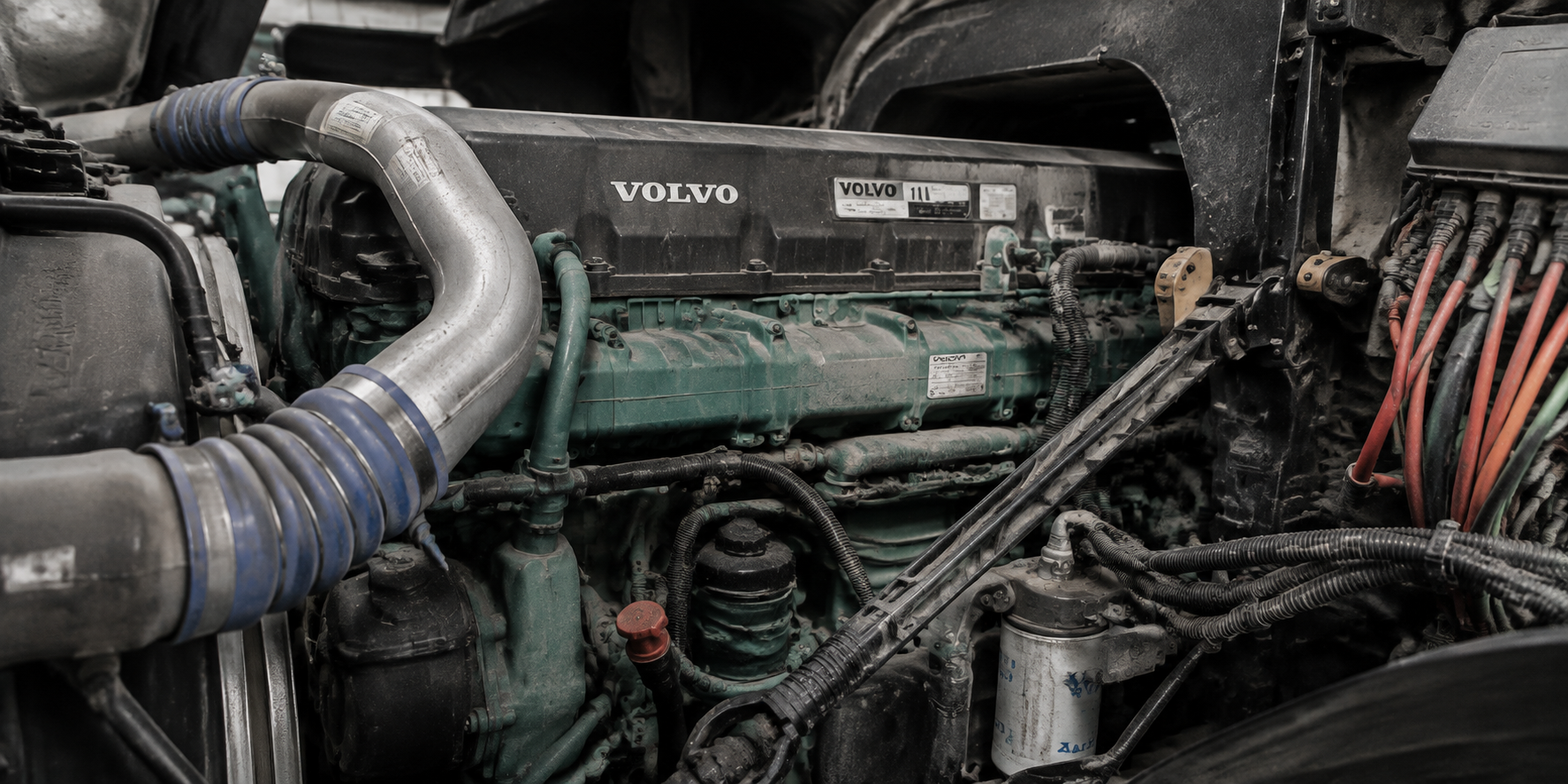
In an industry where emission standards drive rapid engine-platform changes and component redesigns, the Volvo 11L diesel — known in the Chinese market as the “Bianda” (变达) — stands as a compelling case study in long-term reliability. Despite operating under the Euro III emission standard, an older tier by today’s regulatory yardstick, these engines have accumulated over 200,000 kilometers of operation and continue to perform reliably in commercial service.
This is not an anecdotal claim. It is an observable reality in commercial fleets where Volvo diesel platforms keep delivering dependable service well beyond what many would expect from a previous-generation emission tier. The reasons are worth examining — not just for Volvo operators, but for anyone trying to understand what makes diesel components endure.
As a manufacturer of European-series flywheels including Volvo applications, Changwei’s engineering team has studied the design and manufacturing principles behind this level of reliability. This article examines the factors that keep the Volvo 11L running.
Euro III and the Question of Obsolescence
Understanding the emission tier context
Euro III standards, implemented in the early 2000s, set limits on nitrogen oxides (NOx), carbon monoxide (CO), hydrocarbons (HC), and particulate matter (PM) from diesel engines. Later stages — Euro IV, V, and VI — tightened those limits and introduced technologies such as selective catalytic reduction (SCR), diesel particulate filters (DPF), and exhaust gas recirculation (EGR).
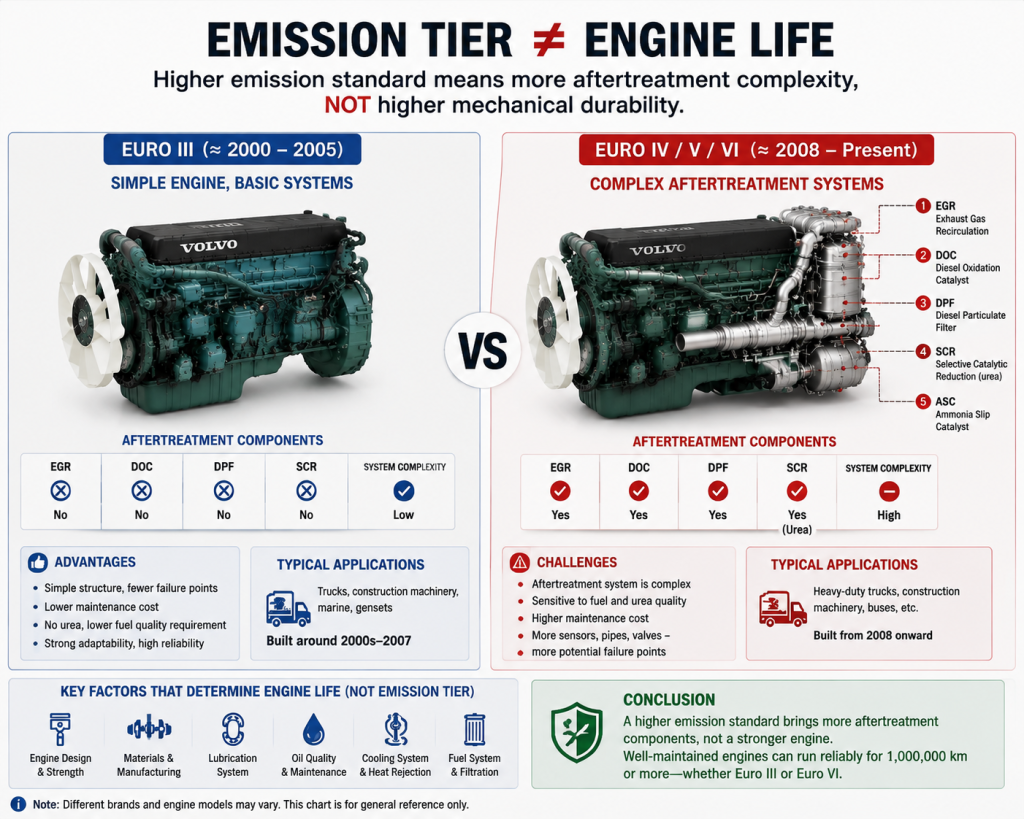
A common assumption is that engines meeting older standards are inherently less durable. The Volvo 11L demonstrates that emission tier and component longevity are separate considerations. An emission standard governs exhaust output; it does not directly determine the mechanical durability of internal components.
Why older-standard engines can outlast expectations
- Design maturity — by the Euro III production era, heavy-duty diesel architecture had decades of refinement behind it. The Volvo 11L benefited from mature, well-understood engineering.
- Mechanical simplicity — Euro III engines typically lack the complex aftertreatment of later tiers. Fewer systems mean fewer failure points.
- Component quality — the durability of crankshaft, rods, pistons, head, flywheel, and timing depends on material, precision, and quality control, not on the emission standard.
- Maintenance practices — consistent oil changes, filter replacement, and cooling service let engines outperform their nominal design life regardless of tier.
The 200,000+ Kilometer Benchmark
What this mileage represents
For commercial diesels, 200,000 km is a significant but not extraordinary milestone. What makes the Volvo 11L noteworthy is the combination: continued reliable operation without major failure, on an older standard, with core systems — including the flywheel that rotates at engine speed for every kilometer — still sound.
The role of core component reliability
Engine longevity is the cumulative result of every system holding specification over time:
- Cranktrain integrity — crankshaft, flywheel, and harmonic damper must maintain dynamic balance and structural integrity. A flywheel bolted directly to the crank sees every revolution; any imbalance or fatigue shows up as vibration, accelerated bearing wear, and potential crank damage.
- Combustion system durability — pistons, rings, liners, and head must keep sealing under repeated thermal cycling and combustion pressure.
- Lubrication consistency — pump, passages, and filtration must feed every bearing surface across the engine’s life.
- Cooling effectiveness — controlled operating temperature prevents the warping and wear that heat stress accelerates.
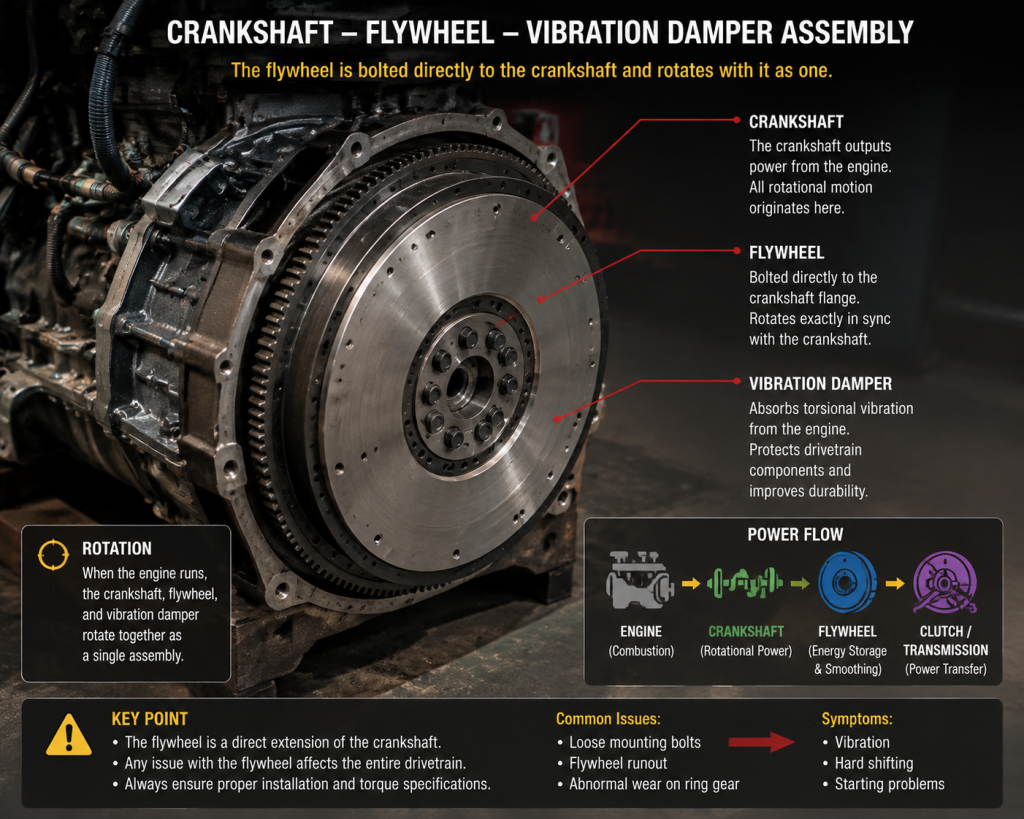
Each system depends on the quality of its individual parts. When all are engineered and manufactured to appropriate standards, the engine achieves the longevity the Volvo 11L demonstrates.
What Makes Engine Components Last: Engineering Principles
Material selection
Durable components begin with the right material. For flywheels, that means cast iron or forged steel with specified mechanical properties: adequate tensile and compressive strength, thermal stability to resist warping, wear resistance for friction surfaces, and damping capacity to absorb vibration.
Manufacturing precision
Precision ensures components meet design intent consistently:
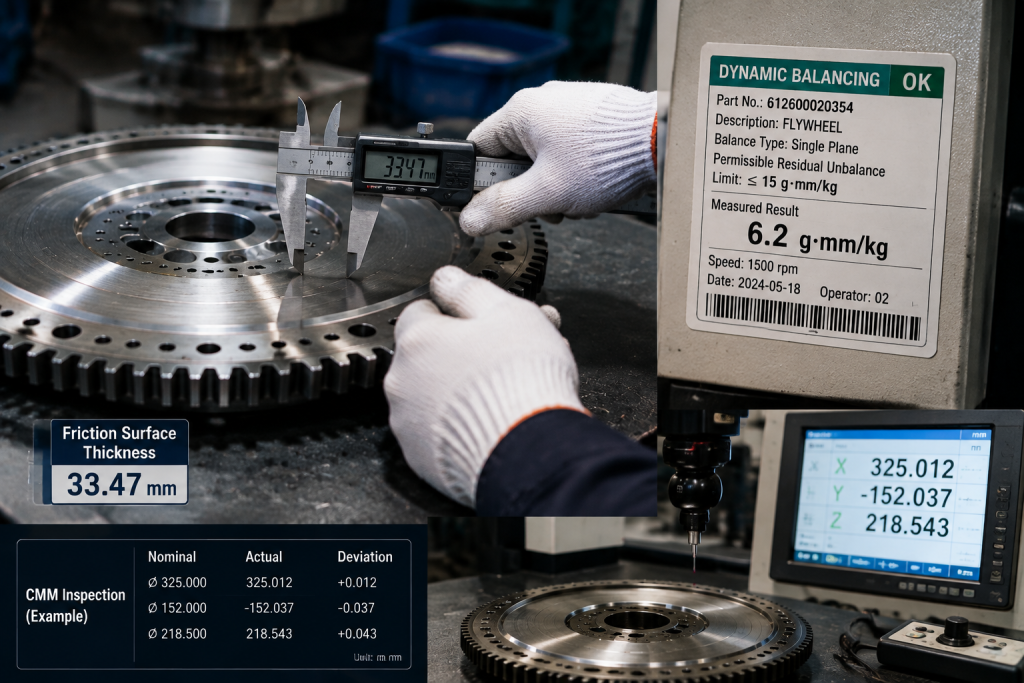
- Dimensional accuracy — tight tolerances for runout, flatness, and pilot-bore concentricity. Deviations cause imbalance and vibration.
- Surface finish — the friction surface must hit a roughness window. Too smooth and the clutch grabs; too rough and it wears fast.
- Dynamic balancing — every flywheel must be balanced. Minor imbalance, multiplied by thousands of rpm, becomes significant vibration force.
- Ring gear fit — the starter ring gear must be properly heat-shrunk with the correct tooth profile for reliable engagement.
Quality control
Consistent quality requires systematic inspection: dimensional verification by CMM, surface-finish measurement, balance verification, material property testing, and visual inspection for casting defects. At Changwei’s 40,000 sqm facility with IATF 16949 certification, these steps are integrated into the production workflow so that each component — whether a flywheel for a Volvo 11L or any other platform — meets the specification required for long-term reliable operation.
The Flywheel’s Contribution to Engine Reliability
The flywheel is not the most complex part, but its role is significant:
- Energy storage — its mass smooths the power stroke, cutting stress on the drivetrain.
- Friction surface — in manual-clutch engines it is the clutch’s working face; its integrity sets clutch life.
- Crankshaft damping — correct mass and balance tame torsional oscillation that would otherwise damage the crank.
- Starter engagement — the ring gear starts the engine, thousands of times over its life.
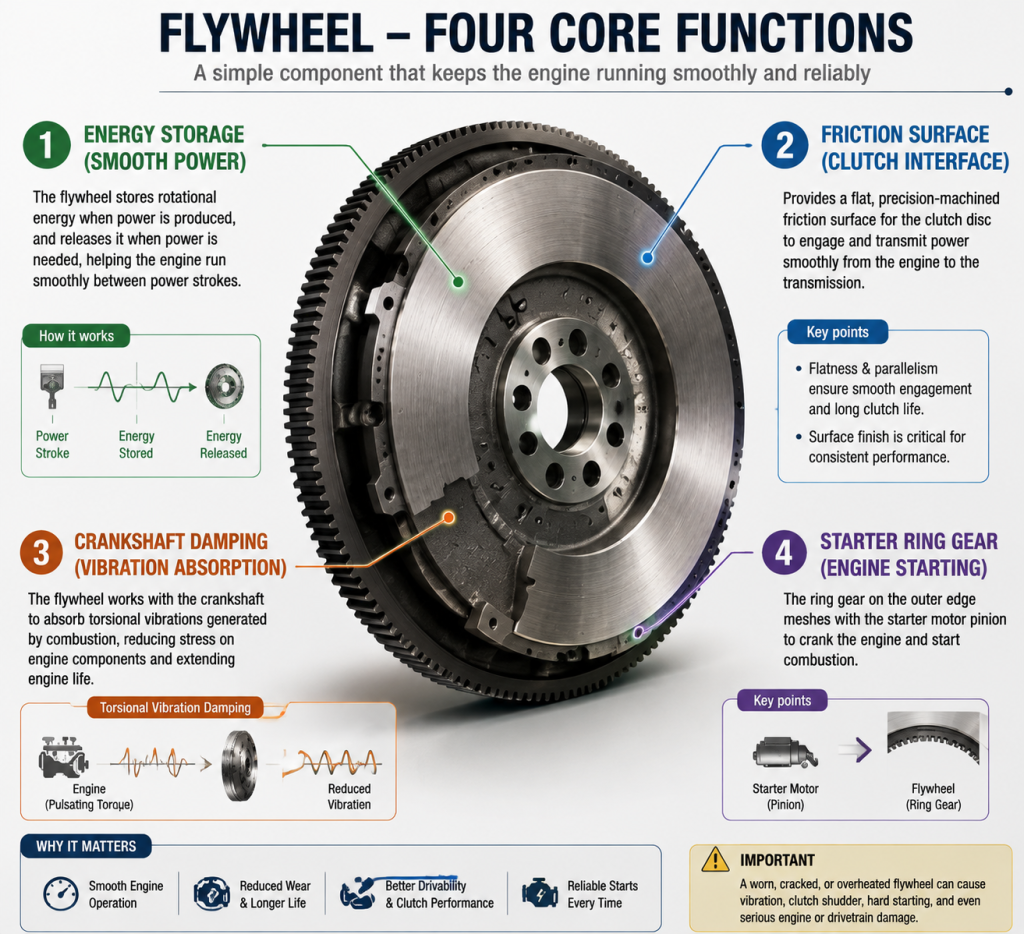
For the Volvo 11L, the flywheel has performed these functions for 200,000+ km — a testament to the original design and manufacturing quality.
Lessons for Component Sourcing and Replacement
Lesson 1: Quality outlasts emission standards. An engine’s emission tier does not determine its mechanical longevity. When sourcing replacements, spec the part by material, accuracy, and quality control — not by its emission-related designation.
Lesson 2: Core components drive longevity. Cranktrain, cylinders, lubrication, and cooling are fundamental mechanical systems. Their life depends on engineering and manufacturing quality, not on electronic controls or aftertreatment.
Lesson 3: Precision manufacturing is non-negotiable. A well-balanced, well-finished flywheel adds reliability; a deficient one causes problems on any engine it is fitted to.
Lesson 4: Supplier expertise matters. Choose a supplier with genuine engineering and quality systems — not just a parts catalog. The same discipline that keeps an original part running for 200,000 km must carry into the replacement. This is exactly where part-number discipline becomes critical: two flywheels can share a suffix yet carry different full numbers for different engine platforms. We covered that trap in detail in our guide on why the same flywheel part number suffix can hide a different part — always read the full number, not just the last four digits.
The Broader Context: Beyond Volvo
The Volvo 11L’s story is not unique to Volvo. The same principle holds across Volvo, Scania, MAN, Mercedes, and Weichai: well-engineered, well-manufactured components last. For operators running aging Euro III fleets, the takeaway is to stop treating older tiers as unreliable and instead protect component quality through maintenance and smart sourcing. For those moving to newer tiers, the foundation is unchanged: component quality and manufacturing precision still decide engine life.
Conclusion
The Volvo 11L, still reliable past 200,000 km on Euro III, proves that diesel longevity is fundamentally a function of component quality, engineering design, and maintenance — not emission tier. The flywheel, a core cranktrain part, earns its place in that story through material, balance, and consistent performance. For anyone maintaining fleets or sourcing replacements, the key points are clear: emission standard and service life are independent variables, core component quality sets the limit, and supplier expertise is the factor you control.

About Changwei: Weifang Changwei Intelligent Equipment Co., Ltd. is an IATF 16949 certified engine flywheel manufacturer based in Weifang, China. With a 40,000 sqm production facility and 20+ years of engineering experience, Changwei supplies flywheels, gear rings, and housing parts — including Volvo and other European-series applications — to customers in 20+ countries. Contact us for OEM/ODM flywheel solutions.