
ISUZU Flywheel Catalog & Replacement Guide | Specs, OEM Numbers & Compatibility
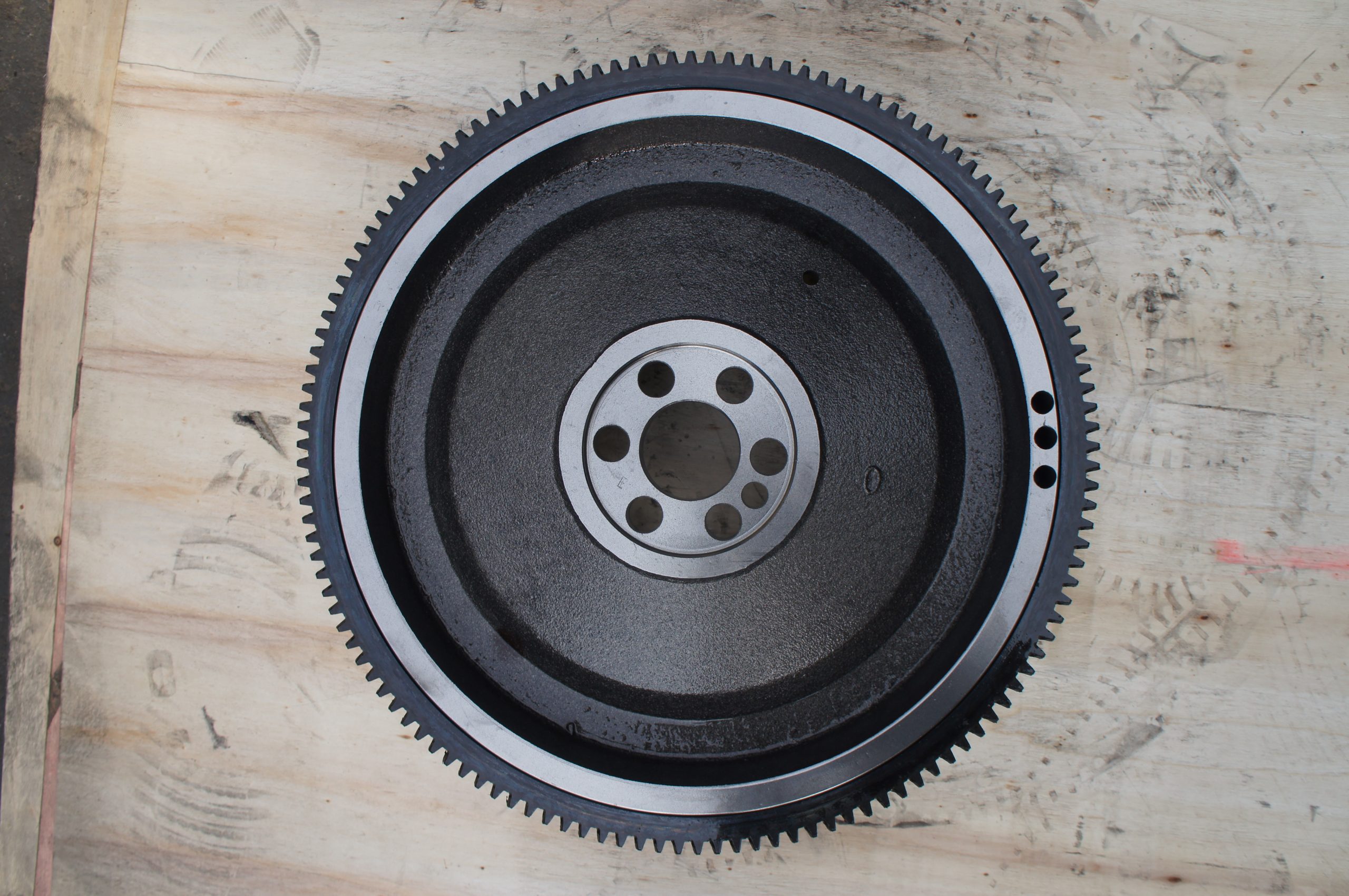
ISUZU Flywheel Catalog & Replacement Guide
A field guide for buyers servicing ISUZU trucks and buses. Covers the 4JB1, 4HK1, 6BG1, 6HK1, 6HH1, 6WG1 and 6WA1 engine families with ring gear tooth counts, truck model compatibility, OEM reference patterns, and what to check before you quote a replacement.
Table of Contents
- Why ISUZU Flywheels Are a Common Replacement Part
- Core Specs That Matter for an ISUZU Flywheel
- ISUZU Flywheel Compatibility by Engine Family
- OEM Reference Patterns for Popular ISUZU Flywheels
- How to Identify the Correct ISUZU Flywheel Before Quoting
- Common Failure Signs on ISUZU Trucks
- Price and MOQ Reference for ISUZU Flywheels
- OEM vs Aftermarket ISUZU Flywheels
- Sourcing ISUZU Flywheels from China
- Frequently Asked Questions
- Get a Quote
Why ISUZU Flywheels Are a Common Replacement Part
ISUZU powers a huge share of the world’s light and medium commercial vehicles. The ELF (N-series: NHR, NKR, NPR, NQR), FORWARD (F-series), and GIGA (C-series) are workhorses across Southeast Asia, the Middle East, Africa and Latin America. Many of these trucks run 10 to 25 years, and the flywheel is a service part that gets replaced at least once in that span.
The usual reasons an ISUZU flywheel comes out:
- Worn ring gear teeth after years of starter engagement, often 80,000 starts or more
- Clutch overhaul on a truck past 250,000 km where the friction face is glazed or heat-checked
- Cracked web from heat cycling or a starter pinion impact
- Friction face machined down to its refacing limit
- Fleet refit from manual to automated manual transmission on certain models
For distributors and importers this is a steady, predictable aftermarket line. For one-off buyers it is a recurring puzzle, because each ISUZU engine family uses its own flywheel with a distinct tooth count, bolt pattern, weight and OEM stamp.
Core Specs That Matter for an ISUZU Flywheel
Before contacting any supplier, pull these four specs from your existing flywheel or the engine plate:
- Outer diameter (mm) sets torque class and the starter ring fit
- Ring gear tooth count must match the starter pinion (common ISUZU counts include 129T and 139T, confirmed on our 6BG1 and 6WA1 castings)
- Bolt circle, pilot bore and bolt count decide whether it seats on the crankshaft flange
- Weight (kg) affects balancing and freight
| Spec | Typical range across ISUZU engines | Why it matters |
|---|---|---|
| Outer diameter | 300–485 mm | Defines flywheel class (light to heavy) |
| Thickness | 30–55 mm | Reface limit, heat capacity |
| Ring gear teeth | 110T, 129T, 139T and others | Starter pinion match |
| Material | QT600-3 ductile iron or GG25 grey iron | Strength, machinability |
| Weight | 12–48 kg | Engine balance class |
| Friction face finish | Ra 1.6 on the clutch side | Clutch plate bedding |
| Dynamic balance grade | G6.3 at rated RPM | NVH and bearing life |
Two ISUZU flywheels with the same tooth count are not automatically interchangeable. The crank pilot, bolt pattern and friction-face thickness differ between the 4J/4H light families and the 6B/6H/6W heavy families. Always cross-check before quoting.
ISUZU Flywheel Compatibility by Engine Family
ISUZU has built dozens of engine families. The most replaced flywheels in the aftermarket sit in three buckets.
Light-duty (ELF / N-series, 2.8–5.2 L)
| Engine | Truck models | Notes |
|---|---|---|
| 4JB1 | NKR, NHR, early NPR | Widely license-built in China; small flywheel class |
| 4JG2 | NPR, faster N-series | Turbo and non-turbo variants |
| 4HF1 / 4HG1 | NPR, NQR | 4.3 L workhorse |
| 4HK1-TC | NPR, NQR, light F-series | 5.2 L common rail, high export demand |
| 4JJ1-TC | NPR, NQR current | 3.0 L common rail |
Medium-duty (FORWARD / F-series, 6.5–7.8 L)
| Engine | Truck models | Notes |
|---|---|---|
| 6BD1 | FRR, FSR (legacy) | Older F-series platform |
| 6BG1 | FRR, FSR, FTR | 129T ring gear on our castings; very common |
| 6HH1 (WF-41) | FSR, FTR | Classic mid-duty; WF-41 variant |
| 6HK1 | FSR, FTR, FVR | 7.8 L, high aftermarket demand |
| 6HE1 | F-series | Similar flange to 6HH1 |
Heavy-duty (GIGA / C-series, 12–16 L)
| Engine | Truck models | Notes |
|---|---|---|
| 6WA1 / 6WD1 | EXR, EYR (GIGA) | 139T ring gear on our 6WA1TC castings |
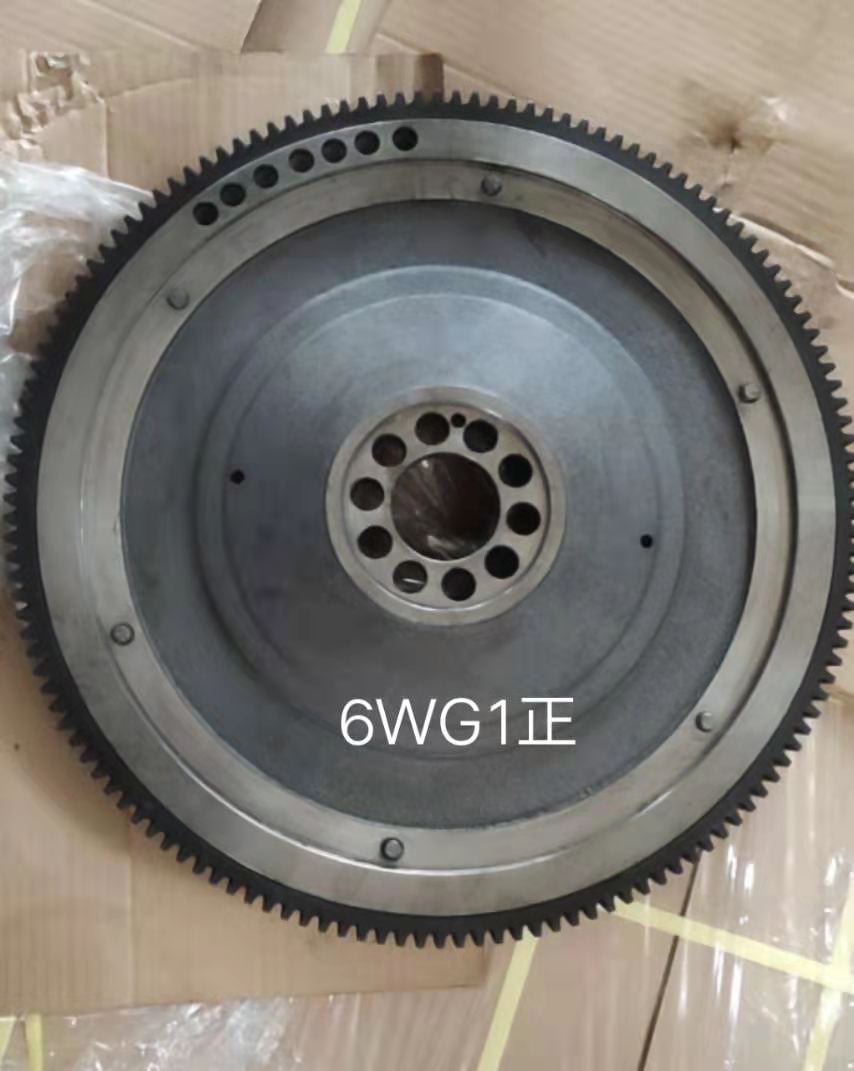
| 6WG1 | EXR, EYR current | 15.7 L flagship; largest flywheel class |
| 6UZ1 | GIGA current | 15.6 L, common with 6WG1 |
| 6SD1 | GIGA legacy | Earlier heavy platform |
Most aftermarket demand sits in the medium bucket (6BG1, 6HK1, 6HH1) because that is what the active FORWARD fleets actually need, with the 4HK1 light class close behind from the ELF population.
OEM Reference Patterns for Popular ISUZU Flywheels
ISUZU OEM part numbers typically follow a “1-XXXXXXXX” or “8-97XXXXXXX” format for the flywheel assembly, with the ring gear carrying its own reference. The exact suffix varies by engine serial range and build year, which is why a firm quote needs your engine serial number or an existing sample.
The table below is a reference pattern, not a guaranteed cross-reference. Confirm against the stamp on your existing flywheel or the engine data plate.
| Engine | Tooth count | OD (mm) | Typical weight (kg) | OEM format (example) |
|---|---|---|---|---|
| 4JB1 | ~110T | ~310 | ~12 | 8-9700x-xxx |
| 4HK1 | ~129T | ~380 | ~20 | 8-973x-xxxx |
| 6BG1 | 129T (on our casting) | ~410 | ~28 | 1-13xx-xxxx |
| 6HK1 | ~139T | ~430 | ~32 | 1-1xxx-xxxx |
| 6HH1 (WF-41) | ~139T | ~430 | ~33 | 1-1xxx-xxxx |
| 6WA1 / 6WD1 | 139T (on our casting) | ~460 | ~40 | 1-1xxx-xxxx |
| 6WG1 | ~143T | ~480 | ~48 | 1-1xxx-xxxx |
Tooth counts marked “on our casting” are read directly from the production photos of our own 6BG1 and 6WA1TC flywheels. Send your engine plate number or a sample flywheel and we will confirm the exact reference before production.
For engine families not listed above (4JG2, 4HE1, 6BD1, 6HE1, 6UZ1, 6SD1), the same rule holds: supply the OEM reference from your existing part or the engine plate and we match it against our catalog or build a sample for verification.
How to Identify the Correct ISUZU Flywheel Before Quoting
Three methods, in order of accuracy:
1. Read the OEM stamp on the existing flywheel. Almost every ISUZU flywheel carries its part number on the web face near the ring gear. Photograph it before sending your enquiry. This is the fastest and most accurate route.
2. Read the engine data plate. Mounted on the block, often on the valve cover or timing case, it carries the engine model and serial number. Combined with the truck model and build year, we can identify the correct flywheel in our catalog.
3. Measure the four key specs. If neither stamp is readable (common on 15-year-old trucks), measure the ring gear tooth count, outer diameter, pilot bore diameter, and the bolt circle with bolt count on the crank flange. Send these four numbers with a clear photo of the flywheel face and we will cross-check against our database.
Common Failure Signs on ISUZU Trucks
These symptoms push an owner to replace the flywheel rather than just the clutch:
- Grinding noise on startup, especially cold, points to worn ring gear or a damaged starter pinion
- Clutch judder or vibration at idle that survives a clutch swap usually means a glazed or hot-spotted friction face
- Visible cracks on the web between the bolt circle and the friction face
- Starter spins without engaging the ring gear, caused by a chipped or broken tooth
- Oil contamination on the friction face from a rear main seal or clutch slave cylinder leak
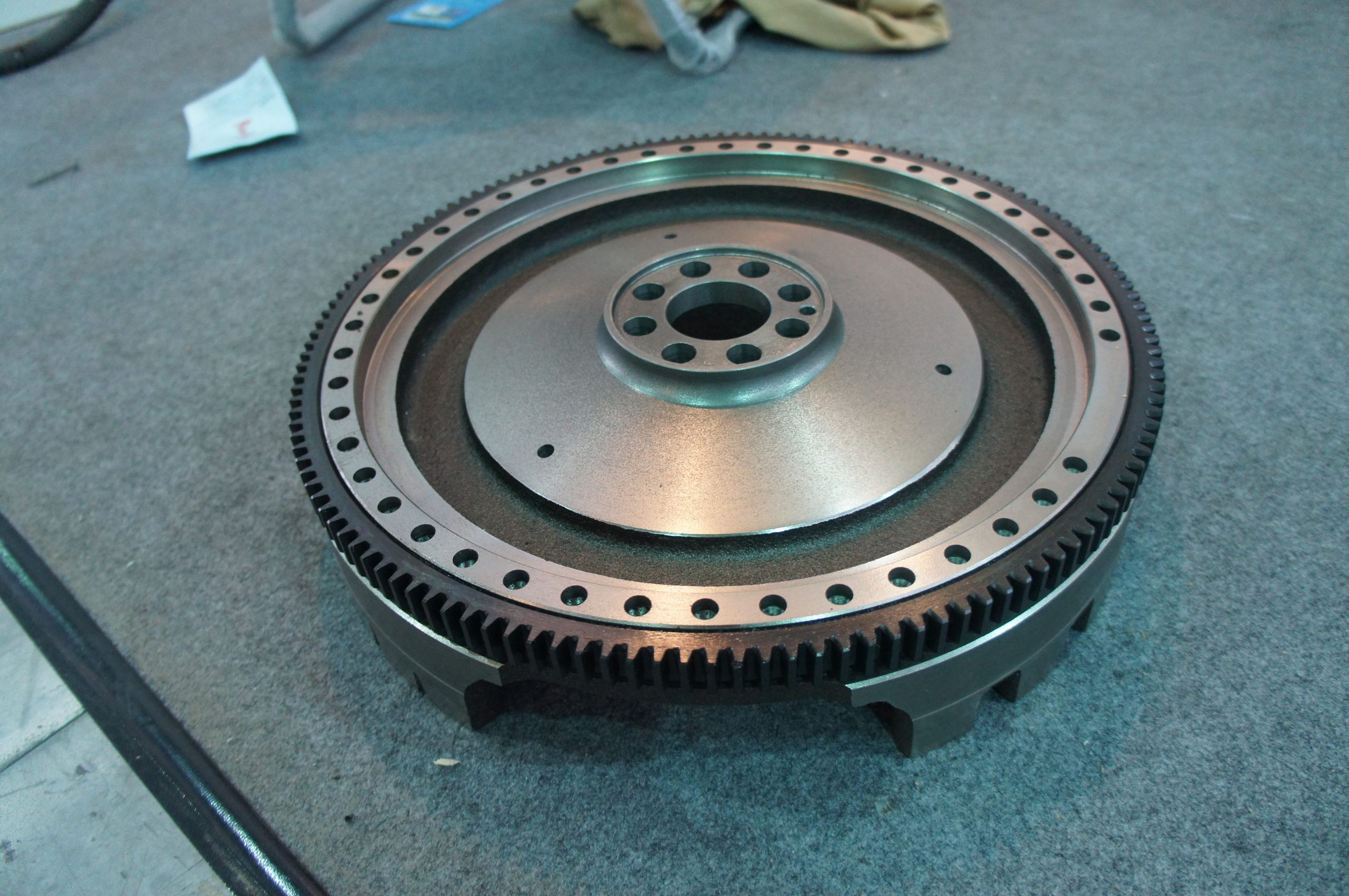
Replacement is normally done together with a new clutch kit, rear main seal and pilot bearing. Replacing the wear items in one service avoids repeat labor.
Price and MOQ Reference for ISUZU Flywheels
Pricing moves with engine family, ring gear option (machined-only vs full ring gear fitted), and order quantity. The reference ranges below reflect typical FOB Qingdao pricing for a sample order of 20 pieces:
| Engine class | Sample price range (USD/pc) | MOQ | Lead time |
|---|---|---|---|
| Light (4JB1, 4JJ1, 4HK1) | $30–55 | 20 pcs | 25–30 days |
| Medium (6BG1, 6HK1, 6HH1) | $60–120 | 20 pcs | 25–35 days |
| Heavy (6WG1, 6WA1/6WD1) | $150–260 | 20 pcs | 30–40 days |
Ring gears are usually sold separately and can be machined and fitted at the factory or shipped loose for customer fitting. FOB Qingdao is the standard Incoterm for export; CIF and DDP are quoted on request where buyers prefer landed cost.
For annual contracts of 500+ pieces, pricing drops materially under a scheduled production agreement. Share your annual forecast and we will prepare a tiered quote.
OEM vs Aftermarket ISUZU Flywheels
The genuine ISUZU flywheel is built by the licensed supply chain and carries the OEM stamp. Quality aftermarket equivalents are built by independent foundries to the same drawing, typically without the ISUZU mark. What actually differs:
| Factor | Genuine ISUZU | Quality aftermarket |
|---|---|---|
| Material spec | Set by ISUZU | Set by the aftermarket supplier |
| Ring gear | Fitted at licensed source | Loose or fitted by supplier |
| Branding | ISUZU stamp | No OEM stamp (legal for replacement parts in most markets) |
| Warranty | Via ISUZU dealer network | Via the aftermarket supplier directly |
| Price | 2–3x aftermarket | Base reference price |
| Lead time | Often 45–60 days via dealer | 25–35 days ex-works |
For most fleets and distributors the aftermarket route is the right balance of cost, availability and warranty, provided the supplier documents material spec, dynamic balance report and dimensional inspection per batch.
Sourcing ISUZU Flywheels from China
If you import ISUZU flywheels from China for resale or fleet maintenance, keep these points in mind:
- Ask for a sample build first if your target part is outside the supplier’s standard catalog. Tooling for legacy ISUZU flywheels is modest because the castings are well documented.
- Demand a dimensional inspection report with every shipment. The four critical checks are outer diameter, bolt circle, pilot bore and ring gear tooth count.
- Check the dynamic balance grade. G6.3 is the floor; anything looser creates vibration.
- Specify packaging. Flywheels are heavy and the ring gear is fragile. Wood crate with foam bracing is standard; avoid stacking more than four per pallet.
- Plan spare ring gears. Ring gear failure outruns flywheel failure. Stocking 5–10% spares keeps a single bad batch from sidelining a truck.
For buyers outside China, FOB Qingdao is the common Incoterm. Sea freight from Qingdao to Bangkok, Jakarta, Lagos, Dubai, Lima and Ho Chi Minh runs 18–30 days by route.
Frequently Asked Questions
What is the most common ISUZU flywheel you supply?
6BG1 and 6HK1 lead the medium-duty mix, with 4HK1 strong from the ELF population. For current heavy production, 6WG1 is the most requested.
Can you build a flywheel if I only have an old sample and no drawing?
Yes. Send the sample by courier or a detailed photo set with measurements. We reverse-engineer the part and produce a sample for your approval before batch production.
Do you supply ring gears separately?
Yes. We ship ring gears loose or fitted per your preference. Most aftermarket buyers take them loose and fit in-house.
How do I confirm the tooth count is correct?
Count the teeth on your existing ring gear and send the number. As a check, the most common ISUZU counts on our castings are 129T (6BG1) and 139T (6WA1/6WD1).
What is your warranty on ISUZU flywheels?
12 months from shipment, covering material and manufacturing defects under normal use. Warranty excludes incorrect installation, over-torque, or crank flange damage from a worn pilot bearing.
Can you brand the flywheel with our company name?
Yes. Laser etching of your brand and part number is free for orders of 50 pieces or more.
Get a Quote
Tell us the ISUZU engine model, OEM reference (if available), and target quantity. We confirm catalog availability, send a sample plan if needed, and quote FOB Qingdao with full specifications and inspection reports.
- Email: [email protected]
- Phone / WhatsApp: +86 19953662121
- Factory: Wangke Industrial Zone, Changyi, Weifang, Shandong, China
- Port: FOB Qingdao
- Certifications: IATF 16949 quality management system
Browse the complete ISUZU flywheel catalog or jump to the flywheel for Japanese trucks overview page.
Published by Changwei Intelligent Equipment. IATF 16949 certified foundry producing replacement flywheels for ISUZU, HINO, FUSO, Toyota and other commercial vehicle brands.