IATF 16949 Certification: Why It Matters for Engine Parts Buyers
IATF 16949 Certification: Why It Matters When You Source Engine Parts
When you shortlist a foundry for flywheels, cylinder blocks, or timing gear housings, the factory’s quality certificate is one of the first things you should check. For automotive castings, one standard sits above the rest: IATF 16949. This article explains what the certification actually covers, why it matters for engine parts specifically, and how to verify a supplier’s claim before you send a purchase order.
- What Is IATF 16949? (From TS 16949 to IATF 16949)
- Why Engine Parts Demand a Certified Foundry
- What IATF 16949 Covers in a Casting Plant
- IATF 16949 vs ISO 9001: The Difference for Buyers
- How to Verify a Supplier’s Certification
- Questions to Ask Your Casting Supplier
- Our Capability: An IATF 16949 Certified Foundry
- Frequently Asked Questions
What Is IATF 16949? (From TS 16949 to IATF 16949)
IATF 16949 is the global quality management standard for the automotive industry, developed and maintained by the International Automotive Task Force (IATF) together with ISO. It is built on top of ISO 9001 but adds automotive-specific requirements for defect prevention, supply-chain consistency, and traceability.
If you have been in the industry for a while, you may know it by its older name: TS 16949 (ISO/TS 16949). The standard was revised and reissued as IATF 16949 in 2016, and TS 16949 certificates were withdrawn. Today, any supplier still quoting “TS 16949” is either using outdated paperwork or referring to the predecessor of the current standard. Always ask for the IATF 16949 certificate, not the legacy TS document.
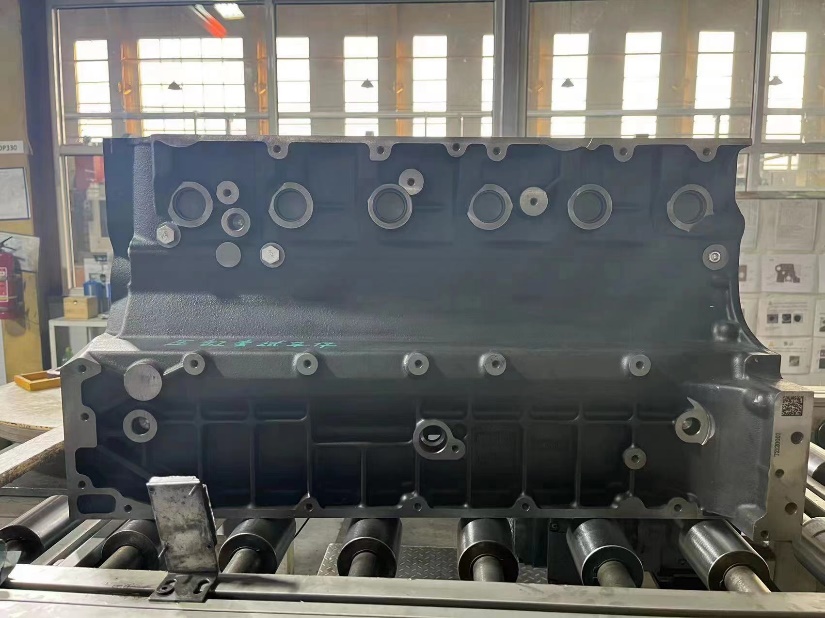
A diesel engine cylinder block — a safety-critical iron casting where process control matters most.
Why Engine Parts Demand a Certified Foundry
Engine components are not generic hardware. Many of them are safety-related or function at the boundary of material failure, and a single defective batch can cause warranty claims, line stoppages, or field recalls. Three reasons stand out for why certification is non-negotiable:
Safety-critical function
A flywheel stores kinetic energy and engages the starter; a cylinder block holds combustion pressure and supports the rotating assembly; a timing gear housing positions the cam and crank timing. A crack, porosity, or wrong hardness grade in any of these can disable a vehicle or a generator set. IATF 16949 forces the foundry to control the failure modes before they reach your dock.
Material and dimensional consistency
Engine parts run in high volumes with tight tolerances. A certified foundry locks its iron chemistry (HT250, GG25, ductile grades), heat treatment, and machining windows through controlled process documents, so part number 10,000 matches part number 1. Non-certified shops often adjust parameters batch by batch, which shows up as variation in your assembly line.
Customer-Specific Requirements (CSRs)
Major OEMs layer their own requirements on top of the standard — PPAP levels, specific inspection plans, traceability depth. A foundry that already runs IATF 16949 speaks this language and can hand you the documentation your own quality team expects, instead of improvising it.

A timing gear housing — dimensional accuracy here protects cam and crank timing across the engine’s life.
What IATF 16949 Covers in a Casting Plant
The certificate is not a one-time audit sticker. It requires the foundry to run a set of recognized quality tools across the whole production chain:
| Tool | What it does in a casting process |
|---|---|
| APQP | Advanced Product Quality Planning — defines steps from drawing review to mass production so risks are caught early. |
| PPAP | Production Part Approval Process — the documented proof that the part is made as agreed, before you receive series volume. |
| FMEA | Failure Mode and Effects Analysis — identifies where a casting can fail (shrinkage, cold shut, hard spots) and builds controls against it. |
| SPC | Statistical Process Control — monitors critical dimensions and hardness with control charts instead of spot checks. |
| MSA | Measurement System Analysis — confirms the gauges and CMM results are themselves trustworthy. |
| Traceability | Heat number, molding sand batch, and inspection records tied to each part for recall and claim handling. |
For a buyer, the practical meaning is simple: a certified foundry can show you the documentation trail for the exact part you are buying, not just a photo of a good-looking sample.
IATF 16949 vs ISO 9001: The Difference for Buyers
| Aspect | ISO 9001 | IATF 16949 |
|---|---|---|
| Scope | General quality management, any industry | Automotive-specific, built on ISO 9001 |
| Defect prevention | Recommended | Mandatory, with FMEA and control plans |
| PPAP / APQP | Not required | Required for production parts |
| Traceability | Basic | Heat-to-part, audit-ready |
| Audit rigor | Periodic external audit | Strict IATF-recognized certification body, surveillance audits |
If a supplier only holds ISO 9001, they have a quality system, but not the automotive-specific controls that engine parts usually require. For flywheels, blocks, and housings, IATF 16949 is the stronger signal.
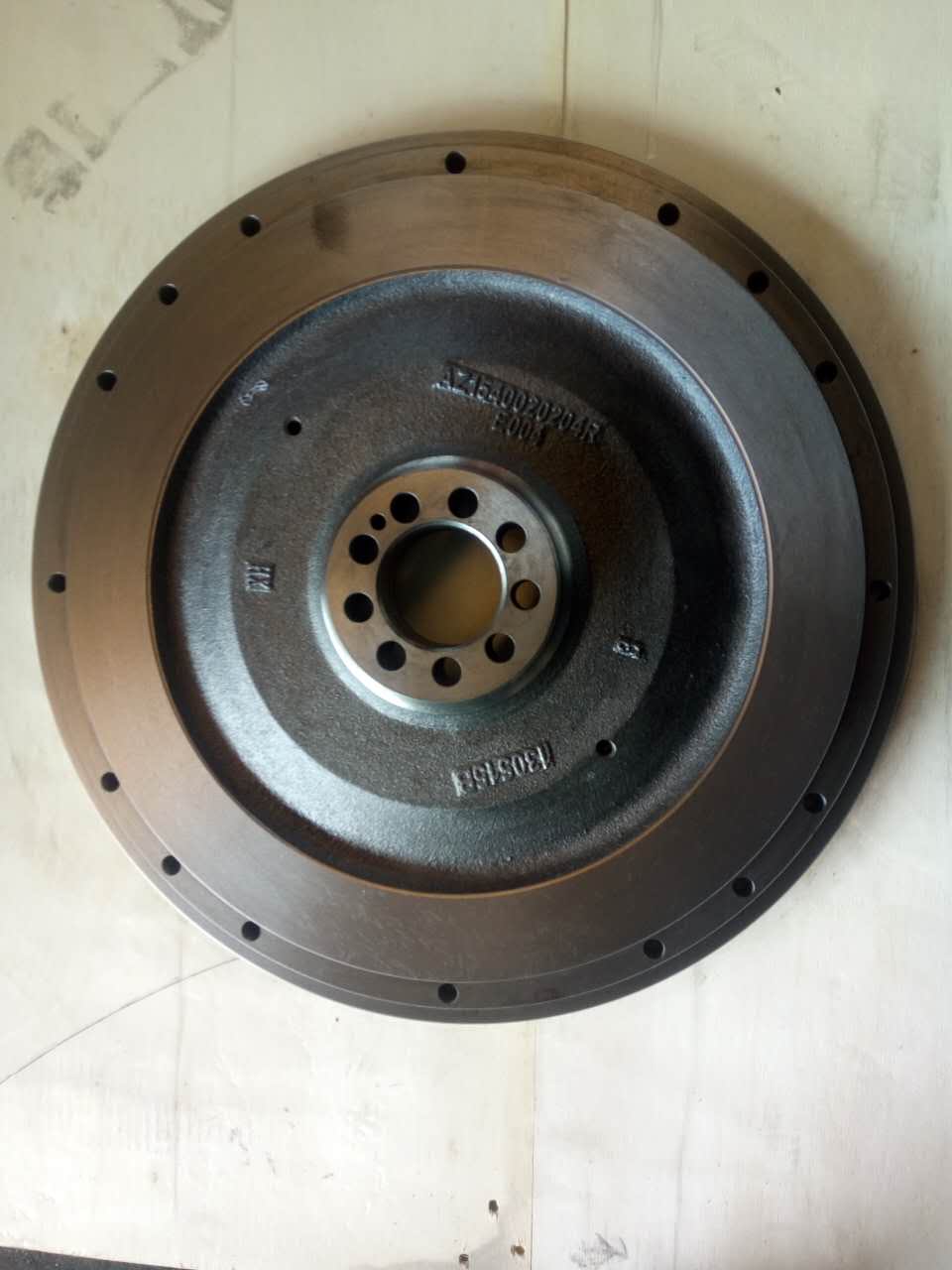
A diesel engine flywheel — dynamic balance and hardness control separate a certified part from a generic one.
How to Verify a Supplier’s Certification
A logo on a website is not proof. Before placing an order, check the actual certificate:
- Certificate number and the issuing body (look for an IATF-recognized registrar such as TÜV, SGS, DNV, or BV).
- Scope of certification — it must list iron casting or the specific process, not just “trading”.
- Validity dates — certificates expire and must be renewed through surveillance audits.
- Multi-site or single-site — confirm the certificate covers the actual production plant, not only a sales office.
You can also ask for a copy of the latest surveillance-audit summary. A transparent foundry sends it without hesitation.
Questions to Ask Your Casting Supplier
- Can you provide the current IATF 16949 certificate with scope and validity dates?
- Which iron grades do you control as standard (HT200/HT250, GG20/GG25, ductile GGG40/GGG50)?
- Do you run PPAP for new parts, and at which level?
- How is each casting traced — heat number, molding line, inspection record?
- What is your documented defect rate (PPM) on similar engine parts?
- Can you supply CMM reports and material test certificates (MTC) per batch?
Our Capability: An IATF 16949 Certified Foundry
Changwei Intelligent Equipment runs an IATF 16949 certified iron foundry focused on commercial-vehicle and engine castings: flywheels, ring gears, flywheel housings, timing gear housings, cylinder blocks and heads, and malleable iron pipe fittings. We control gray and ductile iron grades to drawing, machine in-house, and support PPAP and batch-level traceability for export customers.
If you are sourcing engine parts and want a foundry that can hand you the documentation your quality team expects, start with our product pages or send a drawing for a quote:
Frequently Asked Questions
Source engine parts from a certified foundry
Send us your drawing or OEM number and we will return a quoted plan with material grade, process, and PPAP support.
Email: [email protected] · WhatsApp / WeChat / Tel: +86 19953662121