
Mercedes 906 030 Flywheel Part Numbers: 133 vs 146 Teeth
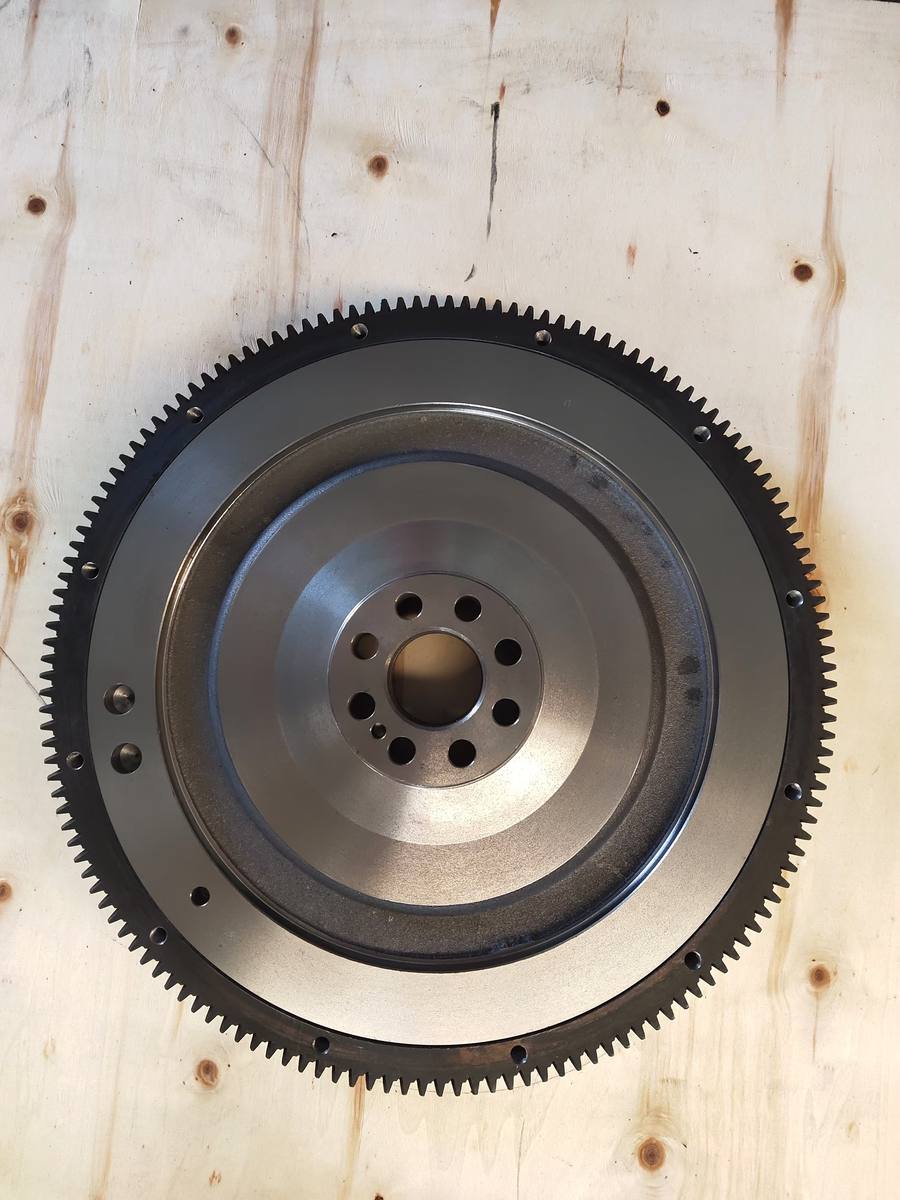
Table of Contents
- Seven Numbers, Two Families
- What Actually Changes Between the Families
- Why the Teeth Look Identical
- The 146-Tooth Family in Practice
- The 133-Tooth Family in Practice
- What the Casting Does Not Tell You
- Three Checks That Settle It
- When the Same Truck Uses Either Flywheel
- Ordering Notes for Fleet Buyers
- FAQ
A Mercedes flywheel enquiry usually arrives as one number: 906 030 19 05, or 906 030 32 05, or something close to it. The digits look interchangeable. The parts are not. The 906 030 prefix covers at least seven flywheel numbers that sit in two distinct families, and the two families differ in tooth count, outside diameter, clutch mounting circle and weight. What they share is the crank bolt pattern, which is the one thing a buyer can see without measuring.
That combination is what makes this a recurring sourcing problem rather than a rare one. A flywheel that bolts to the crank is not a flywheel that accepts the clutch. When a workshop orders by the number on an old invoice and the number has been superseded twice, the part that arrives may be physically larger than the space it has to live in.
This page sets out what the published data says about the two families, what we were able to confirm from four of these numbers in our own finished stock, and the three measurements that decide the question before money changes hands.
Seven Numbers, Two Families
The Mercedes commercial vehicle numbering system gives every part nine digits grouped in threes. A flywheel sits under group 030, so every number on this page reads 906 030 xx 05. The two middle digits are the only thing that moves, and that is exactly why the numbers are easy to mix up on a phone call.
Sorting the numbers by their published tooth count splits them cleanly.
| Family | OE numbers in the family | Teeth | Flywheel outside diameter | Clutch cover outside diameter | Clutch bolt circle | Hub bore | Published weight |
|---|---|---|---|---|---|---|---|
| 146-tooth | 906 030 19 05, 906 030 30 05, 906 030 37 05, 906 030 55 05, 906 030 66 05, 906 030 08 59 | 146 | 443 to 443.5 mm | 435 mm | 409.5 to 410 mm | 51.9 to 52 mm | 26.5 to 28.2 kg |
| 133-tooth | 906 030 32 05, 906 030 38 05, 906 030 57 05, 906 030 68 05 | 133 | 404 mm | 395 mm | 375 mm | 51.9 mm | 18 to 22 kg |
The ranges in the table are not sloppiness on our part. Different aftermarket catalogues publish slightly different figures for what is described as the same part, and where they disagree we have shown both ends rather than picking the more convenient one. The 146-tooth group, for example, appears as 443 mm outer diameter in one catalogue and 443.5 mm in another, and as 27.4 kg in one place and 28.2 kg in another. Those differences are small enough to be measurement method rather than a different part.
What is not small is the gap between the two families: 39 mm on outside diameter, 40 mm on clutch cover diameter, and roughly 7 kg on weight. Those are the numbers that decide whether a flywheel drops into the bellhousing or fouls it.
What Actually Changes Between the Families
Four things move together, and understanding that they move together is the whole point of this article.
The first is tooth count, 146 against 133. The second is outside diameter, 443 against 404. The third is the clutch bolt circle, 409.5 against 375. The fourth is weight, in the high twenties against the low twenties.
Notice that the first two are locked to each other. You cannot have a 404 mm flywheel with 146 teeth unless somebody cuts a different tooth form, and nobody does. The tooth form across both families is the same, which is the subject of the next section.
The clutch bolt circle is the one that catches people. Both families use twelve pressure plate bolts on a hub with eight crank bolts, so a quick visual check of hole count returns the same answer for both. It is the diameter of that twelve-hole circle that differs, by 34.5 mm. A pressure plate drilled for 375 mm will not bolt to a flywheel drilled for 409.5 mm, and no amount of tightening will change that.
The photograph above is 906 030 19 05, a member of the 146-tooth family. The ring gear on this sample is a separate part bolted to the rim, which is visible as the ring of fastener heads around the circumference. Hold on to that detail, because it becomes useful later.
Why the Teeth Look Identical
Divide the circumference by the tooth count and you get the circular pitch, the distance from one tooth centre to the next along the pitch circle.
For the 146-tooth family at 443.5 mm outside diameter, that is 3.1416 times 443.5 divided by 146, which comes to 9.545 mm.
For the 133-tooth family at 404 mm, it is 3.1416 times 404 divided by 133, which comes to 9.542 mm.
The difference is three thousandths of a millimetre. In practical terms the two ring gears are cut with the same tool at the same pitch, and the only reason one has more teeth than the other is that its circle is longer.
This matters for identification because it removes the intuitive shortcut. A buyer who has handled these parts for years will tell you the tooth form looks right, and it does look right, because it is right. The starter pinion does not care which flywheel it is engaging. The engine does not care. Only the clutch and the bellhousing care, and they care about diameter.
So a photograph is not enough. Two flywheels photographed side by side at different zoom levels will look like the same part, because the proportion between clutch bolt circle and outside diameter is nearly identical as well: 409.5 over 443.5 is 0.923, and 375 over 404 is 0.928. Half a percent apart. Nobody eyeballs half a percent on a workshop bench.
The 146-Tooth Family in Practice
We hold four of these numbers in finished stock, and three of them belong to the 146-tooth group: 906 030 19 05, 906 030 30 05 and 906 030 66 05.
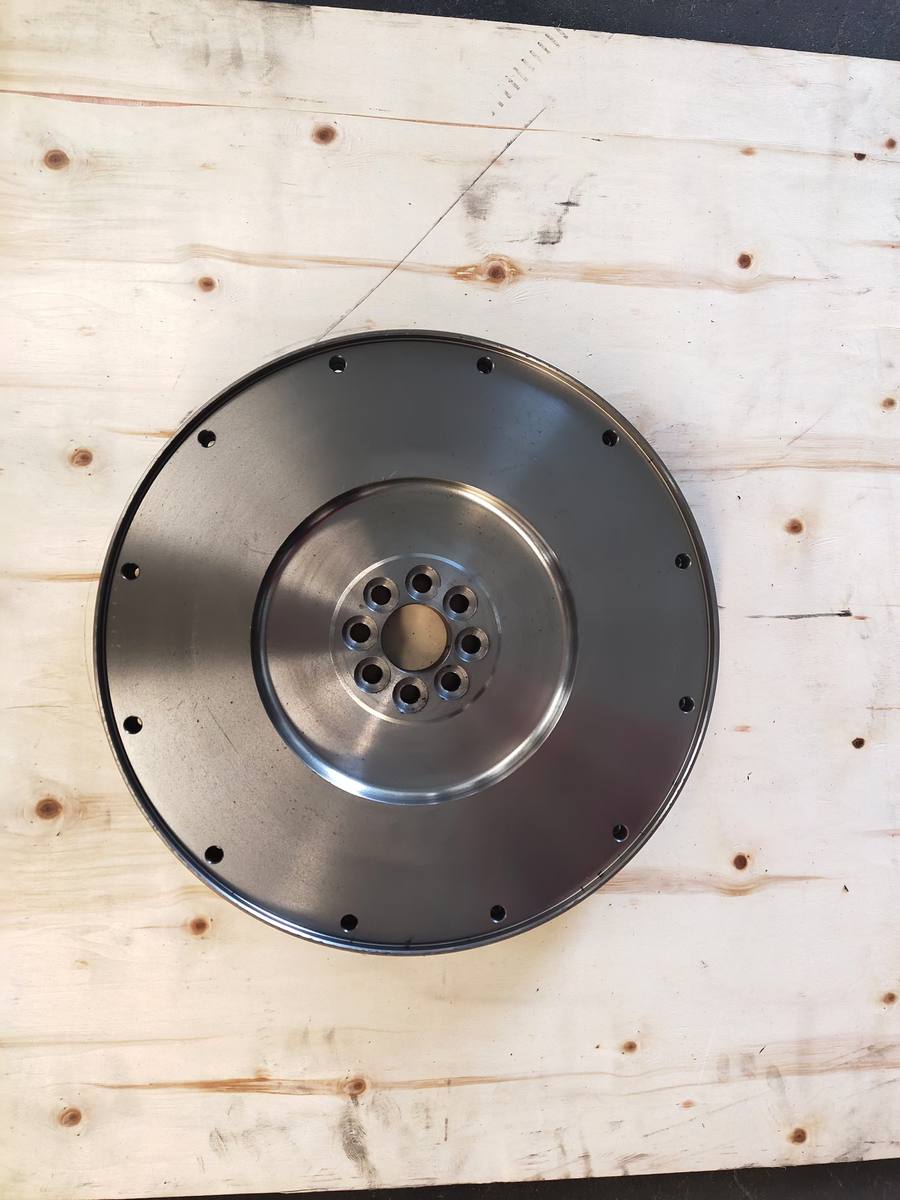
The clutch side of 906 030 19 05 shows the layout that repeats across this family: twelve pressure plate holes on a wide circle near the rim, an eight-bolt hub in the middle, and a machined friction face between them. The casting between the friction face and the hub is left as cast on this part, which is normal for a flywheel that is machined from a single casting rather than assembled.
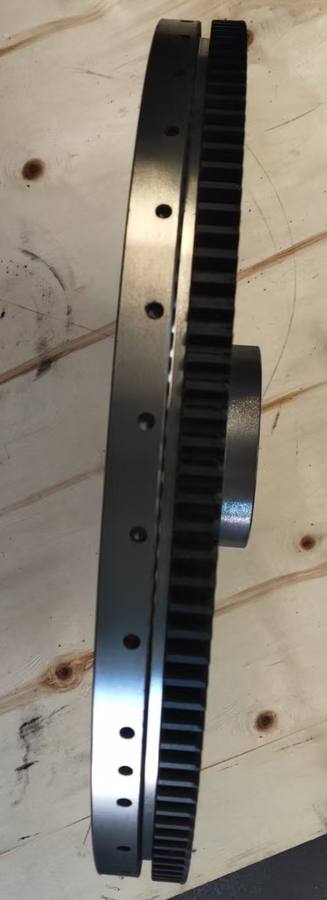
From the side, the ring gear reads as a separate band sitting on the rim, held by fasteners rather than shrunk on. The band is roughly the width you would expect from a 146-tooth ring on a 443 mm circle: tooth height plus root thickness, with the fasteners passing through the root.
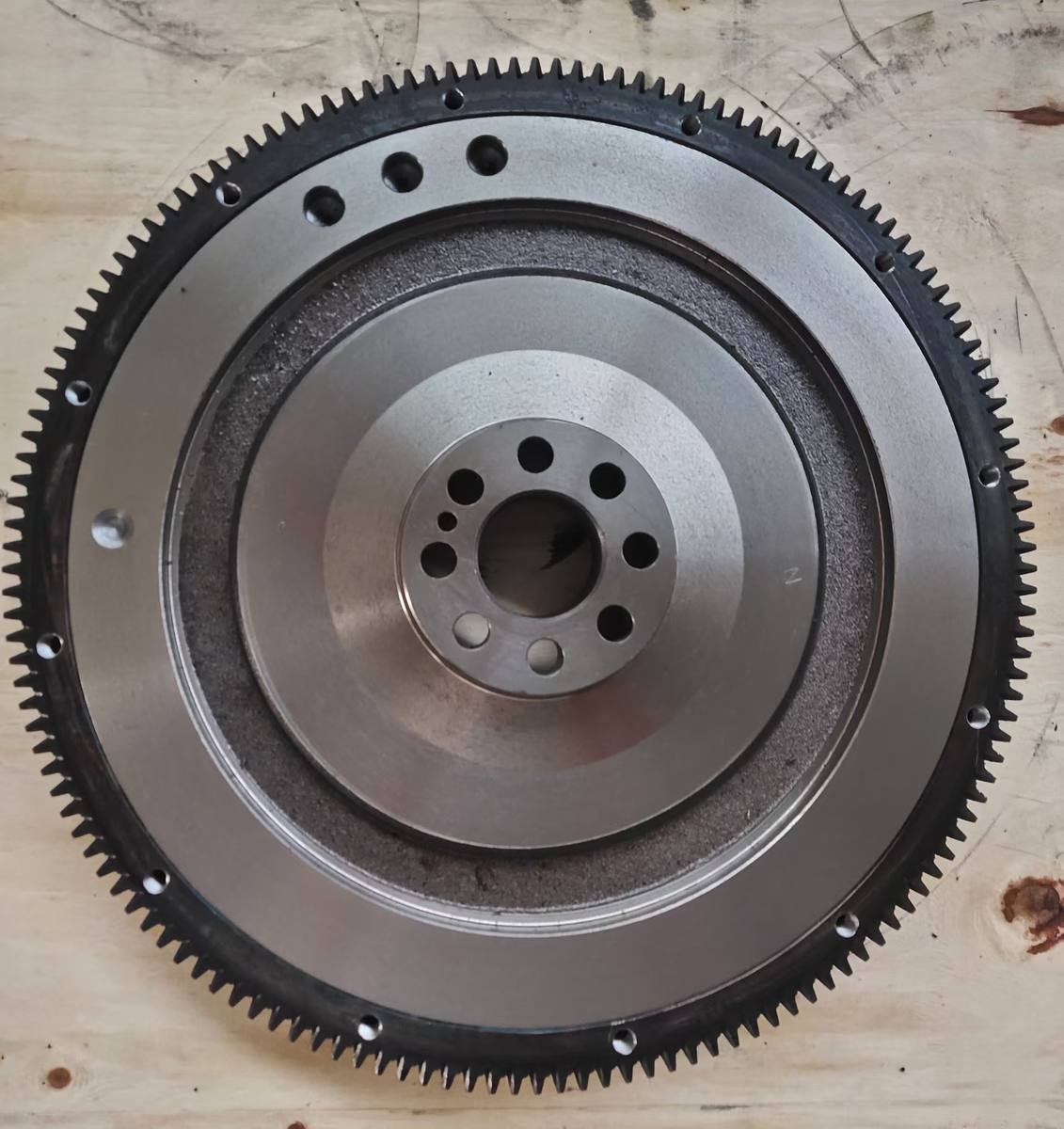
906 030 30 05 presents the same architecture. Ring gear bolted rather than shrunk, lightening holes in the web, friction face machined. If you laid this beside 906 030 19 05 you would struggle to tell them apart at a glance, and that is not a failure of observation. It is the design.
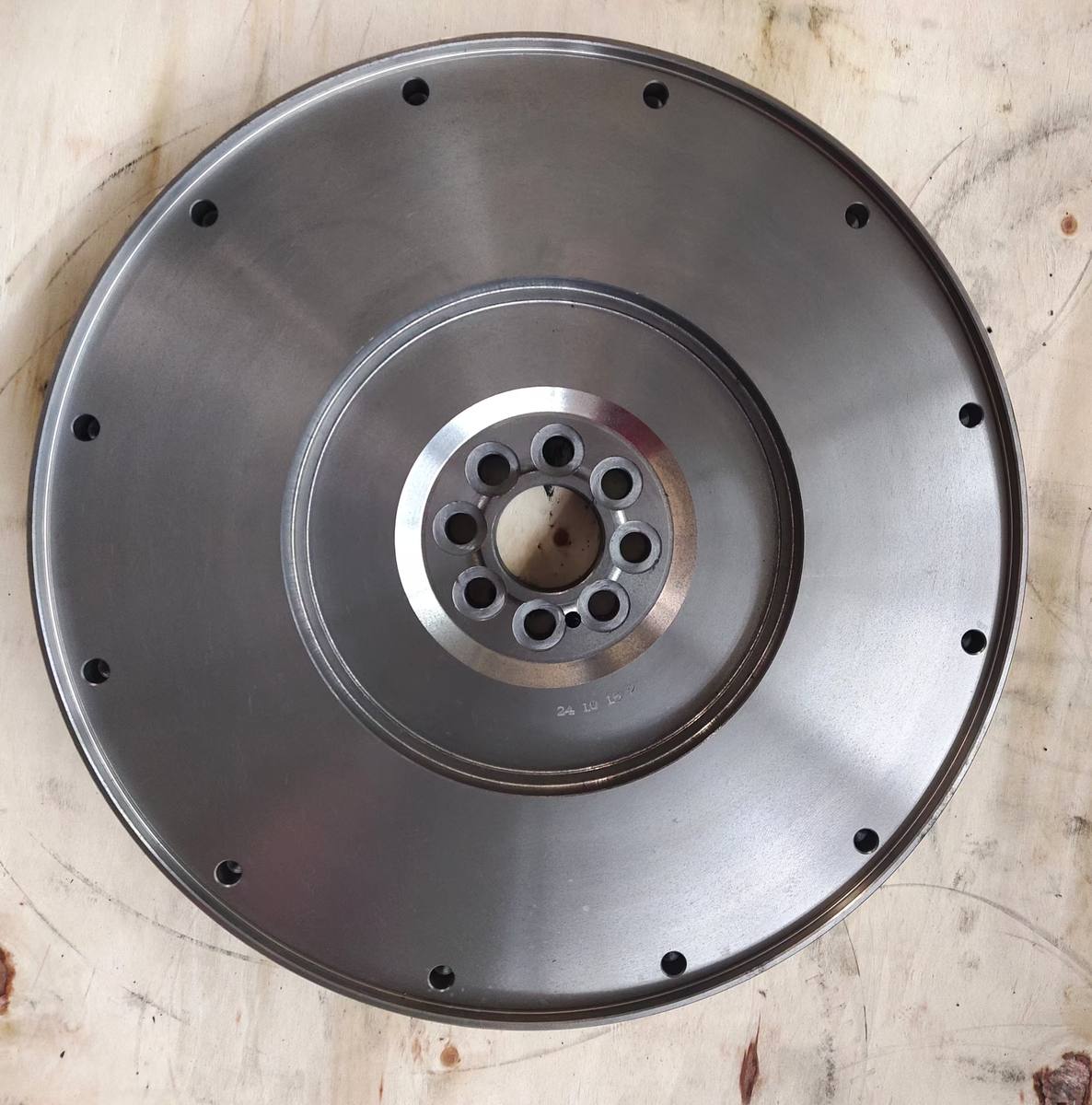
The rear view of 906 030 30 05 carries something worth pointing out. Inside the hub, between the crank bolt holes and the friction face, there is a stamped marking that reads as a four-group date code, in the form year-month-day. It is not a part number. We have seen the same pattern on castings from several suppliers, and it is one of the most common sources of misidentification in this trade: a buyer photographs a flywheel hub, reads a neat row of digits, and concludes that the part number is on the casting. It usually is not. On these four samples the only markings we could recover at high magnification were date codes and, on one, a supplier mark.
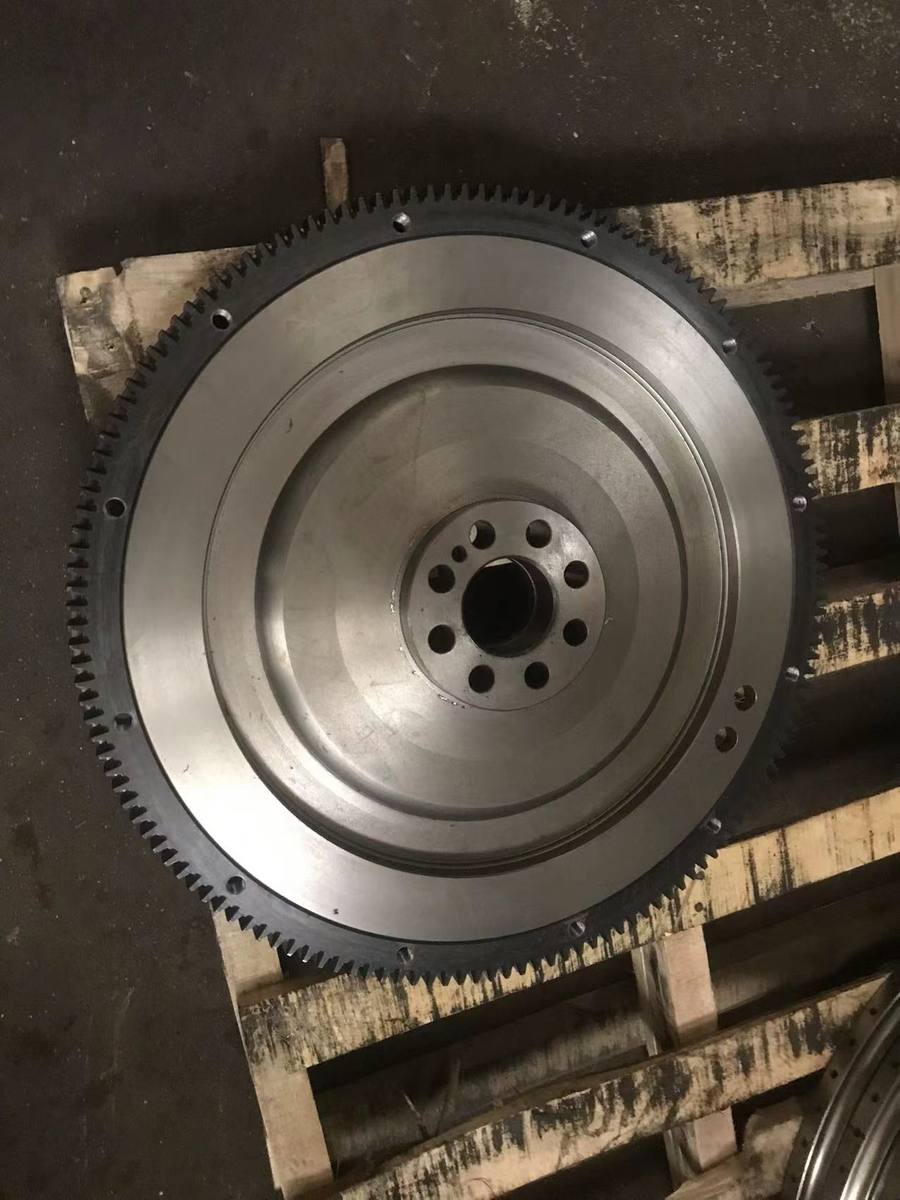
906 030 66 05 is the third member of the family in our stock. This one arrived on a pallet with several others, which is why the background shows a warehouse floor rather than the clean board we use for single-piece photography. The engineering content is the same: bolted ring gear, twelve pressure plate holes, eight-bolt hub.
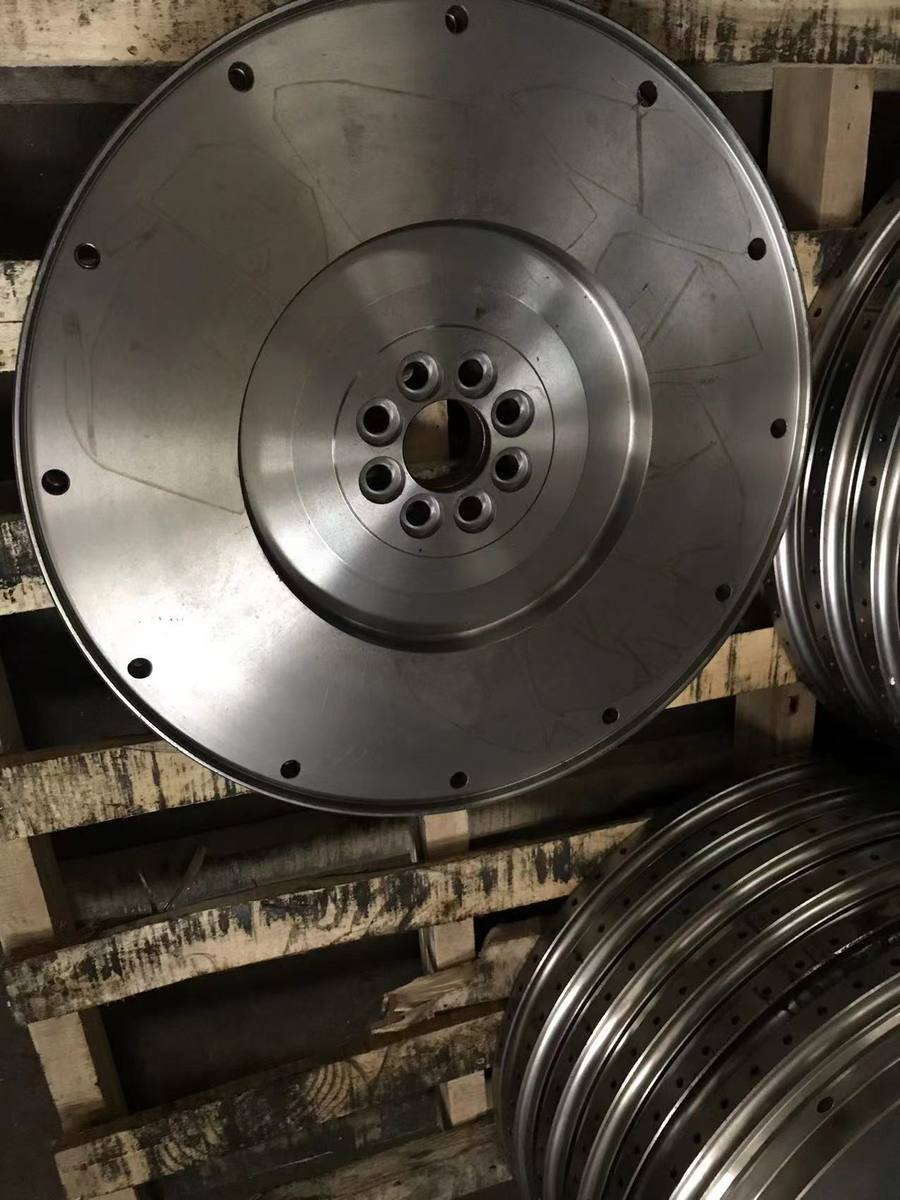
On the clutch side the friction face on 906 030 66 05 is wider than on the two smaller numbers, and the transition from the friction face down to the hub is a single continuous curve rather than a step. Whether that difference is a running change within the family or a difference between sub-suppliers, we cannot say from four samples. What we can say is that the twelve holes sit on the same wide circle.
The 133-Tooth Family in Practice
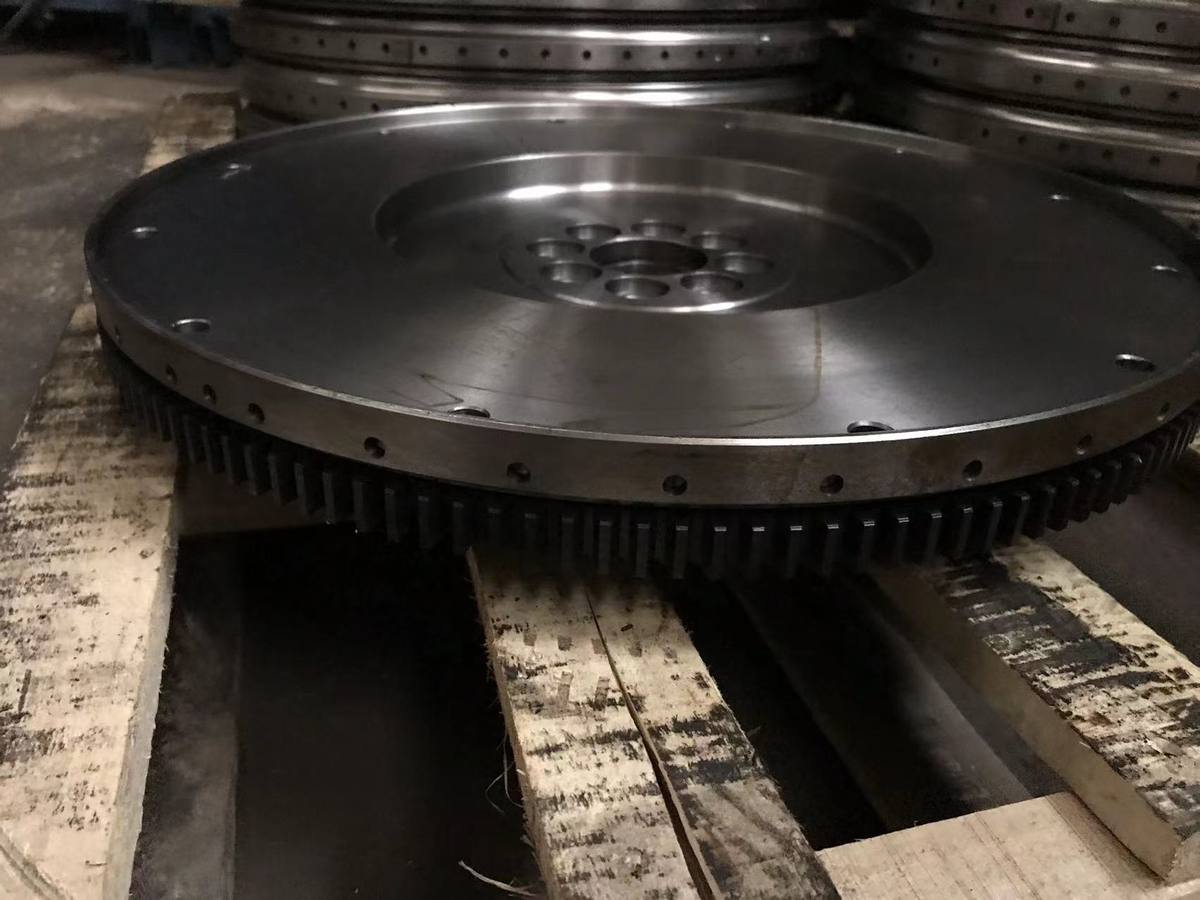
The fourth number in our stock is 906 030 32 05, and it belongs to the other family.
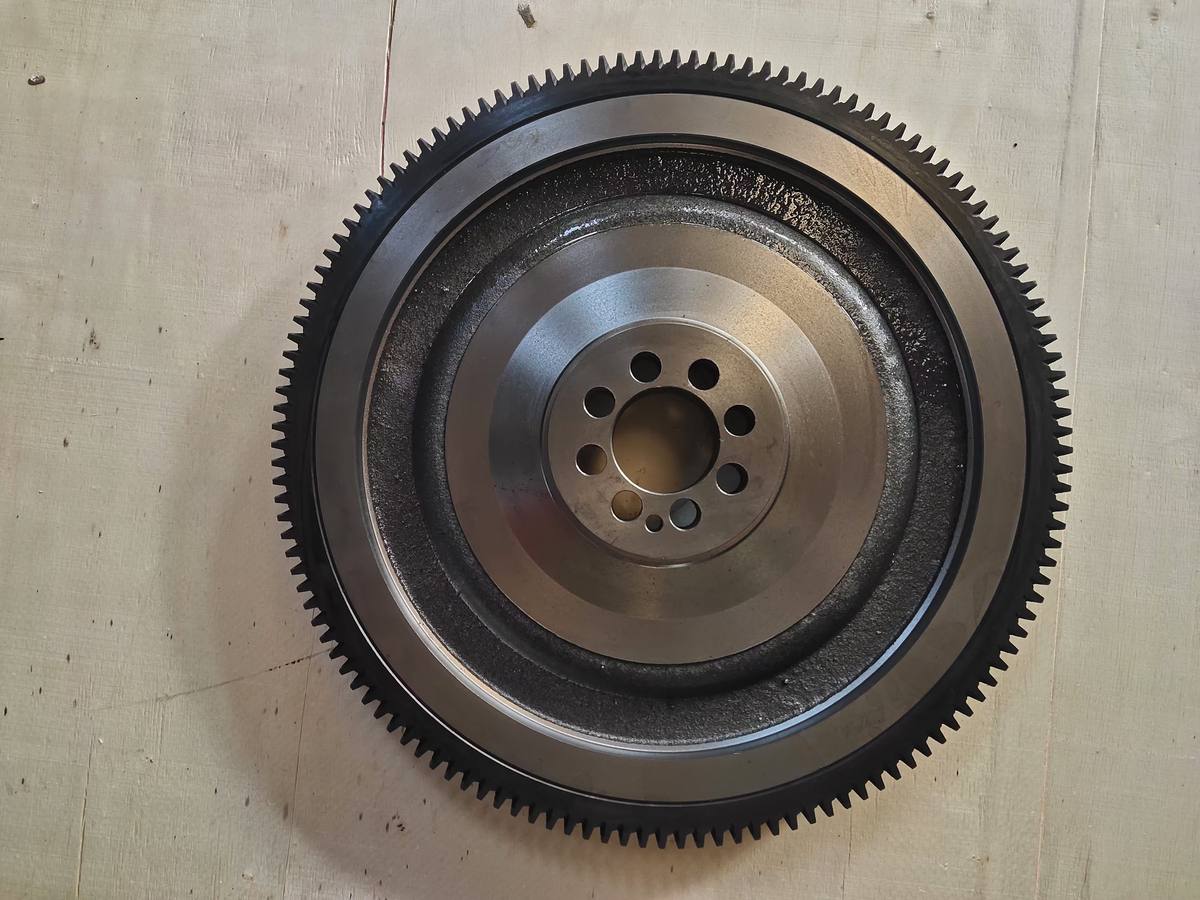
This is where the two families stop being interchangeable in any practical sense. Put this beside the 146-tooth parts and the first difference is not the tooth count, which you cannot count from a photograph anyway. It is the diameter. The disc is visibly smaller, and the space between the ring gear and the clutch mounting face is shorter.
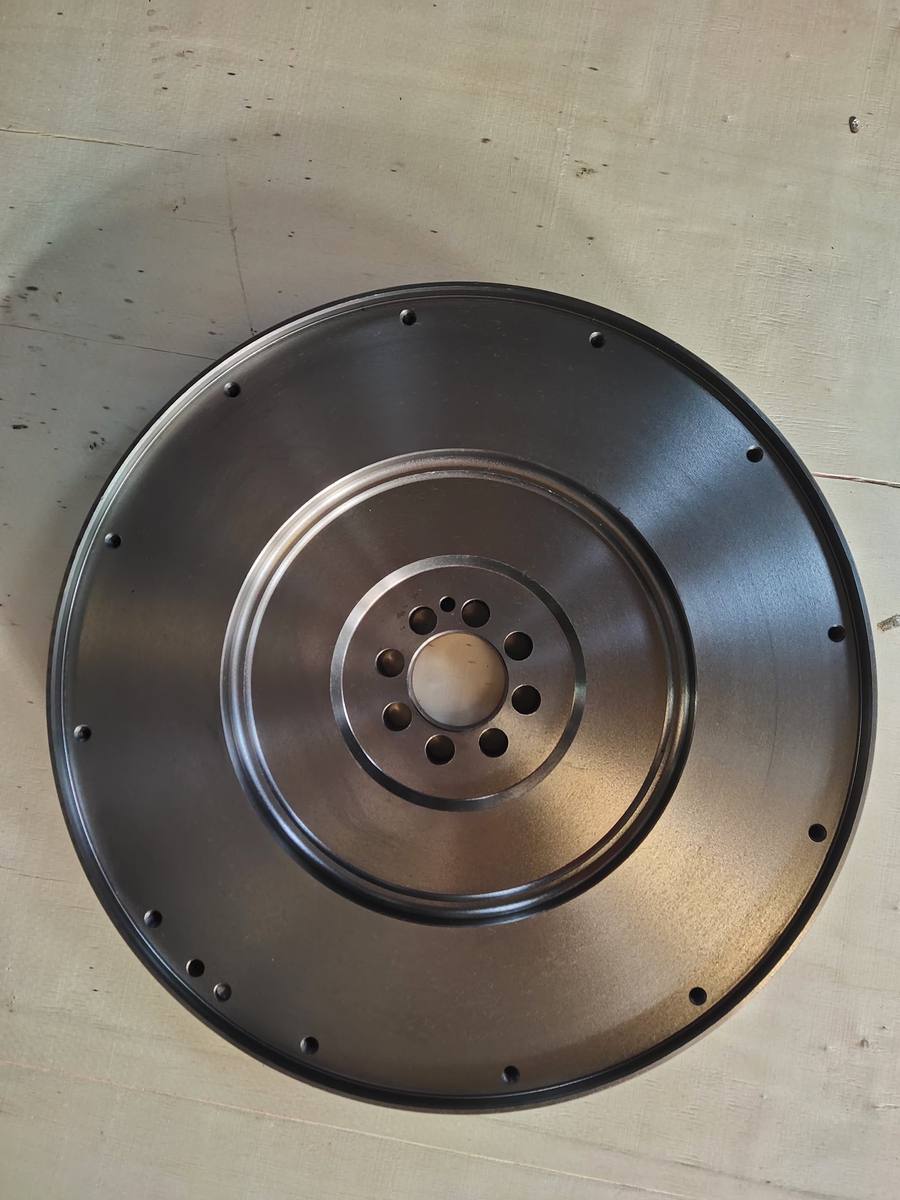
The rear view shows the twelve pressure plate holes drawn in towards the centre compared with the 146-tooth parts. On a bench, with both parts in front of you, that is the tell. On a photograph with no scale, it is not, because the ratio stays the same. This is the recurring difficulty in the whole family: every distinguishing feature is proportional, and proportions do not survive photography.
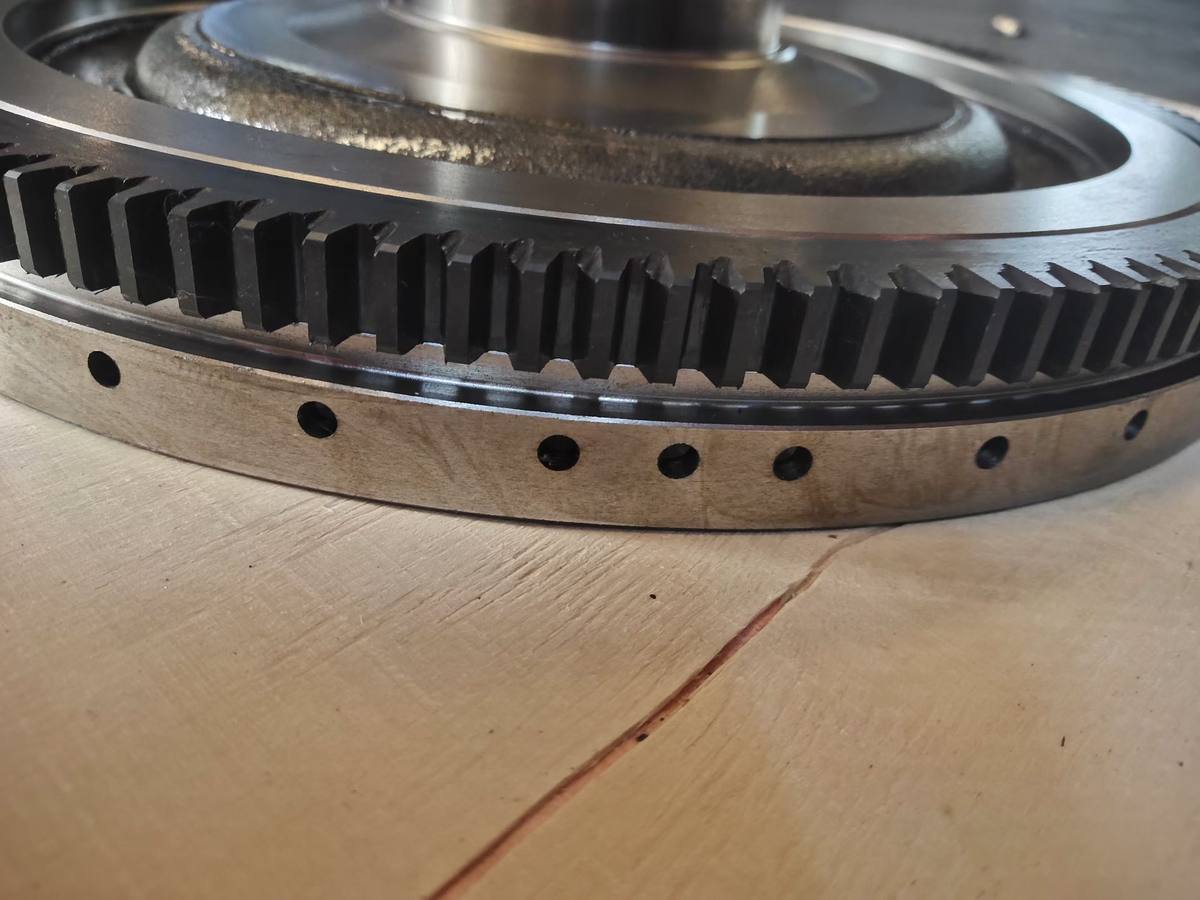
At the rim, the tooth form on 906 030 32 05 is indistinguishable from the tooth form on the 146-tooth parts, which is the direct consequence of the circular pitch calculation above. A toolmaker looking at this close-up would be unable to tell you the tooth count without counting, and neither can a buyer.
What the Casting Does Not Tell You
It is worth being explicit about the limits of what we could verify, because this is the sort of article where an unverified claim turns into a wrong shipment.
The four part numbers in this article come from our own receiving records for these samples. The physical description in each section is what the photographs show. The dimensions, tooth counts, weights and vehicle applications in the comparison table come from published aftermarket catalogues, not from our own measurement of these four pieces. We did not put a caliper on them for this article, and we are not going to present catalogue figures as if we had.
On the castings themselves, the markings we could recover were date codes and supplier marks. We did not find a readable Mercedes part number on any of the four, even at high magnification. That is consistent with how these parts are usually produced, but a buyer should not treat it as a rule: some castings do carry a number, some carry a mould number that looks like a number, and the only reliable source is the vehicle documentation or the number on the part being replaced.
Three Checks That Settle It
If a buyer has a flywheel in hand and needs to know which family it belongs to, three checks will answer the question. None of them require a parts catalogue.
The first is counting teeth. Count the whole circumference, not one quarter multiplied by four. On a 133-tooth ring, a quarter is 33.25 teeth, and rounding that to 33 gives 132. The error is small enough to be mistaken for wear and large enough to put you in the wrong family. Mark the starting tooth with chalk and count in blocks of ten.
The second is measuring the clutch bolt circle. Twelve holes, measure centre to centre across the circle at the widest point and divide by the geometry factor, or simply measure the diameter across opposite holes. A 409.5 mm circle and a 375 mm circle are 34.5 mm apart, which is far outside any measurement error on a bench with a tape.
The third is weighing it. A 146-tooth flywheel lands in the high twenties in kilograms. A 133-tooth one lands in the high teens to low twenties. Seven kilograms of cast iron is not something you mistake for a rounding error, and a bathroom scale is enough to separate the families before you start measuring anything.
When the Same Truck Uses Either Flywheel
Here is the part of this article that matters most to a fleet buyer, and it is the reason the two families exist at all.
The published application lists for both families overlap heavily. Atego, Axor, Citaro, Conecto, Integro, Intouro, Unimog, Zetros, Vario and the OH series appear against numbers in both groups. The 133-tooth group additionally covers Accelo, Cito, Atron and the LK/LN2 range.
That overlap is not a catalogue error. It reflects the fact that the same chassis can leave the factory with different engines and different transmissions, and the flywheel follows the driveline rather than the cab. A Citaro bus and a Citaro bus can take different flywheels. An Atego 1218 and an Atego 1222 can take different flywheels.
The practical consequence: a buyer who identifies the vehicle model and stops there has not identified the part. Model-level fitment data will give you two or three candidate numbers, all of which fit the crank, and only one of which fits the clutch that is bolted to the gearbox in front of you.
The reliable identifier, in our experience of these enquiries, is the number off the part being replaced, or the transmission model alongside the engine code. VIN-based lookups work when the vehicle is unmodified. On a truck that has had a gearbox swapped in its second life, which is common in the export markets these parts go to, the VIN will tell you what left the factory and not what is in the truck now.
Ordering Notes for Fleet Buyers
A few things we have learned from quoting these numbers, offered as practical guidance rather than sales copy.
When you send an enquiry, send the old number and a photograph of the clutch side. The photograph does not prove the number, but it does confirm which family you are in, because the clutch bolt circle is visible relative to the rim even without a scale, once we know what to look for. Send the transmission model if you have it.
If the old number has been superseded, expect to be offered a number from the same family rather than the same digits. The cross-reference chains in the aftermarket catalogues are long, and several of the numbers in the 146-tooth group are listed as direct replacements for each other by more than one brand. That is normal and it is not a downgrade, but it does mean the number on the box will not match the number on your invoice from five years ago.
If you are stocking for a mixed fleet, do not standardise on one number across Atego and Axor. The overlap in application lists is real and it will bite. Keep the two families separate in your warehouse, and label the bins by tooth count rather than by part number, because the tooth count is the thing a storeman can check in ten seconds without a catalogue.
On the manufacturing side, both families are straightforward grey iron castings with a machined friction face and a separately produced ring gear, and both are within what a foundry with IATF 16949 process control can hold tolerances on. The difficulty in this part family is not making one; it is making sure the one you make is the one the customer’s gearbox expects. That is a documentation problem more than a casting problem, which is why we ask for the transmission model.
FAQ
Will a 146-tooth flywheel fit where a 133-tooth one came off?
It will bolt to the crankshaft and it will not accept the clutch. The crank bolt pattern is common to both families, but the clutch bolt circle is 409.5 mm against 375 mm, and the outside diameter is 443 mm against 404 mm. The pressure plate will not line up and the assembly will not clear the bellhousing.
Are 906 030 19 05 and 906 030 66 05 the same part?
Multiple aftermarket catalogues list 906 030 19 05, 906 030 30 05, 906 030 37 05, 906 030 55 05 and 906 030 66 05 as cross-references for one another, and more than one brand publishes that chain. We have not verified that equivalence by measurement on our own samples, so treat the cross-reference as a strong lead rather than a guarantee, and confirm against the vehicle documentation.
Can I identify the family by counting a quarter of the ring gear?
No. A quarter of a 133-tooth ring is 33.25 teeth, and rounding it produces a count that belongs to neither family reliably. Count the full circumference in blocks of ten.
Do these castings carry the Mercedes part number?
On the four samples we photographed, no readable part number was present. What we found were date codes in a year-month-day form and, on one part, a supplier mark. Do not assume a neat row of digits on a hub is the part number.
Which engines use these flywheels?
The 906 030 family is associated with the OM906 and OM902 six-cylinder engines, 6.37 litres, used across Atego, Axor, Citaro and the bus range. The flywheel number follows the engine and transmission combination rather than the vehicle model alone, so the same model can appear against numbers from both families in published application lists.
What is the fastest way to tell them apart in a warehouse?
Weigh one. The two families are about seven kilograms apart, which any scale will resolve. After that, measure the clutch bolt circle across opposite holes: 409.5 mm against 375 mm.