
Fuso Flywheel Part Numbers: 4D34, 6D14, 6D16, 6D22, 8DC9 Size and Teeth Chart
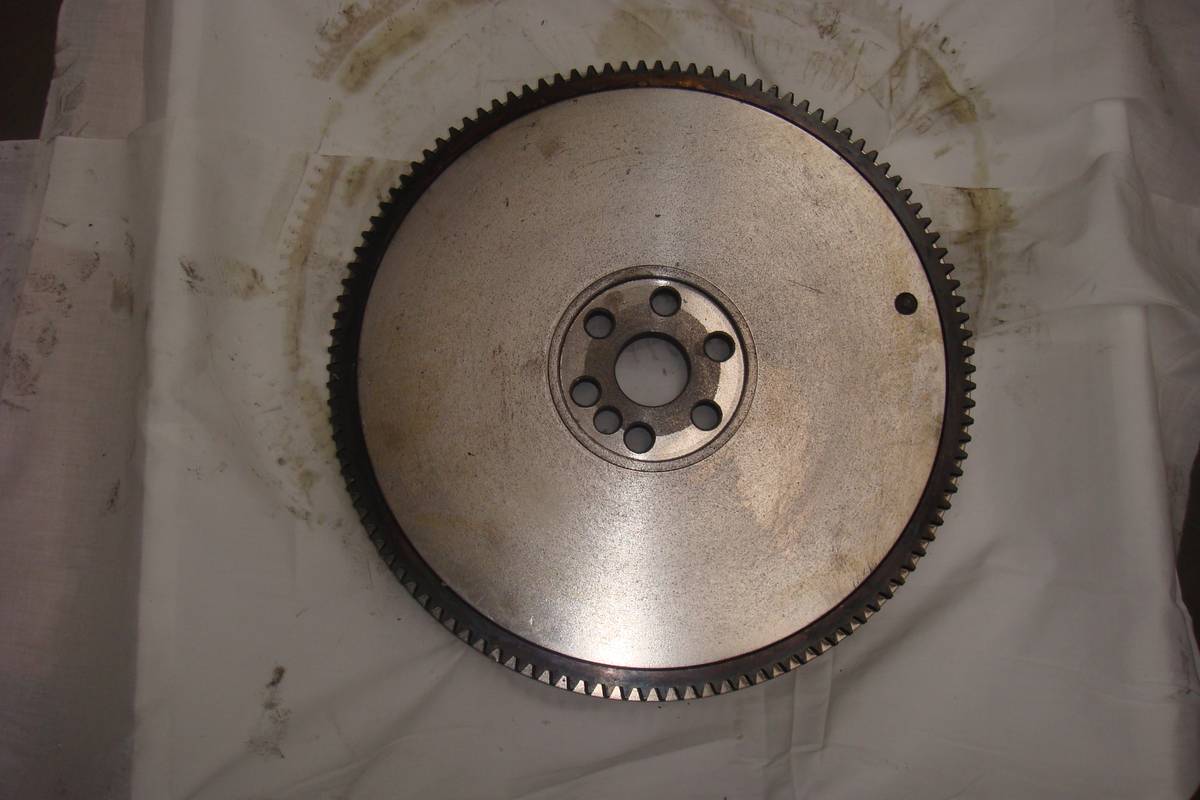
Fuso Flywheel Part Numbers: 4D34, 6D14, 6D16, 6D22, 8DC9 Size and Teeth Chart
A Fuso flywheel arrives at your counter with no label. It is 380 mm across, the ring gear has a lot of teeth, and the bore pattern looks like every other six-hole Fuso you have seen this month. You order the one you think it is. It does not fit, or worse, it fits and the starter chews the ring gear within a month.
This is the single most common Fuso parts problem, and the cause is always the same: the flywheel looks interchangeable but is not. Diameter, ring gear tooth count, and crankshaft bolt hole count all have to match, and Fuso changed all three across the D-series generations.
The table below is built from parts we actually manufacture. Every number in it can be checked against a physical part in our shop, which is a different exercise from copying a catalogue.
Table of Contents
- The three numbers that decide fit
- Fuso flywheel reference chart
- Why the same size still does not fit
- Reading a Fuso part number
- The 4D34 case: 300 mm and two tooth counts
- The 6D14 to 6D16 continuum
- The big sixes: 6D22 and 6D40
- The V8 outlier: 8DC9
- What changed with electronic engines
- How to confirm before you order
The three numbers that decide fit
A flywheel has to satisfy three independent constraints at once. Getting two of three right still produces a part that will not work.
Diameter sets which clutch and which bellhousing it fits. Fuso flywheels in this series run from 260 mm up to 430 mm. A 350 mm flywheel will not sit in a housing built for a 325 mm unit, and it cannot take the pressure plate designed for a 430 mm.
Ring gear tooth count sets whether the starter engages correctly. This is where most of the confusion lives, because tooth count does not scale with diameter in a straight line. The 325 mm Fuso flywheels carry 129 teeth. The 380 mm units also carry 129 teeth in some versions and 139 in others. So you cannot infer teeth from size, and you cannot infer size from teeth.
Crankshaft bolt hole count and diameter set whether it will physically bolt to the crank. Six holes is common across the D-series sixes, but the 430 mm units use eight or nine, and the hole diameter differs between versions even where the count is the same.
Fuso flywheel reference chart
The table below lists the Fuso flywheels we produce. Where a part number has more than one size version, both are shown, because that duplication is exactly what causes mis-orders.
| Engine model | Reference part number | Outer diameter | Ring gear teeth | Crank holes |
|---|---|---|---|---|
| 4M40 | ME431260 | 260 mm | 120T | 6 |
| 4D31 | ME431275 | 275 mm | 110T | 6 |
| 4D31 | ME012551 | 275 mm | 114T | 6 |
| 4D32 | – | 300 mm | 110T | 6 |
| 4D33 | – | 300 mm | 114T | 6 |
| 4D34 | ME012532 / ME012549 | 300 mm | 114T | 6 |
| 6D14 | ME032692 | 325 mm | 129T | 6 |
| 6D16 | ME072102 | 325 mm | 129T | 6 |
| 6D31 | ME082537 | 325 mm | 129T | 6 |
| 6D14-2AT | ME072248 | 350 mm | 129T | 6 |
| 6D14T | ME032693 | 350 mm | 129T | 6 |
| 6D14-3AT | ME072139 | 380 mm | 139T | 6 |
| 6D14-3AT | ME072129 | 380 mm | 129T | 6 |
| 6D22 | ME150497 | 430 mm | 143T | 8 |
| 6D22 | ME052658 | 430 mm | 143T | 8 |
| 6M70 | ME180143 | 430 mm | 143T | 8 |
| 8DC9 | ME062829 / ME062698 | 430 mm | 143T | 8 |
| 8DC9H | ME093092 | 430 mm | 143T | 9 |
Two things in this table are worth pausing on. Fuso used 129 tooth ring gears across four different diameters, from 325 mm to 380 mm, so tooth count alone never identifies the part. And the 430 mm group shares a tooth count between engines as different as the inline-six 6D22 and the V8 8DC9, so size plus teeth still does not separate them.
Why the same size still does not fit
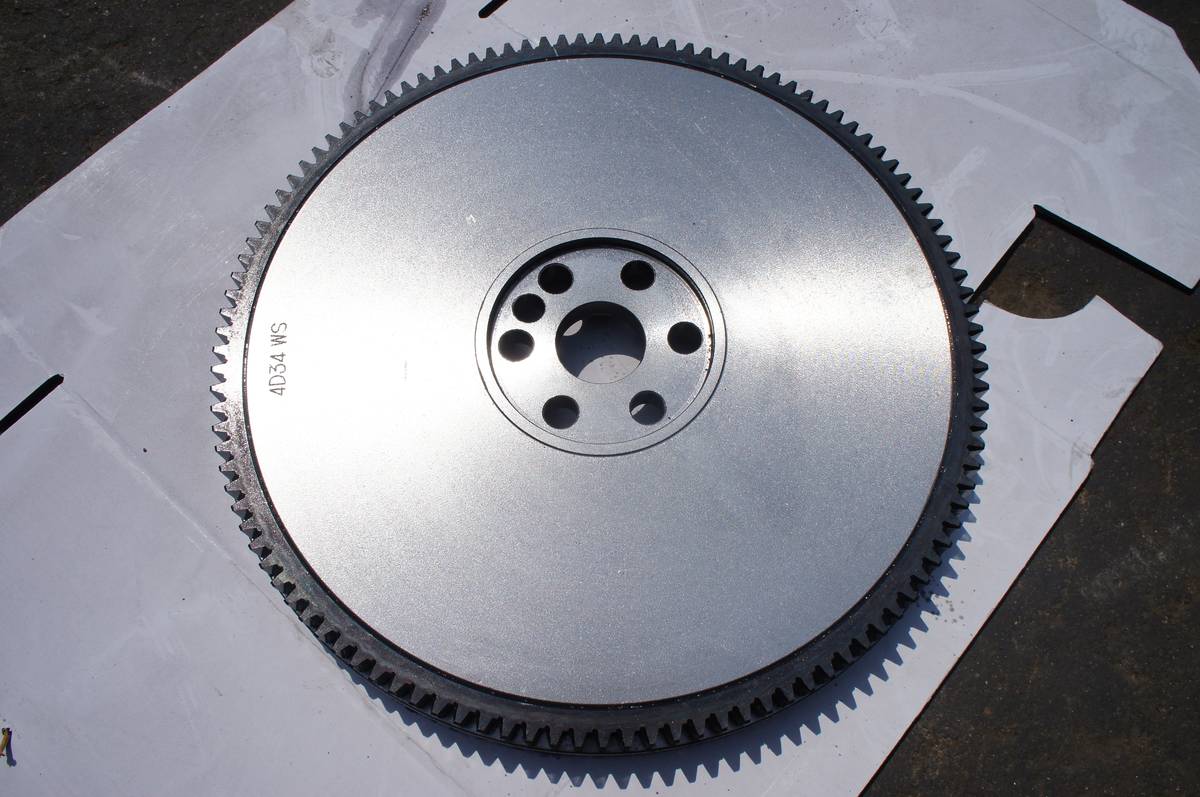
Look at these two flywheels side by side. This is a 300 mm 4D34 unit with 114 teeth on the ring gear, machined and marked with the engine code on the face:
And here is a 380 mm 6D16 unit with 139 teeth and six crank holes. Same brand, same family of six-cylinder engines, but nothing about it will interchange with the 4D34 part:
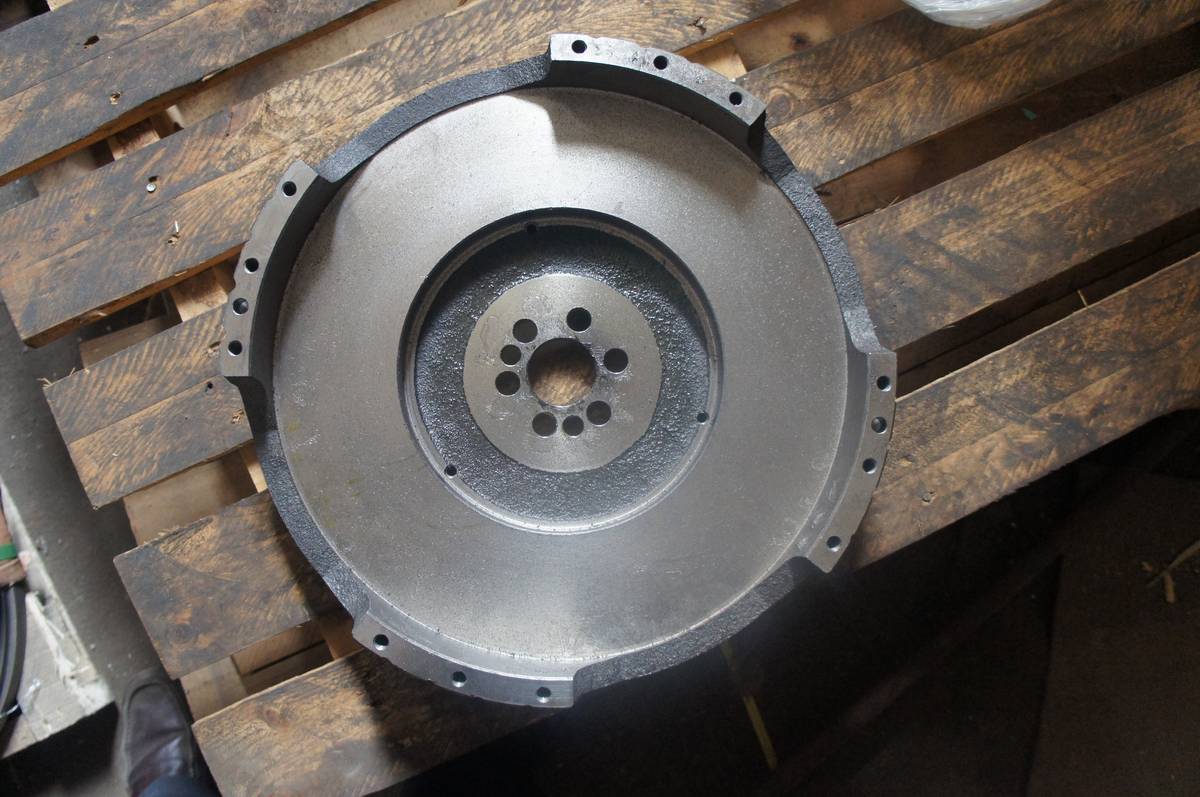
The step from 300 to 380 mm is not cosmetic. It changes the clutch diameter, the housing, and the starter position. This is why we photograph every flywheel we make with its engine code visible.
Reading a Fuso part number
Fuso flywheel part numbers begin with the ME prefix. That prefix identifies the part as a Mitsubishi engine component, and it tells you nothing about which engine. The number after it is the only thing that identifies the part.
This matters because the same physical flywheel can be listed under two or three ME numbers depending on the application and the production year. The 4D34 unit above appears as both ME012532 and ME012549 in supplier lists. The 8DC9 430 mm flywheel appears as both ME062829 and ME062698. When you are cross-referencing, a single part number match is not enough to confirm you have the right part.
The practical rule is to work from three known values, not from one. If you have the diameter, the tooth count and the hole count, you can identify the flywheel even when the part number is unreadable. If you only have the part number, you are one catalogue error away from the wrong part.
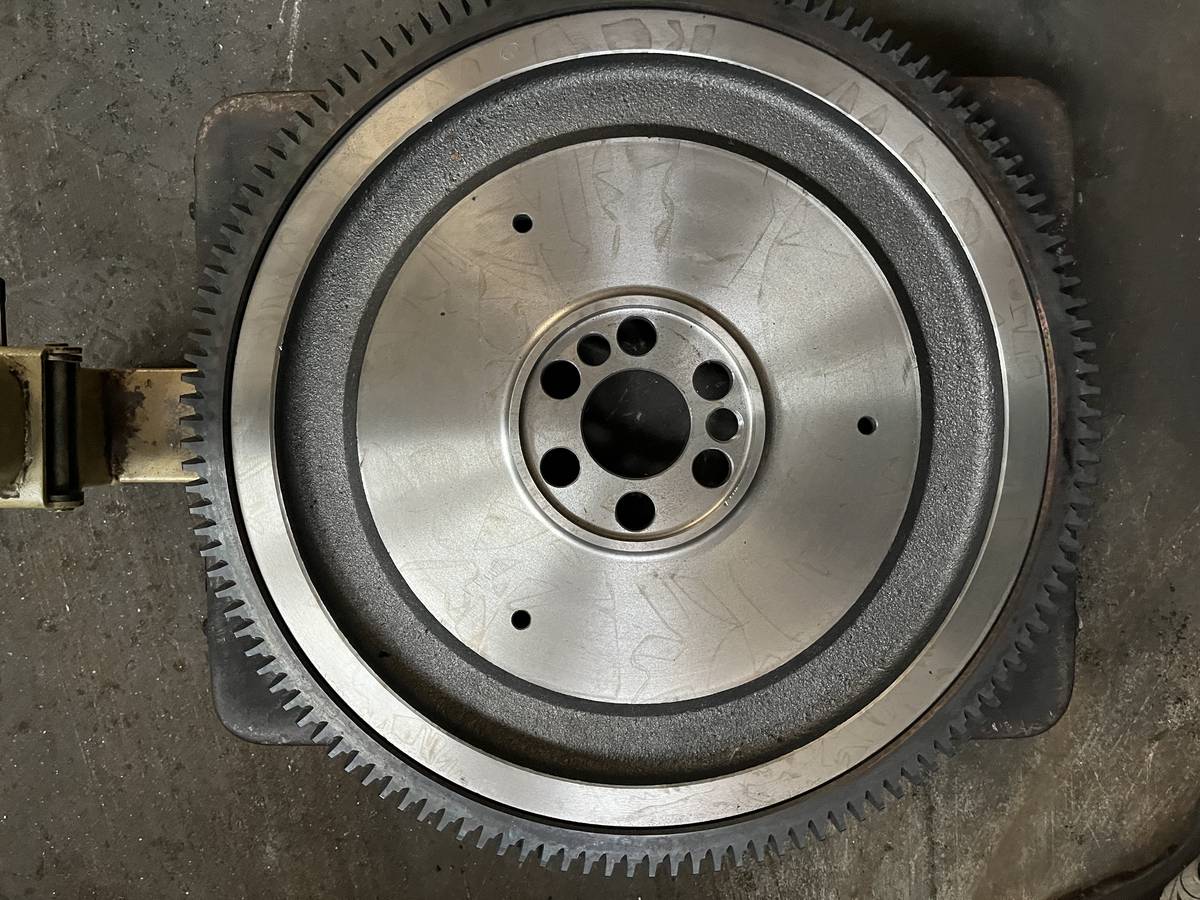
This 6D17 flywheel shows why the triple check is worth doing. It is a 129 tooth 6-hole unit, which is the most duplicated specification in the entire Fuso range:
The 4D34 case: 300 mm and two tooth counts
The 4D34 is the clearest example of why tooth count cannot be assumed. The 4D34 is a 3,907 cc four-cylinder, bore 104 mm by stroke 115 mm, turbocharged in most applications. In the general export Canter it produces around 100 kW with 412 Nm from 1,600 rpm depending on the version.
Its flywheel is a 300 mm unit with 114 teeth. But the 4D33, which is a 4,214 cc engine with a different bore and stroke, also uses a 300 mm flywheel, and so does the 4D32 at 3,567 cc, which in some applications carries 110 teeth instead of 114.
Same diameter. Different engines. Different tooth count on one of them. Here is a 110 tooth unit from the same family, next to the 114 tooth 4D34 above:
If you are ordering for a four-cylinder Canter, the safe procedure is to count the teeth on the old ring gear before you order, not after. A flywheel that is 300 mm and 6-hole will bolt up to the crankshaft either way, and the failure only shows up when the starter spins.
The 6D14 to 6D16 continuum
The 6D14 family is where Fuso gets genuinely difficult, because the same engine code appears at three different diameters.
The 6D14 is a 6,557 cc six, bore 100 mm by stroke 115 mm. Naturally aspirated it makes around 155 to 160 PS, and the turbocharged 6D14T makes about 195 PS. The 6D16 is the 7,545 cc successor, bore 118 mm by stroke 115 mm, with a gear driven camshaft and a Bosch style in-line injection pump.
Despite the displacement difference, these engines share flywheel sizes across the range. A 6D14 can take a 325 mm, a 350 mm or a 380 mm flywheel depending on the variant. The 6D16 uses the same 325 mm unit as the 6D14 in one version, and the same 350 mm unit as the 6D14-2AT in another.
This is a 350 mm 6D14 flywheel, the middle of the three sizes:
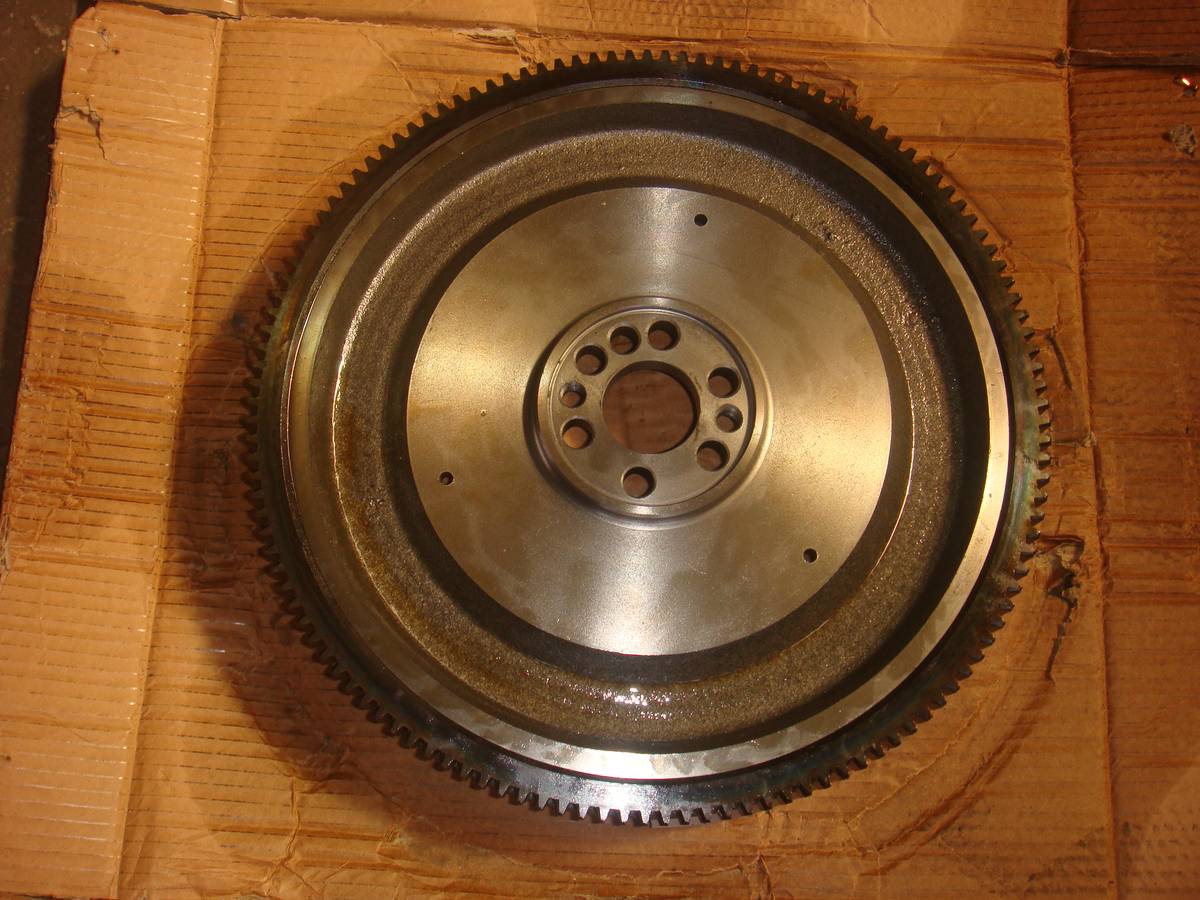
The trap is the 380 mm pair. The 6D14-3AT is listed with two different tooth counts at the same 380 mm diameter: 139 teeth as ME072139, and 129 teeth as ME072129. Both are real parts. Both are 380 mm. One of them is the wrong part for your truck, and the only way to tell them apart is to count.
The big sixes: 6D22 and 6D40
Above the 6D16 the flywheels jump to 430 mm and the hole count goes up. The 6D22 is an 11,149 cc six with a 130 mm bore and a 140 mm stroke, running a 17.0:1 compression ratio and a wet liner block. In naturally aspirated form it makes around 225 PS, and the turbocharged versions run up to 310 PS.
Its flywheel is 430 mm with 143 teeth and eight crank holes. At this size the flywheel weighs in the region of 68 kg, which is why the bolt pattern and the clamping torque matter far more than they do on a 260 mm unit.
Here is a 6D22 flywheel face:
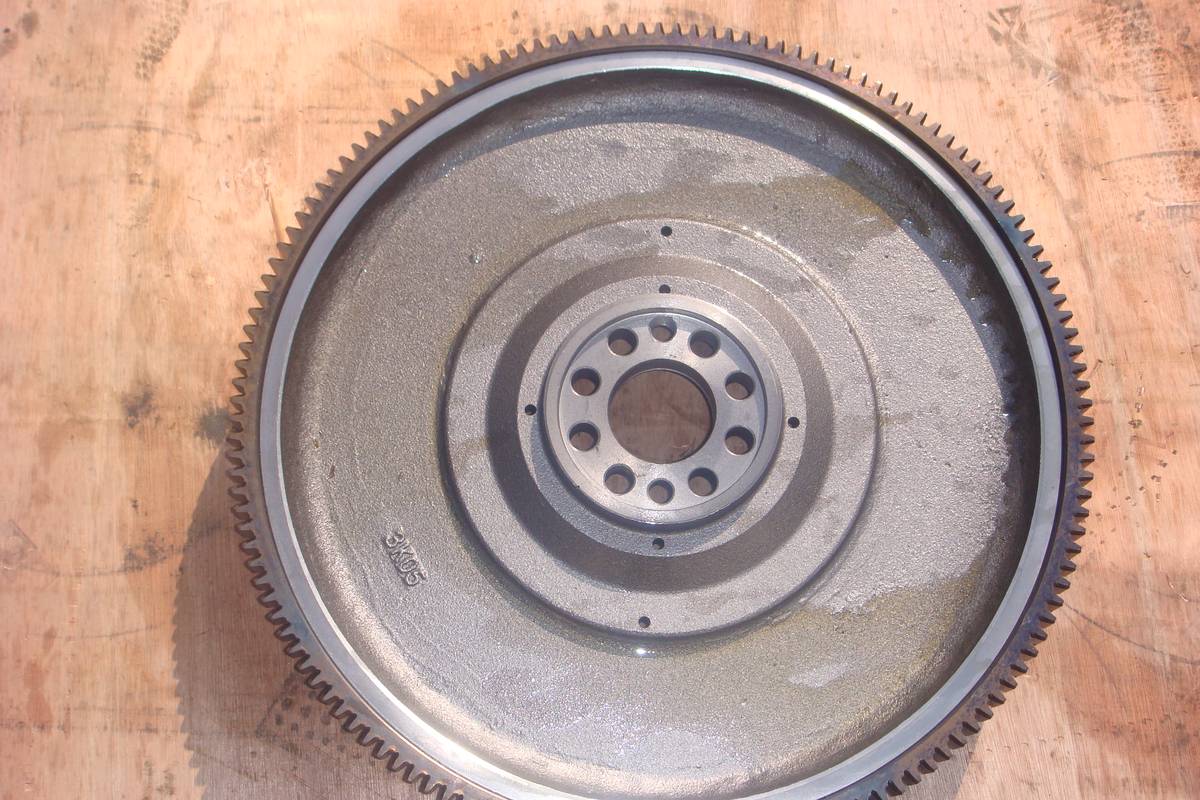
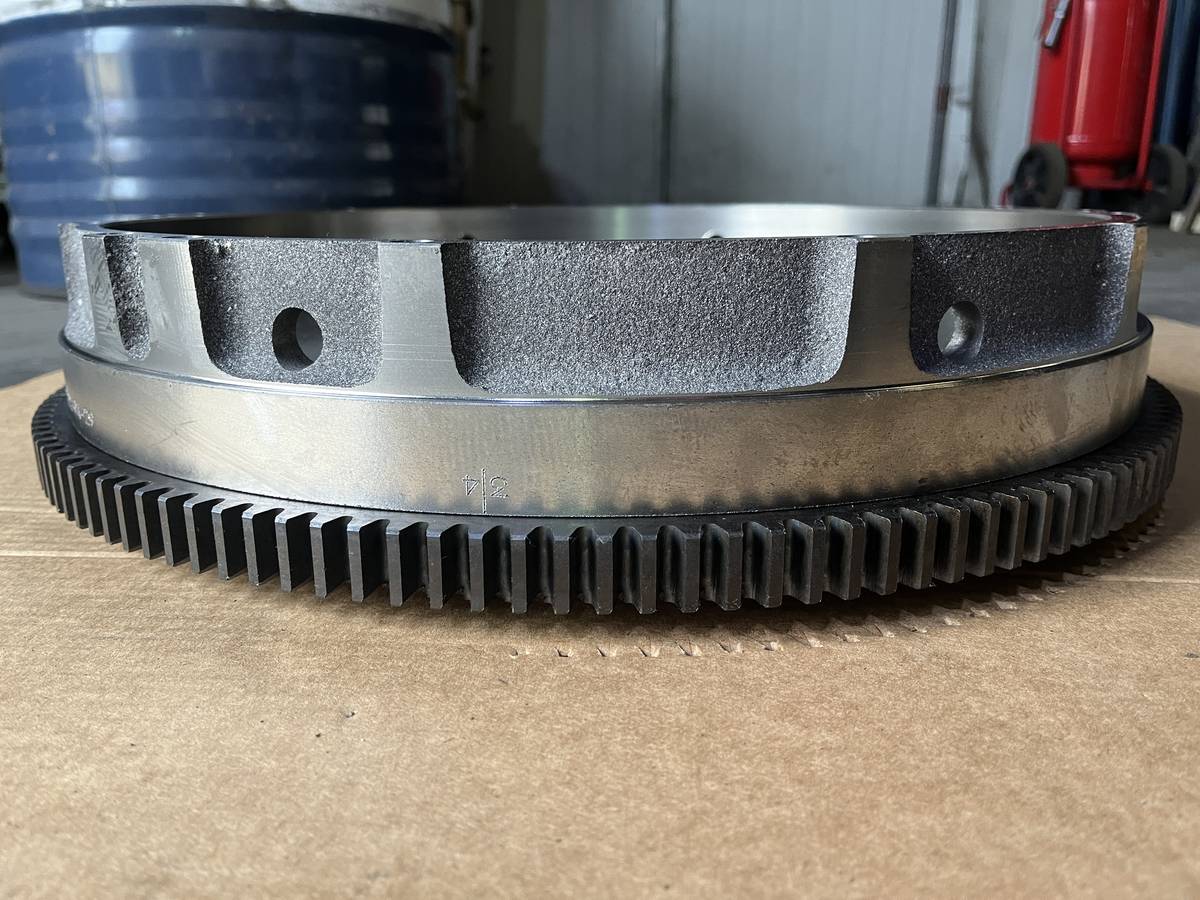
And the side view, which shows the wall thickness and the ring gear seating shoulder. This is the dimension that gets ignored and then causes the ring gear to run out once it is fitted:
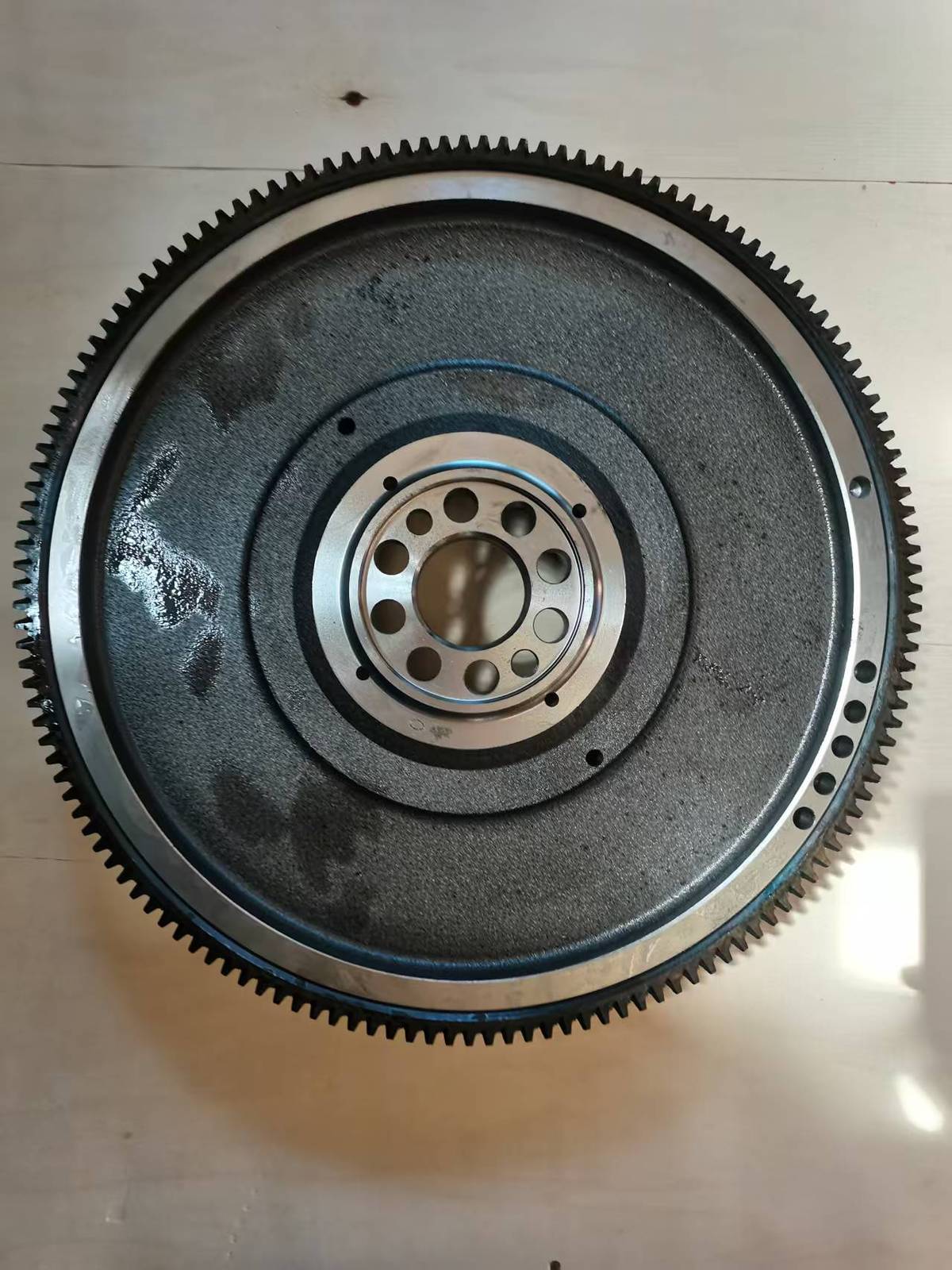
The 6D40 is the 12,023 cc 24-valve six, bore 135 mm by stroke 140 mm. Note that it shares the 430 mm diameter with the 6D22 but is a different engine with a different head design and a different power band:
The V8 outlier: 8DC9
The 8DC9 is the case that breaks every shortcut. It is a V8, not an inline six, and it runs the same 430 mm diameter and the same 143 tooth ring gear as the 6D22. If you were identifying by diameter and teeth, you would conclude these two flywheels are interchangeable.
They are not. The 8DC9 flywheel uses a nine hole crankshaft pattern in the H version, against eight holes on the 6D22. And the 8DC9 itself comes in two body types, a high version and a low version, which differ in the height of the centre boss where it meets the crankshaft but share the same diameter and tooth count:
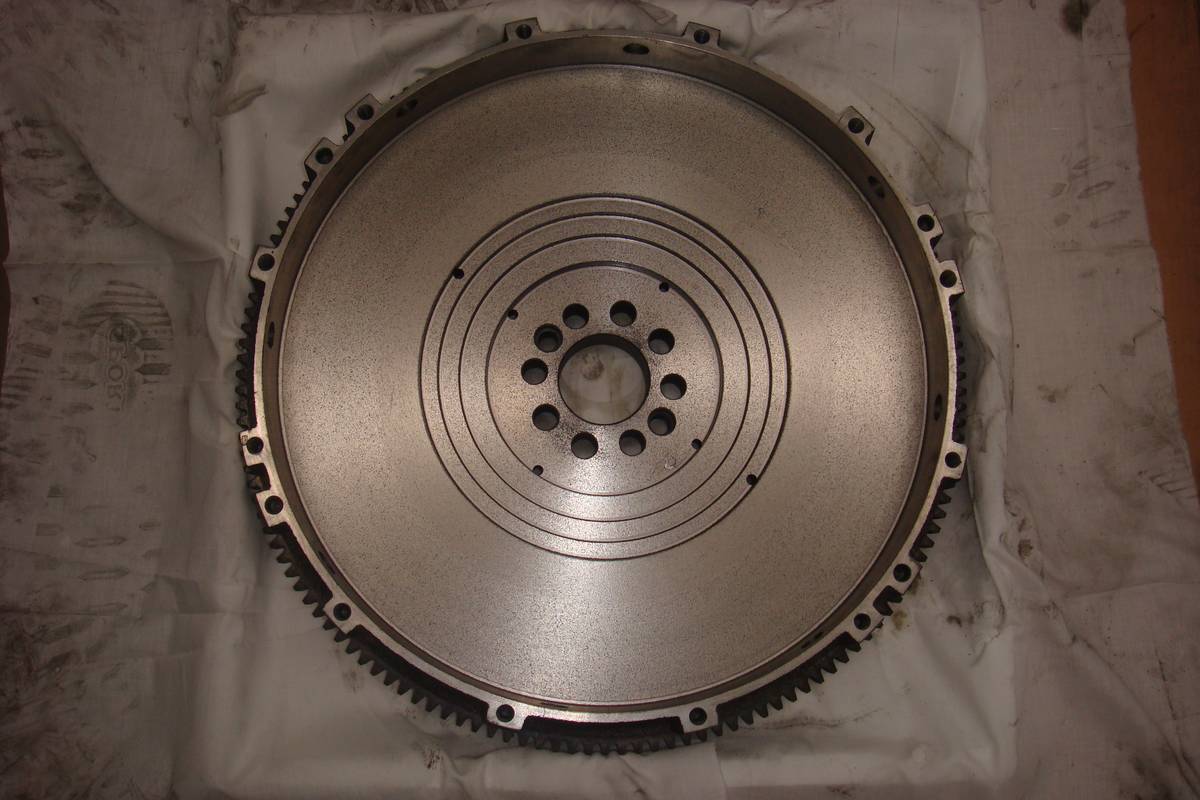
This is why a two-number check fails on the V8. The part number ME062829 and ME062698 look like the same family, the diameter matches, the teeth match, and the boss height decides whether it fits.
What changed with electronic engines
Everything above describes mechanically governed engines. From the late 1990s Fuso moved to electronically controlled injection, and the flywheel had to start carrying information rather than just inertia.
This 6M70 flywheel shows the change clearly. Look at the ring of closely spaced holes around the outside of the friction face:
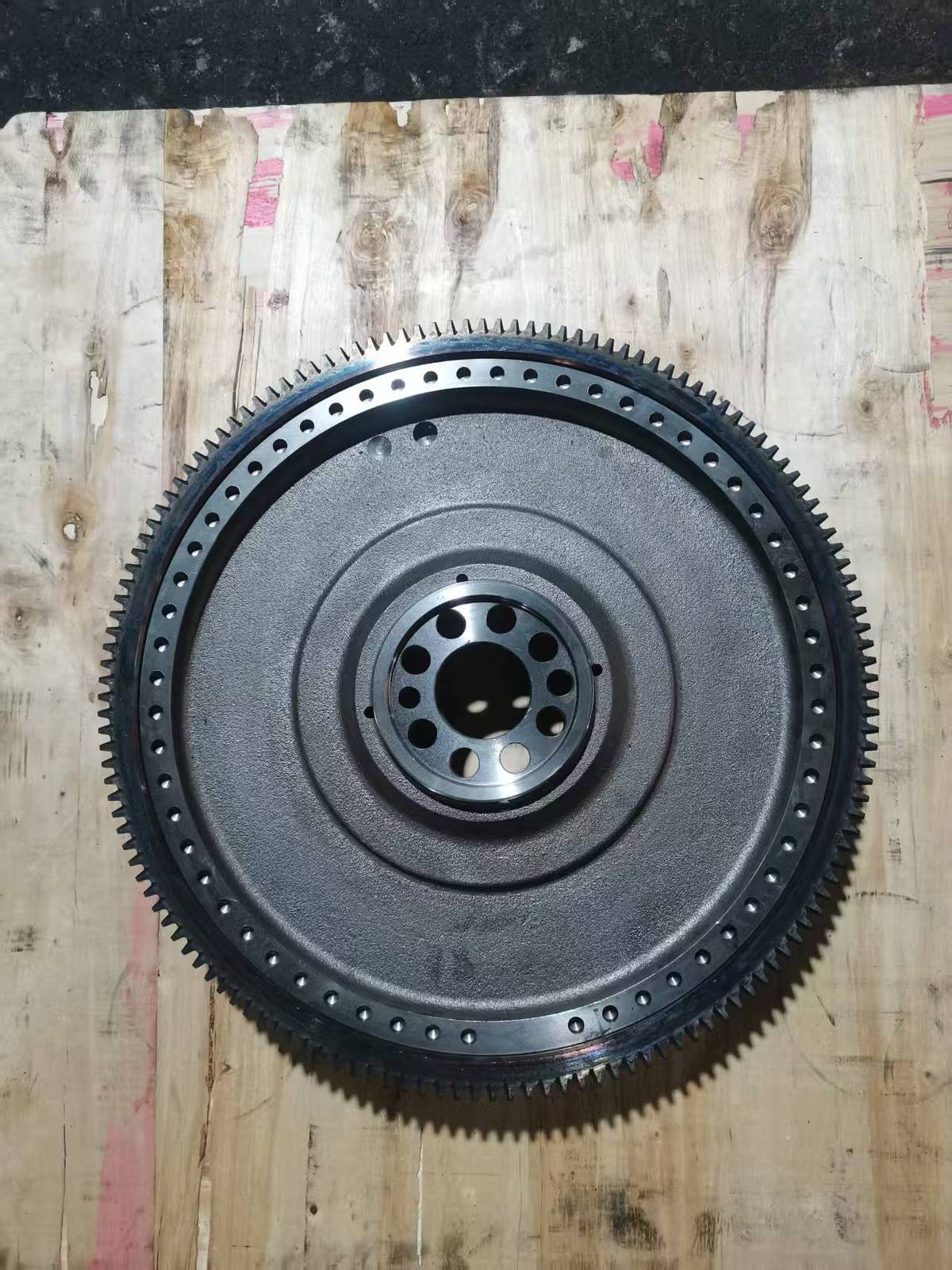
Those are not lightening holes and they are not for balance. They are the target pattern for the crankshaft position sensor, and the ECU uses them to know where the crank is and how fast it is turning. The 6M70 is the 12,882 cc six with a 135 mm bore and a 150 mm stroke.
There are two consequences for anyone ordering a replacement. First, a flywheel with the wrong sensor pattern will either not start or will start and run badly, and the fault will not point at the flywheel. Second, the sensor pattern is machined, not cast, so a flywheel that is dimensionally correct but cut with the wrong pattern cannot be corrected after the fact.
If your engine is a 6M70, a 6M60 or a late 6D16 with electronic control, check the sensor pattern before you check anything else.
How to confirm before you order
The procedure that removes almost all of the risk takes about five minutes with the old part in hand.
Measure the outside diameter across the friction face, at the widest point. Count the ring gear teeth, marking the start tooth so you do not lose count on a 143 tooth ring. Count the crankshaft bolt holes and measure their diameter, because two flywheels with six holes can still have different hole sizes. If the engine is electronically controlled, note the sensor pattern and its tooth count.
Then match all four values against the chart. If three match and one does not, you have the wrong part, and the one that does not match is the one that will fail.
If you do not have the old part, send us the engine code, the vehicle model and the year, and any part number stamped or cast on the flywheel. We will tell you which of the versions it is, and if the number is ambiguous we will say so rather than guess.
Send those details to Irene at [email protected], or call +86 19953662121. We produce these flywheels at our foundry in Changyi Wangke Industrial Park, Shandong, and ship FOB Qingdao.