
Ring Gear Manufacturing: Process & Quality Control
Ring Gear Manufacturing: Process & Quality Control
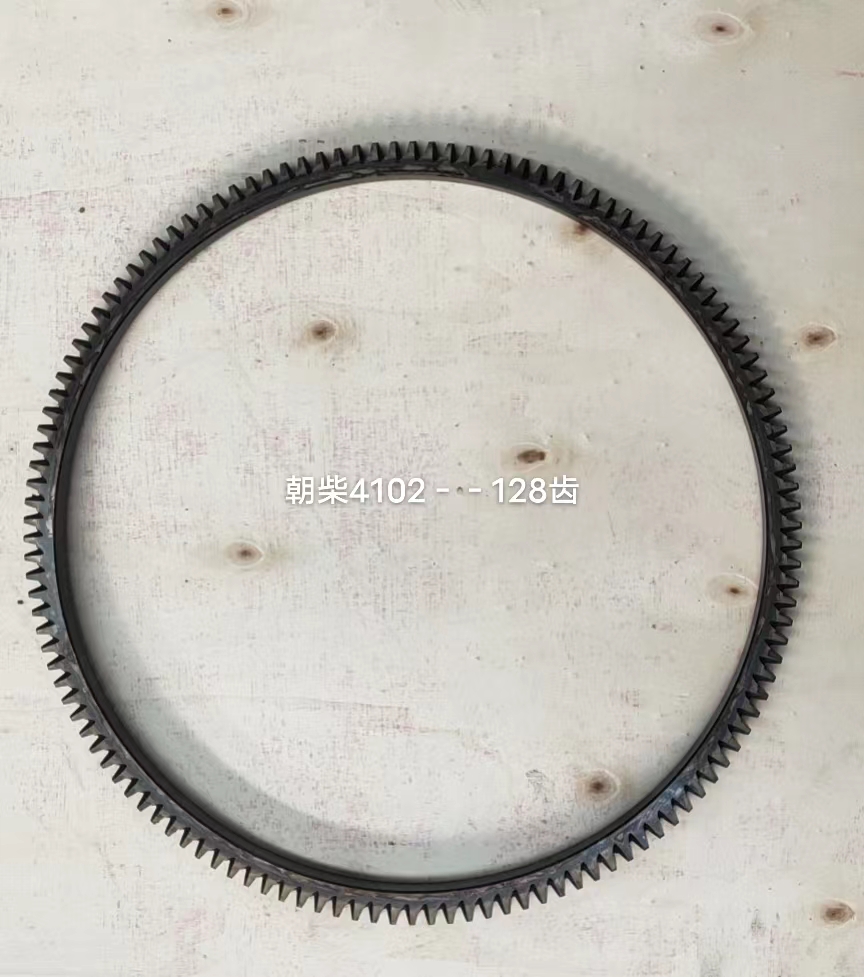
A ring gear is one of the smallest parts in a powertrain, yet it decides whether an engine starts on the first turn of the key. On most diesel and gasoline engines the ring gear is shrunk or bolted onto the flywheel (or flexplate), and the starter motor pinion engages its teeth to crank the engine. When those teeth are soft, misaligned, or cracked, the result is a no-start, a grinding noise, or a sheared tooth.
We are an IATF 16949 certified iron foundry and machining workshop. We produce ring gears as both cast ductile-iron blanks and finish-machined parts. From that production seat, this article walks through how a ring gear is actually made — from raw blank to hobbed teeth — and the quality checkpoints that separate a part that lasts 500,000 starts from one that fails in a season. If you source ring gears, the checkpoints below are the questions worth asking your supplier.
Table of Contents
- What a Ring Gear Actually Does
- Ring Gear Manufacturing at a Glance
- Step 1 — Making the Blank
- Step 2 — Turning and Facing
- Step 3 — Hobbing the Teeth
- Step 4 — Heat Treatment
- Step 5 — Finishing and Keyway
- Quality Control Checkpoints
- Common Defects and How to Avoid Them
- Forged Steel vs Cast / Ductile Iron Ring Gears
- Material and Price Reference
- Selection Tips for Buyers
- FAQ
- Talk to Our Engineering Team
What a Ring Gear Actually Does
The ring gear is a large-diameter gear fixed to the outer edge of the flywheel. Its only job is to receive the starter motor’s torque and transmit it to the crankshaft so the engine can begin the compression and combustion cycle. In a typical passenger car the ring gear has 100–150 teeth; in a truck or industrial engine the count varies with flywheel diameter and starter ratio.
Because the starter pinion hits the ring gear teeth with a sharp impact every single start, the tooth surface must be hard enough to resist wear but the gear body must stay tough enough to absorb shock. That combination — hard surface, tough core — is the whole engineering problem of ring gear manufacturing.
Ring Gear Manufacturing at a Glance
The production route for a finish-machined ring gear runs through six stages:
- Blank making — forging, or casting a ductile-iron blank
- Normalizing / annealing — relieve stress and set a uniform structure
- Turning and facing — cut the OD, face the sides, bore the center
- Hobbing — cut the gear teeth to the required module and tooth count
- Heat treatment — induction-harden the tooth flank to a target hardness
- Finishing and inspection — deburr, chamfer, cut keyway, 100% inspect
Step 1 — Making the Blank
There are two common blank routes. Forged blanks use medium-carbon steel such as 45# or 40Cr and are dominant in passenger-car and high-volume starter ring gears because forging gives a fine, dense grain that resists impact. Cast blanks use ductile (spheroidal graphite) iron and are common for larger, lower-speed industrial and marine ring gears where cost and machinability matter more than peak impact strength.
A sound blank is the foundation of everything after it. Porosity, slag inclusion, or a coarse forging grain will show up later as a cracked tooth or a soft spot that no amount of machining can fix. We control blank quality with material certificates, spectrometer checks on every heat, and ultrasonic or magnetic-particle inspection on critical batches.
Step 2 — Turning and Facing
The blank is chucked and turned to bring the outer diameter, side faces, and center bore to tolerance. The two side faces must be flat and parallel, and the bore must be concentric with the OD, because the ring gear later sits on the flywheel with almost no clearance.
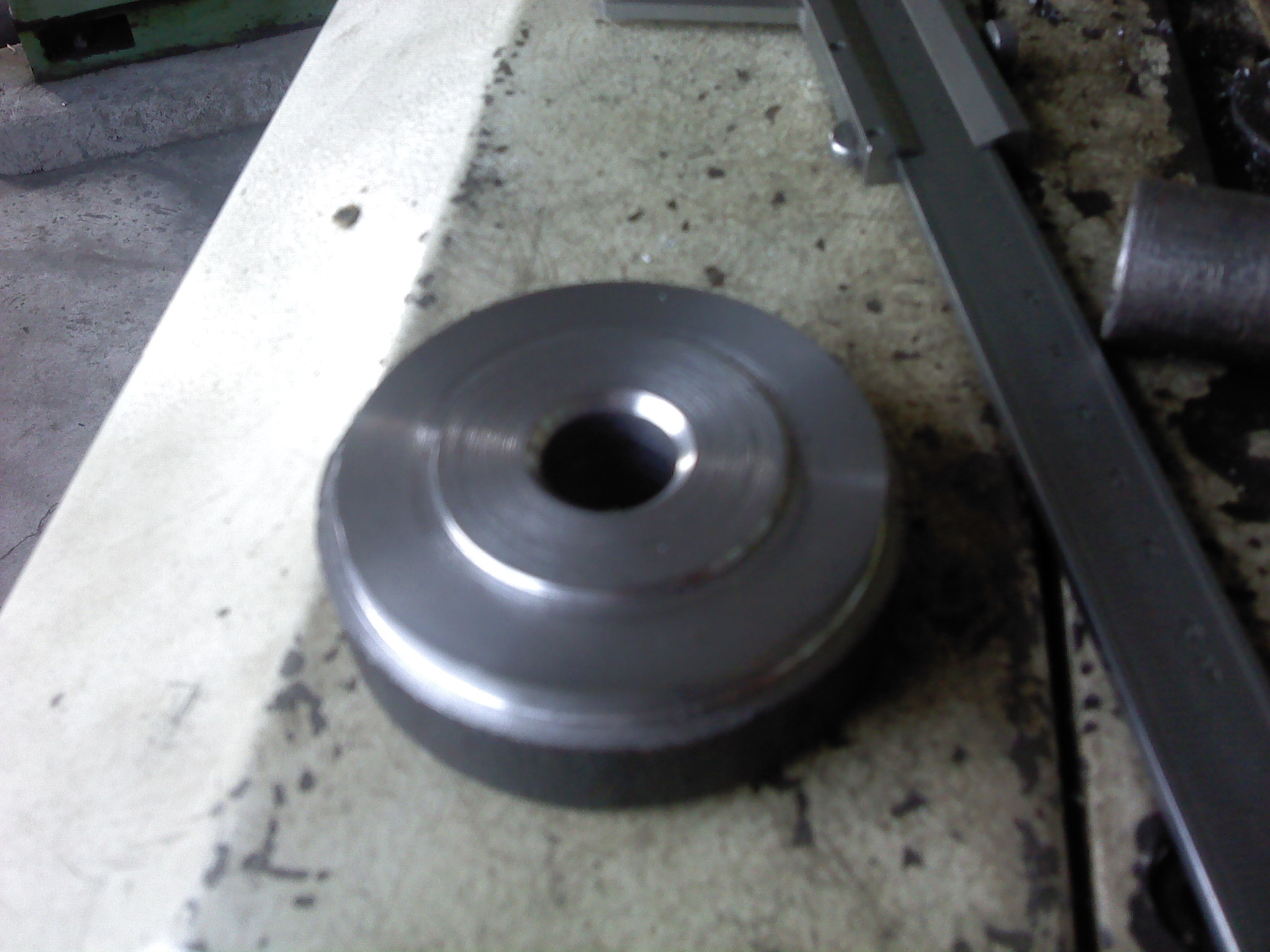
Typical tolerances at this stage are within 0.05 mm on flatness and a runout of less than 0.1 mm on the bore. A part that leaves turning out of true will never cut a straight tooth in the next step.
Step 3 — Hobbing the Teeth
Hobbing is the gear-cutting process that shapes the teeth. A rotating cutter (the hob) progressively meshes with the blank and generates the tooth profile to the specified module, pressure angle, and tooth count. For a ring gear the module is usually coarse (2.0–3.5 mm) because the teeth are large and built for torque, not quiet running.
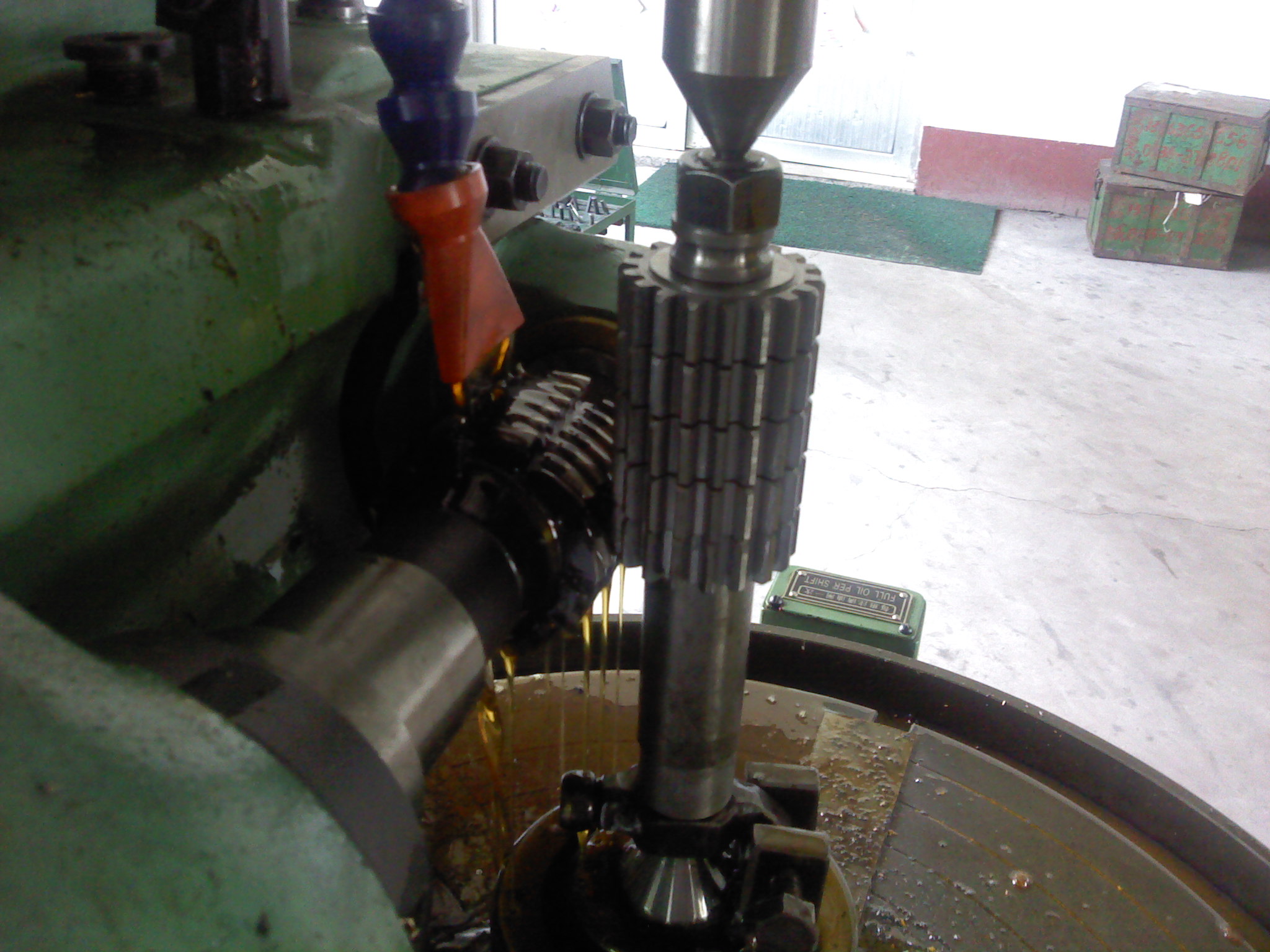
Tooth-profile accuracy here decides how smoothly the starter engages. A profile that is off by even a fraction of a millimeter causes the pinion to clash and grind on every start. We verify the first-article tooth profile on a gear measuring machine and then sample every production lot.
Step 4 — Heat Treatment
After cutting, the teeth are hardened. The standard method is induction hardening of the tooth flank, which heats only the surface and quenches it, leaving a hard case (typically 45–55 HRC) over a tough, ductile core. Some designs also specify through-hardening for very heavy-duty use.
The hard case resists the starter’s impact and the constant wear of engagement; the soft core absorbs shock so a tooth bends rather than shatters. The risk is an uneven case — if one section is soft, that is exactly where a tooth will round off first.
Step 5 — Finishing and Keyway
The hardened gear is deburred, the tooth tips are chamfered to help the starter pinion slide in, and any keyway or locating feature is cut. A light shot-blasting or tumbling cleans the surface, and the part is washed before inspection.
Quality Control Checkpoints
If you buy ring gears, these are the control points that actually matter. Ask a supplier to show evidence for each:
| Checkpoint | What is verified | Typical method | Acceptable range |
|---|---|---|---|
| Material certificate | Grade matches the drawing (45#, 40Cr, QT600, etc.) | Spectrometer + mill cert | Per spec |
| Hardness | Tooth flank case hardness | Rockwell tester | 45–55 HRC (induction) |
| Tooth profile | Module, pressure angle, tooth count | Gear measuring machine | ISO/DIN class 8–9 |
| Runout | Teeth concentric with bore | Dial indicator | < 0.1 mm |
| Cracks | Surface and tooth-root cracks | Magnetic particle inspection | Zero accepted |
| Dimensions | OD, width, bore, keyway | Calipers / CMM | Per drawing ±0.05 mm |
Common Defects and How to Avoid Them
| Defect | Symptom in the field | Root cause | Prevention |
|---|---|---|---|
| Soft tooth flank | Teeth round off after a few hundred starts | Uneven or insufficient induction hardening | Hardness map every lot, calibrate coils |
| Tooth-root crack | A tooth snaps on a cold start | Slag inclusion or grind burn | MPI on blanks and finished parts |
| Poor concentricity | Grinding noise, uneven engagement | Turning runout out of tolerance | In-process gauging, rigid fixtures |
| Wrong tooth count / module | Starter will not mesh | Wrong hob or program | First-article approval before run |
Forged Steel vs Cast / Ductile Iron Ring Gears
| Property | Forged steel (45# / 40Cr) | Ductile iron (cast) |
|---|---|---|
| Impact strength | High — best for frequent starting | Moderate |
| Cost | Higher (material + forging) | Lower |
| Machinability | Good | Very good |
| Typical use | Passenger car, light truck | Industrial, marine, large flywheels |
| Weight | Slightly higher | Comparable |
Neither is “better” in the abstract — the right choice follows the duty cycle. A generator set that starts once a week can live happily on a well-made ductile-iron ring gear; a delivery vehicle cycling the starter dozens of times a day wants forged steel.
Material and Price Reference
Ring gear pricing tracks tooth count, diameter, material, and whether you buy a raw blank or a finish-machined, heat-treated part. Market reference for finish-machined starter ring gears runs roughly:
- Small (under 100 teeth, passenger-car size): USD 5–10 per piece
- Medium (100–140 teeth, light-truck / industrial): USD 8–15 per piece
- Large (heavy flywheel, marine / G-series): USD 15–22 per piece
These are market reference prices, not our quotation. Final FOB Qingdao price depends on material grade, hardness requirement, certification paperwork, and order volume. MOQ is typically 20 pieces. Contact our team for a real quote against your drawing or sample.
Selection Tips for Buyers
- Send the drawing or a sample tooth — do not describe a ring gear only by diameter.
- Confirm the material and the required tooth-flank hardness in writing.
- Ask for a first-article inspection report before a full production run.
- Request magnetic-particle inspection evidence on safety-critical batches.
- Match forged vs ductile iron to your actual start frequency, not to habit.
- Clarify packaging — ring gears dent easily in transit and a dented tooth is scrap.
FAQ
What material is a ring gear usually made from?
Passenger-car and light-truck ring gears are usually medium-carbon steel (45# or 40Cr) supplied as forgings. Larger industrial and marine ring gears are often ductile (spheroidal graphite) iron castings. The choice follows the start frequency and shock load.
How hard should ring gear teeth be?
For induction-hardened teeth, a flank hardness of 45–55 HRC is typical. The core stays much softer so the gear absorbs shock instead of shattering.
Can a ring gear be repaired when teeth are damaged?
In the field, a failed ring gear is normally replaced as a unit (or the whole flywheel is changed). Repair by welding is not recommended for starter ring gears because the weld changes the hardness and the heat can crack the part.
Why does my starter grind against the ring gear?
Grinding usually means worn or misaligned teeth, poor concentricity of the ring gear, or a starter pinion that does not retract. A tooth-profile or runout check on the ring gear will usually show the cause.
Do you supply ring gears to drawing or only standard sizes?
Both. We regularly produce to customer drawings and samples, including non-standard tooth counts and module combinations, and we keep first-article approval on file for repeat orders.
What is the usual MOQ and lead time?
MOQ is typically 20 pieces for a standard item and higher for fully custom profiles. Lead time depends on whether a blank forging or casting tool already exists; please ask with your drawing for a firm date.
Can you match an existing OEM ring gear?
Yes. Send the OEM part or its number and we will measure tooth count, module, pressure angle, hardness, and bore, then produce a matching part. We confirm with a first-article report before the full run.
Talk to Our Engineering Team
Need a Ring Gear Quote Against Your Drawing?
Send us your drawing, sample, or OEM number and we will return a matched quote with material grade, hardness, and inspection plan. We are an IATF 16949 certified foundry and machining workshop, FOB Qingdao.
- Email: [email protected]
- Phone / WeChat / WhatsApp: +86 19953662121
- Factory: Changyi Wangke Industrial Zone, Weifang, Shandong, China
- Request a quote online
Related reading: Ring Gear product page · Flywheel product page