
Flywheel Housing: Function, Materials & Failure Signs | Buyer’s Guide
Flywheel Housing: Function, Materials & Failure Signs
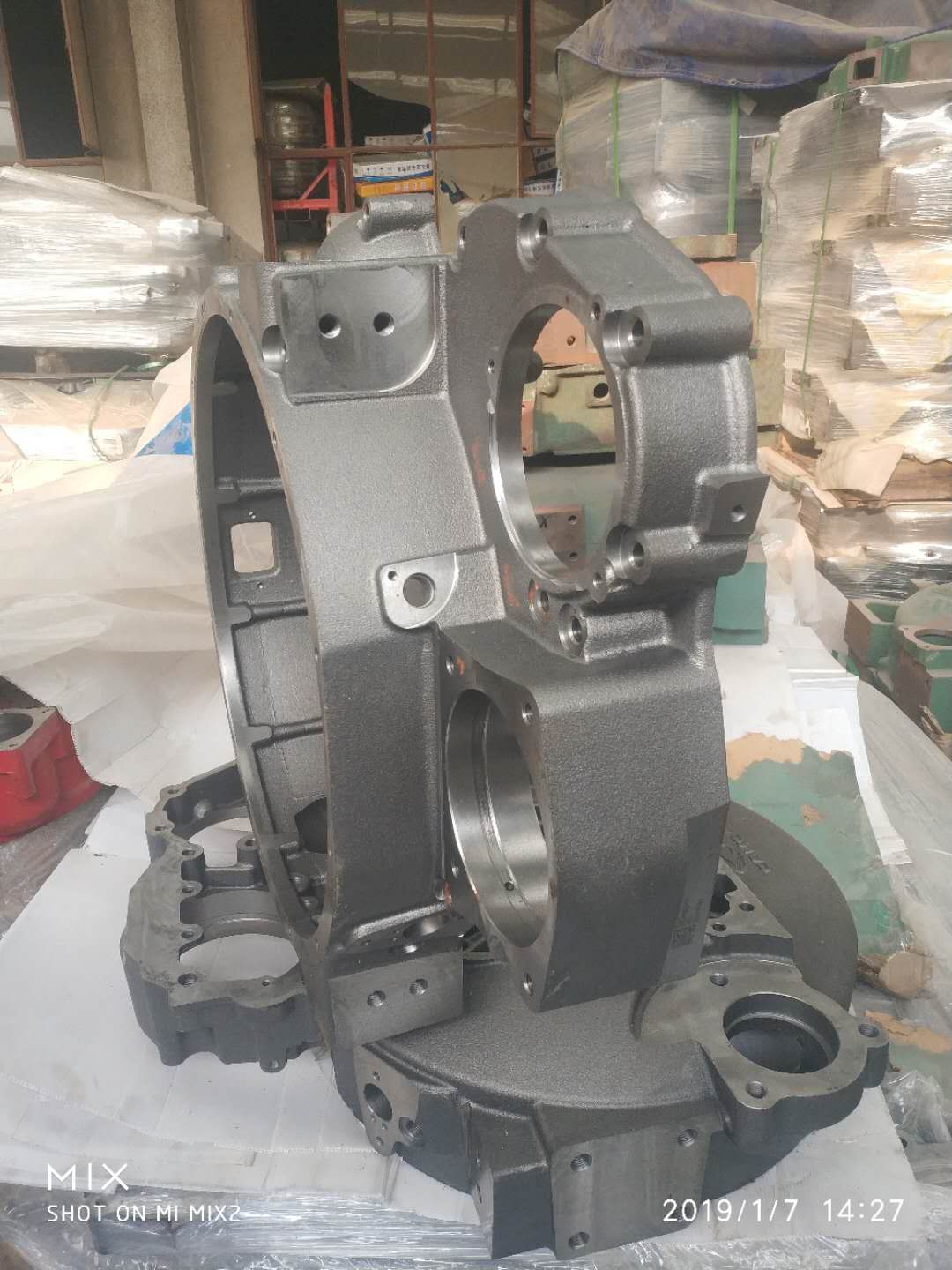
The flywheel housing is one of those engine parts buyers rarely think about until it cracks, leaks, or throws the whole driveline out of alignment. It is a cast iron case that bolts to the back of the engine block, encloses the flywheel and starter ring gear, and carries the flange that the transmission or clutch housing bolts to. This guide covers what the housing actually does, why gray cast iron is still the default material, the failure signs that matter, and the specs to confirm before you quote a replacement from a foundry.
Table of Contents
- What a Flywheel Housing Is
- What the Housing Does Inside the Driveline
- Gray Cast Iron vs Ductile Iron
- How Flywheel Housings Are Made
- Common Failure Signs
- How to Inspect a Housing Before Replacement
- Specs That Decide Fit
- Price and MOQ Reference
- Sourcing Flywheel Housings from China
- Frequently Asked Questions
- Get a Quote
What a Flywheel Housing Is
The flywheel housing, also called a bell housing or clutch housing on many engines, is the structural link between the engine and the gearbox. It sits behind the cylinder block, wraps around the flywheel and the starter ring gear, and provides the machined face and bolt circle where the clutch or transmission mounts. On a diesel truck or industrial engine it is a substantial casting, not a cover, because it has to hold the engine and transmission in exact alignment while the whole assembly vibrates and sees shock loads from every gear change.
What the Housing Does Inside the Driveline
Five jobs matter for buyers and service shops:
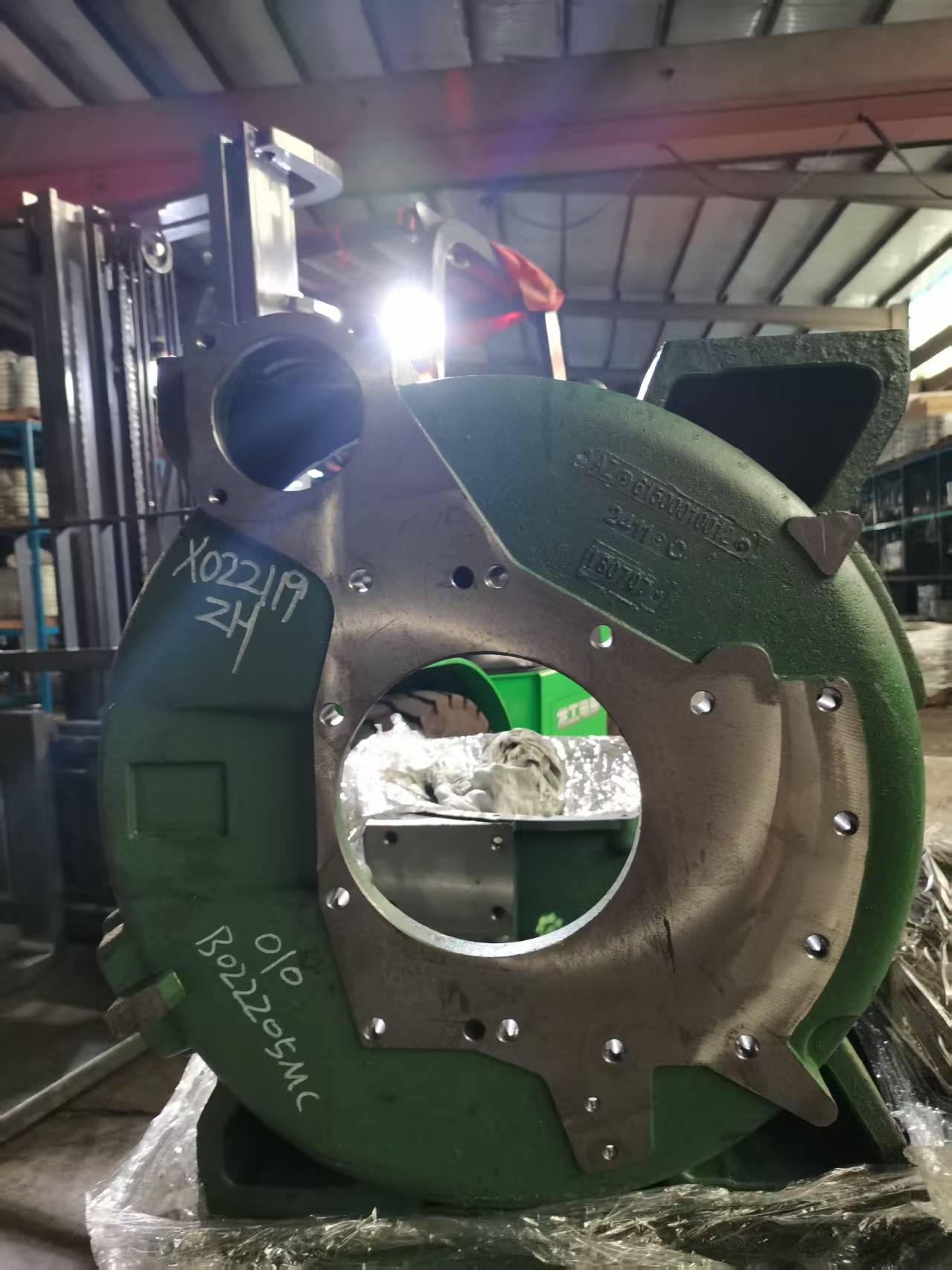
- It aligns the engine to the transmission. The pilot bearing bore at the center keeps the input shaft concentric with the crankshaft, so the clutch does not chatter and the gearbox does not whine.
- It protects the flywheel and ring gear from dust, grit and impact, which matters in construction, mining and agriculture where the housing lives close to the ground.
- It supports the starter motor and locates the ring gear engagement. The starter boss and the ring gear window are cast into the housing to a tight tolerance.
- It seals the bell housing area so oil from the rear main seal and clutch dust do not mix in a way that destroys the friction surface.
- It provides the lifting and mounting points that let the engine and transmission be handled as one unit during assembly.
A housing that is out of flat by even a fraction of a millimeter moves the transmission off-axis. The visible symptom is a clutch that grabs unevenly and a gearbox that wears early, which is why housing alignment is treated as a precision spec, not a rough fit.
Gray Cast Iron vs Ductile Iron
Most flywheel housings are gray cast iron, with ductile iron used where the part sees heavier shock. The table shows how the two compare for this application.
| Property | Gray cast iron (GG25 / GJL250 / HT250) | Ductile iron (GGG40 / QT450) |
|---|---|---|
| Vibration damping | Excellent, graphite flakes absorb vibration | Good, but less damped than gray iron |
| Strength and shock | Moderate, fine for static structural loads | Higher, resists impact and bending better |
| Machinability | Very good, easy to bore and face | Good, slightly harder on tooling |
| Cost | Lower, the default for most housings | Higher, used for heavy-duty or high-stress cases |
| Typical use | Standard truck, bus and industrial engine housings | Construction, mining and high-torque applications |
For the majority of commercial vehicle engines, gray cast iron grade GG25 (equivalent to Chinese HT250 or ISO GJL-250) is the right call: it damps the vibration that would otherwise travel into the transmission, machines cleanly to the flatness the flange needs, and keeps cost down. Ductile iron earns its place where the housing doubles as a structural mount under shock loads.
How Flywheel Housings Are Made
The part starts as a casting. Green sand molding and lost-foam casting are both common; lost-foam gives cleaner internal shapes and fewer parting-line fins, which is why it is favored for complex housings. After casting, the critical faces are machined: the engine-side flange, the transmission-side flange, the pilot bearing bore, and the bolt holes. Flatness on the mounting faces is measured in tenths of a millimeter because that is what keeps the driveline aligned.
Buyers should ask two process questions. First, how is porosity controlled in the casting, since a void near a bolt boss is where a crack starts. Second, what grade of cast iron is used and is a material certificate available. A foundry that answers both with specifics is a foundry that controls its process.
For an IATF 16949 certified foundry, the housing is not a rough casting with holes drilled in it. It is a controlled process from gating design and pour temperature through to final machining and dimensional audit.
Common Failure Signs
Housings fail slowly and the early signs are easy to miss. The ones that actually matter:
- Cracks around the bolt bosses or the starter mounting, often hairline at first and growing from a porosity void or over-torqued fastener.
- Oil leaking from the bell housing seam, which usually points to a failed rear main seal but can also mean a cracked housing letting oil through.
- Clutch chatter or gearbox whine, the classic symptom of a housing that is no longer holding the engine and transmission concentric.
- Worn or oval pilot bearing bore, which lets the input shaft wander and chews the clutch disc.
- Stripped or wallowed bolt holes that will not hold torque, common on engines that have been pulled and refitted repeatedly.
- Surface corrosion and rust pitting on housings that sat in transit or storage without proper protection.
How to Inspect a Housing Before Replacement
For importers and rebuilders, the check happens on the bench, not after a comeback. A short list catches most problems:
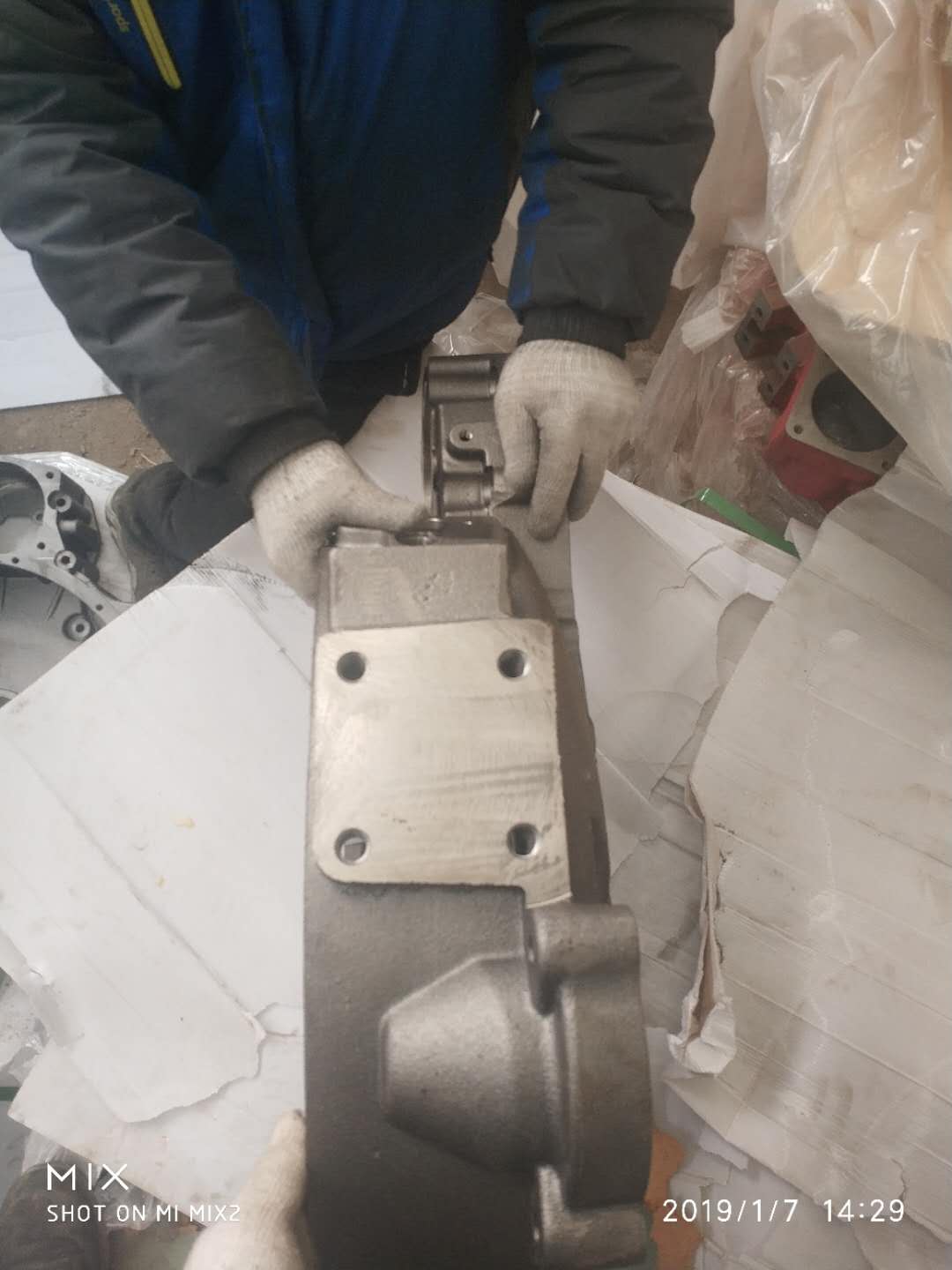
- Check the mounting flanges for flatness with a straightedge and feeler gauge; anything beyond the spec means a misaligned driveline.
- Inspect the bolt bosses and starter face with dye penetrant for hairline cracks, especially after the part has been in service.
- Measure the pilot bearing bore for size and roundness; an oval bore is a reject.
- Confirm the bolt-hole pattern and pitch-circle diameter match the OEM drawing exactly before quoting.
- Ask the foundry for a material certificate and the machining tolerance on the faces, not just a price.
Specs That Decide Fit
A flywheel housing is not interchangeable by engine family alone. The dimensions that decide whether it fits are the bore diameter at the flywheel, the bolt circle and pitch-circle diameter of the mounting holes, the flange thickness and overall length, the pilot bearing bore size, and the transmission-side flange pattern. Always confirm these against the OEM number or the old part before ordering a container.
| Spec | Why it matters |
|---|---|
| Bore diameter | Must clear the flywheel and ring gear with correct clearance |
| Bolt circle / PCD | Decides whether the housing mounts to the block and transmission |
| Flange flatness | Holds the driveline aligned; drives clutch and gearbox life |
| Pilot bearing bore | Keeps the input shaft concentric with the crankshaft |
| Overall length | Sets the clutch and transmission position |
Price and MOQ Reference
Single-piece market ranges, FOB reference, for a cast iron flywheel housing reflect typical listed and traded prices across B2B platforms and are not a quote:
| Class | Reference range (USD/pc, FOB) |
|---|---|
| Standard truck / bus housing (gray iron) | 18 – 25 |
| Heavy-duty / ductile iron housing | 25 – 45 |
| Complex multi-bolt industrial housing | 40 – 70 |
MOQ is typically 20 pieces per specification, FOB Qingdao. Final price depends on cast iron grade, machining scope, surface treatment and order volume. For an exact number, send the OEM number or the old part and request a quote.
Sourcing Flywheel Housings from China
China is the largest source of cast iron engine components, and the gap between a good foundry and a jobber is the same as for flywheels: material certification, machining control and dimensional audit. Look for an IATF 16949 certified foundry that can supply the material certificate, show the machining tolerances on the flanges, and match the OEM bolt pattern. That is what turns a low price into a part that fits and lasts.
Related parts worth bundling in the same enquiry: the flywheel itself, the starter ring gear, and other engine housings. Consolidating from one certified source simplifies quality control and shipping.
Frequently Asked Questions
Q: Can a cracked flywheel housing be welded?
A: Small cracks in non-structural areas are sometimes welded and stress-relieved, but a crack at a bolt boss or flange usually means the alignment is already compromised. For a commercial vehicle, replacement is the safe call.
Q: Gray iron or ductile iron for my engine?
A: Standard truck and bus engines use gray iron GG25 (HT250). Specify ductile iron only when the housing carries heavy shock loads, as in construction or mining equipment.
Q: How do I know a housing will fit my transmission?
A: Match the bolt circle, pitch-circle diameter, pilot bearing bore and flange pattern to the OEM drawing or the old part. Never order by engine family name alone.
Q: What tolerance should the mounting flange hold?
A: Flatness is typically held to a few tenths of a millimeter. Ask the foundry for the actual machining tolerance; a shop that quotes it controls it.
Q: Do you supply with material certificate?
A: Yes, an IATF 16949 foundry supplies the cast iron grade certificate and can provide machining dimensions on request.
Q: What is the MOQ and lead time?
A: MOQ is generally 20 pieces per specification, FOB Qingdao. Lead time depends on whether the tooling exists; quote with the OEM number for an exact date.
Get a Flywheel Housing Quote
Send your OEM number or the old part photo and we will match the specification from an IATF 16949 certified foundry, with material certificate and machining dimensions.
Email: [email protected] | WhatsApp / WeChat / Tel: +86 19953662121