
Lost Foam Casting Process Explained: How It Works for Engine Parts & Flywheels
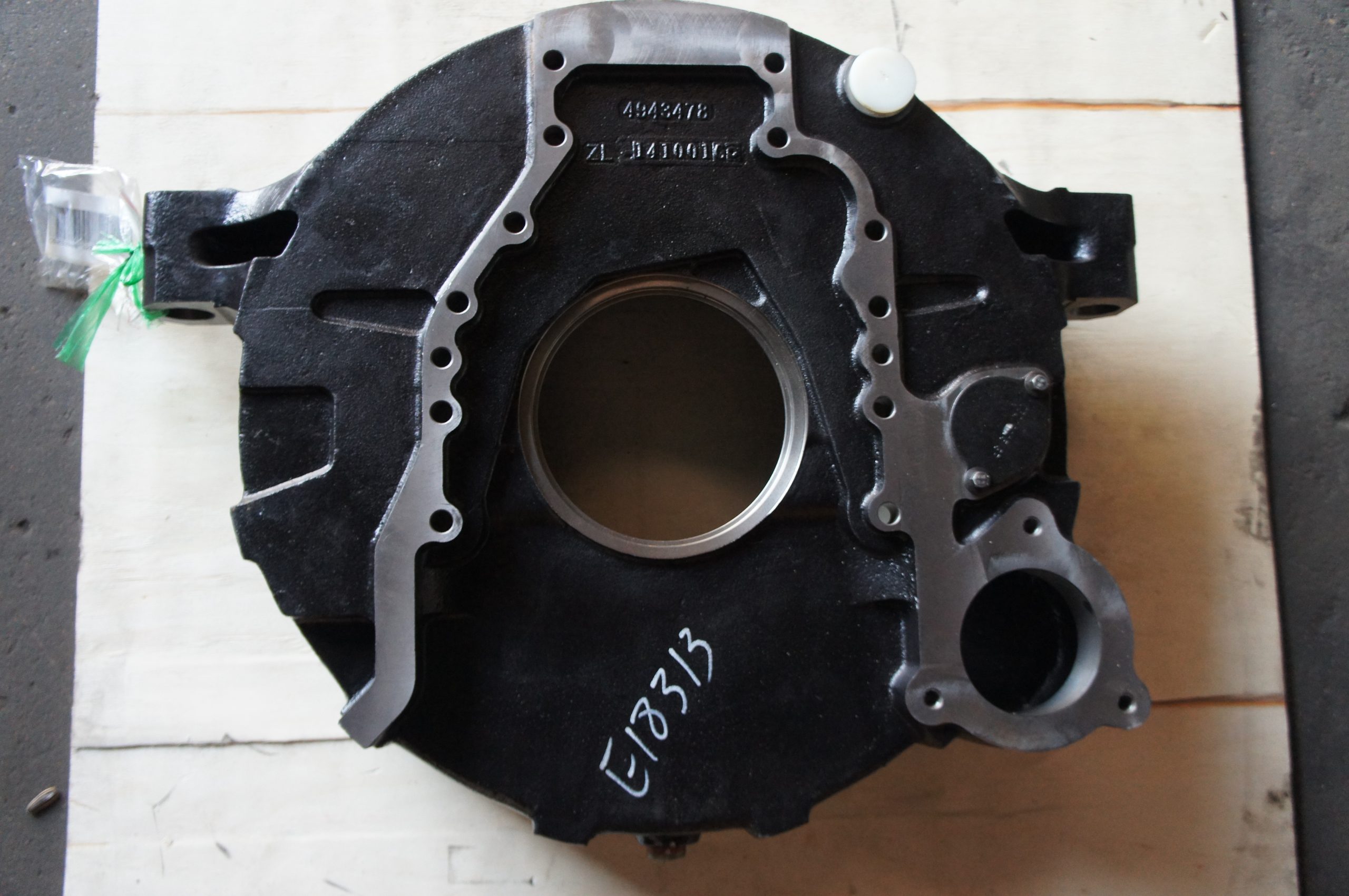
Table of Contents
- What Is Lost Foam Casting?
- How the Process Works: Step by Step
- Why Choose Lost Foam Over Traditional Sand Casting
- Materials Used: EPS Beads and Coatings
- Quality Control at Each Stage
- Common Defects and How to Prevent Them
- Lost Foam vs. Sand Casting: A Side-by-Side Comparison
- Is Lost Foam Right for Your Flywheel or Housing Order?
- Conclusion
What Is Lost Foam Casting?
Lost foam casting — also known as Evaporative Pattern Casting (EPC) or Full Mold Casting — is a precision casting process that uses expandable polystyrene (EPS) foam patterns instead of traditional wax or metal patterns. The foam pattern is coated with refractory material, embedded in unbonded sand, and then molten metal is poured directly into it. The foam vaporizes instantly upon contact with the molten metal, leaving behind a cavity that fills with liquid metal to form the final casting.
The process was first patented in the United States in 1958 but did not see widespread industrial adoption until the 1980s, when Ford Motor Company adopted it for engine block and cylinder head production. Today, lost foam casting is used globally for automotive powertrain components, agricultural machinery parts, marine engine castings, and increasingly for commercial vehicle components like flywheel housings, transmission cases, and brake drums.
What makes lost foam distinctive is that it eliminates the need for cores (used in sand casting to create internal cavities), reduces machining allowances, and produces castings with tighter dimensional tolerances than conventional green sand methods. For buyers of complex engine parts, understanding whether your supplier uses lost foam, sand casting, or another process helps you set realistic expectations for surface finish, dimensional accuracy, lead time, and unit cost.
How the Process Works: Step by Step
Lost foam casting follows a sequence of distinct stages, each requiring specific equipment and process controls:
Step 1: Pattern Making (EPS Molding). Expandable polystyrene beads are pre-expanded using steam in a pre-expander vessel, increasing their volume roughly 40–50 times from raw bead size. The expanded beads are then aged for 4–12 hours to allow air diffusion and dimensional stabilization. After aging, the beads are blown into aluminum molds (themselves machined from the part’s CAD model) and steam-heated again to fuse the beads into a solid foam pattern that matches the final casting shape, including any required machining allowance.
For large or complex parts like flywheel housings, the pattern may be assembled from multiple foam sections glued together with hot-melt adhesive. This modular approach allows intricate internal passages and undercuts that would require separate cores in sand casting.
Step 2: Coating Application. The assembled foam pattern is dipped or sprayed with a refractory ceramic coating — typically a water-based slurry containing silica, zircon, or alumina particles suspended in a binder system. The coating serves two critical functions: it provides a smooth surface barrier between the foam and the sand, and it must be permeable enough to allow vaporized gas to escape during pouring without causing metal penetration or surface roughness.
Coating thickness ranges from 0.3 mm to 1.5 mm depending on section thickness and alloy type. Thicker coatings improve surface finish but increase the risk of coating-related defects if drying is incomplete. Most facilities use controlled drying ovens with temperature and humidity monitoring to ensure uniform curing before the next stage.
Step 3: Molding (Sand Filling). The coated foam cluster is placed in a flask (a steel molding box) and surrounded with dry, unbonded silica sand. Unlike green sand casting, no clay binders or water are added to the sand — it relies entirely on vibration compaction to hold the pattern in place. The sand is compacted in layers using a vibrating table operating at 30–60 Hz, ensuring dense packing around all surfaces of the foam pattern without damaging the coating.
This “no-bond” sand system is one of the key economic advantages of lost foam: the sand can be reclaimed and reused almost indefinitely with minimal processing, whereas green sand requires continuous addition of new bentonite clay and has higher disposal costs.
Step 4: Pouring. Molten metal (typically gray iron, ductile iron, or aluminum alloys for automotive applications) is poured directly into the foam pattern through a sprue formed in the foam cluster itself. As the metal contacts the EPS foam, the polymer rapidly decomposes into gaseous products and liquid residue that are absorbed into the surrounding sand or vented through the permeable coating.
Pouring temperature and rate are tightly controlled variables. For gray iron flywheel housings, typical pouring temperatures range from 1380–1420°C, depending on section thickness. Pouring too slowly can cause premature foam collapse and misrun defects; pouring too fast can cause turbulent metal flow that entraps decomposition gases, creating porosity.
Step 5: Cooling, Shakeout, and Finishing. After pouring, the casting cools inside the sand mold. Cooling time varies from 20 minutes for small thin-walled parts to several hours for heavy-section castings like engine blocks. Once cooled, the sand is vibrated away from the casting (shakeout), the gating system is cut off, and the casting proceeds to shot blasting, heat treatment (if specified), and CNC machining operations.
Why Choose Lost Foam Over Traditional Sand Casting
Lost foam offers measurable advantages for certain categories of automotive and commercial vehicle castings:
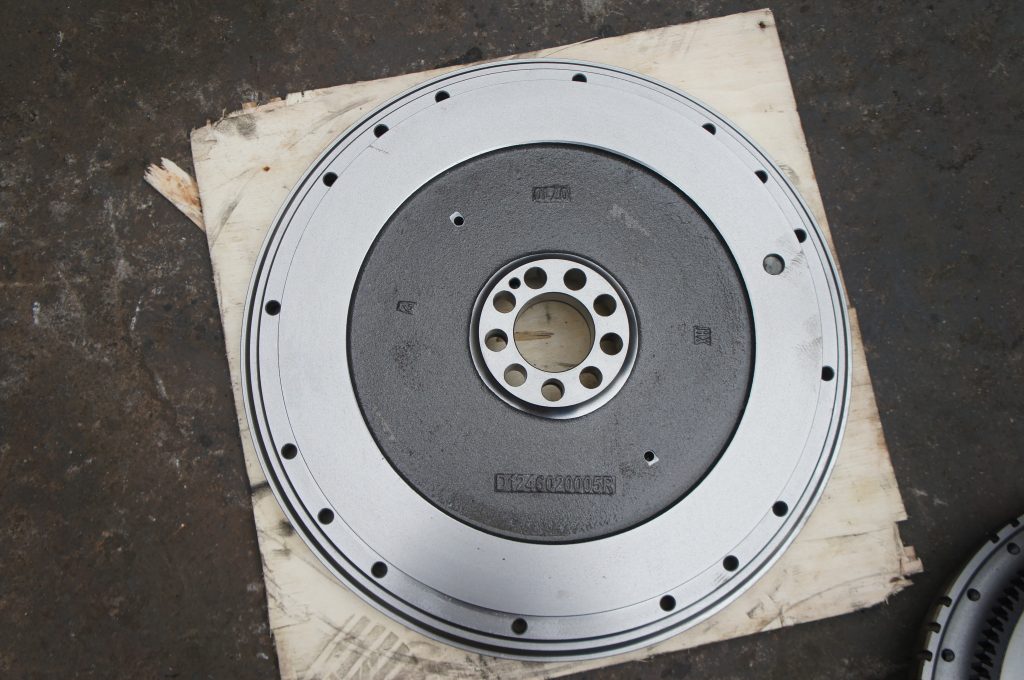
Dimensional Accuracy. Castings from lost foam typically achieve CT8–CT9 grade tolerances per ISO 8062, compared to CT10–CT12 for conventional green sand. For a flywheel housing with multiple bolt-hole positions and bore alignments, this translates to less variation between pieces and reduced machining stock requirements — which means lower CNC machining cost per part.
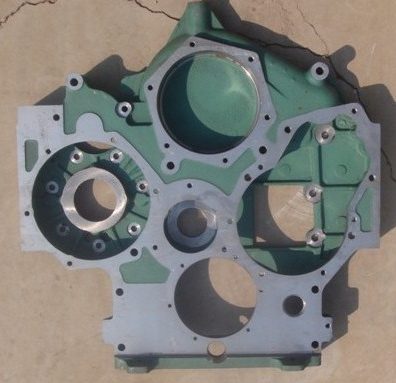
No Cores Required. In sand casting, internal cavities (like the central bore of a flywheel housing or water jacket passages in a cylinder block) require separate sand cores that are placed inside the mold. Each core introduces a potential core-shift defect and adds labor cost. Lost foam creates these cavities as integral parts of the foam pattern, eliminating core-related defects entirely.
Design Flexibility. Undercuts, blind holes, and complex internal geometries that would be impossible or extremely expensive in sand casting are straightforward in lost foam because the foam pattern can include any geometry that the CAD model defines. This makes lost foam particularly attractive for prototype development and low-volume production of new designs.
Surface Finish. Properly executed lost foam casting produces surface roughness values of Ra 6–12 μm on as-cast surfaces, compared to Ra 12–25 μm for green sand. Smoother as-cast surfaces mean less material removal during machining and better cosmetic appearance on visible surfaces.
Reduced Machining Stock. Because of improved dimensional accuracy and surface finish, machining allowances for lost foam castings are typically 1.5–2.5 mm per surface, versus 3–5 mm for sand castings. On a high-volume part like a flywheel housing, this reduction in machining stock can save 15–25% on CNC machine time and tooling consumption.
Materials Used: EPS Beads and Coatings
The two primary consumables in lost foam casting — EPS beads and refractory coatings — have specifications that directly affect casting quality:
EPS Bead Selection. Standard EPS beads for casting applications come in three density grades:
| Grade | Pre-Expansion Density | Typical Applications |
|---|---|---|
| Low-density (16–18 kg/m³) | Small thin-walled parts (< 5mm wall) | Instrument housings, brackets |
| Medium-density (20–24 kg/m³) | General-purpose castings | Flywheel housings, pump bodies |
| High-density (26–30 kg/m³) | Heavy-section or high-pressure parts | Cylinder blocks, hydraulic manifolds |
Higher-density foam produces less gas volume during decomposition (reducing porosity risk) but costs more per pattern and requires longer pre-expansion times. Most commercial vehicle component manufacturers settle on medium-density EPS as the optimal balance between cost and quality.
Refractory Coating Composition. The coating slurry formulation varies by foundry and alloy type, but common ingredients include:
- Silica flour (SiO₂) — base refractory, provides thermal insulation
- Zircon flour (ZrSiO₄) ��� added for high-temperature alloys, improves surface finish
- Aluminum oxide (Al₂O₃) — increases coating hardness and erosion resistance
- Binder system (sodium silicate, acrylic, or proprietary polymers) — holds particles together
- Surfactants and defoamers — control application consistency
A well-formulated coating must balance three competing properties: sufficient strength to survive handling and sand filling, adequate permeability to allow gas escape, and smooth surface texture to transfer to the casting. Adjusting any single property affects the others, which is why coating development is often the most technically demanding aspect of lost foam process engineering.
Quality Control at Each Stage
Quality in lost foam casting is built into every step, not inspected in at the end. Here is what a qualified supplier monitors at each stage:
Pattern QC: Foam density is measured by weighing a known-volume sample from each batch. Target density tolerance is typically ±1.5 kg/m³. Pattern dimensions are checked against the master CAD model using CMM (coordinate measuring machine) sampling — first-article inspection for new tools, then statistical process control (SPC) charts for ongoing production. Fusion quality between EPS beads is verified visually; unfused bead boundaries create weak spots that can cause pattern breakage during coating or molding.
Coating QC: Coating thickness is measured using a wet-film gauge after application and a dry-film gauge after curing. Weight-per-unit-area is also tracked as a secondary metric. Drying oven temperature and humidity are logged continuously. Under-dried coatings trap moisture that flashes to steam during pouring, creating blowhole defects; over-dried coatings crack and lose adhesion.
Molding QC: Sand compaction density is monitored using cone-penetration tests at multiple points in the flask. Vibration amplitude and frequency are recorded for each mold. Insufficient compaction causes mold wall movement during pouring (leading to oversized castings); excessive compaction damages the coating layer.
Pouring QC: Metal temperature is measured with a pyrometer immediately before pouring, logged for each heat. Pouring rate is controlled via stopper-rod or slide-gate systems on the ladle. Chemical composition of each heat is verified by spectrometer sample taken from the pour stream or test bar.
Final Inspection: Castings undergo visual inspection for surface defects, dimensional verification against drawing tolerances (typically CMM spot-check on a sampling plan), and non-destructive testing (magnetic particle inspection for ferrous castings, ultrasonic testing for critical pressure-containing sections). Hardness testing confirms mechanical properties meet specification.
Common Defects and How to Prevent Them
Even well-controlled lost foam operations occasionally produce defects. Understanding the root causes helps buyers evaluate whether a supplier’s quality system is mature:
Misruns (Incomplete Filling). Caused by insufficient metal fluidity, low pouring temperature, or inadequate gating design. Prevention: maintain pouring temperature within ±15°C of target, optimize sprue/runner sizing using simulation software (e.g., MAGMAsoft, ProCAST), and ensure foam density is within spec.
Gas Porosity. Trapped decomposition gases from the EPS foam create spherical voids in the casting. Prevention: ensure coating has adequate permeability, avoid over-coating thick sections, control pouring rate to prevent turbulence, and verify sand compaction allows gas migration.
Carbonaceous Residue (Lustrous Carbon Defects). Incomplete combustion of EPS decomposition products leaves shiny carbon-rich folds on the casting surface, particularly on upper horizontal surfaces. Prevention: use permeable coatings, add oxidizing elements to the sand (iron oxide powder is common), and ensure adequate metal head height above the defect-prone area.
Sand Adhesion/Burn-in. Molten metal penetrates the coating and fuses with surrounding sand, creating rough, sand-stuck areas that are difficult to machine off. Prevention: maintain minimum coating thickness, avoid local overheating from concentrated metal flow, and use finer-grain sand in critical areas.
Dimensional Distortion. Foam patterns can warp due to temperature changes, aging effects, or improper handling. Prevention: store patterns in temperature-controlled conditions, limit storage time between molding and pouring (ideally < 48 hours), and use rigid gluing fixtures for multi-piece assemblies.
Lost Foam vs. Sand Casting: A Side-by-Side Comparison
When sourcing engine parts from China, you will encounter suppliers using both processes. Here is how they compare across key decision factors:
| Factor | Lost Foam Casting | Green Sand Casting |
|---|---|---|
| Pattern/tooling cost | $2,000 – $15,000 (aluminum EPS molds) | $500 – $5,000 (wood/iron patterns) |
| Lead time for new tooling | 4 – 8 weeks | 2 – 4 weeks |
| Dimensional tolerance | CT8–CT9 (ISO 8062) | CT10–CT12 (ISO 8062) |
| Surface finish (as-cast) | Ra 6–12 μm | Ra 12–25 μm |
| Machining allowance | 1.5–2.5 mm/surface | 3–5 mm/surface |
| Core requirement | None (integral cavities) | Separate sand cores needed |
| Minimum viable quantity | 100–300 pcs (to amortize tooling) | 50–100 pcs |
| Unit cost (medium complexity) | Moderate–High | Low–Moderate |
| Best suited for | Complex geometries, tight-tolerance parts, medium-high volume | Simple shapes, low-medium volume, cost-sensitive orders |
| Design change flexibility | Moderate (new foam molds needed) | High (patterns easier to modify) |
The practical takeaway: if your part has complex internal passages, requires tight tolerances across multiple features, and your order volume exceeds 300 pieces, lost foam may offer better total cost despite higher tooling investment. If you need 100 pieces of a simple flywheel with generous tolerances, sand casting will likely be more economical.
Is Lost Foam Right for Your Flywheel or Housing Order?
Not every commercial vehicle casting benefits from lost foam. Here is a decision framework:
Choose lost foam if:
- Your part has internal cavities, ribs, or undercuts that would require multiple sand cores
- You need consistent dimensional accuracy across 500+ pieces per year
- Surface finish on visible or sealing surfaces matters for assembly fit
- You are willing to invest $3,000–$10,000 in upfront tooling for long-term savings
- Your design may evolve incrementally (lost foam accommodates moderate design changes)
Stick with sand casting if:
- Your order volume is below 200 pieces per year
- The part geometry is relatively simple (solid disc flywheel, basic housing)
- Unit cost is the primary driver and tolerances are generous
- You need first articles within 3 weeks (sand casting tooling is faster)
- You anticipate frequent design changes (sand patterns are cheaper to modify)
Many qualified Chinese foundries operate both processes in parallel and can recommend the most economical approach based on your specific part geometry and volume. Asking “do you run lost foam or sand casting for this part?” early in the conversation filters out suppliers who only have one capability and steers you toward the right process for your needs.
Conclusion
Lost foam casting is a mature, proven technology that delivers superior dimensional accuracy and design flexibility compared to traditional sand casting — at the cost of higher tooling investment and longer setup lead times. For commercial vehicle buyers sourcing flywheel housings, transmission cases, brake drums, and other complex iron castings from China, understanding which process your supplier uses helps you set accurate expectations for pricing, quality, and delivery.
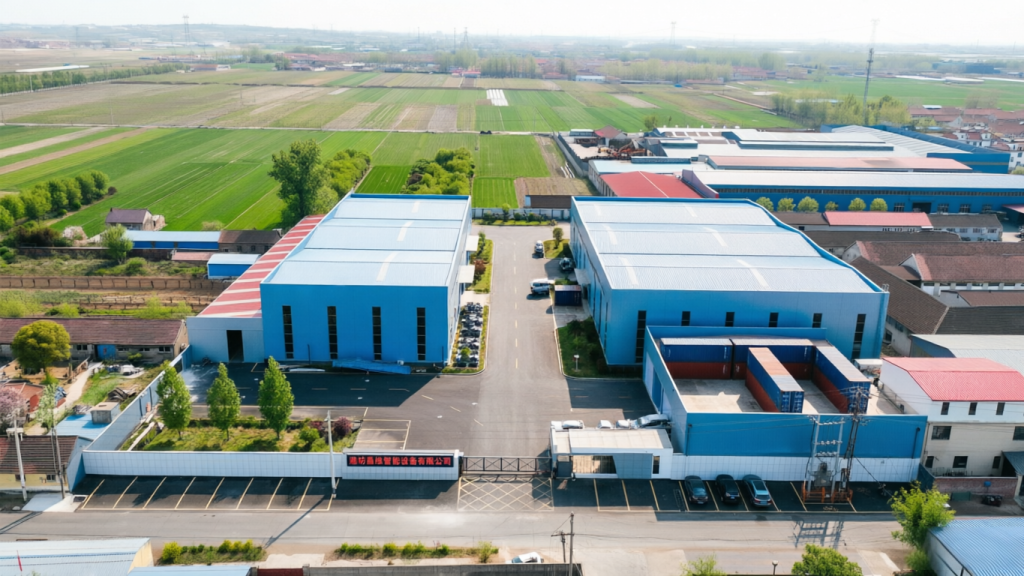
Changwei Intelligent Equipment operates sand casting lines in our Weifang foundry, producing cast iron flywheels, ring gears, and flywheel housings for HINO, ISUZU, FUSO, MAN, DAF, Scania, Volvo, Mercedes, and Chinese heavy-duty engines. Our quality system is certified to IATF 16949, and we work with customers to select the optimal casting approach for each part — whether that means our in-house sand casting capabilities or coordinating with partner foundries for lost foam production on specialized geometries.
If you have a casting requirement and are unsure which process fits best, send us your drawings or OEM references. We will evaluate the geometry, recommend the most cost-effective method, and provide a quotation with clear process specifications.
Get in Touch
Ready to discuss your casting requirements? Contact Irene at Changwei Intelligent Equipment:
Email: [email protected]
Phone / WhatsApp: +86 19953662121
Factory Address: Wangke Industrial Zone, Changyi, Weifang City, Shandong Province, China
Shipping Port: FOB Qingdao | Website: changweiintl.com
Request a QuoteJapanese Flywheel CatalogFlywheel Housing ProductsRing Gear Specifications
Frequently Asked Questions
Q: Is lost foam casting more expensive than sand casting?
A: It depends on volume. Per-unit cost for lost foam is often comparable or slightly lower than sand casting at volumes above 500 pieces because reduced machining offsets the higher casting cost. But at low volumes (under 200 pieces), sand casting wins on total cost because lost foam tooling ($2K–$15K) cannot be amortized across enough units. Always request quotes from both process routes if your supplier offers them.
Q: Can lost foam casting produce ductile (nodular) iron parts?
A: Yes. Lost foam is widely used for both gray iron and ductile iron castings. Ductile iron requires stricter control of pouring temperature and cooling rate to ensure proper graphite nodule formation, but the process itself handles both metallurgies equally well. Many Chinese foundries produce ductile iron flywheel housings and brake drums via lost foam.
Q: What is the typical lead time for a lost foam casting order?
A: For existing tooling (patterns already made), production lead time is 20–30 working days plus shipping. If new tooling is required, add 4–8 weeks for pattern design, fabrication, and trial pours. First-article inspection and approval typically adds another 1–2 weeks. Plan for 10–14 weeks total from drawing approval to receipt of first production parts when starting a new lost foam program.
Q: How do I know if my current parts were made by lost foam or sand casting?
A: Look at the as-cast (unmachined) surfaces. Lost foam castings tend to have a smoother, more uniform surface texture with a characteristic fine pebble appearance. Sand castings show visible grain texture from the sand mold, sometimes with slight mismatch lines where mold halves meet. Another clue: if the part has complex internal passages and no evidence of core prints (the marks left by sand core supports), it was likely lost foam.
Q: Does lost foam casting support different metal alloys?
A: Beyond gray and ductile iron, lost foam is used for aluminum alloys (common in automotive intake manifolds and cylinder heads), steel castings (for high-stress components), and even some copper-base alloys. Each alloy family requires adjustments to coating formulation, pouring temperature, and sand composition. Iron-based alloys remain the dominant application for commercial vehicle parts due to cost and performance balance.
Q: What certifications should a lost foam casting supplier hold?
A: At minimum, ISO 9001 for general quality management. For automotive parts, IATF 16949 is the expected standard — it covers process control, traceability, and continuous improvement specifically for the automotive supply chain. Additional relevant certifications include ISO 14001 (environmental management — important because EPS foam and sand reclamation have environmental implications) and OHSAS 18001 / ISO 45001 (workplace safety). Request copies of valid certificates and verify scope covers “casting” or “metal casting.”