
KAMAZ Flywheel Part Numbers: 740.10, 740.30, 740.60
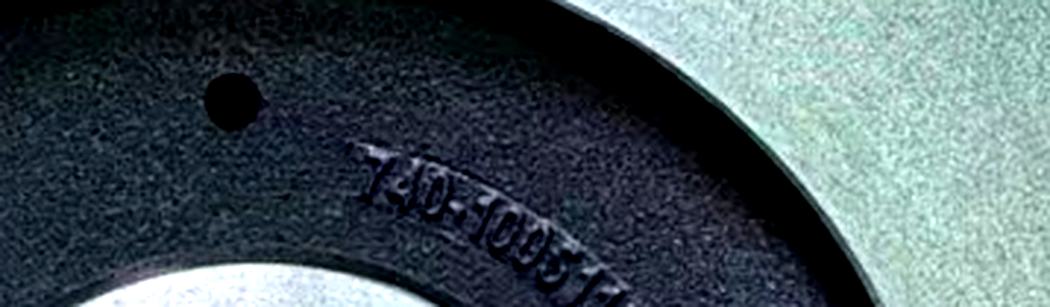
Table of Contents
- The Number On The Part Is Not The Whole Number
- How A 740 Number Is Built
- One Block, Five Generations
- Three Flywheels, Three Numbers
- 113 Teeth Or 125 Teeth
- Two Flywheels That Look The Same
- Why The Crankshaft Decided The Flywheel
- The 1005115 Trap Outside Russia
- Punctuation Moves, Digits Do Not
- What To Send Before You Order
- Weight Is Not In The Catalogue
- What We Could Not Confirm
- Questions Buyers Ask
- Send The Number Off Your Flywheel
The Number On The Part Is Not The Whole Number
A KAMAZ flywheel is easy to photograph and hard to name. Every one of them carries the same block in the middle of the number. Buyers read that block, search for it, and land on a page about a Chinese truck.
That block is 1005115. On a KAMAZ it marks the flywheel position in the engine’s own part list. It repeats under the whole 740 family, from the first Euro-0 engine to the last Euro-3 unit. So the block tells you what the part is. It never tells you which one you need.
What changes is the front of the number. 740.10, 740.30, 740.50, 740.60 and the 7405 series each point at a different generation of the same V8. Each generation got its own flywheel drawing. Some of those drawings are far apart. Two of them are almost the same shape.
We pulled three flywheels out of our workshop and photographed them from four sides each. This article is what the numbers and the castings actually show.
How A 740 Number Is Built
The KAMAZ system reads from the engine outwards. The engine variant comes first, then the functional block, then the variant of that block.
| Piece of the number | Example | What it tells you |
|---|---|---|
| Engine variant | 740.60 | Which 740 generation the flywheel was released with |
| Functional block | 1005115 | The flywheel position in that engine’s part list |
| Variant suffix | 10, 21, 30, 94 | A separate drawing inside the same block |
| Separator | dash or dot | Nothing. Punctuation is not standardised |
Take 740.60-1005115-30. Read from the left, it says: Euro-3 engine family, flywheel, third variant of that drawing. Read from the right, it says nothing at all.
This is the opposite of the Chinese systems we usually write about. On a FAW flywheel the number starts with the part family. On a KAMAZ it starts with the engine. A buyer trained on Chinese numbers reads a KAMAZ number backwards and gets a confident wrong answer.
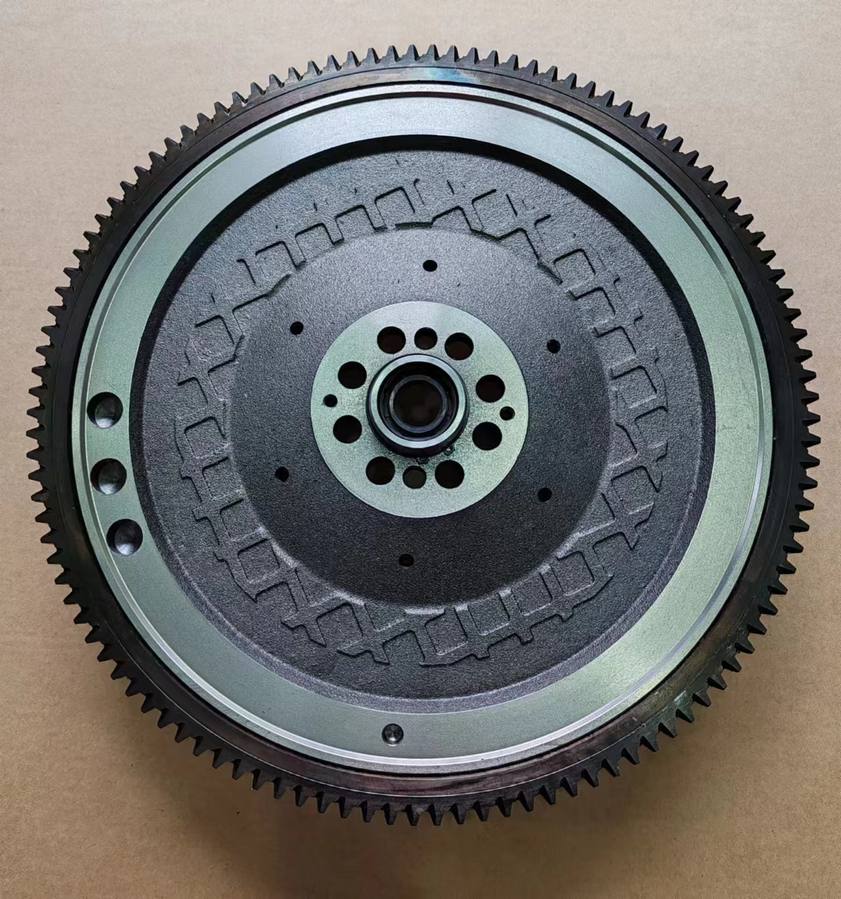
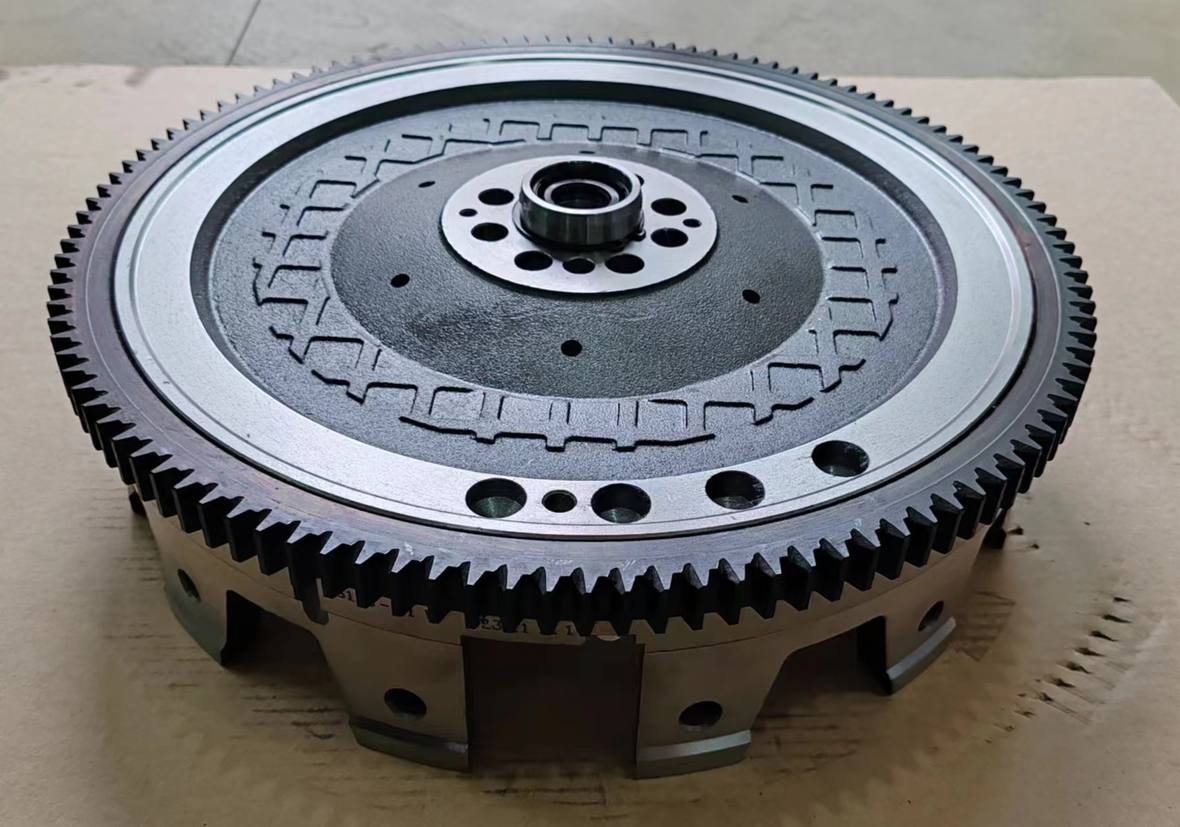
The photo above is 740-1005115.94. The cast pattern inside the friction ring is not decoration. It stiffens a deep dish that is 113.5 mm tall. Hold that number in mind. We come back to it.
One Block, Five Generations
KAMAZ published the engine table themselves, and it is the cleanest reference for this family. Bore and stroke split the range into two groups before emissions even enter the picture.
| Engine variant | Emission step | Bore x stroke | Displacement | Rated speed |
|---|---|---|---|---|
| 740.10 and 740.10-20 | Euro-0 | 120 x 120 mm | 10.86 L | 2600 rpm |
| 7403.10 | Euro-0, turbocharged | 120 x 120 mm | 10.86 L | 2600 rpm |
| 740.11-240 and 740.13-260 | Euro-1 | 120 x 120 mm | 10.86 L | 2200 rpm |
| 740.30-260 and 740.31-240 | Euro-2 on road | 120 x 120 mm | 10.86 L | 2200 rpm |
| 740.50-360 through 740.55-300 | Euro-2, long stroke | 120 x 130 mm | 11.76 L | 1900 rpm |
| 740.60-360 through 740.65-240 | Euro-3 | 120 x 130 mm | 11.76 L | 1900 rpm |
Two things fall out of that table. First, the 120 mm stroke engines stop at 740.31. Everything from 740.35 upwards runs the 130 mm stroke and 11.76 litres. Second, KAMAZ lists 740.30-260 twice, once against the Euro-2 rule and once against the Euro-3 rule for non-road engines.
That double listing is why catalogues disagree about the same flywheel. One supplier files it under Euro-2, another under Euro-3. Both are quoting the same factory table.
A practical note on the 740.70 to 740.72 variants you will see in flywheel listings. They belong to the same Euro-3 group as 740.60 to 740.65. The flywheel drawing is shared. The engine rating is not.
Three Flywheels, Three Numbers
Here is what we could read directly off the parts, next to what the catalogues publish. Empty cells are empty because nobody published a value. We did not fill them in.
| Number on the part | Engine family | Teeth | Outer dia | Height | Clutch holes | Clutch PCD | Evidence |
|---|---|---|---|---|---|---|---|
| 740-1005115.94 | 740.10 and 7403.10, Euro-0 | 113 | 406 mm | 113.5 mm | 8 x 15 mm | 385 mm | Cast on our part, plus catalogue FW0711 |
| 7405-1005115-21 | 7405 series, Euro class | not published | not measured | not measured | Cast on our part, plus trader listing without dimensions | ||
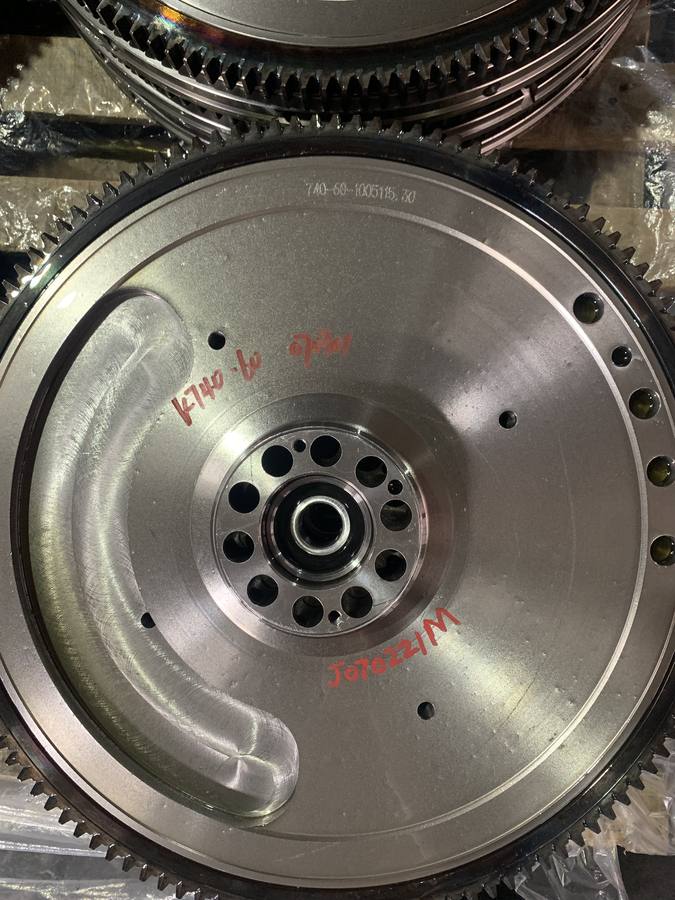
| 740.60-1005115-30 | 740.60 to 740.65, Euro-3 | 125 | 481.5 mm | 75 mm | 10 x 17 mm | 450 mm | Laser etched on our part, plus catalogue FW0708 |
| 740.30-1005115 | 740.30 and 740.31, Euro-2 | 125 | 481.5 mm | 75 mm | 10 x 17 mm | 450 mm | Catalogue FW0707 only, no photo |
Read the last two rows together. The Euro-2 part and the Euro-3 part carry identical published dimensions. Same 125 teeth, same 481.5 mm outer diameter, same 75 mm height, same ten clutch holes on a 450 mm circle.
So a tape measure will not separate them. Neither will a photo. Only the number will.
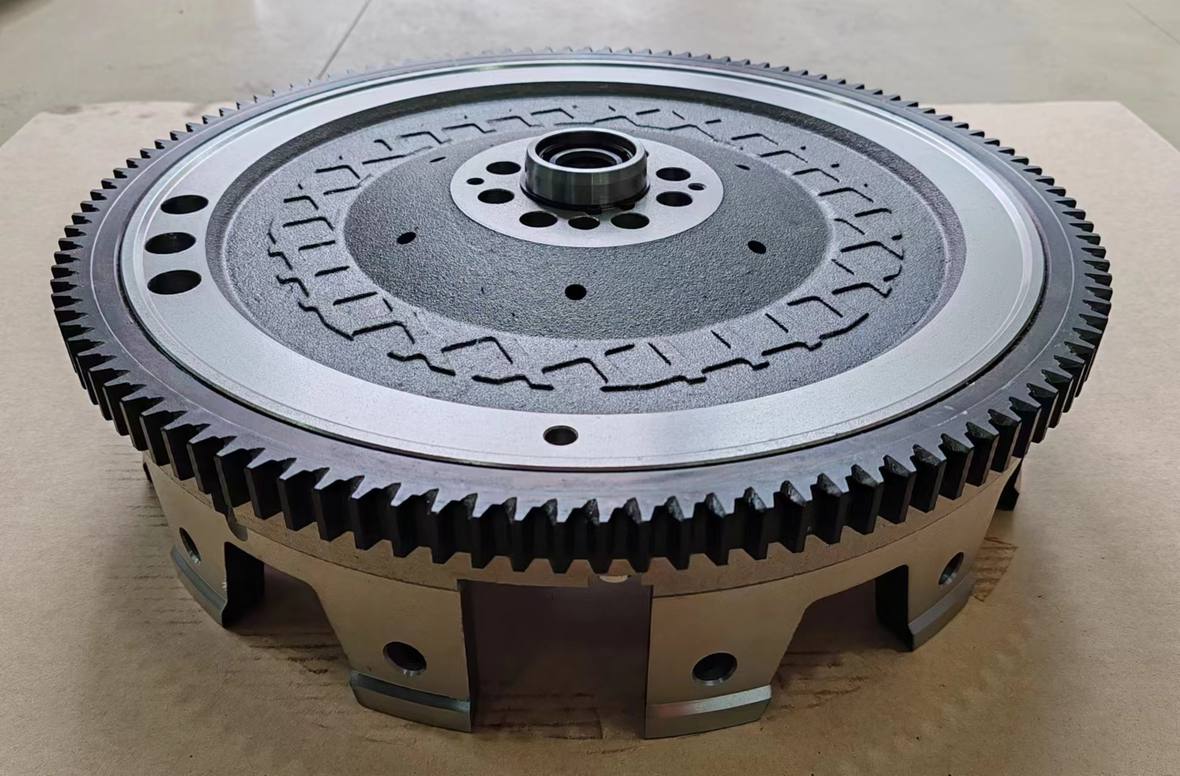
The 406 mm part above and the 481.5 mm part below are not close relatives. One is a deep dish with a 113.5 mm height. The other is a shallow disc at 75 mm. They share a number block and nothing else.
113 Teeth Or 125 Teeth
The tooth count is the fastest filter you have. It splits the family in two, and it does so cleanly.
113 teeth belongs to the Euro-0 era. Two independent supplier families quote that figure for the 740.10 and 7403.10 part, and one of them sells it under two numbers, 740.1005115-94 and 740.1005115-91, with the same 113 tooth ring.
125 teeth belongs to the Euro-2 and Euro-3 flywheels. It appears on 740.30-1005115 and on 740.60-1005115-30 alike, with the same 481.5 mm outer diameter behind it.
A 113 tooth ring is smaller in diameter, so it cannot be swapped for a 125 tooth one. The starter pinion would not reach it, and the bell housing depth is different. This is a fit problem, not a tuning problem.
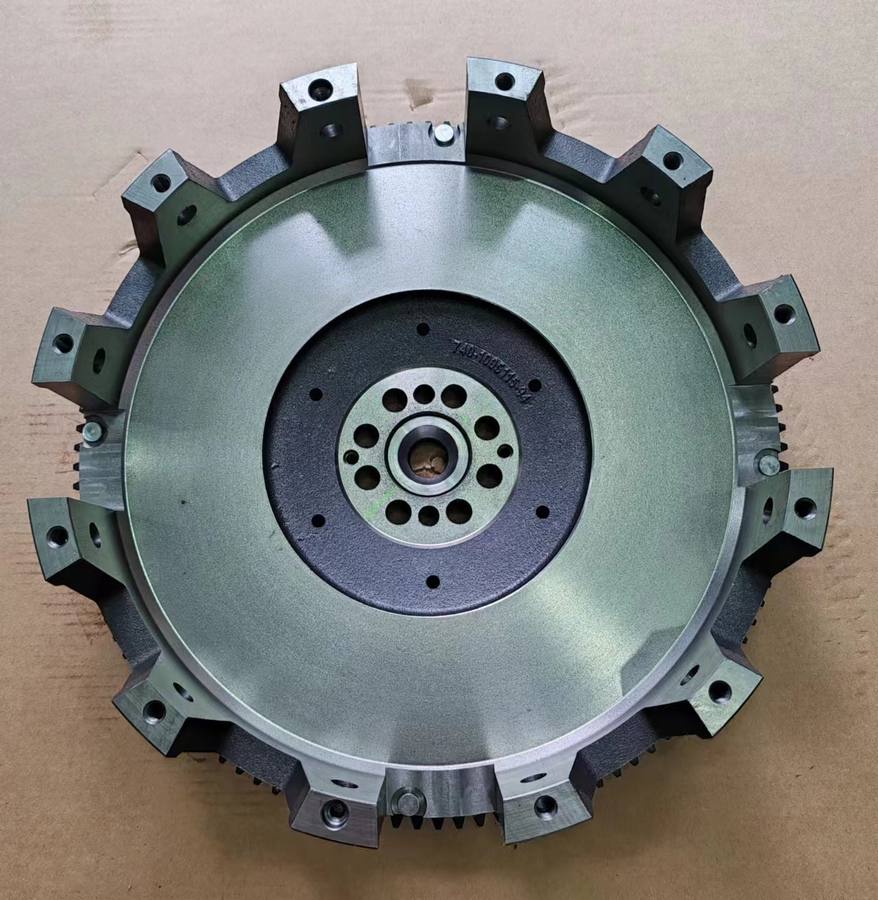
Count teeth by hand if you have the part. Colour a reference tooth with a marker, then count around once. Do not count from a photograph. Cast shadows on a ring gear are easy to miscount, and we do not publish a tooth count we have not seen in a document or counted in the shop.
Two Flywheels That Look The Same
This is the part of the article that saves money. Put these two photos side by side.
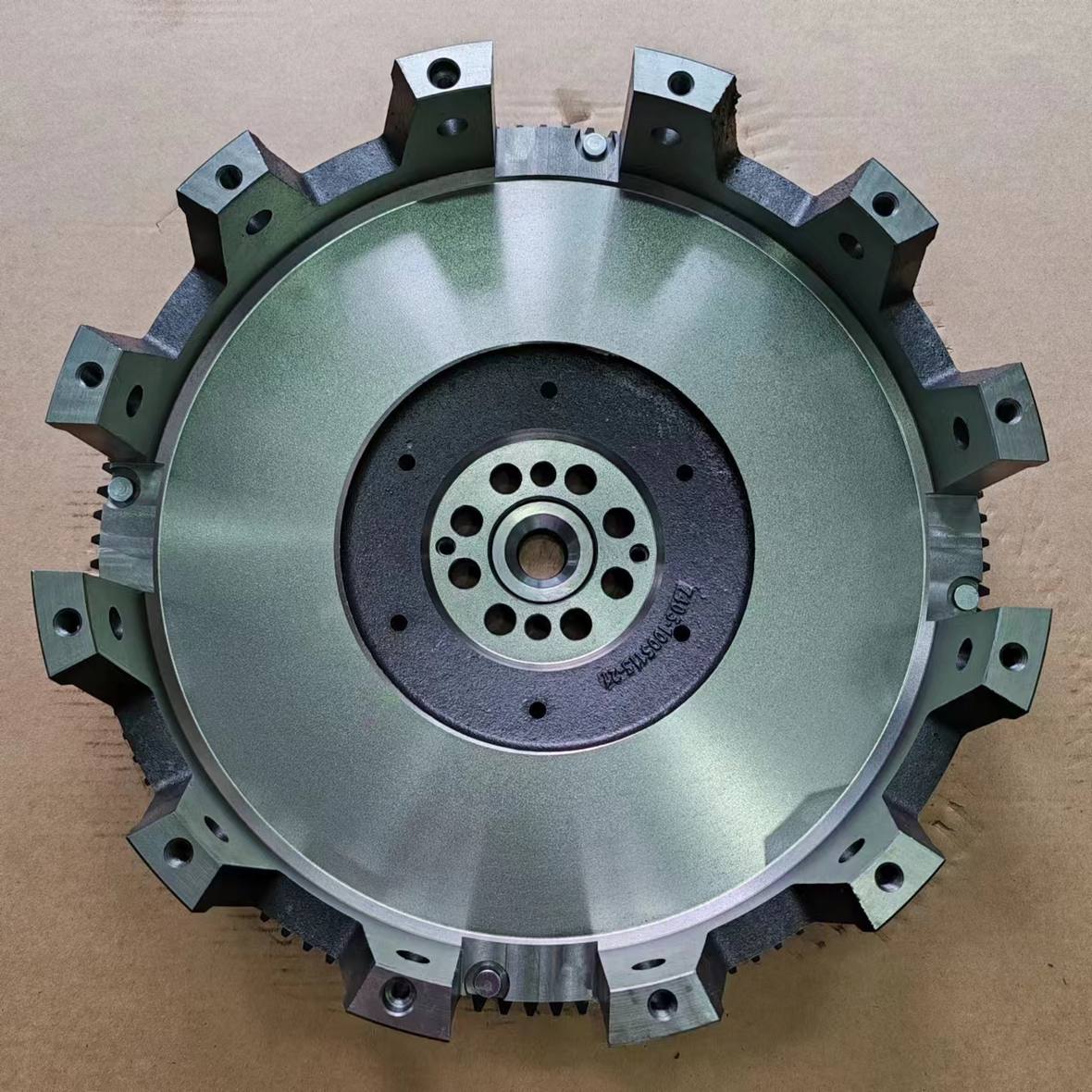
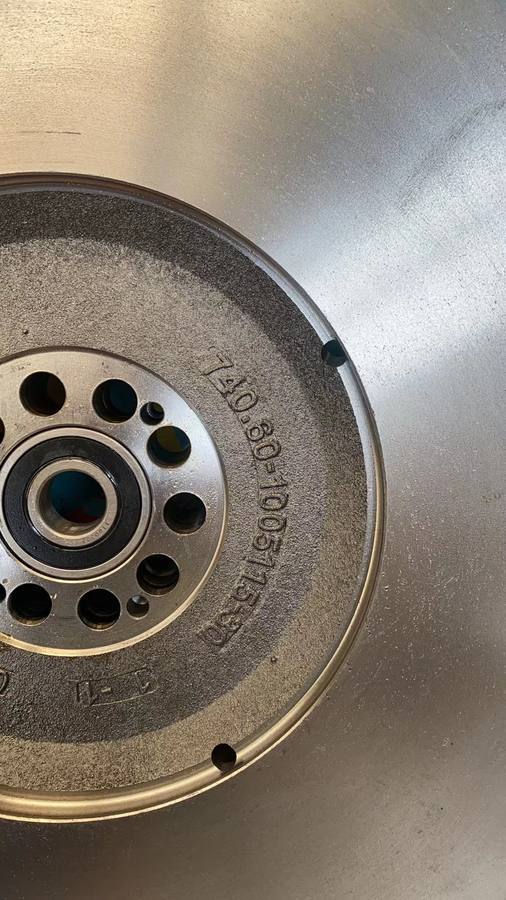
That is 7405-1005115-21. Eight cast lugs around the back, clutch holes drilled through the lugs, a machined friction ring, a ring gear pressed on, a pilot bearing in the centre.
Now look back at the rear of 740-1005115.94. Same eight lugs. Same bolt pattern layout. Same dish depth at a glance. Different number.
The next two photos are the same angle on both parts, one after the other. Put them side by side on screen and there is nothing to choose between them.
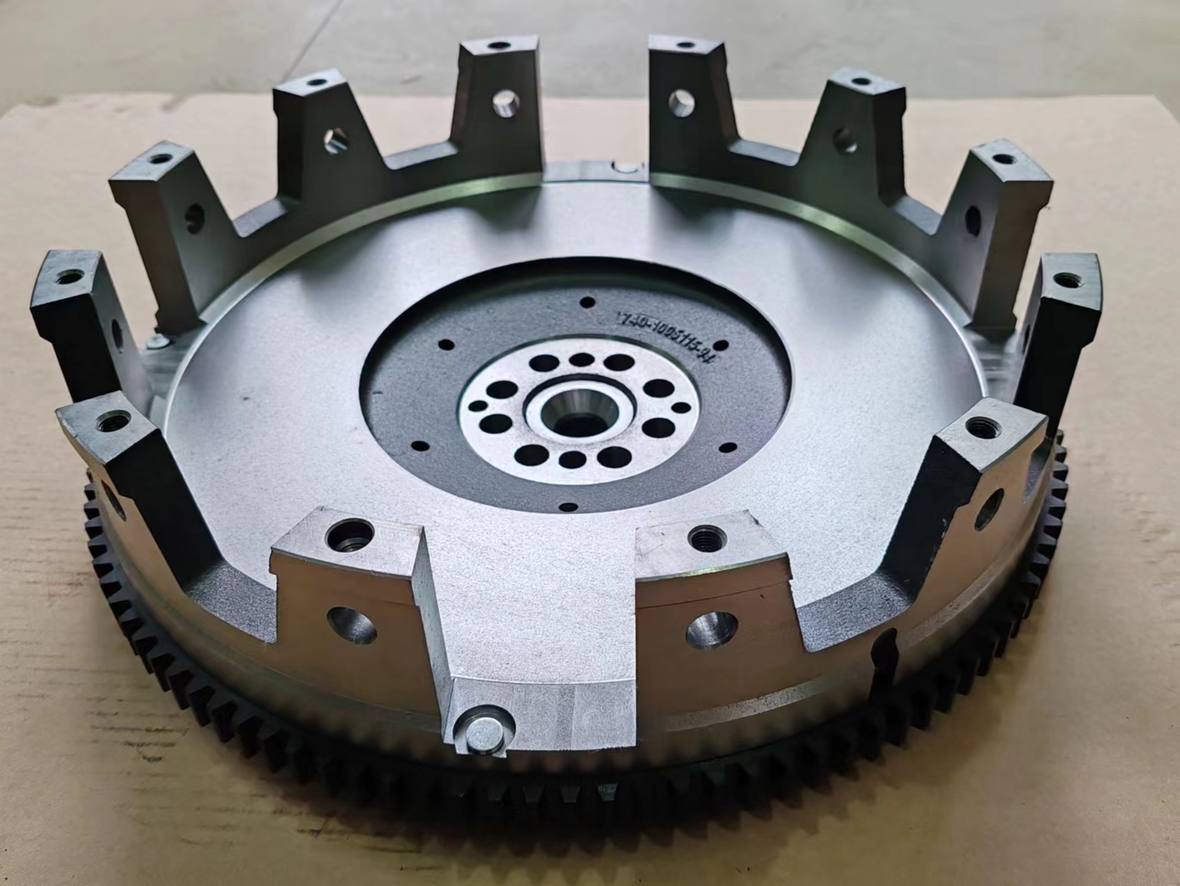
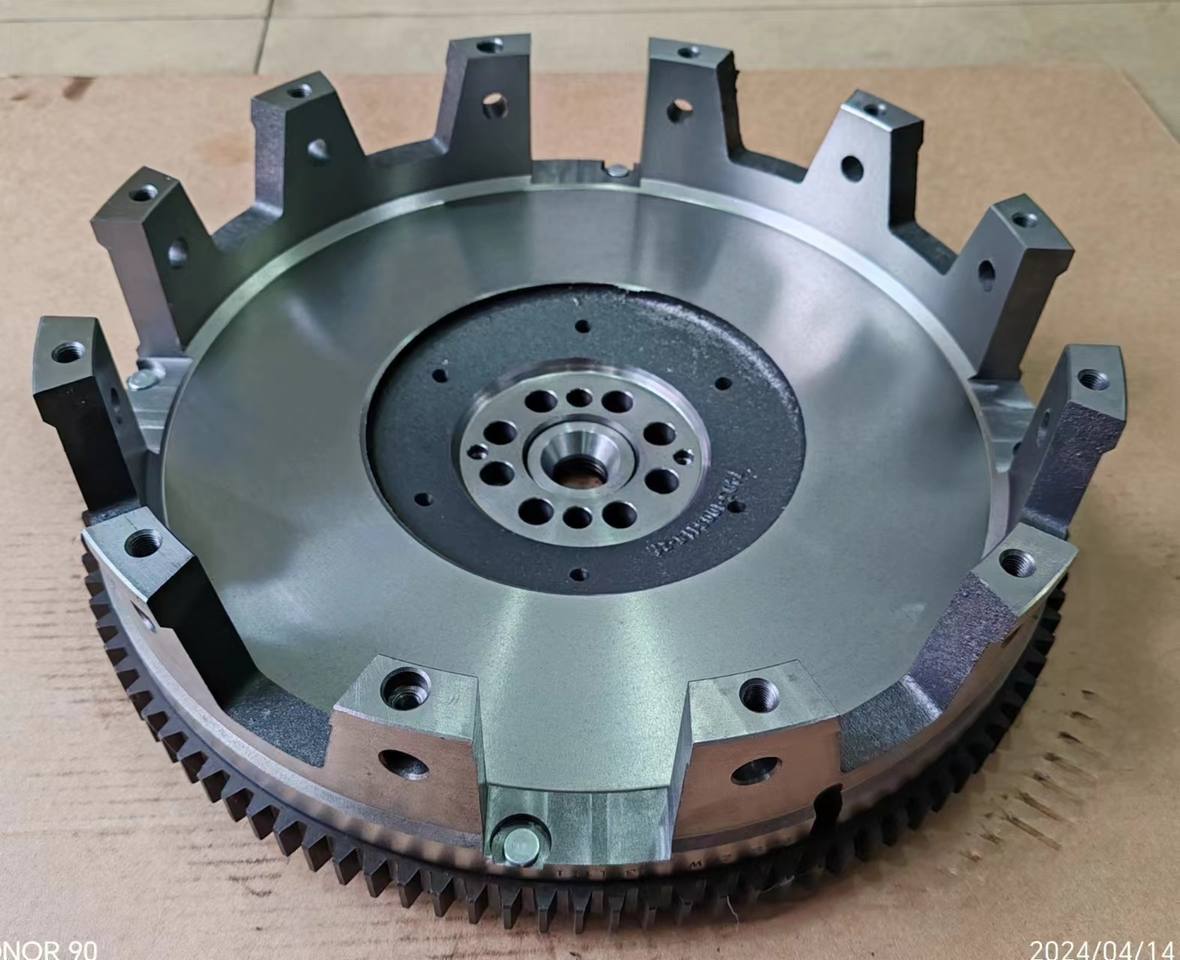
We are not going to claim these two are interchangeable, and we are not going to claim they are not. We have not measured the 7405 part against the drawing, and no public document gives its dimensions. What we can say is that a buyer looking at two photos, or two parts on a bench, will not separate them by eye.
The numbers are cast in different places, which is the only reliable visual difference we found.
On the Euro-0 part the number sits on the inner web, close to the hub, inside a raised ring.
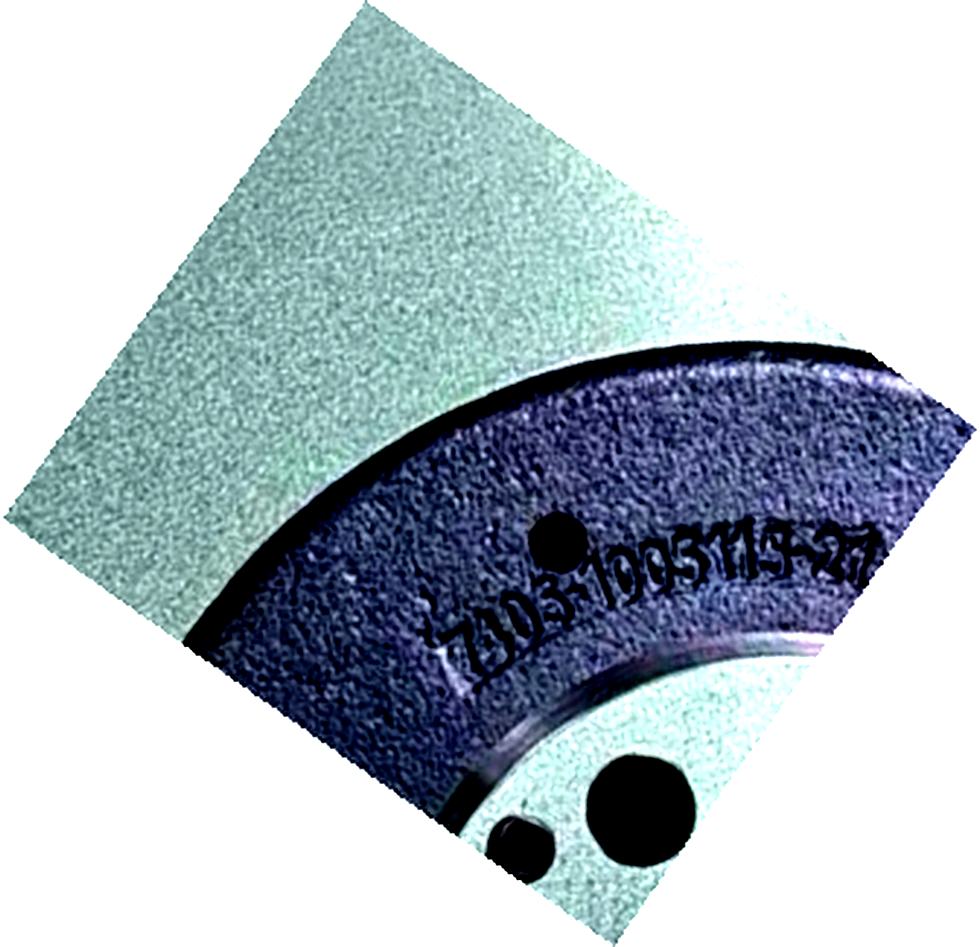
On the 7405 part it sits on the machined hub ring itself. Different position, same style of raised lettering. Ask for that photo before you approve a shipment.
Why The Crankshaft Decided The Flywheel
A flywheel is bolted to a crankshaft flange. Change the flange and the flywheel follows, even if the clutch side stays identical.
One engine reference notes that Euro-2 engines with the 120 mm stroke used a crankshaft with a different flywheel mount. That single sentence explains most of the confusion in this family. The clutch did not change. The crank end did.
It also explains why a part can be dimensionally identical on the clutch side and still be a different number. The published tables describe the clutch face, because that is what buyers measure. The crank interface is buried in the drawing.
When a customer tells us the flywheel fits but will not seat flat, this is the first thing we check. Not the diameter. The crank spigot and the bolt flange.
The 1005115 Trap Outside Russia
Search 1005115 without the 740 in front of it and you leave Russia completely. Chinese truck makers use the same digits for a different part family.
On FAW numbers, 1005115 marks a flywheel and ring gear assembly. 1005117 is the ring gear on its own. 1005120 is a Xichai flywheel assembly. 1005121 is a flywheel housing, not a flywheel at all.
On Dongfeng numbers, 1005115 and 1005120 are two layers of the same part. The first is the assembly, the second is the bare casting under it.
So the identical seven digits mean three different things in three catalogues. A KAMAZ buyer who searches the block alone will find Chinese listings, Chinese prices and Chinese photos. The parts will not fit.
Our own lesson on this came from the other direction. We wrote about a family of Deutz flywheels that look alike and are told apart by an etched number on the rim. Same failure mode, different country.
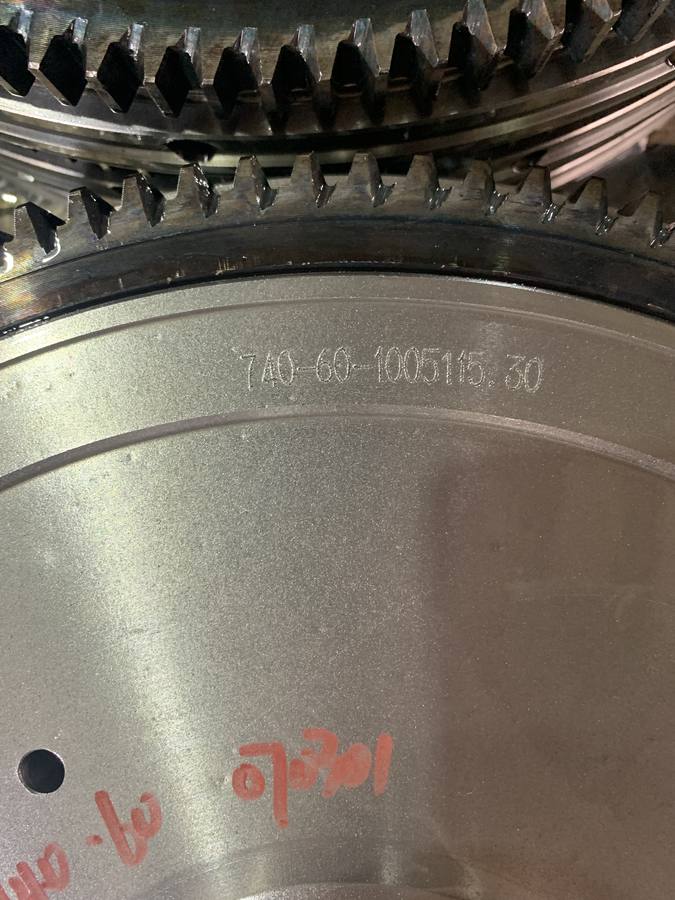
That is a laser etched number, not a casting. The Euro-3 part carries it on the friction face, where it survives machining. Older parts carry a cast number on the web instead. Both are readable. Neither is the same as the number on the invoice.
Punctuation Moves, Digits Do Not
The same flywheel is written several ways in the trade. All of these refer to one part.
- 740.1005115-94, as the catalogue prints it
- 740-1005115.94, as it is cast on the part
- 740 1005115 94, as a buyer typed it into an email
Dots and dashes move. Digits do not. If a customer sends us a number with a dot where we expect a dash, we read the digits and ignore the separator.
The reverse is also true, and it matters more. Dropping a digit or adding one is not a formatting issue. 740.1005115-94 and 740.1005115-91 are two numbers on the same catalogue page, with the same 113 tooth ring. Whether they are truly different parts, or the same part at two revision levels, is not stated anywhere we could find.
What To Send Before You Order
Photographs decide this faster than any form. Send these four and we can usually name the part within a day.
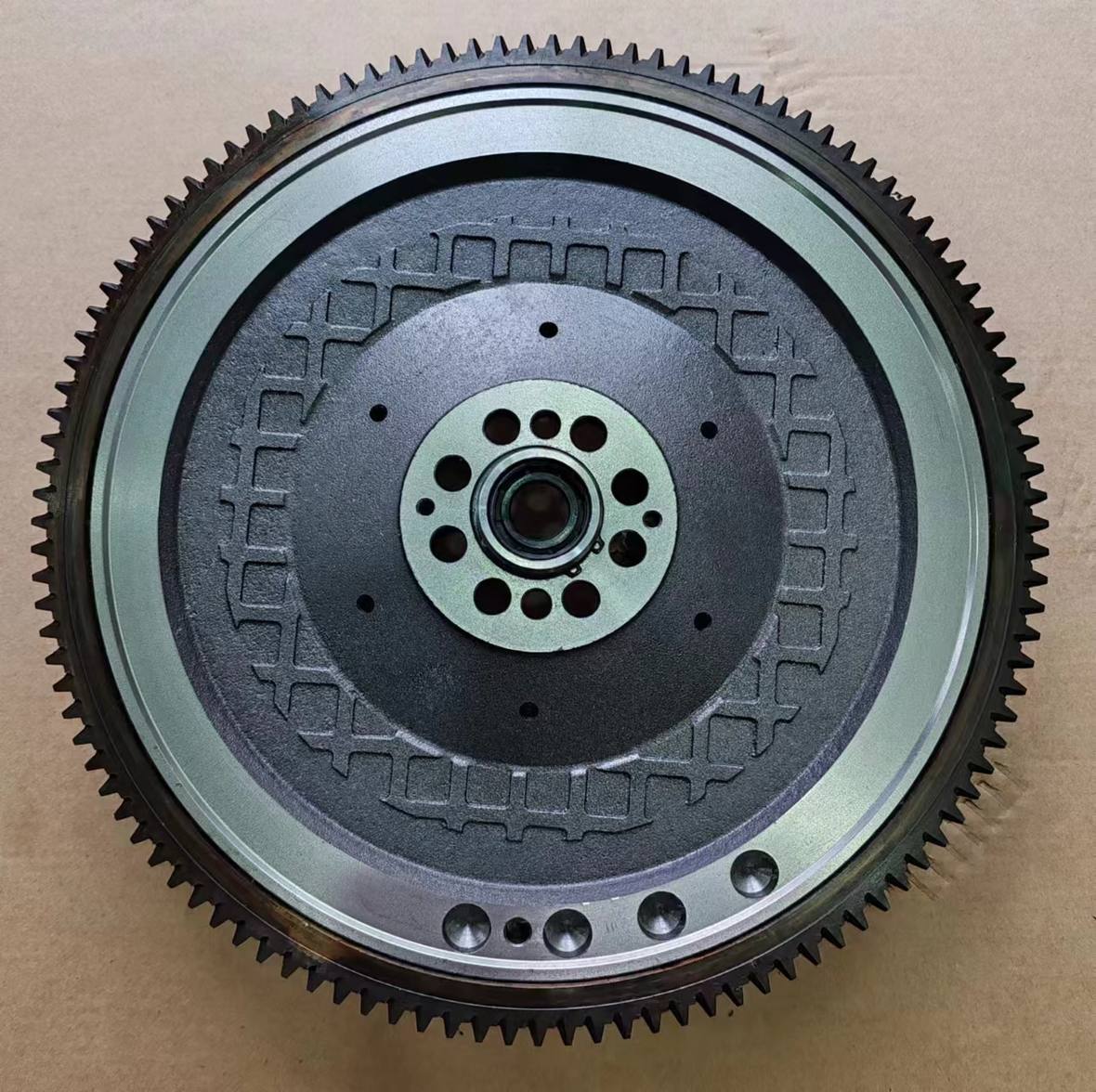
- The number cast or etched on the part, photographed square on, close enough to read.
- The rear face, so we can see the lug layout and the crank flange.
- A side view on a flat surface, so the dish depth shows against a straight edge.
- The engine plate, with the model and the emission step.
If the number is unreadable, measure instead. Outer diameter across the ring gear, overall height from friction face to crank flange, clutch hole count and the circle they sit on, and the tooth count you made by hand.
One number beats four measurements. But four measurements beat a guess.
Weight Is Not In The Catalogue
None of the catalogues we read publish a weight for these flywheels. Customs declarations for the same family do quote figures, and they are not consistent enough to quote as a specification.
One line shows a single 740.50-1005115 at 43.2 kg. Another shows two 740.30-1005115 units at 44.05 kg for the line. A third shows one 7405-1005115 at 30.8 kg and calls it steel.
The declarations do not say whether the figure covers one piece or the whole line. So we weigh each batch before we quote freight, and we tell the customer the weighed figure. Air freight on a part this size is decided by that number, not by a catalogue.
What We Could Not Confirm
Four things stayed open, and we are listing them rather than closing them with a guess.
The dimensions of 7405-1005115-21 are not published anywhere we could reach. The only commercial listing we found has no size data.
The difference between the Euro-2 and Euro-3 flywheels is not documented. Published dimensions are identical. Something must differ, or the numbers would have been merged. We do not know what.
The 740.1005115-91 number appears beside 740.1005115-94 with the same tooth count. No document explains the pair.
YaMZ flywheels sit in the same trade lists and we deliberately left them out. One Chinese catalogue quotes 238-1005120-H at 132 teeth for a YaMZ 238, while our own file folder holds a photo labelled 238-1005115-H. Those are two different blocks. We could not settle which is correct, so we quote neither.
If you need a metallurgy statement, ask for a test report with the batch. We do not certify a material from a photograph.
Questions Buyers Ask
Is 740.30-1005115 the same flywheel as 740.60-1005115-30
Published dimensions are identical: 125 teeth, 481.5 mm, 75 mm height, ten clutch holes on a 450 mm circle. No document states a difference. Treat them as separate numbers until you have both in hand.
Can I fit a 125 tooth flywheel where a 113 tooth one came off
No. The ring gear diameter is different, so the starter will not engage correctly and the bell housing depth will be wrong.
Why does my flywheel number not appear in any catalogue
Because it may be a casting code rather than a part number. Our article on flywheel rim markings covers the difference between functional marks, trace codes and part numbers.
Do you supply the pilot bearing
The parts in our photos carry one. Confirm it on the order, because supply varies with the batch and the destination.
Can you match a sample without a number
Yes, with measurements and photographs. Send the four photos listed above and the measured dimensions, and we will compare against the drawings we hold.
Do you make these in cast iron or steel
Our KAMAZ flywheels are cast, then machined, with a separate ring gear pressed on. Material grade is stated on the drawing for each part, so ask per number. Our guide to cast iron grades explains what the designations mean.
Send The Number Off Your Flywheel
If you have the part in your hand, photograph the number and send it. If you only have the engine model and the emission step, send those and we will narrow it down.
We cast and machine flywheels, ring gears and flywheel housings in our own foundry in Shandong, to IATF 16949. We can work from a number, a drawing or a sample.
Send your number through our quote page. If you want to see the wider range first, start at the flywheel product overview, or look at ring gears and flywheel housings separately.
Two related reads from this workshop: why cast iron grades are written the way they are, and what the marks on a flywheel rim actually mean.