How to Choose a Flywheel Manufacturer in China
A Complete Sourcing Guide for Commercial Vehicle Buyers
Table of Contents
- Why Source Flywheels from China?
- The Non-Negotiable: IATF 16949 Certification
- How to Verify a Factory’s Real Production Capability
- Quality Control: What to Look For
- Understanding MOQ, Pricing, and Payment Terms
- Shipping and Logistics: FOB Qingdao Explained
- Red Flags That Should Make You Walk Away
- A Checklist Before You Place Your First Order
- Conclusion
Why Source Flywheels from China?
China exported $93.43 billion worth of auto parts in 2024, ranking first globally. For commercial vehicle flywheels specifically, Chinese manufacturers now supply replacement parts to markets across Southeast Asia, the Middle East, Africa, and Latin America — regions where OEM pricing often exceeds what local fleets can sustain.
The math is straightforward. A cast iron flywheel that costs $45–$65 from an authorized dealer in Southeast Asia typically lands at $12–$22 per unit when sourced directly from a qualified Chinese foundry, even after factoring in sea freight from Qingdao Port. The savings come not from cutting corners on material or process, but from China’s mature casting ecosystem: abundant raw iron supply, specialized machining clusters, and decades of accumulated expertise in gray iron and ductile iron casting.
That said, the price gap between a reliable manufacturer and a trading company posing as one can be just as wide. The real challenge is not finding a cheap quote — it is identifying which suppliers actually own their production lines, hold genuine certifications, and can deliver consistent quality across multiple container loads.
This guide walks through every step of that evaluation process.
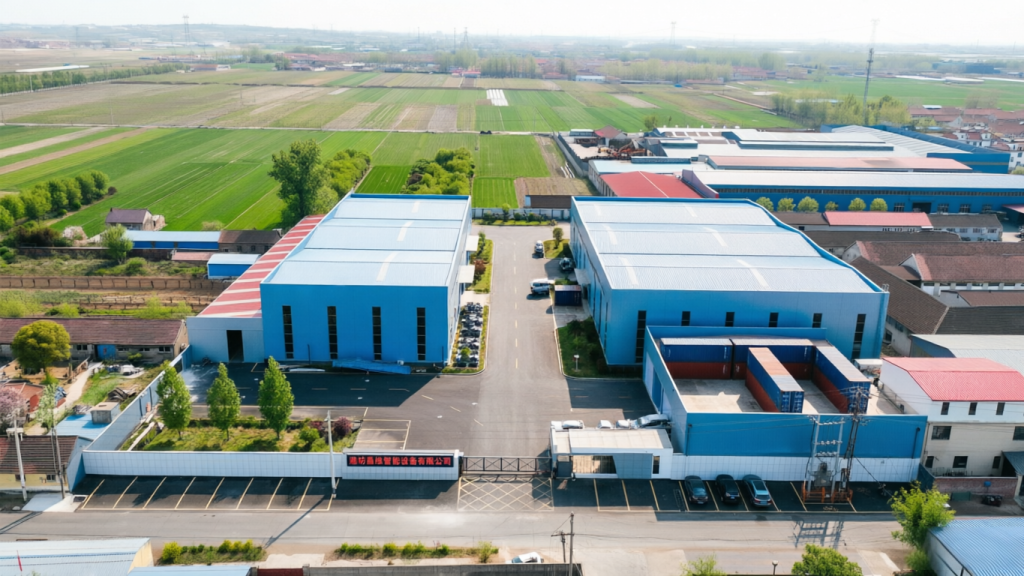
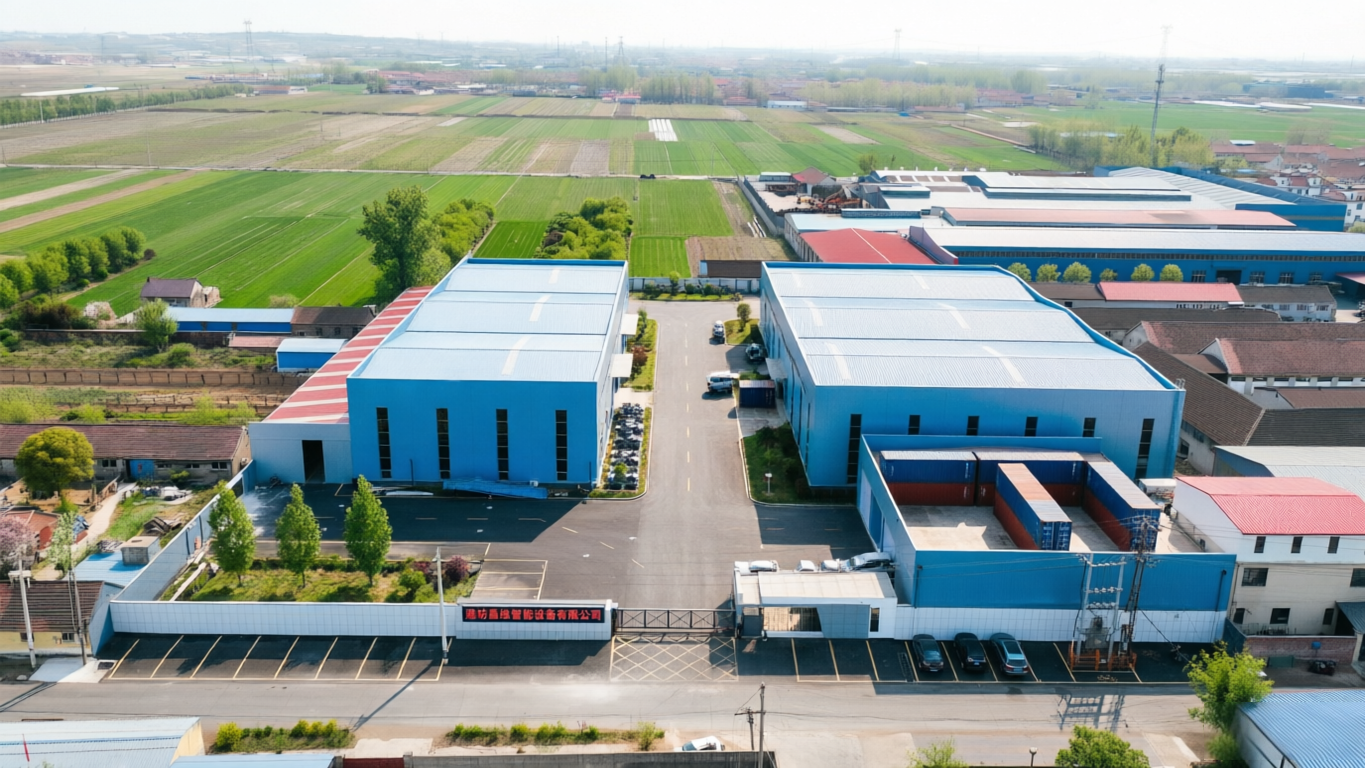
Figure 1: A qualified flywheel manufacturer should operate from a dedicated production facility like this one in Weifang, Shandong Province — China’s casting industry hub.
The Non-Negotiable: IATF 16949 Certification
If a supplier claims to serve the automotive aftermarket but cannot produce a valid IATF 16949 certificate, stop the conversation there. This certification is the global baseline for any company that manufactures components destined for automotive applications. It is stricter than ISO 9001 because it adds automotive-specific requirements around process control, defect prevention, and continuous improvement.
What IATF 16949 actually means in practice:
- Every batch of flywheels must be traceable back to its raw material lot number. If a quality issue surfaces six months after delivery, the manufacturer can identify exactly which heat of iron was used and which production shift processed it.
- The foundry maintains documented procedures for every step — from sand mold preparation through final dynamic balancing. These are not informal shop-floor habits; they are written, audited, and signed off by management.
- An accredited third-party body conducts annual surveillance audits. The certificate has an expiration date and can be revoked if non-conformities are not corrected within specified timeframes.
When you request a certificate, ask for the full document, not just a logo on a letterhead. Check the issuing body (common ones include TUV, SGS, BSI, and domestic bodies like CQC), verify the scope covers “casting of automotive components” or similar language, and confirm the certificate number against the registrar’s online database if available.
Suppliers who deflect or delay when you ask for the original certificate are usually hiding something.
How to Verify a Factory’s Real Production Capability
Alibaba profiles and company websites can make a three-person workshop look like an industrial conglomerate. Here is how to separate image from reality.
Request a video call tour. A legitimate manufacturer will walk you through the molding area, the melting furnace, the machining line, and the inspection station during a live video call. Watch for details: Is the floor organized? Are workers wearing proper PPE? Do you see actual equipment running, or just staged photos on the wall?
Ask for photos of recent shipments. Not stock photos from a catalog — actual photos of pallets being loaded into containers, with visible shipping labels and destination ports. A factory that ships regularly will have these on hand within hours.
Check their export history. Request references from existing customers in your region or a similar market. Two or three verifiable contacts who have received at least three orders carry more weight than a decade-old testimonial page.
Verify business registration. In China, every manufacturing entity has a Unified Social Credit Code (统一社会信用代码). Cross-reference this code on government business registration platforms to confirm the company name, registered capital, legal representative, and operational status. A mismatch between the name on their website and the registered entity is a warning sign.
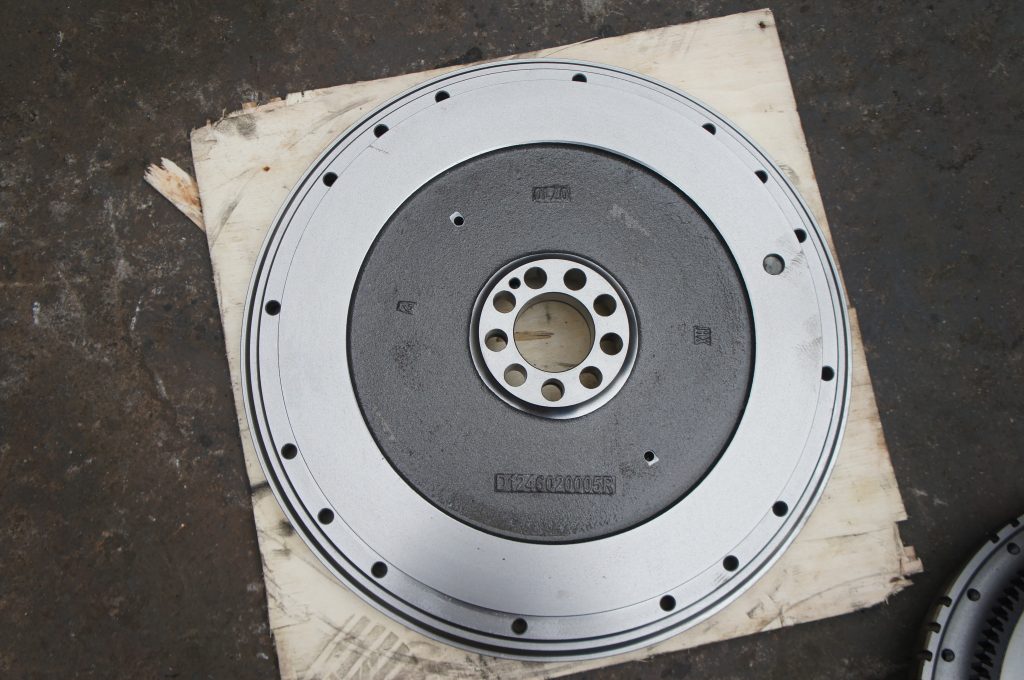
Figure 2: A freshly machined cast iron flywheel awaiting ring gear press-fit. The surface finish and dimensional accuracy visible here are direct indicators of the manufacturer’s machining capability.
Quality Control: What to Look For
Flywheels are safety-critical components. A cracked flywheel at highway speed can destroy a transmission, damage the clutch assembly, and create road debris hazards. Quality control is therefore not optional — it is the single most important factor separating professional foundries from opportunistic traders.
Here are the specific QC checkpoints a qualified manufacturer should have in place:
Material composition testing. Each batch of molten iron should be tested with a spectrometer before pouring. The target chemistry for typical automotive flywheel castings falls within these ranges: Carbon 3.2–3.5%, Silicon 1.8–2.2%, Manganese 0.5–0.8%, Sulfur under 0.12%, Phosphorus under 0.15%. Deviations outside these ranges affect machinability, wear resistance, and fatigue life.
Dimensional inspection. Critical dimensions — outer diameter, pilot bore diameter, bolt circle diameter, mounting face flatness, and total runout — must be measured against the engineering drawing using calibrated instruments. Tolerances for commercial vehicle flywheels typically range from ±0.05 mm on critical diameters to ±0.15 mm on non-critical features.
Dynamic balancing. Every finished flywheel must pass dynamic balancing, typically to G6.3 or better grade per ISO 1940. Unbalanced flywheels cause vibration, accelerate bearing wear, and lead to premature clutch failure. Ask the supplier what balancing standard they use and whether they retain balance records for each serial number.
Surface hardness testing. The friction face where the clutch disc contacts the flywheel should meet specified hardness requirements, usually HB 170–220 for gray iron castings. Hardness that is too low accelerates wear; hardness that is too high increases the risk of cracking under thermal stress.
Ring gear assembly quality. For flywheels with shrink-fit ring gears, the interference fit tolerance and heating temperature during assembly directly affect gear retention. Loose ring gears are one of the most common field failures in low-quality aftermarket flywheels.
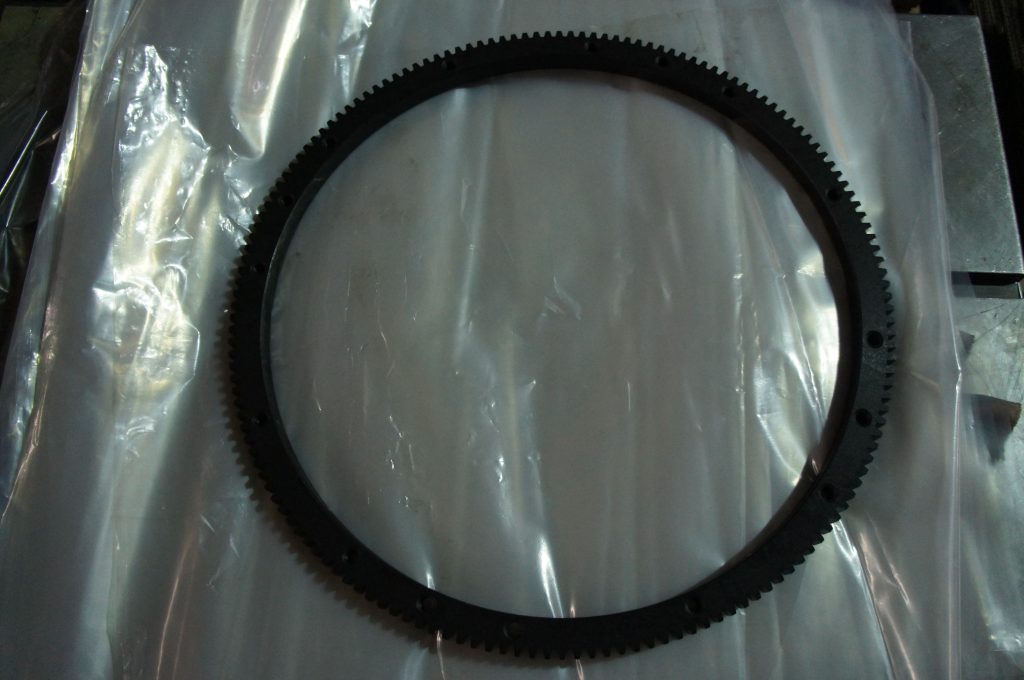
Figure 3: Ring gears are precision-machined components that must meet strict tooth profile and dimensional tolerances before assembly onto the flywheel body.
Understanding MOQ, Pricing, and Payment Terms
Minimum order quantities vary widely depending on the manufacturer’s setup cost structure and their existing tooling inventory.
For standard models that match common OEM part numbers (HINO E13C, ISUZU 6BG1/6WF1, FUSO 6D14/6D16, etc.), most established foundries can accept MOQs of 50–100 pieces per model if you are willing to accept their existing packaging. Custom patterns or new models that require new tooling typically require 500+ pieces to amortize the pattern cost, which ranges from $800 to $3,000 depending on complexity.
On pricing, expect these rough benchmarks for medium-duty commercial vehicle flywheels (cast iron, machined, with ring gear assembled):
| Specification | Unit Price Range (EXW) | Notes |
|---|---|---|
| Standard model, 50–100 pcs | $14 – $22 | Higher end for larger diameters |
| Standard model, 200+ pcs | $11 – $17 | Volume discount applies |
| Custom/new model, 500+ pcs | $18 – $28 | Includes tooling amortization |
| Ring gear only (separate) | $3 – $7 | Depends on tooth count and diameter |
Payment terms in the Chinese auto parts industry commonly follow a 30% deposit / 70% balance before shipment structure for new customers. Established buyers with 3+ successful orders may negotiate to 30% / 70% against BL copy or even net-30 days for very large accounts. Be wary of suppliers demanding 100% upfront — this is unusual in B2B parts trade and suggests cash flow problems on their end.
Shipping and Logistics: FOB Qingdao Explained
Most Shandong-based foundries ship via Qingdao Port, one of China’s top ten container ports and roughly 2–3 hours by truck from the Weifang casting cluster. FOB (Free On Board) Qingdao means the seller handles all costs up to the point where the loaded container is aboard the vessel at Qingdao terminal. From that moment, freight, insurance, and destination charges are the buyer’s responsibility.
For reference, here are approximate sea freight costs from Qingdao to major destination ports (20-foot container, 2025–2026 rates):
| Destination Region | Transit Time | Approx. Freight (20ft GP) |
|---|---|---|
| Southeast Asia (Bangkok, Jakarta) | 7–12 days | $350 – $550 |
| Middle East (Dubai, Jeddah) | 18–25 days | $650 – $950 |
| South America (Callao, Santos) | 35–45 days | $1,400 – $2,100 |
| West Africa (Lagos, Tema) | 30–40 days | $1,200 – $1,800 |
A 20-foot container can hold approximately 300–500 medium-duty flywheels depending on packaging density. Your supplier should provide a packing list with exact piece count, gross weight, and CBM (cubic meters) well before the loading date so you can arrange customs clearance at the destination port.
Red Flags That Should Make You Walk Away
Some warning signs are obvious. Others are subtle enough that inexperienced buyers miss them until the first container arrives with defects.
No physical address on their website or Alibaba profile. If the only contact method is a Gmail address and a WhatsApp number with no street address, you are likely dealing with a trader, not a manufacturer.
Certificates that do not match the company name. Some companies display certificates issued to a different legal entity — sometimes a parent company, sometimes a completely unrelated firm that sold them the rights to use the logo. Always cross-check the certificate holder name against the company you are contracting with.
Unrealistically low quotes. If a supplier offers a price 30–40% below the market range shown above, they are either substituting inferior materials (recycled scrap iron instead of virgin charge), skipping critical machining operations, or planning to deliver a partial order and disappear. Cast iron has a well-established commodity cost floor; prices too good to be true usually are.
Reluctance to provide samples. A confident manufacturer will send 1–2 sample units at cost price (you pay freight) so you can verify fitment and quality before committing to a production order. Suppliers who refuse samples or demand payment for “sample molds” on standard products are avoiding scrutiny.
Vague responses to technical questions. When you ask about balancing grade, material specification, or traceability system, a knowledgeable supplier gives specific answers. Evasive replies like “our quality is very good” or “we have many satisfied customers” without technical detail indicate the person you are talking to does not understand their own product.
A Checklist Before You Place Your First Order
Use this checklist during your evaluation. A supplier should clear most of these items before you transfer any funds:
- Valid IATF 16949 certificate (verify issuing body and expiration date)
- Business registration matches the contracting entity name
- Physical factory address confirmed via satellite map or video tour
- Recent shipment photos or container loading documentation provided
- Material test reports (spectrometer analysis) available upon request
- Dimensional inspection report with actual measurements vs. drawing tolerances
- Dynamic balancing standard and grade specified (e.g., ISO 1940 G6.3)
- Sample unit received and verified for fitment and surface quality
- Clear payment terms in writing (deposit %, balance trigger, accepted methods)
- Packing list template reviewed (piece count per carton, total CBM, gross weight)
- Lead time confirmed in writing with penalty clause for delays exceeding 2 weeks
- At least one verifiable customer reference in your region or a comparable market
Conclusion
Sourcing flywheels from China can reduce your procurement cost by 60–70% compared to buying through traditional distribution channels — but only if you invest time upfront to vet the manufacturer properly. The suppliers worth working with will welcome your questions, provide documentation proactively, and demonstrate transparency at every stage of the conversation.
If you are looking for a qualified partner, Changwei Intelligent Equipment operates an IATF 16949 certified foundry in Weifang, Shandong, specializing in cast iron flywheels, ring gears, and flywheel housings for HINO, ISUZU, FUSO, MAN, DAF, Scania, Volvo, Mercedes, and Chinese heavy-duty engines (Weichai, Yuchai, Sinotruk). Our facility includes sand casting lines, CNC machining centers, dynamic balancing stations, and a dedicated quality inspection lab. Shipments load from Qingdao Port weekly.
We offer free samples for standard models to qualified buyers. Reach out with your part numbers or OEM references, and we will respond within 24 hours with specifications, pricing, and lead time.
Get in Touch
Ready to discuss your flywheel requirements? Contact Irene at Changwei Intelligent Equipment:
Email: [email protected]
Phone / WhatsApp: +86 19953662121
Factory Address: Wangke Industrial Zone, Changyi, Weifang City, Shandong Province, China
Shipping Port: FOB Qingdao | Website: changweiintl.com
Request a QuoteJapanese Flywheel CatalogFlywheel Housing ProductsRing Gear Specifications
Frequently Asked Questions
Q: What is the typical lead time for a flywheel order from a Chinese manufacturer?
A: For standard models already in production, lead times range from 15–25 working days after deposit confirmation. New models requiring pattern making add 25–35 days for tooling development before production begins. During Chinese New Year (late January to mid-February), add 2–3 weeks as most factories shut down for 2–3 weeks.
Q: Can I visit the factory before placing a large order?
A: Absolutely, and reputable manufacturers encourage it. Weifang is accessible via Qingdao Airport (1.5-hour drive) or Beijing/Shanghai with a connecting flight. Most factories will arrange airport pickup, hotel booking, and a full facility tour including the casting floor, machining line, QC lab, and warehouse. A factory visit is the single most effective way to verify capabilities before committing to a five-figure order.
Q: What is the difference between EXW, FOB, and CIF pricing?
A: EXW (Ex Works) means you pay for pickup at the factory door and handle all logistics yourself. FOB (Free On Board) means the supplier delivers to the port and loads the container; you pay ocean freight. CIF (Cost Insurance and Freight) means the supplier handles everything up to your destination port, including marine insurance. For first-time buyers, FOB is recommended — it gives you control over freight forwarder selection while keeping logistics simple.
Q: How do I know if a flywheel will fit my vehicle?
A: Provide the supplier with either the OEM part number stamped on your old flywheel, the engine model (e.g., HINO E13C, ISUZU 6BG1), or key dimensions (outer diameter, bolt circle diameter, pilot bore diameter, crankshaft pilot diameter, number of mounting bolts, ring gear tooth count). A competent manufacturer can cross-reference these specs against their catalog and confirm compatibility before production.
Q: What warranty should I expect from a Chinese flywheel manufacturer?
A: Industry standard for aftermarket cast iron flywheels is 12 months or 30,000 kilometers, whichever comes first. Some manufacturers offer 18–24 months for premium-grade products with upgraded material specifications. Warranty terms should be clearly stated in the proforma invoice. Note that warranty claims typically require returning the defective unit for failure analysis before replacement is shipped.
Q: Are there trade shows where I can meet Chinese flywheel manufacturers in person?
A: Yes. The Automechanika Frankfurt show (September, Germany) and Automechanika Shanghai (November, China) attract large delegations of Chinese casting and machining suppliers. The Canton Fair (April and October, Guangzhou) also has an auto parts section. Many manufacturers also exhibit at regional shows in Southeast Asia (Bangkok International Motor Show, Indonesia International Auto Show) and the Middle East (Automechanika Dubai). Meeting face-to-face at a trade show allows you to collect samples, review certifications in person, and establish a relationship before placing orders.