Cummins K19 K38 K50 Cylinder Head: 3811985, 3646323, and Why One Engine Needs Six of Them
Cummins K19 K38 K50 Cylinder Head: 3811985, 3646323, and Why One Engine Needs Six of Them
A buyer emails us a photo of a Cummins cylinder head and asks for one piece. We recognise the casting as a big-bore K-series head, and then we have to tell him something he did not expect: one piece will not repair his engine. If it is a K19 he needs six. If it is a K38 he needs twelve. If it is a K50 he needs sixteen.
That mismatch is the single most common mistake we see on this part number family, and it is worth twenty minutes of your time before you place an order.
Table of Contents
- What 3811985 and 3646323 actually are
- One head per cylinder — the K-series architecture
- How this differs from the NT855 head
- How to tell the two generations apart before you order
- What the head looks like at each stage of production
- Torque and fitment notes we are asked about every week
- The injector seal ring diamond marks
- How to send us a request that gets a same-day answer
What 3811985 and 3646323 actually are
Part number 3811985 is a cylinder head for the Cummins K-series big-bore engine family. It covers K19, KTA19 and QSK19, and the same head design carries up through K38, KTA38, QSK38, K50, KTA50 and QSK50.
The number you should be aware of is 3646323. This is the current replacement for 3811985. If you are rebuilding an engine and your parts book still shows 3811985, 3646323 is what you will be quoted today. It also supersedes the older 3081070 and 3811981.
There is a wider family of numbers that get quoted interchangeably across the aftermarket — 3646324, 3021692, 3811988, 3640321, 3640320, 3068401, 3072438, 3081073, 3639984, 3009138, 3018868, 3068402, 3646326, 5581141 and 3081065 among them. These are typical part numbers you will meet in third-party catalogs.
A straight answer on all of them: a number in a catalog only narrows the range. It does not confirm fitment on its own. For a big-bore Cummins head, confirmation comes from four things read together — engine model, cylinder count, valve configuration, and the casting details on the head in your hand. We will come back to this.
One head per cylinder — the K-series architecture
Here is the thing that catches people out. On the K19, the head is a single-cylinder unit. One head serves one cylinder and carries four valves — two intake, two exhaust.
That means the bill of materials is longer than most people expect:
| Engine | Cylinder arrangement | Heads required per engine |
|---|---|---|
| K19 / QSK19 | Inline 6 | 6 |
| K38 / QSK38 | V12 | 12 |
| K50 / QSK50 | V16 | 16 |
This is confirmed across multiple independent parts catalogs, and it is the reason a single-head quote for a K19 looks odd if you were expecting to order “a set.”
The upside of the design is real, and worth understanding. Because each cylinder has its own head, you can replace one damaged unit without disturbing the other five. On a large stationary or marine engine, that is a significant maintenance advantage. A cracked head on cylinder three does not become an engine-out job.
The downside is inventory. If you are a distributor supporting a fleet of K19 generators, the practical spare stock is a multiple of six. If you support K38 or K50, the multiples get larger fast.
Both engine families share the same bore and stroke — 159 mm by 159 mm — with K19 at 19 litres and K38 at 38 litres. The K19 is an inline six; the K38 is a V12. Head design is shared across the range, but cylinder count is not, so always state the engine model rather than just the head number.
How this differs from the NT855 head
This is where most quoting errors originate, so it deserves its own section.
The Cummins NT855 — the 14-litre inline six that sits in a completely different product family — uses a head that serves two cylinders. A single NT855 head covers two combustion chambers with two valves per cylinder, twelve valves in total across the engine.
Put the two side by side:
| K19 / K38 / K50 | NT855 | |
|---|---|---|
| Cylinders per head | 1 | 2 |
| Valves per cylinder | 4 | 2 |
| Heads per inline-six engine | 6 | 3 |
| Total valves on an inline six | 24 | 12 |
A buyer who works mostly on NT855 engines and then orders for a K19 will order three heads and be short by half. A buyer who works on K19 engines and orders six for an NT855 will have three spares on the shelf.
The two heads are not interchangeable in any way, and they are not visually similar once you know what you are looking for. The NT855 head is a long casting covering two bores. The K-series head is a compact single-bore block with a near-square footprint.
How to tell the two generations apart before you order
Because 3811985 and 3646323 both fit the same engines, the practical question is which one you are holding.
The reliable method is to read the engine’s data plate and the parts book for that serial number range, not to attempt a visual identification from a photo. Cast markings on cylinder heads are frequently mold numbers, batch codes or traceability stamps rather than part numbers — a practice that is standard across the casting industry and is not unique to any one foundry.
We have photographs of K-series heads in our own library where the side plate carries a two-line cast inscription that is legible on the original casting but does not survive photography. We are not going to publish a part number read off a photograph, because a wrong number in a technical article is worse than no number at all.
So the working rule is this: if you can supply the engine serial number, the CPL code, or a photograph of the data plate, we will confirm the correct head number against the parts book. If you only have the old head in your hand, send photographs of all six faces plus the engine data plate, and we will work it out from the combination.
What the head looks like at each stage of production
Cylinder head quality is decided long before machining, so it is worth showing the intermediate states.
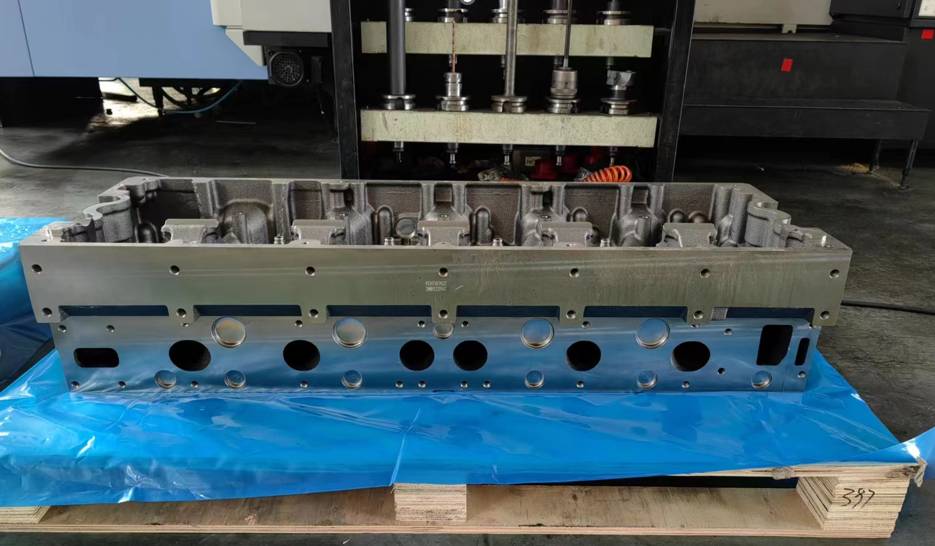
This is a K-series head at the raw casting stage, seen from the combustion face. The valve openings are still uncut and the core plugs are visible in position. At this point the casting has been cleaned and shot-blasted but not yet machined:
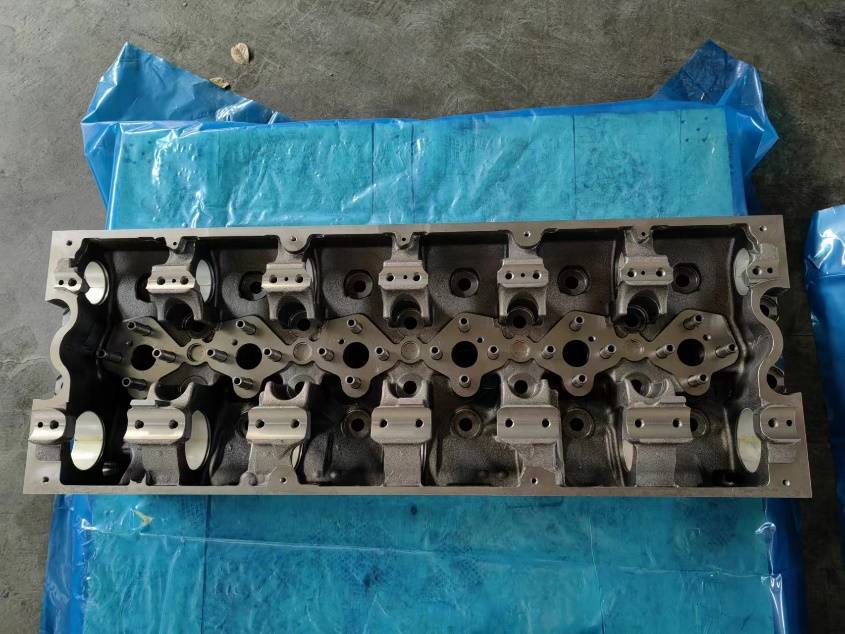
The same casting from the top deck. You can see the six rocker pedestal mounting positions and the injector bore locations:
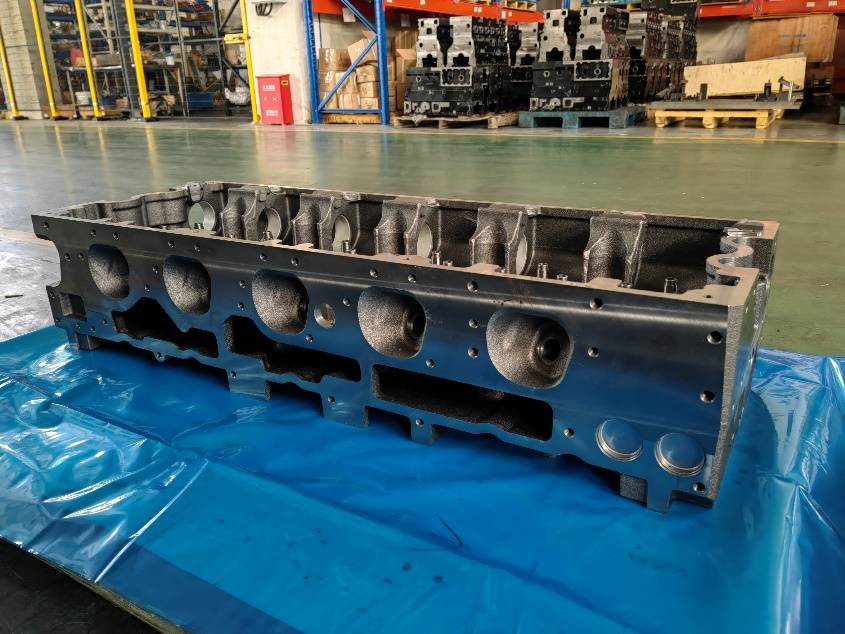
A partially assembled head viewed from the side, showing the overall proportions of the single-cylinder unit:
And here is the machining stage that matters most for fitment — valve seat inserts pressed into the combustion face. Four seats per head, matching the four-valve configuration. Getting seat concentricity and seat depth right is what determines whether the head seals, and it is the operation that separates a foundry that machines its own castings from one that does not:
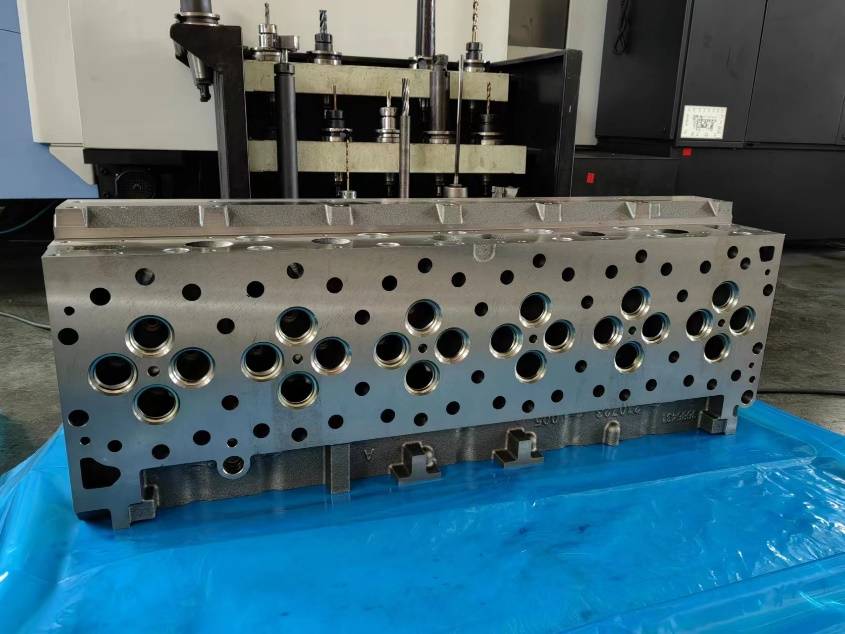
The same discipline applies to every cylinder head we produce. For reference, these are heads from other programmes we run on the same lines:
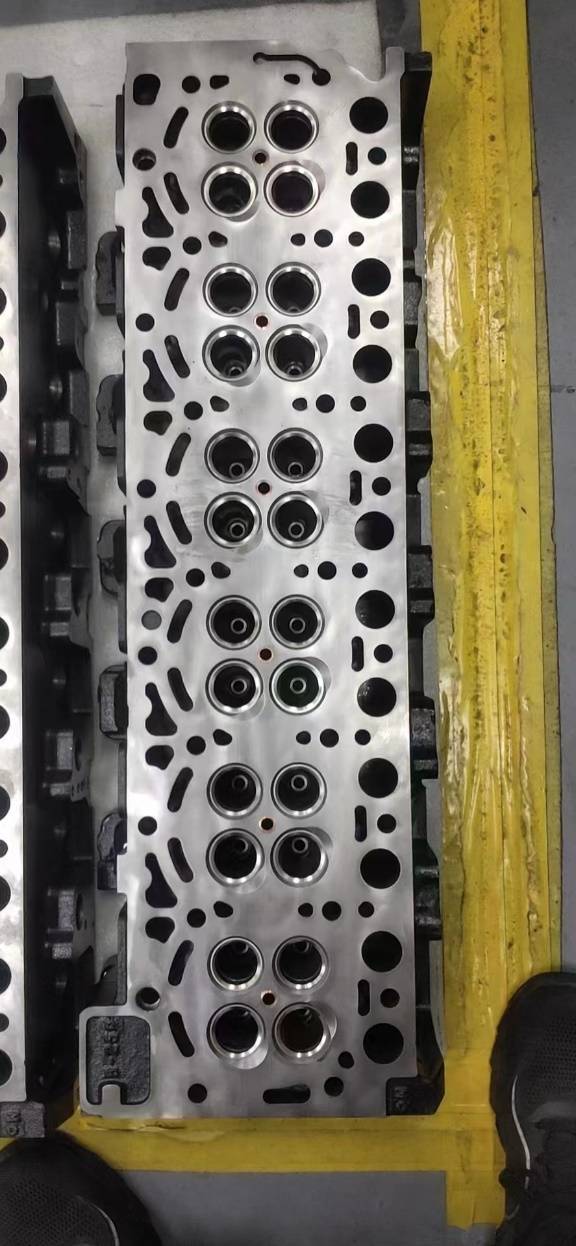
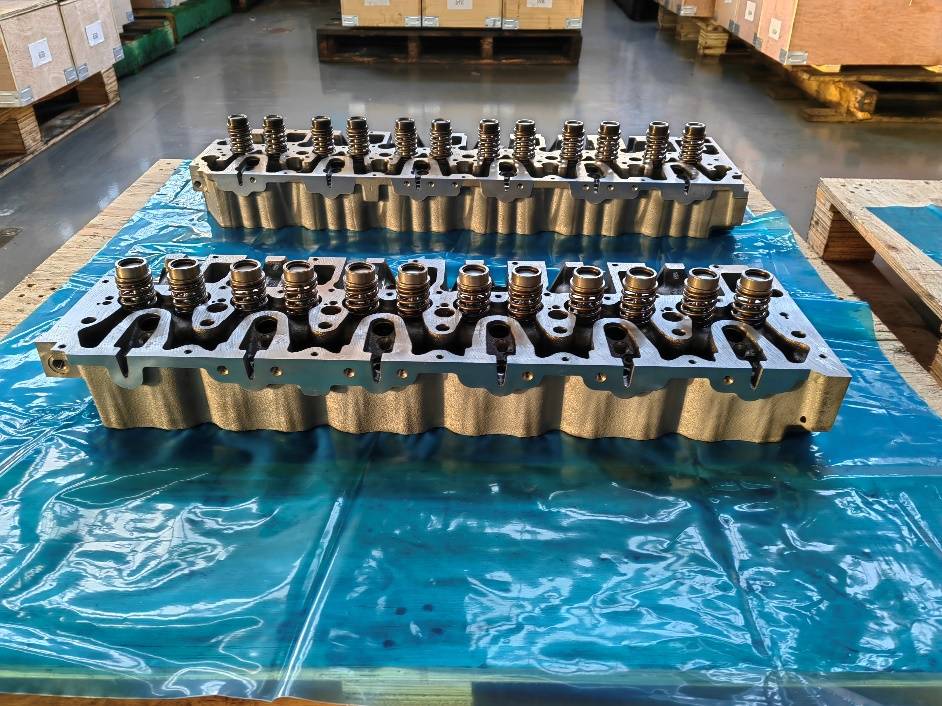
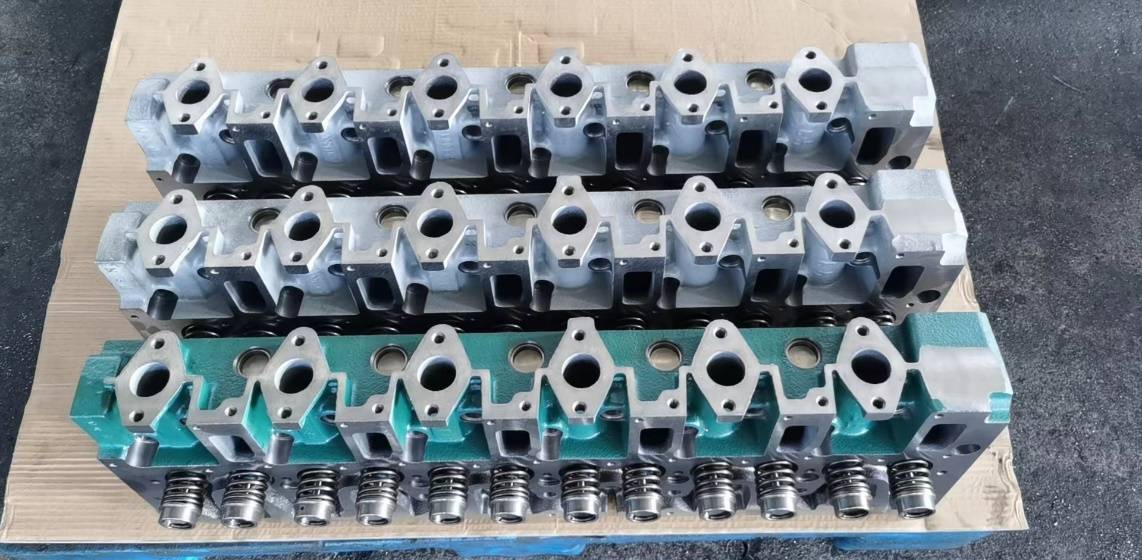
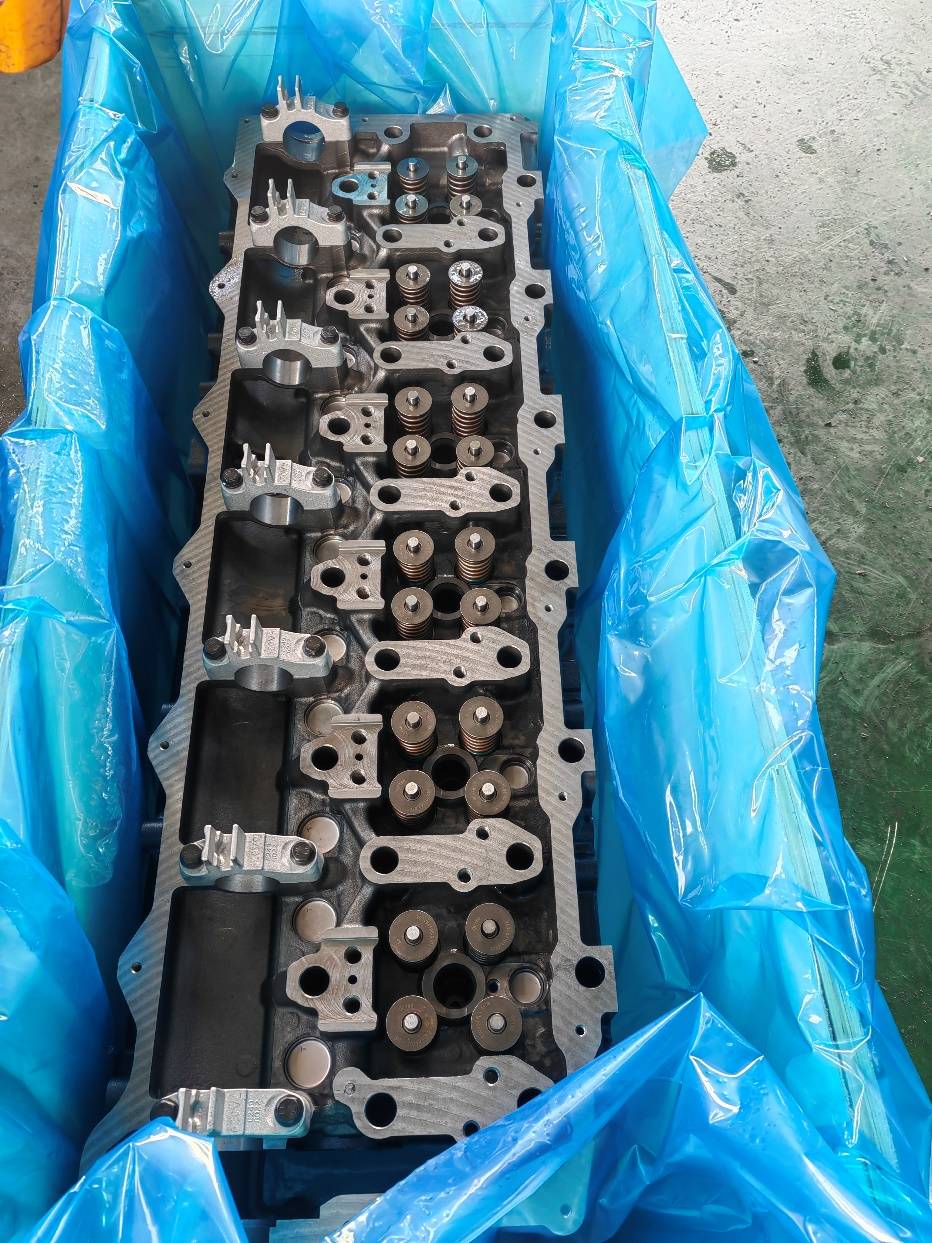
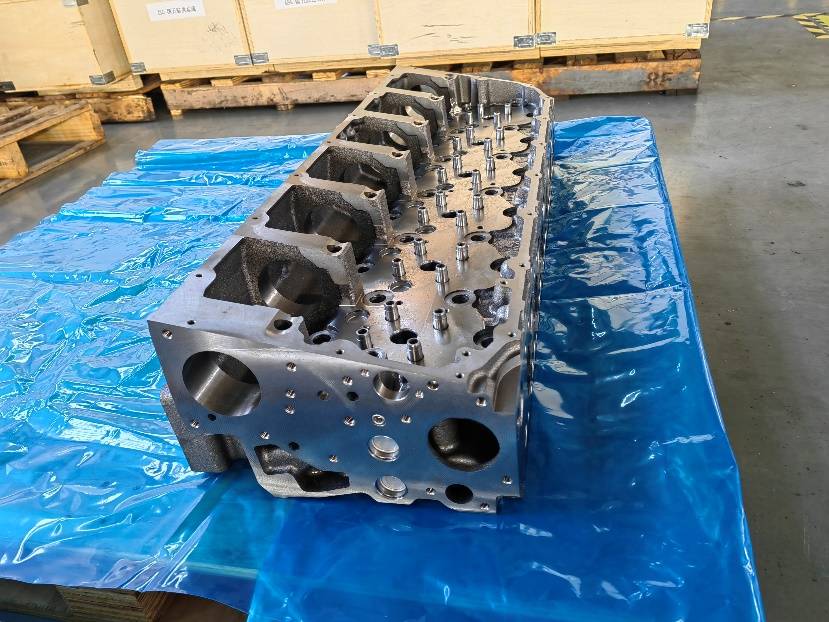
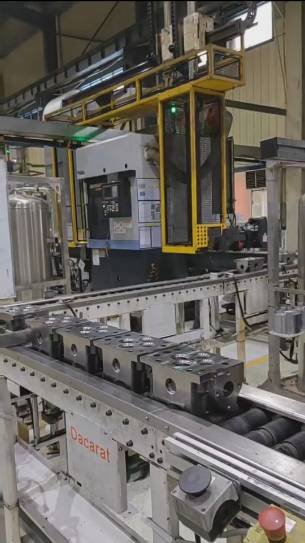
The point of showing these together is simple. A single-cylinder-per-head architecture is not exotic or particularly difficult — it is the normal way large-bore industrial engines are built. What is difficult is holding seat geometry, deck flatness and port alignment consistently across a production run. That is a foundry and machining capability, not a trading capability, and it is something you can only assess by looking at how castings are handled between processes.
Torque and fitment notes we are asked about every week
A few practical points that come up constantly with K-series heads.
Coolant temperature before removal should be at or below 50 degrees Celsius, 120 degrees Fahrenheit. Pulling a head off a hot engine distorts the deck, and no amount of machining afterwards will fully recover it.
K19 uses a metal composite head gasket, and it is not reusable. Attempting to reuse one is one of the more expensive shortcuts available.
The tightening sequence is done in three passes — 50 percent, then 75 percent, then 100 percent of final torque. Work from the centre outward in a symmetrical cross pattern. Some bolts in the sequence call for a torque-plus-angle method rather than a straight torque value, so check which specification applies to your engine before you start.
There are two head screw lengths in circulation on the K19. The original specification is 170 mm, approximately 6 and three-quarter inches. Engines with production sequence above 31103629, and service blocks from mid-1977 onward, use 203 mm, approximately 8 inches. Using the wrong length in the wrong block is a quick way to ruin a rebuild.
Head screw plating also matters and the coatings are not interchangeable. You will encounter cadmium plated, lubrite in black, and zinc phosphate in grey. Mixing coatings in one engine is not recommended.
The injector seal ring diamond marks
This one is easy to miss and causes fuel leaks that get misdiagnosed as injector failure.
The K19 cylinder head carries diamond-shaped marks near the injector seat area. The number of marks tells you which injector seal ring size that head was machined for:
| Diamond marks | Seal ring size |
|---|---|
| None | Standard |
| One | 0.010 inch oversize |
| Two | 0.020 inch oversize |
| Three | 0.030 inch oversize |
Two cautions. First, K19 seal rings and QSK seal rings are not interchangeable, even on heads that look alike — check which family your engine belongs to. Second, if the head has been remachined, the marks may no longer reflect the current seat dimension, so measure rather than assume.
If you are replacing a head and the seal rings you received do not match the marks, stop and confirm before assembly.
How to send us a request that gets a same-day answer
We are a foundry in Changyi, Weifang, Shandong, operating to IATF 16949. We cast and machine cylinder heads, cylinder blocks, flywheels, ring gears, flywheel housings and gear housings for truck, industrial, agricultural and marine engines.
For a K-series head enquiry, the fastest route to a firm quote is to send:
- Engine model and, if available, serial number or CPL code
- The part number you currently have, or photographs of the existing head from all six sides
- Quantity — and remember the per-engine count for your model
- Whether you need a bare casting, a machined head, or a fully assembled head with valves, springs and guides
- Your destination port, so we can quote FOB Qingdao
We can work from a drawing, a sample, or an OEM number. If you only have a damaged head and no documentation, send the photographs and we will identify it.
Irene
[email protected]
+86 19953662121
Wangke Industrial Zone, Changyi, Weifang, Shandong, China
FOB Qingdao
Summary
- 3811985 is a Cummins K-series big-bore cylinder head; 3646323 is its current replacement and also supersedes 3081070 and 3811981
- The K-series uses one head per cylinder: K19 needs six, K38 needs twelve, K50 needs sixteen
- The NT855 head serves two cylinders with two valves each — a completely different architecture and a frequent source of ordering errors
- A catalog number narrows the range; engine model, cylinder count, valve configuration and casting detail confirm the fit
- Cast markings are often traceability stamps, not part numbers — send the engine data plate for confirmation
- Coolant below 50 degrees Celsius, no gasket reuse, three-pass torque from the centre outward
- Check the diamond marks for injector seal ring size, and never mix K19 and QSK seal rings