
Packing and Shipping Cast Iron Engine Parts: Crates, Rust Prevention & Container Loading
Packing and Shipping Cast Iron Engine Parts: Crates, Rust Prevention and Container Loading
Three questions come up in almost every inquiry after the price is settled: will the parts rust on the way, how many tons fit in a container, and how long from finished goods to a ship. They sound like details. They decide whether the shipment arrives in saleable condition.
This guide covers how cast iron engine parts — flywheels, ring gears, flywheel housings, timing gear housings, cylinder blocks and heads — are packed, protected and loaded at Qingdao. The numbers are the ones we use when quoting.
1. Cast iron is weight cargo, not volume cargo
The first thing to understand about shipping castings is density.
| Material | Density (g/cm³) | 1 m³ of solid metal |
|---|---|---|
| Grey iron (HT250 / Class 35) | 7.20–7.35 | 7.2–7.35 t |
| Ductile iron (QT500-7 / 80-55-06) | 7.10–7.20 | 7.1–7.2 t |
| Carbon steel | 7.85 | 7.85 t |
| Aluminium | 2.70 | 2.70 t |
A 20GP container holds about 33 m³. Fill it with solid iron and you would have 237 tonnes. The container’s own weight limit is somewhere around 21 to 28 tonnes depending on the carrier.
So a castings container hits its weight ceiling long before it runs out of space. This changes the whole packing logic. With textiles or plastic parts you try to fill volume. With castings you try to fill weight, and every kilogram of packaging is a kilogram of product you cannot load.
That is why export packing for castings looks sparse compared with other industries: no thick foam, no oversized cartons, no pallet for every part.
2. Packing by part weight
Packaging is chosen by unit weight, not by part name. A 6 kg ring gear and a 380 kg cylinder block are not the same problem.
| Part type | Typical unit weight | Packing used | Stacking |
|---|---|---|---|
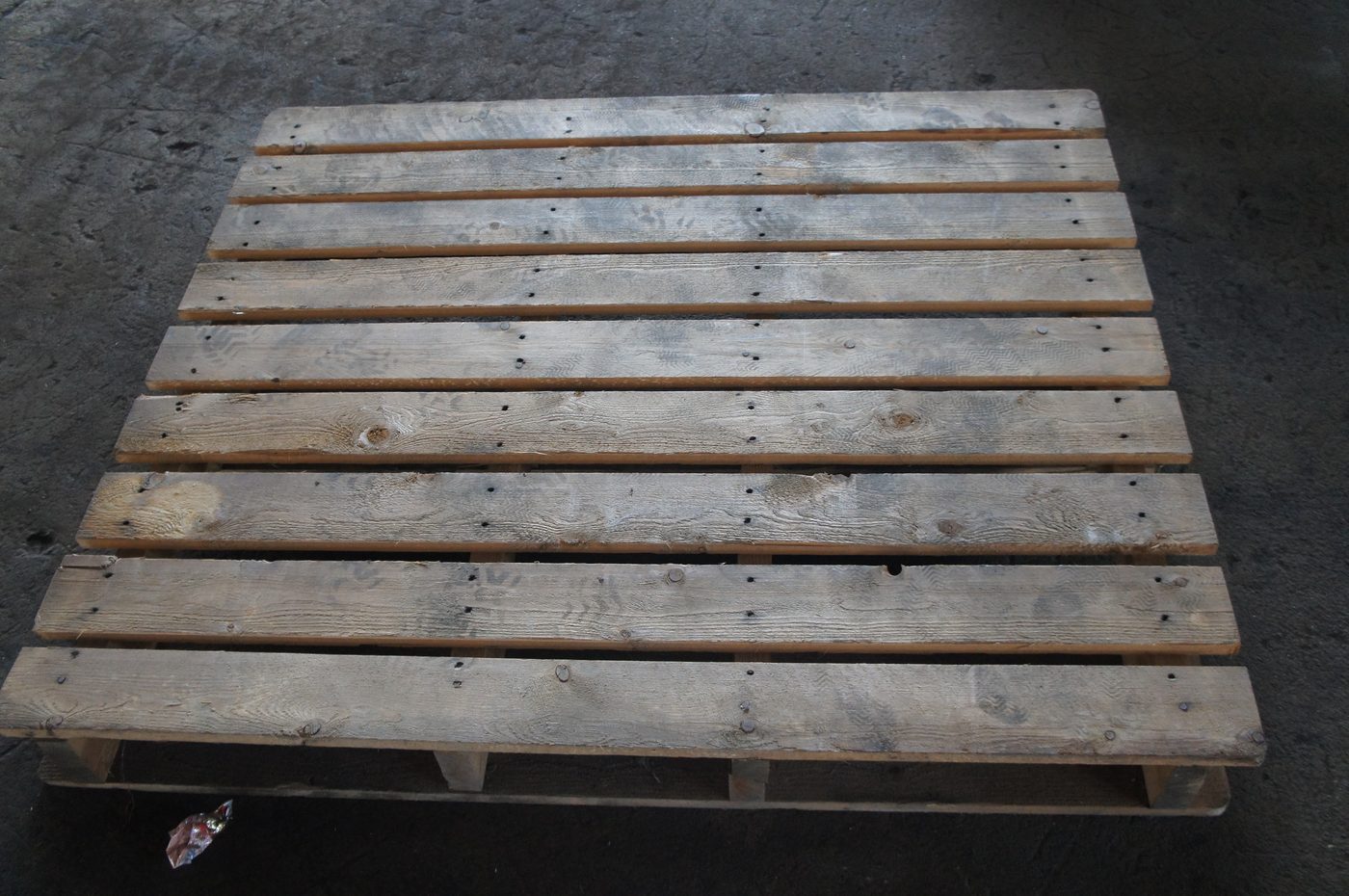
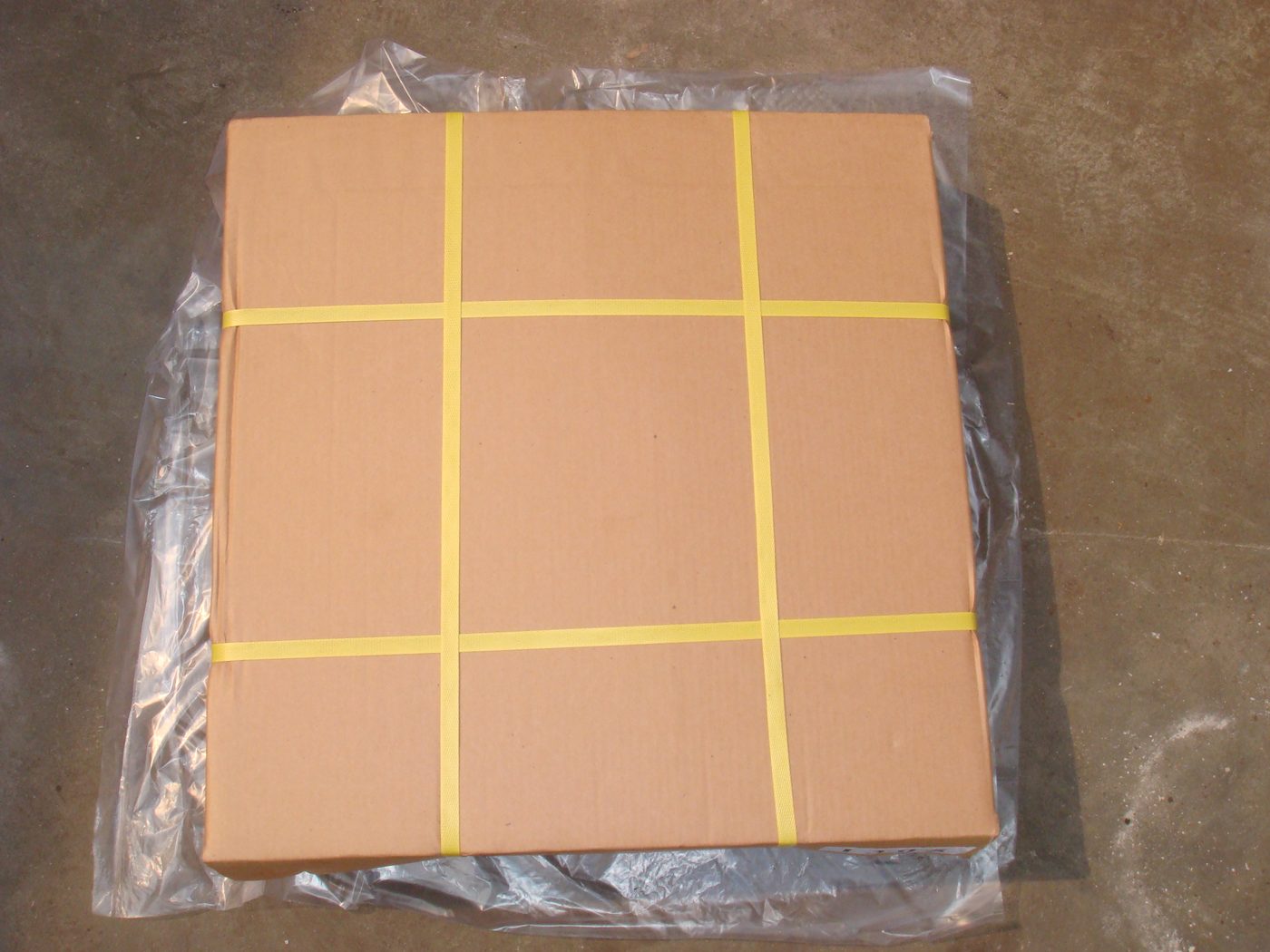
| Ring gears, pulleys, small gears | 2–15 kg | Carton + stretch film + PP strap, on a wooden pallet | 5–8 cartons high |
| Small and mid-size flywheels | 20–60 kg | Pallet + stretch film + steel or PP strapping | 1–2 layers |
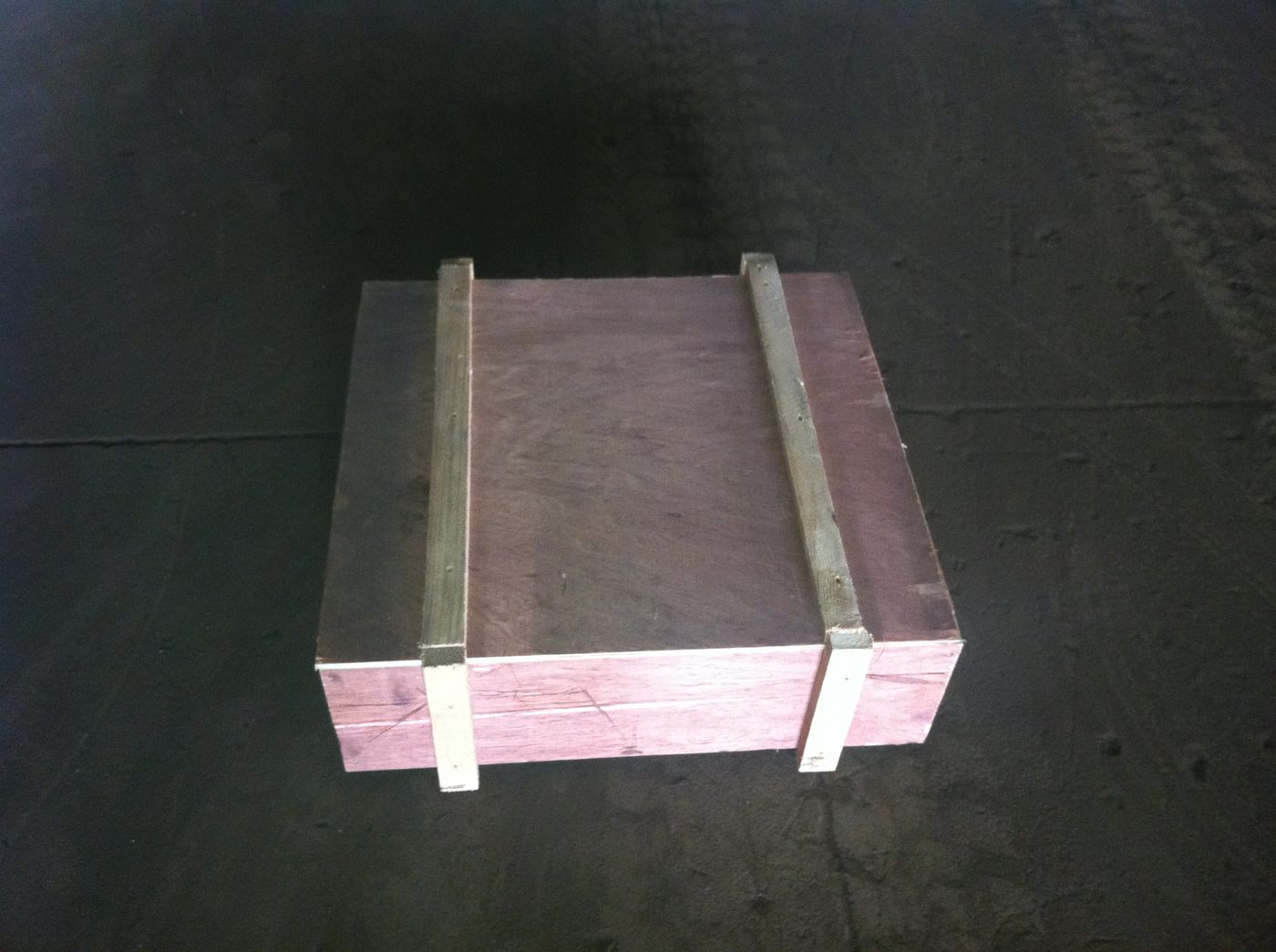
| Large flywheels (European, high-horsepower) | 60–150 kg | Plywood case with skids, one part per case or nested with separators | Single layer |
| Flywheel housings, timing gear housings | 15–80 kg | Pallet with cartons, or plywood case | 1–2 layers |
| Cylinder blocks and heads | 80–400 kg | Plywood case, reinforced with timber, one part per case | Single layer |
| Very heavy items over 200 kg | >200 kg | Steel frame, or heavy-duty case, strapped to a pallet base | Single layer |
Two rules sit underneath this table.
Machined faces never touch anything hard. The friction face of a flywheel, the tooth flanks of a ring gear, a cylinder bore, a seal face — these are the surfaces your customer inspects first. Every one of them needs paper, cardboard or PE foam between it and the next part.
Nothing heavy sits on a cardboard box. A 90 kg flywheel on top of a carton will crush it in a warehouse, and the damage shows up at the destination port.
For flywheels specifically, we put a support under the centre hub if the part is stored vertically, and never let the rim carry the whole weight. A flywheel that has been leaning on its rim for two months at sea can come out with a runout problem before it is ever bolted to a crankshaft.
3. Rust: cast iron is not the problem, machined surfaces are
There is a common assumption that anything made of iron will arrive rusty. In practice, the opposite is often true. As-cast grey iron surfaces carry a dense oxide skin and free graphite, and a flywheel can sit in a yard through a rainy season with nothing worse than a dull grey appearance.
The rust risk sits on the machined surfaces, where fresh metal is exposed: flywheel friction faces, ring gear tooth flanks, cylinder bores, sealing faces, bolt-hole threads, keyways.
Three levels of protection, chosen by transit time and destination climate:
| Transit time | Protection | Typical destinations |
|---|---|---|
| Under 30 days | Rust-preventive oil, thin film, applied after cleaning and drying | Southeast Asia, Korea, Japan |
| 30–60 days | Rust oil + VCI (vapour corrosion inhibitor) film + desiccant | Middle East, Africa, Europe, Russia |
| Over 60 days, or hot and humid | Paint or zinc-flake coating on exposed faces + VCI film + foil vac-bag | Latin America, equatorial regions, long-term storage |
Three things go wrong most often with VCI film, and all three are avoidable:
The film has to be sealed. VCI works by saturating a closed air space with inhibitor vapour. A loosely draped sheet releases the vapour and protects almost nothing. Folded, taped, closed.
The part must be at or below ambient temperature before wrapping. Wrap a hot casting and the moisture in the air inside the film condenses on the metal overnight. You have built a humidity chamber.
Oil goes on dry metal. Cleaning fluid, coolant and rinse water all have to be gone first. Oil applied over a wet surface traps water underneath and produces rust under a perfect-looking film of grease.
If your customer’s incoming inspection includes a salt spray test, say so at the quotation stage. Neutral salt spray to ASTM B117 at 24, 48 or 72 hours is a standard request and it changes what we apply. Adding it after the parts are packed means repacking the whole order.
4. How many tons fit in a container
| 20GP | 40HQ | |
|---|---|---|
| Internal dimensions (approx.) | 5.90 × 2.35 × 2.39 m | 12.03 × 2.35 × 2.69 m |
| Usable volume | about 33 m³ | about 76 m³ |
| Common maximum payload | 21,000–28,000 kg | 24,000–28,600 kg |
| Realistic castings load | about 20–24 t | about 22–26 t |
The conclusion surprises most first-time buyers: the 40HQ has about 2.3 times the volume of a 20GP, but only a little more payload. Load castings into a 40HQ and you ship half a container of air.
For dense castings, the 20GP almost always wins on freight per tonne. The 40HQ makes sense when the parts are individually light — small ring gears, pulleys, timing marks — or when the order is consolidated with other cargo.
A worked example. Mid-size flywheels at 56 kg each:
| Basis | Calculation | Units per 20GP |
|---|---|---|
| 22 t payload | 22,000 ÷ 56 | about 390 |
| 20 t payload (inland road limits) | 20,000 ÷ 56 | about 350 |
The second row matters more than the first in some markets. Several countries limit the gross weight of a truck on public roads, and a container that is legal at the seaport can be illegal 200 km inland. If your goods move by truck after discharge — and in Africa, inland Latin America and parts of Southeast Asia they usually do — confirm the road limit before booking, not after.
The payload figures above are common carrier values. The binding number is on the booking confirmation and the bill of lading. Load estimates for castings assume roughly 45 to 60 percent solid fill inside the container, which varies with part shape; a flat flywheel stacks far denser than a hollow housing.
5. Inside the container: securing the load
Wrap film alone does not hold 22 tonnes in place during a sea crossing. What holds it is timber and strapping.
Pallets or cases are bedded on timber dunnage so the load does not sit directly on the container floor. Strapping runs to timber battens wedged against the container walls, never to the wall itself. On heavy cases we use steel strapping; on palletised cartons, heavy PP.
Ring gears need their own rule. A nicked tooth flank becomes a noise source once the gear is pressed onto a flywheel and the engine is running. Gears travel with cardboard or foam separators between every layer and every row.
The last two rows at the door end get dunnage bags or timber blocking. A gap of 30 to 50 cm at the door lets the load shift forward on the first heavy swell, and 22 tonnes of castings arriving in a heap is a claim waiting to happen.
6. Wood packaging and ISPM 15
Solid wood packaging — pallets, battens, timber-reinforced cases — must comply with ISPM 15 for most destination countries. Untreated solid wood can be held, fumigated at the consignee’s expense, or refused entry.
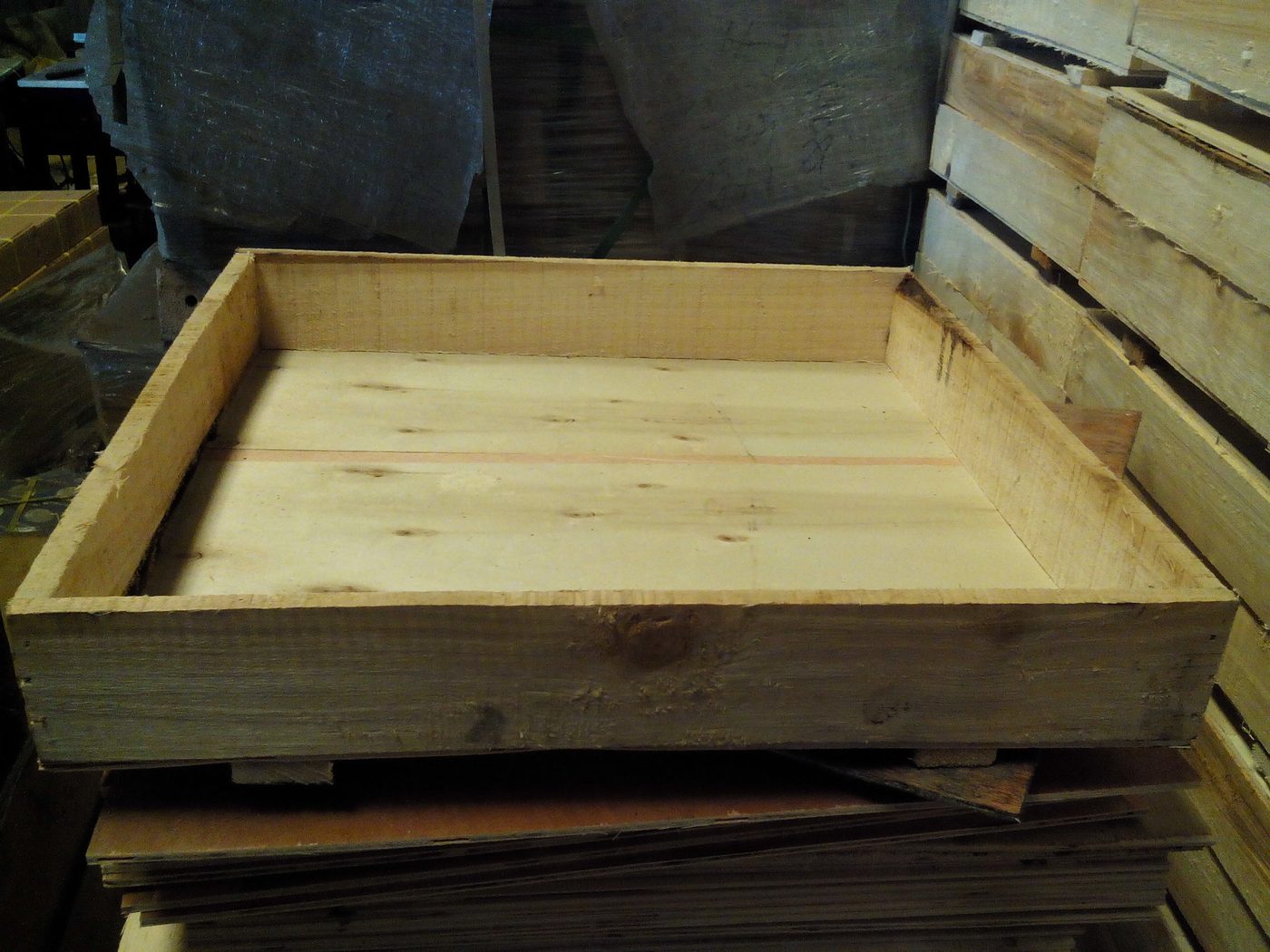
The simple way around it is to avoid solid wood as the primary packaging material. We build the majority of export cases from plywood, which is processed and therefore exempt from fumigation. Solid wood, where used for battens or skids, is heat treated and marked under IPPC.
A plywood case saves a process step and a couple of days, and removes one entire category of destination-port problem.
Documents that normally travel with a castings shipment: commercial invoice, packing list, contract, certificate of origin, and the material certificate. For castings we issue an EN 10204 3.1 certificate covering heat number, grade, chemical composition and mechanical properties, plus dimensional and hardness reports where the drawing calls for them.
7. FOB Qingdao: from finished goods to sailing
| Step | Typical time |
|---|---|
| Final inspection (dimensions, hardness, visual, runout) | 1–3 days |
| Booking | 3–5 days off-peak, 7–10 days in peak season |
| Packing and delivery to port | 1–2 days, plus 2–3 days before vessel closing |
| Customs clearance | 1–2 days |
| Sailing to bill of lading | 3–7 days after departure |
Indicative transit times from Qingdao:
| Destination region | Transit time |
|---|---|
| Southeast Asia | 5–10 days |
| Korea, Japan | 3–7 days |
| Middle East | 15–22 days |
| Africa | 25–40 days |
| Europe | 30–40 days |
| Latin America | 30–45 days |
Transit times move with carrier, route and season. Treat the table as a planning range, not a commitment.
8. Six packing mistakes that cost buyers money
| Mistake | What it costs |
|---|---|
| Solid wood packaging with no IPPC mark | Hold at destination, fumigation charge, storage days |
| Stretch film only, no VCI on machined faces | White rust on opening, claim and rework argument |
| Pallet or case over the weight or dimension limit | Rejected at the loading dock, manual handling surcharge |
| Shipping marks missing carton or case numbers | Packing list cannot be reconciled at receiving |
| Heavy parts stacked on cartons | Crushed bottom layers, damaged machined faces |
| Mixed part numbers in one case with no separation | Sorting by eye, wrong parts fitted |
9. FAQ
Q: Will cast iron parts rust during sea freight?
As-cast surfaces normally will not. Machined surfaces will if they are unprotected, especially in a container that crosses climate zones. We apply rust oil plus VCI film for longer routes, and will add salt spray testing if your incoming inspection requires it.
Q: How many tons of flywheels fit in a 20GP?
Between about 20 and 24 tonnes, depending on the carrier’s payload limit and the road weight limit at destination. For a 56 kg flywheel that is roughly 350 to 390 pieces.
Q: Do the wooden cases need fumigation?
Plywood cases do not. If solid wood is used, it is heat treated and marked to ISPM 15. Ask before the order ships if your country has additional requirements beyond ISPM 15.
Q: Can you pack to our specification?
Yes. Customer marks, carton printing, case dimensions, pallet type, layer separators and rust protection level can all be specified. Send the packing requirement with the inquiry so it goes into the quotation.
Q: Does the packaging affect MOQ?
It can. Custom carton printing and custom case sizes have their own minimums. Standard export packing on castings has no MOQ beyond the order quantity itself.
Q: What quality documents come with the shipment?
An EN 10204 3.1 material certificate with heat number, chemical composition and mechanical properties. Dimensional, hardness and runout reports where the drawing specifies them. IATF 16949 process documentation is available for automotive programs.
10. Getting a shipping estimate
Tell us the part numbers, the quantity, and the destination port. We will come back with unit weight, packing method, total gross weight and the container configuration that gives the lowest freight per tonne — usually a 20GP, occasionally two 40HQs, sometimes a mix with the customer’s other cargo.
Factory: Changyi Wangke Industrial Zone, Weifang, Shandong, China
Port of loading: Qingdao
Email: [email protected]
Phone / WeChat / WhatsApp: +86 19953662121
Related reading:
– Cast iron grade conversion: HT250 and QT500-7 against ASTM, EN, JIS and GOST
– Ring gear manufacturing process and quality control
– Flywheel dynamic balancing: why it matters
Request a quote at https://www.changweiintl.com/en/inquiry