15N RSG Flywheel for Generator Sets: Two Proven Conversion Solutions
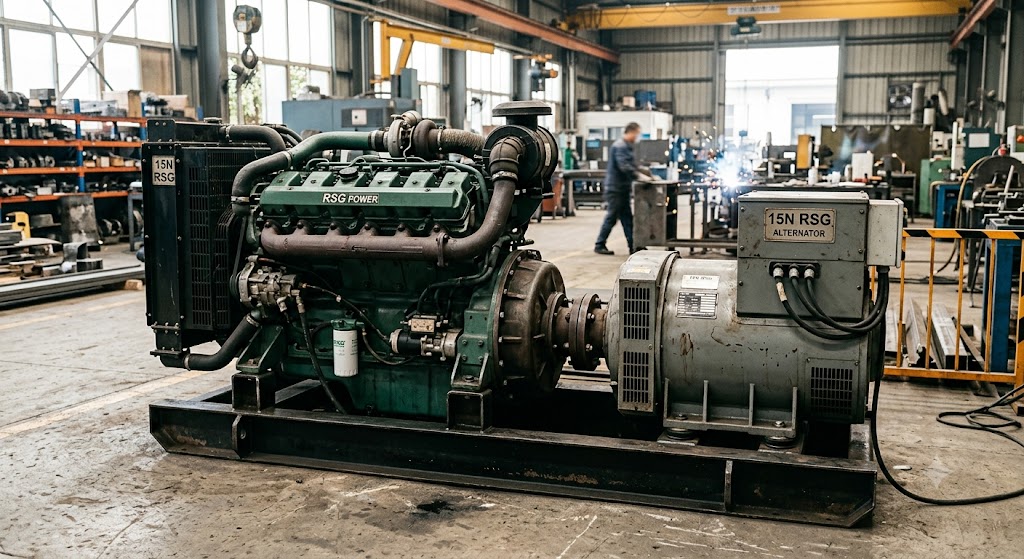
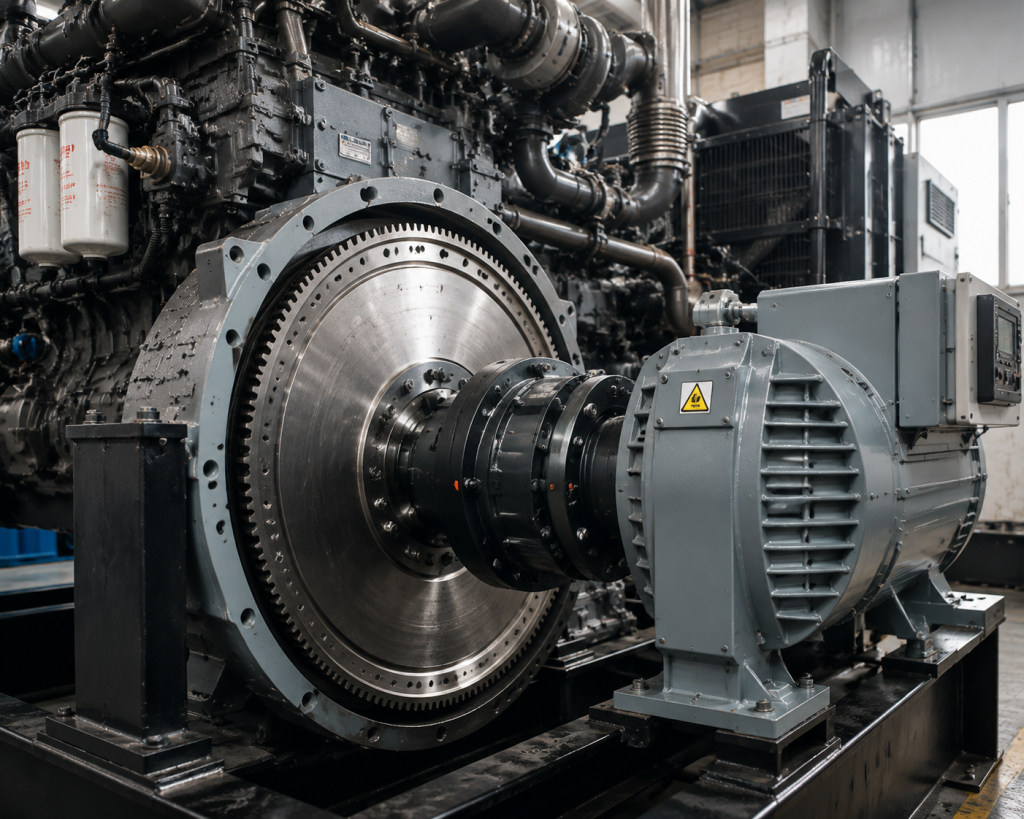
The 15Nx13x12 RSG engine is a proven vehicle power unit — and an increasingly popular platform for generator sets. But its flywheel was designed to drive a transmission, not an alternator.
This guide covers the two proven ways to bridge that gap: a connection ring on the original flywheel, or a one-piece integrated flywheel. You will learn how each works, what it costs you in balance tolerance and assembly time, and which one fits your production volume.
Key takeaways:
- A vehicle flywheel cannot connect directly to a generator coupling — the bolt patterns and dimensions do not match.
- A connection ring is the fast, flexible fix for small batches and prototypes.
- A one-piece integrated flywheel wins for volume production: fewer parts, faster assembly, and no balance tolerance stack-up.
- Whichever you choose, dynamic balance and CMM inspection are non-negotiable for constant-RPM generator duty.
Why a Vehicle Flywheel Needs Modification
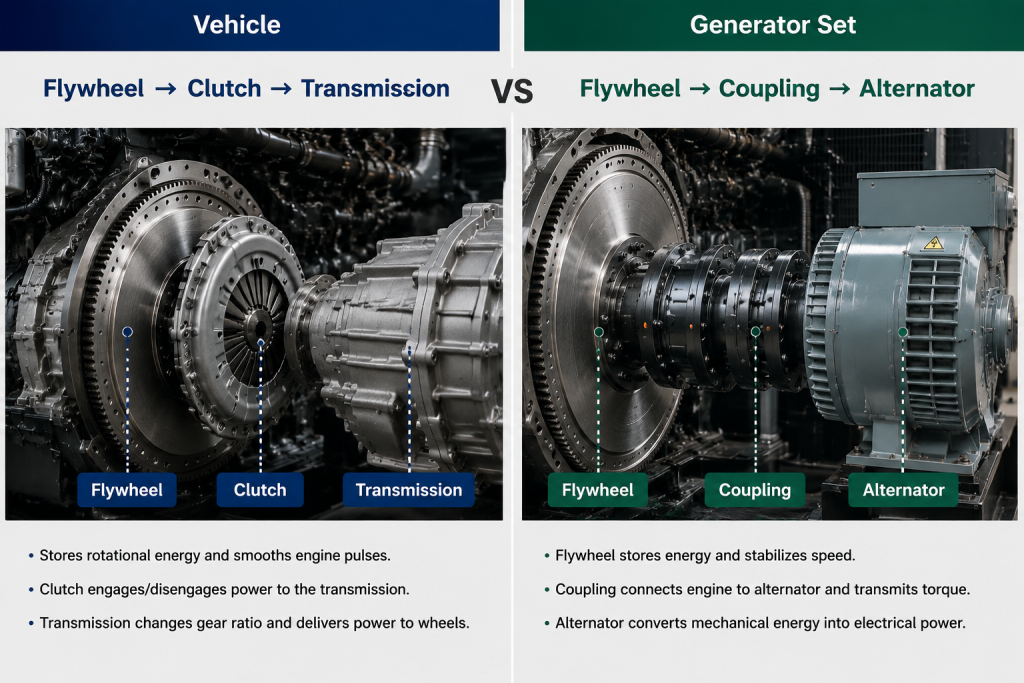
In a vehicle, the flywheel connects the crankshaft to the transmission. It carries the clutch friction surface and smooths power pulses. Every bolt pattern and dimension is optimized for that job.
In a generator set, there is no clutch and no transmission. The flywheel must drive a generator coupling that transfers rotational energy to the alternator — and the interfaces simply do not match.
That leaves two options: adapt the original flywheel with an extra component, or replace it with a purpose-designed part.
Solution 1: The Flywheel Connection Ring
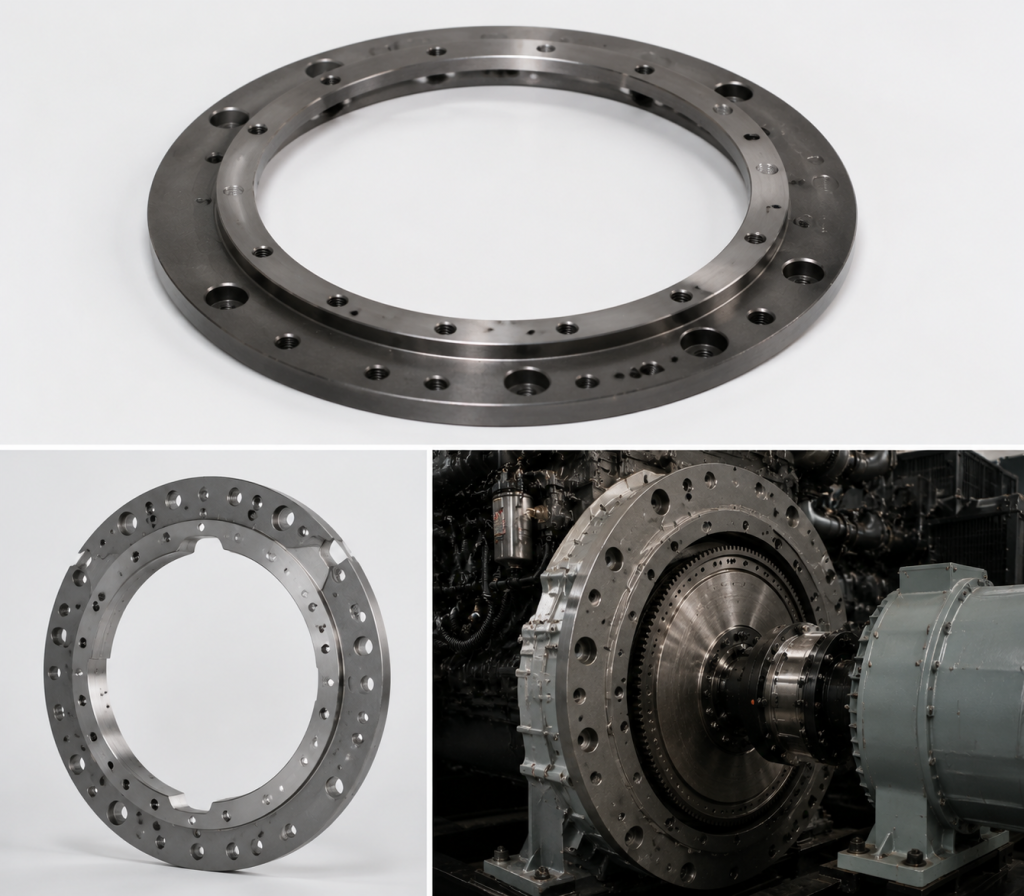
The connection ring (adapter ring) is a machined component that bolts to the outer face of the original vehicle flywheel. It provides the correct dimensions and bolt pattern for the generator coupling.
This is not a workaround — it is a validated solution. The 15Nx13x12 RSG engine runs stably with its original flywheel plus a connection ring, with alignment and balance held within tolerance.
Best for: small batches, prototypes, fast setups.
- Lower cost at low volume — no new flywheel design; just one adapter component
- Flexible — different rings adapt the same flywheel to different generator couplings
- Fast — a ring can be designed and machined quickly, cutting lead time
Solution 2: The One-Piece Integrated Flywheel
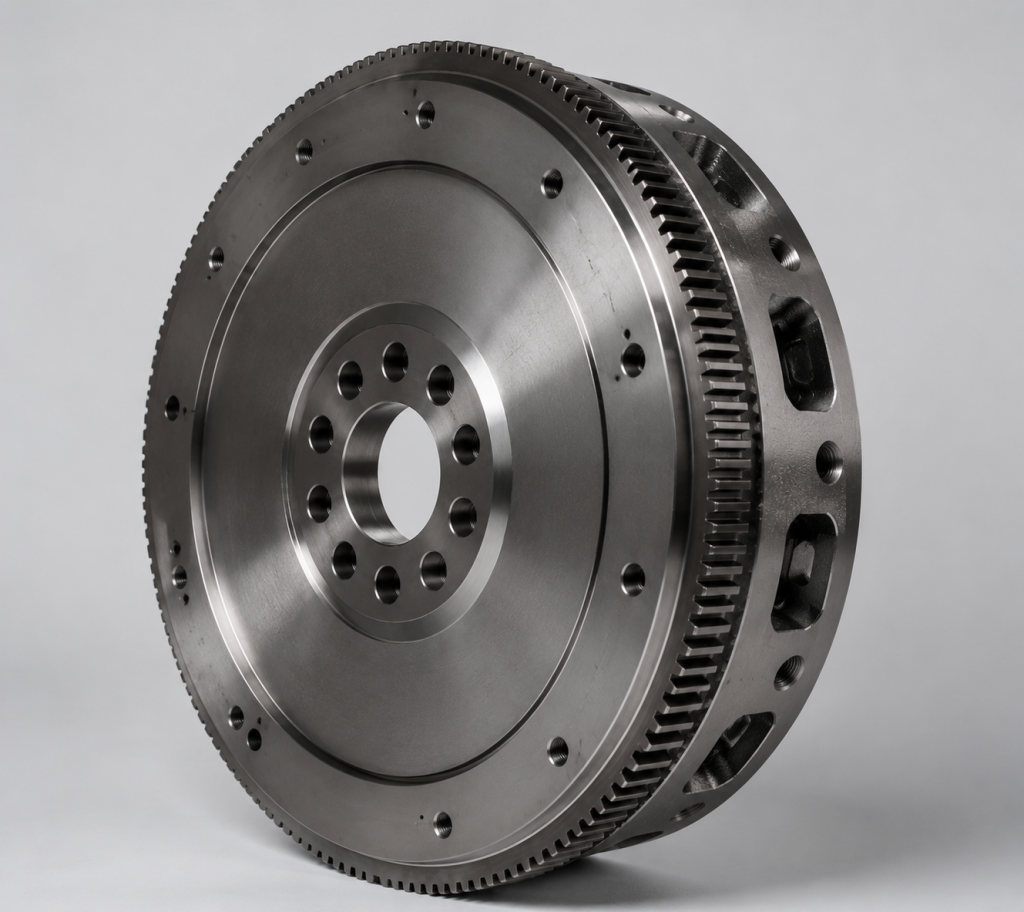
For volume production, the integrated flywheel builds the coupling interface directly into the flywheel itself. Engine-side mounting specs and generator-side connection specs live in one component — no separate ring.
Best for: batch and volume production.
- One less assembly step — no ring installation on the production line
- Fewer parts — fewer fasteners, fewer failure points, simpler inventory
- Better balance — one component, one balancing operation, zero tolerance stack-up
The Balance Problem: Why Stack-Up Matters
Generator sets run at constant speed for hours on end. Any flywheel imbalance vibrates through the coupling, bearings, and the entire drivetrain.
Here is the catch with the two-piece approach: the flywheel and connection ring are balanced individually, and each carries its own tolerance. Those tolerances accumulate — tolerance stack-up. In the worst case, the combined imbalance exceeds what either part would cause alone.
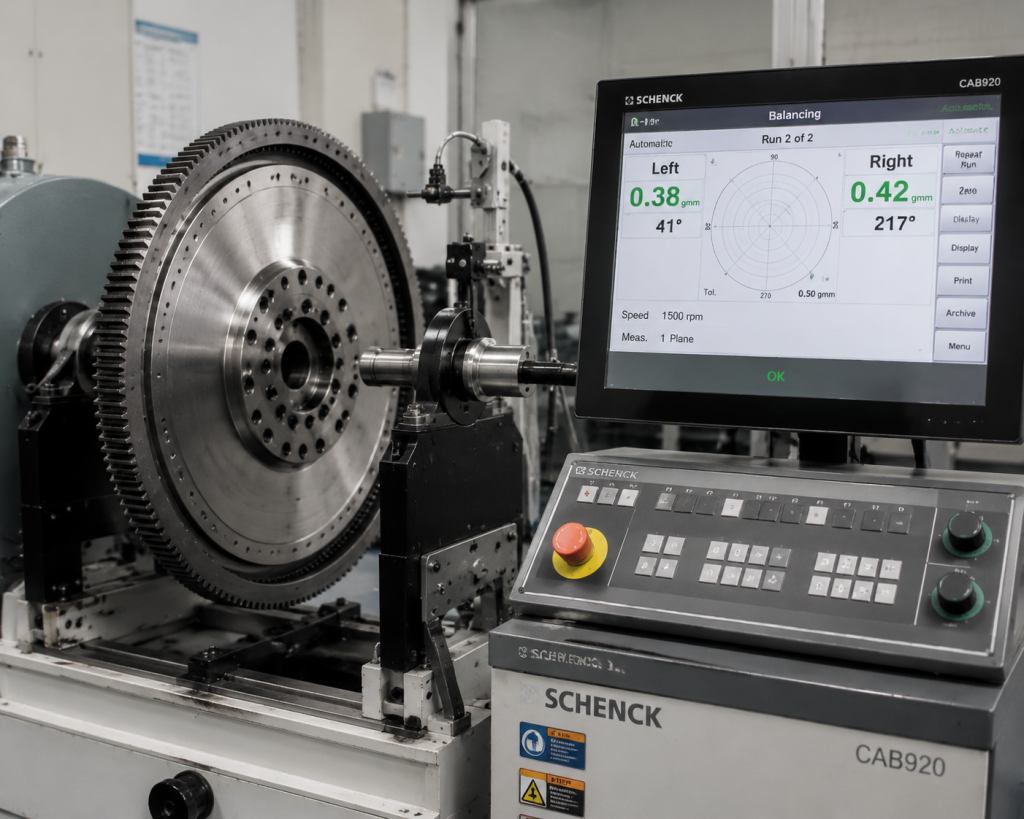
The integrated flywheel eliminates the problem structurally: one component, one dynamic balancing operation, no stack-up.
Connection Ring vs Integrated Flywheel: Comparison Table
| Connection Ring | Integrated Flywheel | |
| Production volume | Small batch / prototype | Volume production |
| Assembly | Extra installation step | Simplified, fewer fasteners |
| Balance tolerance | Stack-up risk (two parts) | Single component, no stack-up |
| Flexibility | One flywheel, many couplings | Dedicated design per spec |
| Inventory | Flywheel + ring variants | One component per application |
| Lead time | Faster initial setup | Requires design and tooling |
The practical playbook: start with a connection ring to validate the platform quickly, then switch to an integrated flywheel once volume justifies the tooling. You get speed early and manufacturing efficiency later.
Quality Checkpoints for Generator Flywheels
A generator flywheel runs under continuous load at constant RPM. Four checks are non-negotiable:
- Material verification — chemical analysis and mechanical testing of the casting
- Dimensional inspection — CMM verification of bolt patterns, pilot bore, and coupling interface
- Dynamic balance — measured and corrected on a dedicated balance machine
- Surface finish — mating surfaces must meet spec for proper alignment
An IATF 16949 certified process is what makes these checks consistent on every part, not just the first article.
FAQ
Can the 15N RSG vehicle flywheel be used in a generator set without modification?
No. The vehicle flywheel is designed to interface with a clutch and transmission. For generator duty it needs either a connection ring or replacement with an integrated flywheel that matches the generator coupling.
Is the connection ring approach reliable?
Yes. The 15Nx13x12 RSG engine has been validated running its original flywheel plus a precision-machined connection ring, with alignment and balance within tolerance. It is a proven solution for small-batch installations.
When should I switch to a one-piece integrated flywheel?
When production volume grows. The integrated flywheel removes an assembly step, reduces part count, and eliminates balance tolerance stack-up — advantages that compound at scale.
What balance standard should a generator flywheel meet?
The flywheel should be dynamically balanced on a dedicated machine to the grade specified for constant-speed operation, and verified with documented results before shipment.
Conclusion
The 15N RSG flywheel transition is a solved problem with two proven paths: connection ring for speed and flexibility, integrated flywheel for volume and balance precision. The right choice is a production-volume question, not an engineering gamble.
Need help specifying either solution? Contact Changwei’s engineering team — we manufacture both connection rings and integrated flywheels to IATF 16949 standards.
About Changwei: Weifang Changwei Intelligent Equipment Co., Ltd. is an IATF 16949 certified engine flywheel manufacturer based in Weifang, China. With a 40,000 sqm production facility and 20+ years of engineering expertise, Changwei supplies flywheels, gear rings, and housing parts to customers in 20+ countries. Contact us for OEM/ODM flywheel solutions.