
For heavy-duty construction machinery such as wheel loaders and bulldozers, the powertrain must deliver high performance while fitting into limited installation space. As a critical component between the engine and transmission, the engine flywheel directly affects powertrain packaging, power transmission, and long-term equipment reliability.
The WP10 flywheel features a concave crankshaft end and connecting plate design, allowing the transmission to be positioned closer to the engine. Compared with a conventional thick flywheel assembly that incorporates a friction clutch and related components, this design reduces axial space requirements and creates a more compact powertrain package while maintaining the required rotational inertia and power transmission capability.
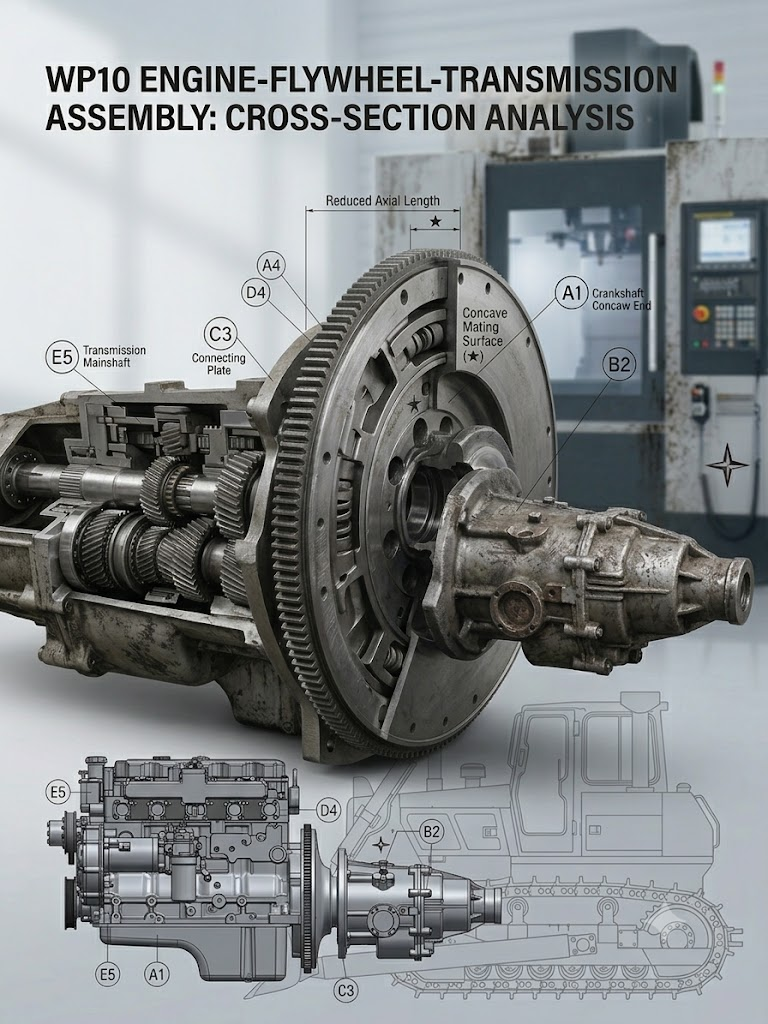
For construction equipment manufacturers, this is not simply a flywheel structure improvement. It is an engineering solution designed to address the space, power transmission, and reliability requirements of modern construction machinery.
Why Construction Machinery Needs a Compact Engine Flywheel Design
The flywheel assembly is located at the critical connection point between the engine and transmission. If the flywheel assembly is relatively thick, especially when it incorporates a conventional friction clutch and related hardware, the transmission may need to be positioned further away from the engine.
This can affect the overall center of gravity and machine stability while taking up valuable space inside the chassis. This space could otherwise be used for hydraulic reservoirs, counterweights, or other critical components.
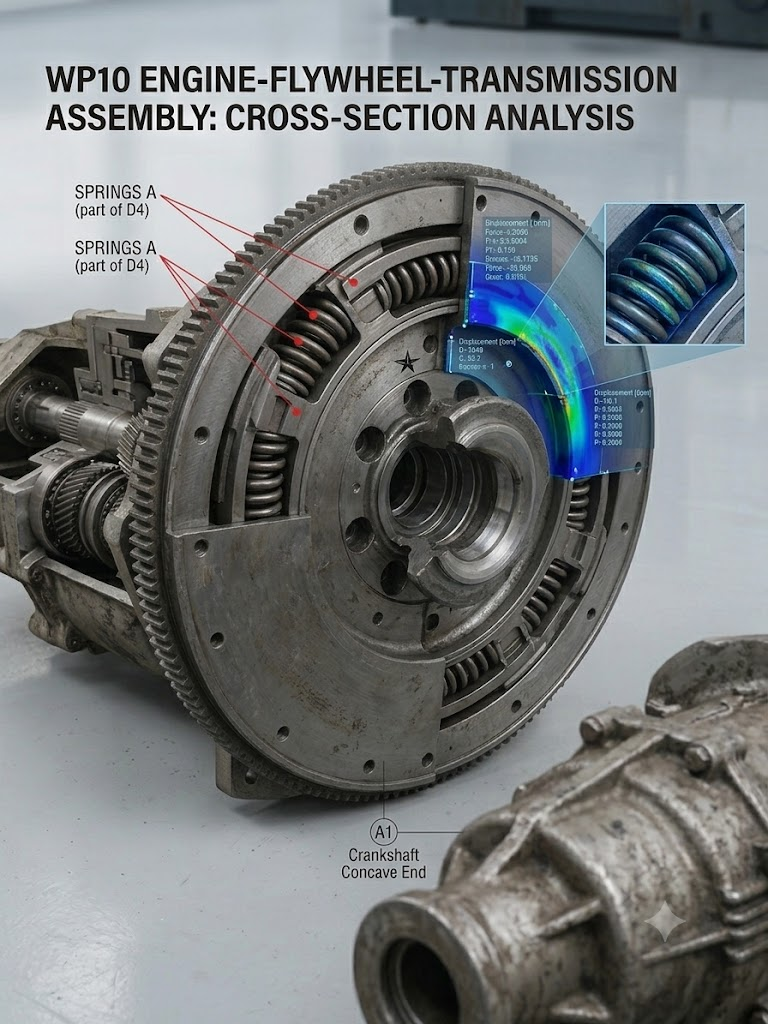
The WP10 flywheel addresses this challenge through its concave crankshaft end design. By reducing the axial space required by the flywheel assembly, the transmission can be positioned closer to the engine. The thinner assembly helps shorten the axial length of the powertrain and improve space utilization.
For wheel loaders, bulldozers, and other construction machinery with limited installation space, this engine flywheel design can help manufacturers achieve a more efficient powertrain layout.
How the WP10 Flywheel Supports Power Transmission in Bulldozers
Bulldozers are typical heavy-duty construction machines that often operate under high loads and demanding environmental conditions. As track-driven equipment, their engines, transmissions, and final drive systems must be arranged within a limited chassis space. Powertrain packaging and reliability are therefore critical considerations.
Bulldozers can also experience significant shock loads when pushing heavy materials, working on rocky terrain, operating on uneven ground, or encountering obstacles. These conditions place additional demands on the engine flywheel, transmission, and complete drivetrain system.
The WP10 flywheel uses a connecting plate structure to provide direct mechanical power transmission. Compared with conventional friction-based transmission systems, this design reduces dependence on friction materials and can minimize the impact of friction component wear and slippage on power transmission stability.
For bulldozers, wheel loaders, and other heavy-duty construction machinery, a compact, direct, and durable engine flywheel design is well suited to long-term operation under demanding working conditions.
How a Thin WP10 Flywheel Maintains Rotational Inertia
It may seem that a thinner engine flywheel would have less mass and therefore lower rotational inertia, potentially affecting engine smoothness.
From an engineering perspective, flywheel rotational inertia depends not only on total mass but also on how that mass is distributed relative to the rotational axis. Simply removing material from a flywheel can indeed reduce its rotational inertia.
However, the WP10 flywheel is not designed by simply reducing its overall mass. Instead, the design optimizes the geometry and distribution of material to improve space efficiency.
The concave crankshaft end primarily removes material from the central hub area, where its contribution to overall rotational inertia is relatively limited. At the same time, sufficient mass, diameter, and rim thickness are maintained in the outer section of the flywheel, where mass located further from the rotational axis has a greater influence on rotational inertia.
As a result, the WP10 flywheel design reduces axial space requirements while maintaining the rotational performance required for stable engine operation.
This is an important principle in thin engine flywheel design. The goal is not simply to make the flywheel thinner, but to optimize the distribution of material and available space so that the flywheel can meet the requirements of powertrain packaging, rotational inertia, and power transmission.
Precision Machining and Balance Requirements for WP10 Engine Flywheels
As a high-speed rotating component in the engine powertrain, an engine flywheel must maintain excellent balance and dimensional accuracy. Insufficient machining accuracy or improper dynamic balance can generate vibration and negatively affect the crankshaft, bearings, and complete drivetrain system.
The concave crankshaft end of the WP10 flywheel requires precise machining and strict dimensional control. The concave area must accurately match the engine crankshaft while ensuring the correct dimensions and positioning of the connecting plate.
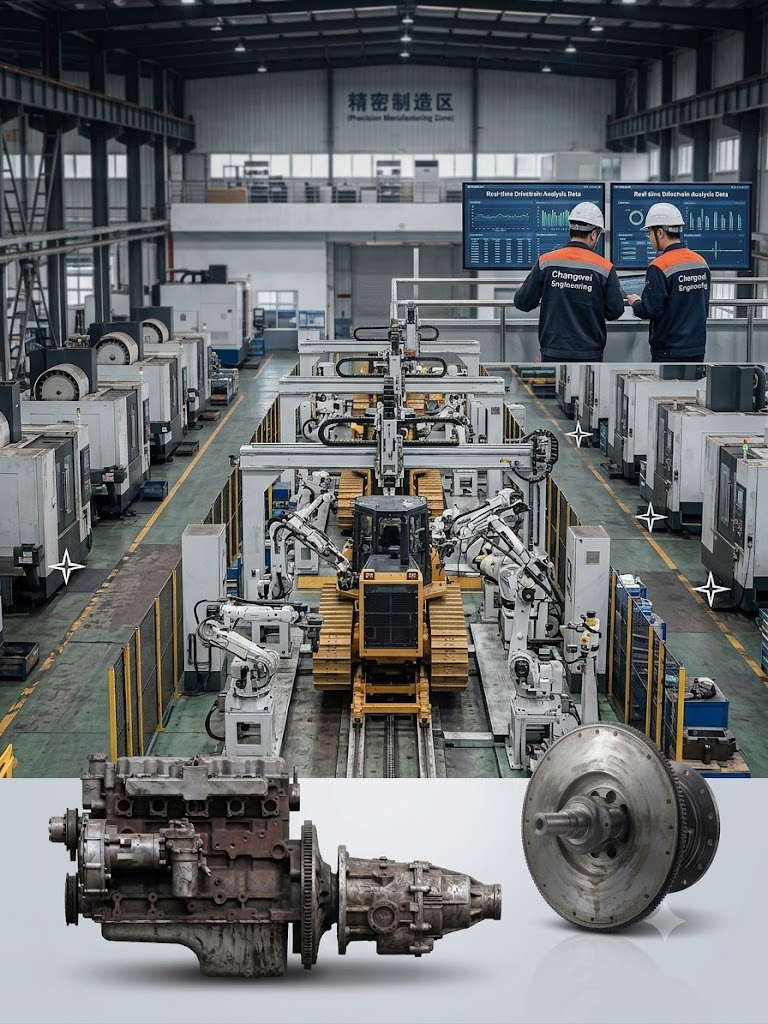
At Changwei's production facility, engine flywheels are manufactured using vertical CNC lathes and CNC machining centers to achieve the dimensional accuracy required for complex flywheel geometries.
During production, the concave crankshaft end is manufactured according to strict engineering specifications. Material removal must also be carefully controlled to maintain the required dynamic balance and structural integrity of the flywheel.
Critical dimensions are verified using Coordinate Measuring Machine (CMM) inspection to ensure manufacturing accuracy. For a WP10 engine flywheel, even small deviations in the concave geometry can affect crankshaft fitment, connecting plate alignment, and the performance of the complete powertrain under dynamic loads.
For this reason, precision machining, dimensional inspection, and balance control are essential parts of high-quality engine flywheel manufacturing.
WP10 Flywheel Reliability for Construction Machinery
The WP10 flywheel features a concave crankshaft end and connecting plate structure, with its design focused on three key areas: mechanical optimization, space efficiency, and long-term durability.
First, an optimized power transmission structure can reduce potential wear points within the drivetrain and help minimize certain mechanical failure risks.
Second, a thinner flywheel assembly allows construction equipment manufacturers to make better use of the limited space between the engine and transmission. This can provide additional packaging flexibility for hydraulic systems, reservoirs, counterweights, and other components.
Third, reducing dependence on traditional friction-based transmission components can minimize the impact of friction material wear on power transmission performance, supporting the long-term operation of heavy-duty construction equipment.
These characteristics make this type of engine flywheel particularly suitable for wheel loaders, bulldozers, and other heavy-duty construction machinery.
Why Construction Equipment Manufacturers Need an Experienced WP10 Flywheel Supplier
For construction equipment manufacturers, engine component procurement teams, and equipment distributors, selecting the right WP10 flywheel involves more than checking basic dimensions.
As a critical engine powertrain component, the flywheel must be precisely matched with the engine crankshaft, transmission, connecting plate, and complete drivetrain system.
For the WP10 engine platform, flywheel selection may involve several important specifications, including the crankshaft end profile, connecting plate dimensions, ring gear tooth count, and signal hole configuration used by the engine management system.
Therefore, when sourcing a WP10 engine flywheel or construction machinery flywheel, manufacturers and procurement teams should consider more than whether the product matches the dimensions shown on a technical drawing.A professional engine flywheel manufacturer should have expertise in flywheel design, precision machining, quality control, and powertrain compatibility.
An experienced OEM flywheel manufacturer should not only be able to manufacture products according to customer drawings but also understand how the flywheel integrates with the engine, transmission, and complete powertrain system.For different construction machinery applications, the right supplier should also be able to provide customized OEM and ODM flywheel solutions based on specific engine and equipment requirements.
Conclusion
The concave crankshaft end design of the WP10 flywheel is a practical example of how optimized flywheel engineering can address powertrain packaging challenges in construction machinery.
By combining a concave crankshaft end with a connecting plate power transmission structure, the WP10 engine flywheel can reduce axial space requirements while maintaining the rotational inertia, power transmission capability, and reliability required by heavy-duty equipment.
For wheel loaders, bulldozers, and other construction machinery with limited transmission installation space, an optimized flywheel design can help manufacturers create a more compact powertrain layout and make better use of available chassis space.
Modern engine flywheel engineering is not simply about reducing weight or thickness. It is about optimizing the complete design so that the flywheel works effectively with the engine, transmission, and entire drivetrain system.
For construction equipment manufacturers and procurement teams looking for a WP10 flywheel, construction machinery flywheel, OEM engine flywheel, or customized flywheel solution, choosing an experienced engine flywheel manufacturer with strong engineering and precision manufacturing capabilities is essential.
About Changwei
Weifang Changwei Intelligent Equipment Co., Ltd. is an IATF 16949-certified engine flywheel manufacturer based in Weifang, China. With a 40,000-square-meter production facility and more than 20 years of flywheel engineering and manufacturing experience, Changwei specializes in engine flywheels, ring gears, flywheel housings, and other engine components for customers in more than 20 countries.
Changwei provides OEM and ODM engine flywheel solutions for construction machinery and other heavy-duty applications. Through precision machining, strict quality control, and customized manufacturing capabilities, Changwei provides reliable engine component solutions for global customers.